Start with the wastewater, not the tank
Domestic sewage from toilets, washrooms, kitchens and routine building activities contains biodegradable organics, suspended solids, nutrients, detergents and microorganisms, but its flow and strength can still vary substantially between homes, offices, schools, hospitals and hotels. Commercial, hotel, hospital and industrial flows must be characterized separately: oil, grease, metals, salts, solvents or extreme pH can make a standard packaged domestic sewage treatment system unsuitable. The MABR design guide and industrial wastewater pretreatment guide explain why mixed streams may require segregation or specialist treatment.
Require representative wastewater samples across normal occupancy and relevant operating periods. A single grab sample can miss production cleaning cycles, seasonal occupancy or short contaminant slugs, as Water World International’s 2025 Pakistan guide explains. The samples should establish hydraulic load, biodegradable and total oxidisable load, solids generation, screening needs and any pretreatment requirement.
Confirm the destination before selecting the biological process: inland drain, irrigation reuse, sewer offtake or another receiving system. For a Karachi housing society, the destination changes both the required effluent specification and the balance between biological treatment and additional filtration or disinfection. Do not assume that packaged domestic sewage treatment can accept a commercial or industrial load simply because the housing flow is predominantly domestic.
Calculate the design flow from occupied homes
HydropureWater’s 2026 Pakistan guide gives a residential baseline of 150–200 L/person·day and a peak factor of 2.5–3.0 times average daily flow. The project engineer must adjust for occupancy, seasonal water use, irrigation and future growth rather than treating the baseline as a final design value.
Its worked example uses 1,000 homes × 5.2 persons per home × 160 L/person·day, producing 832 m³/day of average daily wastewater flow. Applying the cited 3.0 peak factor gives approximately 2,496 m³/day, or 104 m³/h. These are design-basis calculations, not a substitute for measured flows and occupancy forecasts. The selection frameworks in the packaged sewage plant selection for housing developments and housing-development package sewage plant guide provide the broader procurement context.
| Design step | Worked value | Procurement implication |
|---|---|---|
| Occupied homes | 1,000 | Separate current occupancy from final development |
| Occupancy | 5.2 persons/home | Confirm unit mix and seasonal occupancy |
| Water contribution | 160 L/person·day | Check against the 150–200 L/person·day baseline and local conditions |
| Average daily flow | 832 m³/day | Use for organic loading and daily mass balance |
| Peak flow | Approximately 2,500 m³/day or 104 m³/h | Check pumps, equalization and hydraulic treatment capacity |
| Future load | Not supplied | Add phased occupancy and any unbuilt blocks before ordering |
Do not size from daily flow alone. Check peak hourly flow, equalization, transfer-pump capacity and whether parallel trains can maintain treatment while one train is serviced. The cited WSZ capacity of 1–80 m³/h means the worked example can be assessed through parallel trains, but the number, arrangement and redundancy still require hydraulic design.
Match the process to the discharge and reuse target
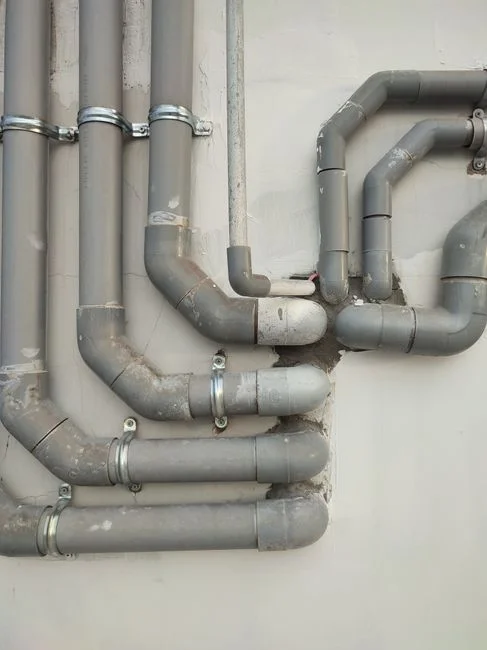
HydropureWater’s 2026 guide identifies the WSZ as a buried A/O package combining anoxic/aerobic contact oxidation, sedimentation and chlorination, with a stated range of 1–80 m³/h and no resident operator. Its MBR alternative combines activated sludge with submerged PVDF membrane filtration and covers 10–2,000 m³/day for municipal sewage and reuse applications.
The required receiving-water or reuse specification must be written into the procurement document. HydropureWater’s 2026 guide gives inland-water NEQS targets of BOD ≤80 mg/L, COD ≤150 mg/L, TSS ≤200 mg/L, oil and grease ≤10 mg/L and pH 6–9. For restricted landscape irrigation reuse, the same source lists typical provincial limits of BOD ≤30 mg/L, TSS ≤30 mg/L, fecal coliform ≤200 CFU/100 mL and turbidity ≤2 NTU. Confirm the applicable Sindh requirements and the project’s internal reuse specification before selecting either process.
| Decision factor | Buried WSZ A/O | MBR |
|---|---|---|
| Primary objective | Approved discharge compliance | Reuse-grade effluent or tighter effluent requirements |
| Process | Anoxic/aerobic contact oxidation, sedimentation and disinfection | Activated sludge with submerged PVDF membrane separation |
| Stated capacity | 1–80 m³/h | 10–2,000 m³/day |
| Site characteristic | Buried package; preserve access and service space | Compact biological and membrane arrangement |
| Operating issue | Equalization, biological loading and downstream polishing where required | Cleaning, aeration demand, fouling control and membrane replacement |
| Go when | Discharge is the principal requirement and the site can support the buried system | Reuse quality, internal limits or footprint govern the decision |
For a discharge-only project with adequate power and service access, evaluate the underground WSZ A/O package sewage treatment plant. If confirmed irrigation reuse, tighter internal limits or constrained land govern, evaluate the integrated MBR wastewater treatment system, including membrane cleaning and replacement planning. Neither option should be described as producing drinking water; potable reuse requires additional treatment, monitoring, risk control and applicable approval.
Build a complete Karachi site and utilities concept
A package-plant quotation is not automatically an installed-project price. Water World International’s 2025 Pakistan guide notes that packaged equipment may include pumps, screens, mixers, aeration equipment, biological media, clarifiers, filters, dosing systems, instruments and control panels, while equalization, storage, foundations, drainage, pipework and utility connections may still require local civil work.
Reserve access for screen cleaning, sludge removal, ventilation, chemical storage, electrical panels and future replacement. Limited space is not by itself a valid reason to select a compact package. The treatment train must also reflect the wastewater origin: screening and equalization for domestic sewage, and additional clarification, filtration or disinfection where the reuse or discharge specification requires it.
Define the sludge route before award. HydropureWater’s 2026 example calculates 500–800 kg dry solids per day for a 1,000-home society, equivalent to approximately 2,000–3,200 kg of wet cake per day at 22–25% dryness. The scope must state who stores, thickens, dewateres, collects, transports and finally disposes of the material. A sludge dewatering filter press may form part of that route, but it does not replace the disposal plan. Mechanical pretreatment can be reviewed through the rotary mechanical bar screen, while disinfection scope should be tied to the confirmed effluent requirement.
| Installed-scope element | Supplier quotation must state |
|---|---|
| Factory package | Process equipment, controls, testing, shipping and unloading |
| Local civil works | Excavation, foundations, equalization, drainage and access |
| Electrical and utilities | Power connection, backup, controls, lighting and remote support |
| Liquid treatment | Screening, equalization, biological treatment, separation, filtration and disinfection |
| Sludge line | Storage, dewatering, collection, transport and approved disposal |
| Commissioning | Mechanical testing, biological start-up, performance test, training and documentation |
Confirm power quality, standby strategy, local operator access, spare parts and responsibility for a stable biological process after handover. Automation does not replace inspection, sampling or trained operation.
Compare capital cost, operating cost and delivery risk
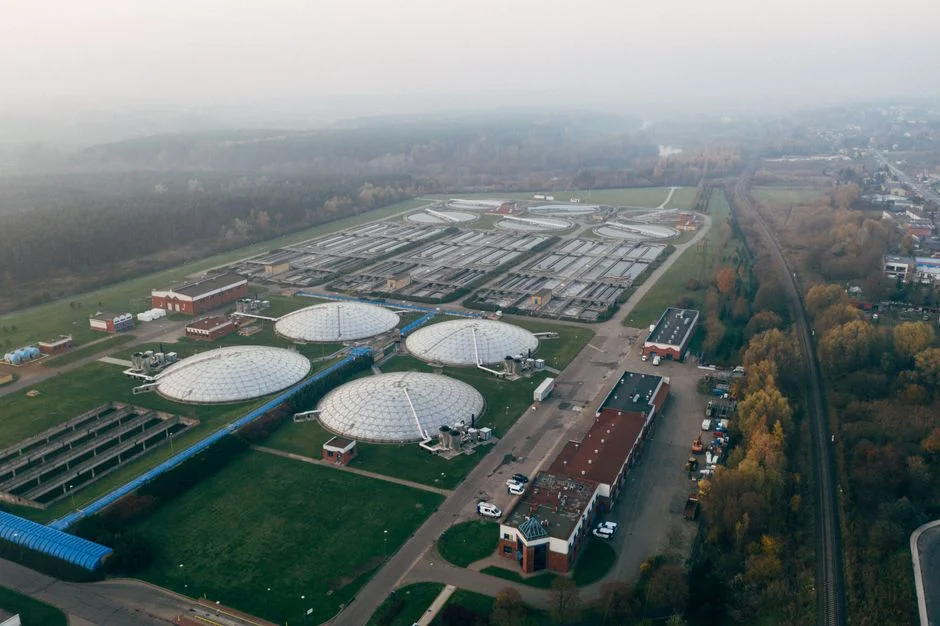
HydropureWater’s 2026 residential estimates provide a useful planning comparison for a 1,000 m³/day scope: PKR 25–45 million CAPEX and PKR 25–40/m³ OPEX for WSZ A/O, against PKR 55–90 million CAPEX and PKR 45–70/m³ OPEX for MBR, with membrane replacement amortized over a 5–7 year cycle. These are estimates, not quotations, and the source does not establish that every installation has the same boundary.
The same 2026 source says MBR’s capital premium may be recovered over a 5–7 year lifecycle when reuse revenue or avoided freshwater purchase is captured. Treat that as a conditional planning case, not a guaranteed payback. The broader 2025 Pakistan package-plant guide gives equipment CAPEX of US$15,000–500,000, demonstrating how capacity, automation, technology and pretreatment affect price.
| Planning benchmark | WSZ A/O | MBR |
|---|---|---|
| Reference scope | 1,000 m³/day | 1,000 m³/day |
| 2026 CAPEX estimate | PKR 25–45 million | PKR 55–90 million |
| 2026 OPEX estimate | PKR 25–40/m³ | PKR 45–70/m³ |
| Delivery estimate | 6–8 weeks fabrication and FAT; 3–4 weeks civil work and installation; 1 week commissioning; 2 weeks for provincial EPA NOC submission | 10–16 weeks because of membrane skid integration and clean-in-place commissioning |
| Estimate status | Planning benchmark | Planning benchmark |
The WSZ delivery narrative totals approximately 90 days for the standard scope described by HydropureWater in 2026. Water World International’s 2025 guide reports broader package-plant deployment of roughly 8–12 weeks, but site civil work, approvals and logistics can alter that schedule. Use the 2026 wastewater treatment plant operating-cost breakdown to examine OPEX assumptions, not to substitute for a site-specific model.
Require the delivered quotation to separate equipment, freight, duties, foundations, civil work, electrical installation, utilities, commissioning, training, initial chemicals, spares and annual maintenance. Then compare the total installed cost, not the equipment line.
Issue an RFP that prevents equipment-only procurement
An RFP should begin with a design-basis schedule containing representative wastewater results, average and peak flow, occupancy and phasing, future expansion, discharge destination, reuse objective, land, utilities and site constraints. Require each bidder to show how its proposed capacity and process respond to that information.
Ask for a process-flow diagram, P&ID, equipment schedule, hydraulic calculations, electrical and control drawings, civil interface, commissioning plan and defined performance-test conditions. The supplier must separate factory-built equipment from client civil, electrical, utility and local-contractor responsibilities, including shipping, unloading, installation and commissioning. Also require an operating-cost schedule that covers power, chemicals, sludge handling, testing, maintenance and membrane replacement where applicable.
Evaluate service capability through verifiable local references, spare-parts availability, operator training, remote support, maintenance response and biological start-up support. Assign sludge handling and final disposal in the contract, together with recordkeeping for the Sindh EPA permit pathway and the housing society’s operating plan.
The JBS German plant procurement guide supports the need to define imported-plant responsibilities, while the filter-press design guide reinforces the need to assign solids handling rather than treating it as an operational afterthought. Loughborough University’s 2003 Karachi case report on public-private partnerships in water and sanitation emphasizes workable delivery processes and evidence-based reporting; use that governance principle to allocate duties between developer, supplier and operator. The report is historical, but its accountability lesson remains relevant.
Make the final selection with a decision checklist
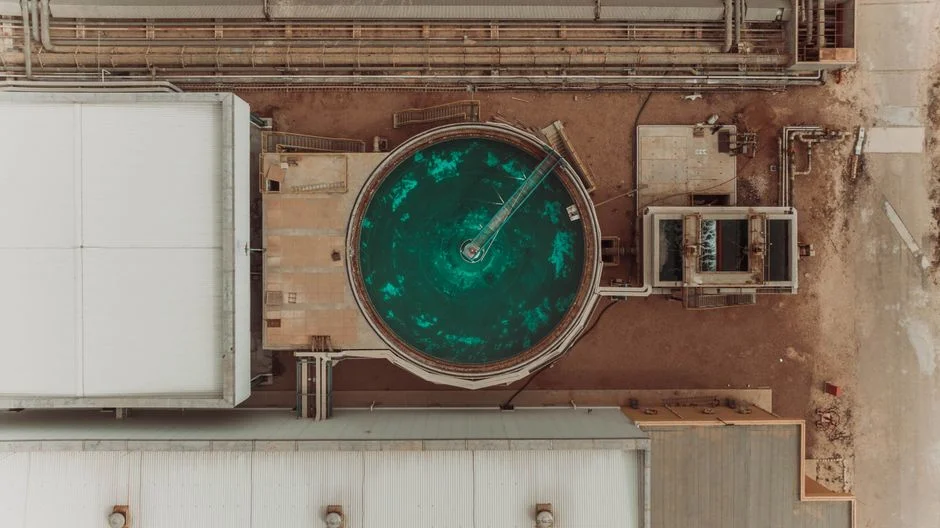
Proceed with WSZ A/O when compliant discharge is the principal objective, power and service access are adequate, and the buried arrangement fits the site and operating model. Proceed with MBR when a confirmed reuse specification, tighter developer limits or constrained footprint justify the additional capital and membrane-related operating costs. These are conditional decisions, not universal rankings.
Reject any proposal that sizes the plant only from resident numbers or daily flow, omits peak and future loads, leaves sludge disposal undefined or excludes civil and utility work from the price. Before order placement, obtain:
- Confirmed wastewater results and the applicable Sindh permit pathway.
- An average-flow and peak-flow model linked to development phasing.
- A process guarantee tied to agreed design and operating conditions.
- A delivered-cost schedule separating equipment from the complete installed project.
- A named operating and maintenance responsibility, including biological start-up and sludge disposal.
For the final technical review, compare the underground WSZ A/O package sewage treatment plant against the integrated MBR wastewater treatment system using the same design basis, scope and acceptance conditions.
Frequently Asked Questions
How should a Karachi housing society size a packaged sewage treatment plant?
Start with occupied homes, expected persons per home and a defensible water-contribution rate, then check representative wastewater results, average flow, peak flow, future phases and parallel-train resilience. For the supplied 1,000-home example, 5.2 persons per home and 160 L/person·day produce 832 m³/day; the cited 3.0 peak factor gives approximately 2,500 m³/day, or 104 m³/h. Confirm the applicable peak-factor band of 2.5–3.0 and adjust for the development’s occupancy pattern before selecting equipment.
What budget should be allowed for WSZ A/O and MBR?
Use HydropureWater’s 2026 estimates as planning benchmarks only: PKR 25–45 million CAPEX and PKR 25–40/m³ OPEX for the 1,000 m³/day WSZ A/O scope, compared with PKR 55–90 million CAPEX and PKR 45–70/m³ OPEX for MBR. Request a delivered installed quotation with foundations, civil work, electrical connections, utilities, freight, duties, commissioning, chemicals, spares, sludge handling and maintenance listed separately. The Pakistan package-plant guide provides broader equipment benchmarks of US$15,000–500,000, but these cannot establish this project’s price.
How should a supplier be selected beyond equipment price?
Request a process guarantee, complete drawings, local references, evidence of service coverage, spare-parts availability, operator training and biological start-up support. Use one responsibility matrix to identify who handles freight, unloading, civil interfaces, electrical work, commissioning, testing, sludge removal and final disposal. A low equipment price is not a comparable bid if these obligations are omitted.
Which compliance and delivery risks must be resolved before ordering?
Distinguish the supplied inland-water NEQS targets from the more stringent irrigation-reuse values, then confirm the applicable Sindh EPA and developer requirements. Keep factory fabrication and FAT separate from on-site civil work, installation, biological stabilization, performance testing and regulatory submission. HydropureWater’s 2026 WSZ schedule is 6–8 weeks for fabrication and FAT, 3–4 weeks for civil work and installation, one week for commissioning and two weeks for provincial EPA NOC submission; its MBR estimate is 10–16 weeks. These remain planning estimates, not contractual dates.