Start with the plant's German discharge route
Wastewater requirements for a German plant acquisition depend first on the site’s actual discharge route: direct discharge to surface water or groundwater, indirect discharge through a municipal sewer, or off-site removal of wastewater, liquid waste, or sludge. JBS must then verify permit transferability, actual effluent performance, pretreatment obligations, historical contamination, and treatment-asset condition. The existing seller authorization is not automatically assignable, and HydropureWater’s 2026 transaction guidance indicates that a failed permit transfer can lead to an 18–24 month reapplication cycle.
Classify the site before commissioning a permit review, treatment design, or liability estimate. For a direct-discharge facility, obtain the current German industrial wastewater permit, the competent authority’s details, authorized flow and parameters, monitoring plan, reporting history, and written evidence addressing transfer or reissuance. For an indirect-discharge site, obtain the municipal sewer or industrial wastewater-treatment contract, connection approval, pretreatment requirements, discharge-control rules, and any sewer-overscharge or cost-allocation provisions. For hauled waste, identify the waste classification, licensed hauler, treatment route, manifests or electronic records, and responsibility for contaminated sludge or liquid waste.
JBS states that each production and further-processing facility has a wastewater treatment program tailored to its discharge permit requirements and that discharged water must meet regulatory and internal standards, according to its corporate water materials. That is the appropriate operating benchmark for JBS, but it is not a German discharge authorization. The site classification remains a gating deliverable because the applicable authority, permit, contracts, treatment equipment, and liability allocation differ by route.
| Discharge route | Core pre-signing evidence | Decision gate |
|---|---|---|
| Direct discharge | Current permit; authority and correspondence; authorized flow and parameters; monitoring and exceedance history; transfer or reissue position | Can JBS lawfully operate and monitor the existing discharge point? |
| Municipal indirect discharge | Connection approval; sewer or industrial treatment contract; pretreatment limits; control rules; overscharge and cost allocation | Does the acquired process satisfy the receiving authority’s contractual conditions? |
| Off-site disposal | Waste classification; licensed hauler; treatment route; manifests or electronic records; residual liability allocation | Who owns historical contamination and transport, treatment, and restoration exposure? |
Resolve permit transfer before committing to the plant
A current German wastewater permit does not, by itself, establish that the acquired plant can continue operating under the seller’s authorization. Verify the exact permit holder, site address, permitted process, discharge points, authorized flow, parameter limits, monitoring obligations, and permit expiration or renewal status. Each discrepancy between the permit and the acquired operation is a transaction issue, not an administrative detail.
HydropureWater states in 2026 that a current permit is not necessarily an assignable permit and that a failed transfer can lead to an 18–24 month reapplication cycle. Treat that interval as deal-planning guidance, not a statutory German processing period. German counsel should determine whether the acquisition changes the legal operator, permitted process, wastewater composition, capacity, or responsible corporate person in a way requiring modification or a new application. The engineering team should separately test whether the equipment and operating envelope can meet the authorization.
Obtain at least the prior permit-compliance record and every unresolved exceedance, self-monitoring discrepancy, regulator letter, enforcement instrument, and corrective commitment. Seller cooperation should continue through transfer, and the purchase agreement should identify an unresolved permit status as a condition to closing rather than an assumed post-closing obligation.
| Permit review | Evidence required | Transaction treatment |
|---|---|---|
| Legal status | Permit copy; holder identity; amendments; expiry and renewal status; counsel opinion | Condition precedent if continued operation is not assured |
| Facility identity | Address, process, discharge points, authorized flow, parameters and monitoring duty | Reconcile every permit assumption with the acquired asset |
| Compliance history | Self-monitoring, laboratory results, exceedances, regulator correspondence, enforcement instruments | Price unresolved findings and allocate liability contractually |
| Change assessment | Acquisition, production, wastewater-composition and capacity analysis | Determine modification, reapplication, or no-change position |
Test the permit against actual protein-processing wastewater
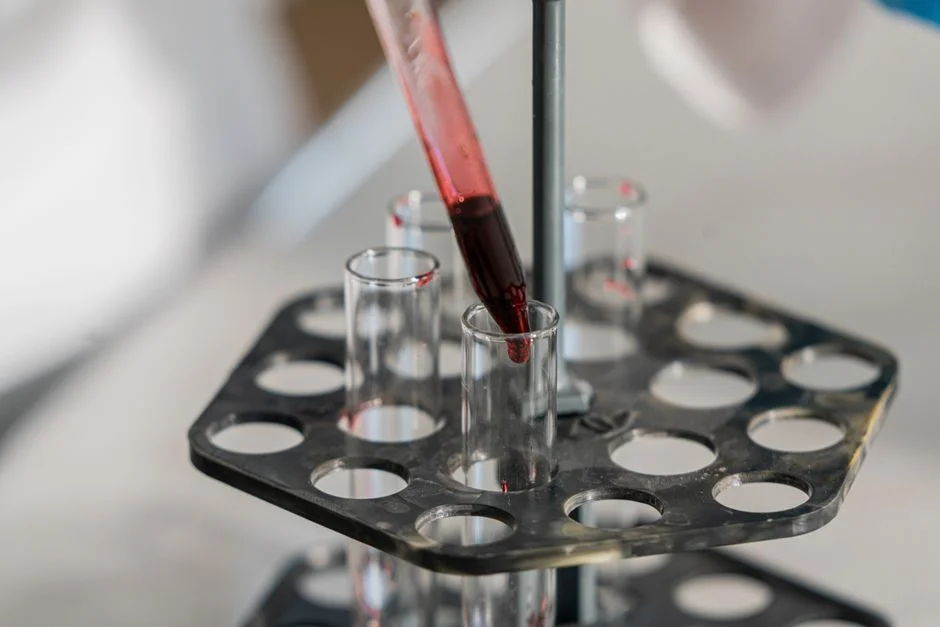
Food-processing wastewater must be tested against the acquired plant’s actual operating envelope, not only the seller’s compliance reports. Collect representative influent and effluent samples across production, cleaning, sanitizing, and peak operating periods. The evidence package should link laboratory results to flow records, production schedules, permit limits, sewer conditions, and operating logs.
HydropureWater’s 2026 screening profile for slaughterhouse and rendering wastewater gives BOD of 1,500–4,000 mg/L, FOG of 200–800 mg/L, total nitrogen of 100–300 mg/L, and ammonia of 50–150 mg/L. These are initial-screening values from HydropureWater, not German discharge limits. Use them to identify missing data and likely load ranges, then compare measured values with the permit, sewer agreement, and installed capacity.
Trace the complete treatment train: headworks, FOG control, biological treatment, separation, disinfection where relevant, and the final discharge or sewer connection. Assess whether cleaning and sanitizing flows create shock loads or bypasses. Source control is part of the technical case: blood loss, paunch handling, rendering-floor drainage, washdown segregation, and chemical dosing can reveal dependence on undocumented operating practices.
For an oil- and FOG-loaded front end, evaluate a DAF system for FOG pretreatment. Where biological separation and a compact footprint are required, evaluate an MBR system for biological wastewater treatment, subject to site-specific hydraulic, fouling, membrane, footprint, sludge, and permit verification.
| Screening parameter | HydropureWater 2026 protein-processing profile | Buyer verification |
|---|---|---|
| BOD | 1,500–4,000 mg/L | Representative influent and effluent testing across operating periods |
| FOG | 200–800 mg/L | Permit or sewer limit; DAF performance; upstream segregation |
| Total nitrogen | 100–300 mg/L | Influent variability and biological treatment capacity |
| Ammonia | 50–150 mg/L | Influent variability, aeration performance, and applicable discharge condition |
Find the environmental liabilities hidden outside the permit
Wastewater permit compliance does not establish that the site has no historical contamination. Commission an environmental assessment appropriate to the plant’s operating history and investigate subsurface soil and groundwater risks associated with lagoons, process drains, fuel or chemical storage, and former treatment areas. HydropureWater identifies old blood lagoons, rendering-floor drainage paths, and buried paunch-handling infrastructure as site-specific exposures that generic checks may miss in its 2026 guidance.
Quantify the sludge inventory, classification, handling history, and disposal exposure. HydropureWater’s 2026 guidance states that legacy sites can contain 200–2,000 tonnes of undocumented sludge and gives a hazardous-sludge removal and disposal benchmark of $80–$450 per tonne. Use those figures only as transaction-screening benchmarks pending volume measurement, waste classification, and supplier quotations. Review sewer contracts, hauler records, laboratory contracts, O&M agreements, chemical-supplier documentation, EPC warranties, and continuing consent decrees or environmental indemnities.
Request PFAS testing separately. HydropureWater, 2026, cites ASTM E1527-21 as explicitly excluding PFAS from its definition of hazardous substances, so a Phase I assessment should not be treated as PFAS clearance. Require Phase II investigation where the Phase I identifies a recognized environmental condition and financing or purchase-price allocation requires quantified exposure, consistent with HydropureWater’s 2026 guidance.
| Hidden exposure | Evidence request | Transaction consequence |
|---|---|---|
| Legacy sludge or lagoons | Volume survey; waste classification; sampling; hauler and treatment records | Removal cost, working capital, and indemnity allocation |
| Contaminated soil or groundwater | Targeted Phase I and, where justified, Phase II assessment; separate PFAS request | Quantified remediation, price adjustment, or escrow |
| Continuing third-party duties | Sewer, O&M, laboratory, chemical, EPC, hauler, and indemnity documents | Assignability review and retention or replacement cost |
Price capacity, asset condition, and regulatory change
Waterworks findings should be converted into a site-specific capital estimate, not a generic treatment quote. HydropureWater’s 2026 benchmark for basic ETP upgrades without a major process change is $280–$620 per m³/day treated. This is a screening benchmark pending characterization, design, and supplier quotation. HydropureWater also places full zero-liquid-discharge retrofits at $5M–$15M in 2026, depending on influent characterization, discharge destination, and recoverable byproduct value; use that range only after establishing a zero-discharge concept.
Screen remaining service life rather than relying on the CIM. HydropureWater cites MBR membrane runs of 5–8 years under normal operating conditions and PLC obsolescence windows typically of 7–10 years. It also cites $15,000–$60,000 per DAF unit for micro-bubble nozzles and skimmer wear, recurring every 3–5 years depending on influent oil and grease loading. These are 2026 transaction benchmarks, not quotations for the acquired site.
Inspect biological equipment, aeration, tanks, piping, controls, and containment. Use an asset-retirement-obligation study to identify remaining sludge, lagoons, equipment, and restoration obligations, with German legal and finance advisers determining the accounting treatment. Map EU or German regulatory changes through the closing period and identify whether the associated expenditure is a seller, shared, or buyer cost.
| 2026 HydropureWater benchmark | Stated scope | Required buyer action |
|---|---|---|
| $280–$620 per m³/day treated | Basic ETP upgrade without major process change | Confirm capacity basis and obtain site-specific design and quotation |
| $5M–$15M | Full ZLD retrofit | Establish the concept, destination, and byproduct assumptions first |
| $15,000–$60,000 per DAF unit | Micro-bubble nozzles and skimmer wear, recurring every 3–5 years | Inspect condition and confirm loading-specific replacement scope |
| MBR membranes: 5–8 years; PLC: typically 7–10 years | HydropureWater 2026 service-life markers | Verify installation date, condition, spares, and support |
Translate wastewater findings into deal protections
The wastewater reserve should reflect identified exposure, not a percentage applied without investigation. HydropureWater’s 2026 guidance recommends reserving 2–8% of enterprise value for a protein-processing target with an on-site ETP, with the upper end for documented permit issues, FOG or ammonia non-compliance, or lagoons older than 10 years. JBS should adjust that benchmark using measured sludge volumes, permit findings, asset condition, remediation estimates, and contractual recoverability.
HydropureWater reports that undisclosed non-compliance can increase reserves by $2M–$18M and trigger remediation timelines of 18–36 months. It also recommends environmental representations and warranties surviving for 5+ years, with a specific environmental indemnity outside the general basket and cap. For high-risk ETP targets, it recommends escrow of 10–15% held for 24–36 months. These are transaction benchmarks, not German legal standards; German counsel must structure the final protections.
Add permit-transfer cooperation, allocation of regulatory-change costs, a Phase II bring-down where appropriate, and removal of a material-adverse-effect carve-out for disclosed environmental findings. Budget for continuity: HydropureWater notes that O&M contracts may contain 30–90 day termination clauses and recommends pricing a 6–12 month transition for operator retention and regulator continuity.
Complete the German acquisition wastewater checklist
A defensible acquisition decision requires each item to have a named technical, legal, and commercial owner, a completion date, and an explicit consequence if unresolved. Do not treat an equipment estimate, a permit copy, or seller certification as a substitute for site-specific evidence.
| Stage | Mandatory actions | Acceptance decision |
|---|---|---|
| Before signing | Classify the discharge route; test permit transferability; obtain authority and sewer records; review enforcement history; conduct baseline sampling; launch targeted environmental assessment | Proceed only if route, authorization path, and preliminary exposure are understood |
| Before closing | Reconcile limits with actual performance; validate treatment capacity; quantify sludge; review contract assignability; secure transfer commitments | Resolve findings or price and contractually allocate them |
| At closing | Make satisfactory permit and environmental findings conditions; set reserve and escrow; define environmental indemnity; assign remaining actions | Accept the transaction only with enforceable protections |
| After closing | Run the 6–12 month operating transition; preserve regulator relationships; implement the compliance calendar; monitor actual parameters; schedule priority renewals | Verify sustained compliance and close capital actions |
Frequently Asked Questions
Can JBS rely on the seller's German wastewater permit after closing?
No automatic reliance is justified. HydropureWater states in 2026 that a current permit is not necessarily assignable and that a failed transfer can lead to an 18–24 month reapplication cycle. German counsel should review the permit holder, site, process, discharge points, capacity, and changes caused by the acquisition; the closing condition should require a clear transfer or modification path.
How much should JBS reserve for wastewater liabilities?
HydropureWater’s 2026 starting point for a protein-processing target with an on-site ETP is 2–8% of enterprise value. JBS should request quantified cost inputs rather than apply that percentage mechanically: permit history, measured FOG and ammonia performance, lagoon and sludge inventory, environmental findings, asset condition, remediation alternatives, insurance, and seller credit support.
Should a German acquisition prioritize DAF or MBR upgrades?
Prioritize DAF where characterized FOG and suspended oil require front-end removal, and MBR where biological treatment, integrated solids separation, compact installation, or filtration quality is required. The decision should follow from measured influent, hydraulic peaks, permit and sewer limits, footprint, sludge handling, fouling risk, remaining asset life, and life-cycle cost—not the technology label alone. HydropureWater’s 2026 guidance identifies DAF for FOG pretreatment and MBR as an upgrade path for protein-processing biological capacity.
How can JBS avoid discovering major ETP liabilities only after closing?
Require a multi-period sampling plan, permit-transfer analysis, compliance-history review, targeted Phase I assessment, Phase II work where justified, separate PFAS testing where relevant, ETP inspection, sludge quantification, and third-party contract review before signing. Then require seller cooperation through closing and attach permit-transfer, remediation, and cost-allocation obligations to the purchase agreement. The DAF system for FOG pretreatment and MBR system for biological wastewater treatment are options to evaluate only after the acquired plant’s actual loading and authorization are established.
Related Equipment
- DAF system for FOG pretreatment — specifications, capacity range, and technical data