Which Package Plant Best Fits a Port Harcourt Housing Development?
For a housing development in Port Harcourt, the defensible shortlist is a buried A/O package plant, a packaged MBR sewage treatment system, or a conventional package train with defined pretreatment. A buried A/O system is generally the first option to test where land is limited and domestic-strength sewage requires a compact installation. MBR becomes relevant when the discharge destination requires tighter solids separation or supports reuse.
A conventional train deserves consideration where flow variability, solids, fats, oils and grease, or fibrous material exceed the simple biological package’s design conditions. Published envelopes provide an initial screen, not a selection: the WSZ buried A/O package sewage treatment plant covers 1–80 m³/h, while the packaged MBR sewage treatment system covers 10–2,000 m³/day. Both figures come from HydropureWater’s published product information. Neither capacity should be matched to an estate until average, peak and minimum sewage flows, groundwater infiltration, effluent destination, sludge handling, utilities, permits and local maintenance capability are verified.
Choose A/O first if the wastewater is predominantly domestic, the footprint is constrained, and the developer prefers fewer process-specific maintenance obligations. Choose MBR where effluent quality, reuse or tighter solids separation is central to the development brief. Consider an extended package train where the design basis shows that pretreatment or flow equalization is necessary.
DAF should not be selected automatically. A DAF pretreatment system becomes relevant only if characterization identifies solids, oil and grease, fats, oils and grease, or colloidal material that must be removed before biological treatment. Port Harcourt’s industrial wastewater market does not determine the process for residential sewage; estate wastewater composition and its legal discharge route must govern the design.
| Initial option | Best fit to test | Published envelope | Decision still required |
|---|---|---|---|
| Buried A/O package | Domestic sewage, constrained land, simpler process preference | 1–80 m³/h | Hydraulic loading, effluent target, groundwater, sludge route and installation depth |
| MBR package | Tighter effluent control, reuse or compact solids separation | 10–2,000 m³/day | Membrane maintenance, aeration, controls, replacement exposure and reuse quality |
| Conventional or extended train | Variable influent or identifiable pretreatment needs | Not established by the supplied research | Stage-by-stage hydraulic and treatment design |
What the Local Wastewater Context Changes
The World Bank’s 2017 Port Harcourt assessment found that 90.5% of 398 surveyed locations used cistern-flush or pour-flush toilets, indicating that underground sewage containment and frequent emptying are established features of the local sanitation system. It also found that almost all fecal sludge generated in Port Harcourt was dumped into surrounding waterways without treatment. These findings do not specify the capacity or process for a particular housing estate, but they make two project controls non-negotiable: treatment must have a defensible residual-disposal route, and the wastewater entering the plant must be characterized rather than inferred from the wider market.
The same World Bank assessment reported that the influent characteristics of raw fecal sludge in Port Harcourt exceeded the design criteria of the sequencing batch reactor system it examined. Although that observation concerns raw fecal sludge rather than a dilute residential wastewater stream, it is a warning against transferring generic biological loading assumptions to Port Harcourt without sampling. A developer should test the actual sewer influent for soluble and particulate organics, solids, fats, oils and grease, pH and relevant toxicity indicators.
The World Bank identified land-use plans, treatment approach, operational capacity, capital and operational resources, piped-water networks and population growth as matters requiring consideration when treatment infrastructure is developed. Those points belong in the estate design brief. The Port Harcourt housing study by Everant Journals separately examines physical planning as a contributory factor in housing quality. It supports careful spatial planning, but it does not establish the performance or capacity of a packaged sewage treatment plant.
This distinction is important when comparing packaged sewage treatment options for housing developments: local sanitation evidence identifies project risks, while site measurements and process guarantees determine equipment selection.
Build the Design Basis Before Comparing Packages
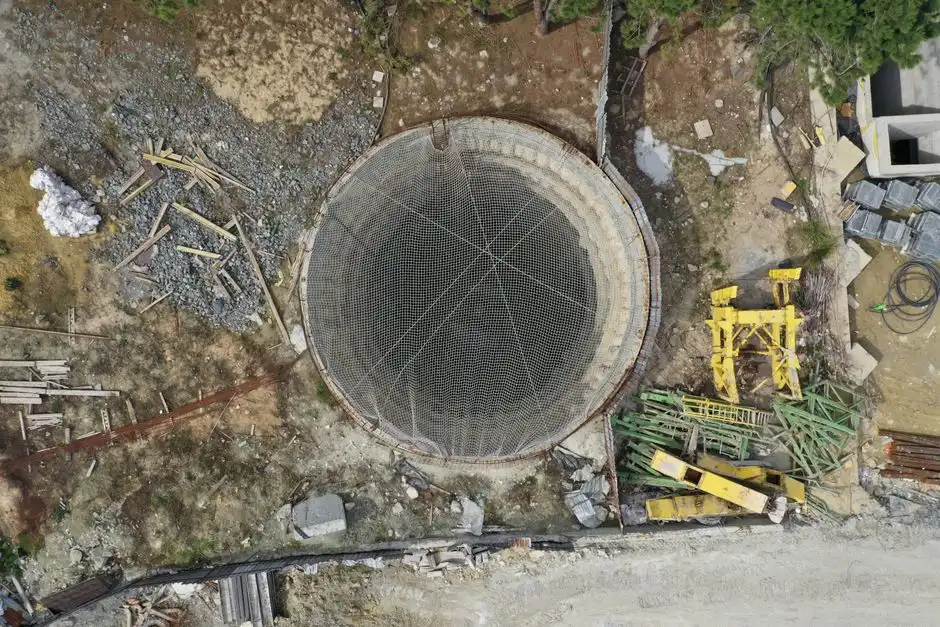
Sewage plant sizing for a housing estate must begin with verified wastewater flows, not the number of units marketed as a capacity range. The design team should derive average, peak, minimum and future-expansion flows from occupancy, water-use and discharge schedules, then reconcile them against the internal sewer network. The supplied research contains no valid flow rate for an unspecified Port Harcourt housing development, so no defensible package size can be stated from the information currently available.
The developer should obtain representative sampling or another defensible characterization method covering BOD, COD, TSS, fats, oils and grease, pH and toxicity indicators where relevant. Sampling should also address groundwater infiltration and expected seasonal variation. A single laboratory sample is not a substitute for checking how the estate operates under wet-season, peak-occupancy and low-flow conditions.
Record the internal sewer layout, pump stations, screen requirements, retention provisions, access roads, burial depth, landscaping constraints, flood exposure, power availability and final discharge point. Define that discharge point before comparing processes: it may be a sewer connection, a permitted outfall or a reuse point. An industrial-discharge specification must not be transferred automatically to a domestic sewage design.
- Establish daily flow, peak-hour flow, minimum flow and expansion allowance from occupancy and water-use data.
- Characterize wastewater quality, groundwater contribution and seasonal variation.
- Map the sewer, pumps, access, power, flood exposure and disposal destination.
- Separate headworks, pretreatment, biological treatment, solids separation, disinfection, reuse, sludge handling and monitoring.
- Issue the resulting design basis for common pricing and performance guarantees.
The pretreatment decision should follow from this evidence. A mechanical bar screen may be needed where the sewer network contains rags, plastics or fibrous debris. A DAF pretreatment system becomes defensible only where the wastewater requires solids or FOG removal before the biological stage.
| Design-basis item | Information required | Supplier output |
|---|---|---|
| Hydraulics | Average, peak, minimum, future expansion and inflow/infiltration basis | Duty flow, equalization and overflow provisions |
| Wastewater quality | BOD, COD, TSS, FOG, pH, toxicity and seasonal results | Stage loading and performance guarantee |
| Site | Land, groundwater, flood level, access, burial depth and landscaping | Footprint, civil interface and installation method |
| Destination | Sewer, permitted outfall or reuse point | Applicable effluent specification and sampling method |
| Solids | Expected residual-sludge volume and authorized destination | Sludge handling, storage and dewatering arrangement |
Compare A/O, MBR and Pretreatment Packages
The WSZ buried A/O package combines contact oxidation, sedimentation and disinfection in a fully automated, below-grade installation within a published flow envelope of 1–80 m³/h. That configuration makes it a credible candidate for an estate with limited land and domestic-strength wastewater. It does not remove the need to verify installation depth, groundwater, access for maintenance, effluent targets and the route for residual sludge.
The packaged MBR uses submerged PVDF membrane filtration within a published capacity envelope of 10–2,000 m³/day. Its relevance depends on whether the required effluent quality, reuse application or solids separation justifies membrane-specific operation. The decision should account for aeration energy, membrane cleaning, replacement exposure, instrumentation and control complexity. MBR should not be selected merely because it offers tighter control.
DAF is a pretreatment option, not a biological treatment package. HydropureWater’s published DAF information gives a flow range of 4–300 m³/h and identifies 13 standard models. It becomes relevant if characterization identifies suspended solids, FOG, oil and grease or colloidal load. Bar screening may be required where debris could overload pumps or biological stages, but screen selection depends on the sewer contents rather than a generic package specification.
Sludge dewatering should follow the process and disposal decision. A plate-and-frame filter press may be relevant where the selected process produces a controllable residual stream and dewatering improves handling. Filtration area and operating mode cannot be specified until sludge volume, characteristics and destination are confirmed.
| Criterion | A/O package | MBR package | DAF or bar screen |
|---|---|---|---|
| Core function | Contact oxidation, sedimentation and disinfection | Biological treatment with submerged membrane filtration | Solids, FOG or debris control before downstream treatment |
| Published capacity | 1–80 m³/h | 10–2,000 m³/day | DAF: 4–300 m³/h; bar-screen basis not supplied |
| Key advantage | Compact, below-grade residential configuration | Tighter solids separation and potential reuse application | Protects downstream stages when the design basis demonstrates a need |
| Key risk | Hydraulic, loading and site constraints | Membrane maintenance, aeration, replacement and controls | Unnecessary complexity if added without characterization |
For a broader packaged sewage treatment comparison for dense housing, the comparison should remain estate-specific rather than inheriting process assumptions from another city.
Turn Technical Requirements into a Supplier Specification
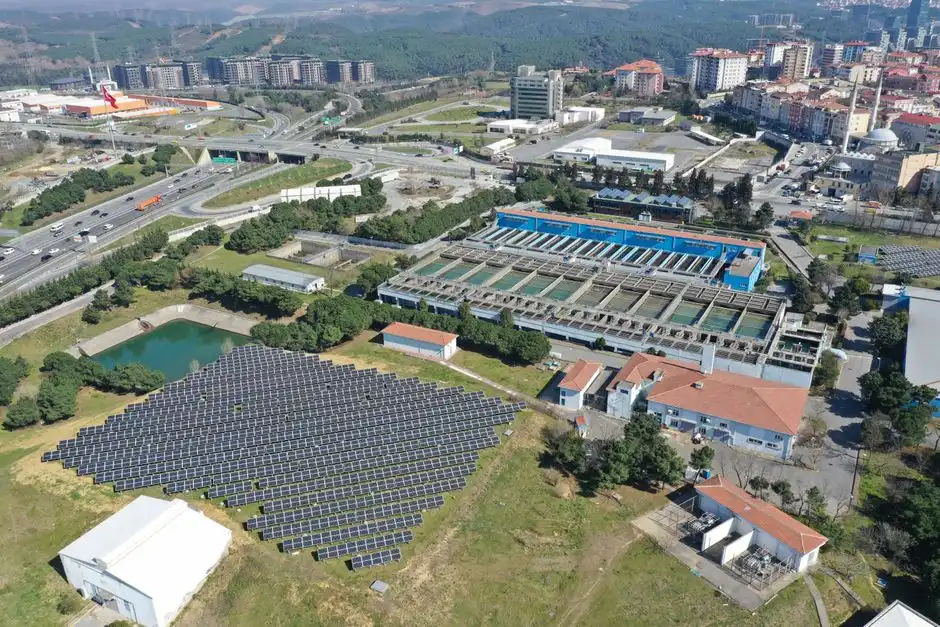
A comparable tender requires every bidder to price the same performance obligation. The specification should state design flow, treatment process, duty cycle, process stages, equipment duty, footprint, utilities, installation method, controls, alarm strategy and commissioning tests. A plant description or catalogue capacity is not an adequate substitute for a project-specific design.
The environmental lead should identify the applicable discharge destination and require an enforceable effluent guarantee tied to that destination and the agreed analysis methods. BOD, TSS and other targets should be proposed against the actual permit or reuse requirement rather than assumed from a universal residential standard.
The industrial thresholds cited in HydropureWater’s 2025 Port Harcourt buyer guide—BOD below 30 mg/L, TSS below 50 mg/L and oil and grease below 10 mg/L—belong to industrial effluent. They must be clearly separated from the housing-estate requirement unless the environmental authority confirms their applicability to the proposed discharge. The containerized wastewater treatment comparison can inform procurement questions, but containerization itself does not determine the biological process.
Service terms should state uptime obligations, response time, operator training, spare-parts availability, remote support, preventive maintenance and local service coverage. For imported equipment, the tender should require compliance with NIS 554:2015 and SON certification, as stated in HydropureWater’s 2025 Port Harcourt buyer guide.
Make acceptance conditional on factory acceptance testing, site testing, hydraulic loading verification and performance sampling, with the developer or environmental consultant present.
| Contract package | Minimum content to request |
|---|---|
| Technical offer | Design basis, process flow, stage duties, footprint, utilities and installation method |
| Performance | Destination-specific effluent guarantees, analysis methods, uptime and test protocol |
| Operations | Controls, alarms, manuals, training, preventive maintenance and spare parts |
| Compliance | Applicable permits and, for imported equipment, NIS 554:2015 and SON certification |
| Acceptance | FAT, site testing, hydraulic loading verification and witnessed performance sampling |
Compare Capital Cost, Operating Burden and Delivery Risk
HydropureWater’s 2025 Port Harcourt buyer guide gives ₦20 million ($50,000) as the lower screening reference for small package plants. This is not a project quotation: it does not establish the price for an unspecified estate, and it does not reveal what civil works, installation, utilities or services are included. A supplier must price the frozen design basis and state every exclusion.
The same guide places the upper reference above ₦1.6 billion ($2 million) for large industrial MBR systems. That figure shows how technology scale and industrial scope can materially change capital exposure; it must not be applied to a residential sewage package. The guide also gives industrial-wastewater operating costs of ₦60–₦160 ($0.15–$0.40) per cubic metre of treated water in Nigeria. This is a sensitivity reference for industrial wastewater treatment, not a guaranteed residential-sewage operating tariff.
The guide cites a 2–5-year payback range for sewage treatment plants in Port Harcourt. A developer should not transfer that screening benchmark directly into the development appraisal. Its model must separately identify land, sewer connection, pumping, power, chemicals, sludge disposal, monitoring, maintenance and residual value.
Ask each bidder for a 10-year total-cost comparison with a consistent boundary. Require exclusions to be listed, including civil works, excavation, pumps, power supply, chemicals, sludge transport, sampling, permits and operator attendance. Then compare service depth and consumables availability before accepting the lowest equipment price.
| Cost item | Evidence status | Buyer action |
|---|---|---|
| Small package capital cost | ₦20 million ($50,000) screening reference from HydropureWater’s 2025 Port Harcourt guide | Request a quotation against the final design basis and commercial boundary |
| Large industrial MBR capital cost | Above ₦1.6 billion ($2 million) in the same 2025 guide | Use only to demonstrate scope sensitivity, not residential pricing |
| Industrial operating cost | ₦60–₦160 ($0.15–$0.40) per m³ in the 2025 guide | Build a residential model from supplier energy, chemicals, sludge and service inputs |
| Payback | 2–5 years cited in the 2025 guide | Recalculate using project-specific costs and residual-value assumptions |
For wider context on commercial assumptions, the 2025 wastewater treatment cost guide is useful only as a secondary screen because its categories are not all specific to a Port Harcourt housing estate.
Make the Final Selection with a Decision Framework
A defensible award begins with non-negotiables: confirmed design flow, effluent destination, land and groundwater conditions, permits, utility availability, sludge route and maintenance capability. A bidder that cannot meet these requirements should be removed regardless of price or delivery promise.
Select a buried A/O package when the wastewater is standard domestic strength, the footprint is limited, reuse requirements are moderate and the estate operator prefers fewer high-maintenance components. Select MBR when higher-quality effluent, reuse, tighter solids separation or a compact process train justifies membrane-specific operation and maintenance. Add pretreatment only where wastewater characterization or upstream network evidence demonstrates the need.
Score the remaining bids on process fit, destination-specific compliance, 10-year lifecycle cost, delivery schedule, local support, operator burden, control quality and contractual guarantees. The weighting should reflect the development’s priorities rather than a generic supplier template.
Before final purchase, require the selected bidder to freeze the design basis, performance guarantees, operating manual, training plan, spare-parts list and commissioning protocol. This converts a conceptual process choice into a procurement-ready package.
| If the verified project condition is | Then evaluate | Required evidence before award |
|---|---|---|
| Domestic sewage, constrained land and moderate reuse needs | Buried A/O package | Hydraulic and loading design, site installation details, effluent guarantee and sludge route |
| Tighter effluent, reuse or solids-separation requirements | MBR package | Membrane specification, aeration demand, controls, maintenance and replacement plan |
| Documented solids, FOG or debris risk | A/O or MBR with targeted pretreatment | Representative characterization and justified screening or DAF duty |
| All shortlisted options remain compliant | Weighted lifecycle and supplier assessment | Comparable 10-year cost model, service evidence and enforceable guarantees |
Frequently Asked Questions
Which package capacity should be selected for a housing estate in Port Harcourt?
Select capacity only after establishing average, peak and minimum wastewater flows, future expansion and representative wastewater characteristics. The WSZ product envelope of 1–80 m³/h and the MBR envelope of 10–2,000 m³/day are supplier-published limits for preliminary screening, not recommended duties for the estate. Ask each bidder to demonstrate how its selected unit accommodates the agreed hydraulic and loading basis.
What budget should the developer use for sewage treatment operating cost in Nigeria?
Use the ₦20 million ($50,000) small-package figure from HydropureWater’s 2025 Port Harcourt buyer guide only as an initial capital-cost screen. Request a site-specific quotation and a 10-year cost model covering power, chemicals, maintenance, sludge handling, monitoring, permits and operator attendance. Do not use the cited industrial operating-cost range as a residential-sewage tariff.
How should a supplier be selected without creating a compliance or delivery risk?
Check alignment with the frozen design basis, references for comparable housing installations, local O&M capability, spare-parts access, contractual guarantees and the commissioning protocol. For imported equipment, require evidence of NIS 554:2015 compliance and SON certification as stated in the 2025 buyer guide. A low equipment price is not defensible if the supplier cannot demonstrate local support or acceptance testing.
Should the estate choose A/O or MBR?
Choose A/O when the wastewater is domestic strength, land is constrained and simpler operation is preferred. Choose MBR when the required effluent quality, reuse application or solids-separation performance justifies membrane maintenance and control complexity. The final choice must also satisfy the discharge destination, sludge route and operating capability; technology alone does not establish compliance.