Containerized wastewater treatment systems reduce installation time from 18–24 months to 6–12 weeks compared to traditional plants, with 30–50% smaller footprint and 20% lower initial CAPEX for capacities under 500 m³/day. Compared to alternatives like MBR, DAF, or package plants, they offer faster deployment and mobility but may require hybrid integration for high-strength industrial effluents.
What Is Containerized Wastewater Treatment?
Containerized wastewater treatment systems are fully assembled, skid-mounted treatment units housed within standard 20ft or 40ft ISO shipping containers. These units are engineered to be "plug-and-play," meaning they arrive at the site with all internal piping, electrical wiring, and control systems pre-installed and factory-tested. This approach shifts the bulk of the construction work from the field to a controlled factory environment, minimizing on-site labor and weather-related delays.
These systems typically integrate multiple treatment stages within a single or dual-container configuration. Depending on the influent characteristics, they may utilize technologies such as Membrane Bioreactors (MBR), Moving Bed Biofilm Reactors (MBBR), or advanced chemical dosing systems. For industrial applications, a standard 40ft container can process between 100 and 500 m³/day, depending on the organic loading and required effluent quality. The heart of these units is often a centralized PLC (Programmable Logic Controller) that manages automated backwashing, chemical dosing, and sensor monitoring, allowing for remote operation with minimal manual intervention.
Unlike semi-modular systems that require significant on-site assembly of disparate parts, containerized units are self-contained. The outer shell provides immediate protection against environmental factors, eliminating the need for a dedicated building to house the equipment. This makes them distinct from traditional concrete-based plants or large-scale prefabricated sewage plants that require permanent foundations and extensive civil engineering.
How Containerized Systems Compare to Traditional Plants
Traditional wastewater treatment plants rely on site-specific civil engineering, including concrete aeration tanks, clarifiers, and dedicated control buildings. This conventional approach typically requires a timeline of 18 to 24 months for design, permitting, and construction. In contrast, containerized units can be deployed in 6 to 12 weeks, as the primary infrastructure is manufactured in parallel with site preparation.
Footprint is a critical differentiator for industrial facilities where land is at a premium. Containerized systems occupy 30–50% less space than concrete-constructed plants for equivalent capacity. Because the internal components—such as an integrated MBR membrane bioreactor system—are vertically stacked and optimized for the container's dimensions, the hydraulic retention time is managed through high-efficiency media rather than large-volume tanks.
From a financial perspective, CAPEX for systems processing less than 500 m³/day is approximately 20% lower than traditional plants. This saving is primarily driven by the reduction in civil works, which can account for up to 60% of a traditional plant's budget. While both systems offer a functional lifespan of 15–20 years, containerized units provide relocation flexibility. If a factory closes or moves, the treatment plant can be disconnected and transported to a new site—a feat impossible for traditional concrete infrastructure. However, for permanent municipal installations exceeding 5,000 m³/day, the economies of scale eventually favor traditional civil construction due to the sheer volume of steel required for multiple containers.
Containerized vs MBR Systems: Performance and Cost
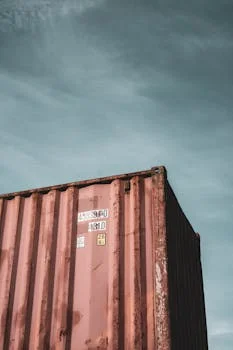
When evaluating high-performance filtration, the choice often falls between a containerized MBR and a standalone MBR system. A containerized MBR integrates the bioreactor and membrane filtration into a sealed, weather-proof unit. This setup is specifically designed to achieve an effluent quality with turbidity below 1 NTU and suspended solids virtually at zero, making the water suitable for non-potable reuse or irrigation.
Standalone MBR systems, while using the same membrane technology, often require larger footprints and on-site assembly of the membrane racks into concrete tanks. This increases installation time by 3 to 6 months. Energy consumption in containerized MBRs is often 10–15% lower than standalone site-built equivalents. This efficiency is achieved through optimized aeration manifold designs and shorter pipe runs, which reduce head loss and pumping requirements. Maintenance is also streamlined, as standardized components in a containerized layout allow for easier access than deep, open-air concrete basins.
| Feature | Containerized MBR | Standalone MBR (Site-Built) |
|---|---|---|
| Installation Time | 8–12 Weeks | 6–9 Months |
| Effluent Quality (TSS) | <1 mg/L | <1 mg/L |
| Space Requirement | Minimal (ISO Container) | Moderate (Concrete Tanks) |
| Energy Efficiency | High (Optimized Airflow) | Standard |
| Relocation Potential | 100% Mobile | Fixed Infrastructure |
For technical buyers, the MBR membrane module selection is the most critical factor in determining long-term OPEX. Containerized systems allow for factory-precise installation of these modules, reducing the risk of membrane damage during the commissioning phase.
Alternative Technologies: DAF, Package Plants, and Compact Units
Containerized systems are often compared to Dissolved Air Flotation (DAF), package plants, and compact units. However, these technologies serve different primary functions. DAF systems excel at removing fats, oils, and grease (FOG) as well as suspended solids, typically achieving 92–97% TSS removal. While effective, a DAF unit is generally a pretreatment step and not a standalone biological treatment solution. In many industrial scenarios, a DAF unit is placed upstream of a containerized MBR to protect the membranes from fouling.
Package plants, such as an underground integrated sewage treatment plant, offer a "set-and-forget" solution for stable flows between 1 and 80 m³/h. These are often buried to save surface space and are ideal for residential complexes or small factories. However, they lack the mobility and high-pressure filtration capabilities of containerized MBRs. Similarly, compact units like the medical system are designed for niche applications like hospital wastewater where sterilization is paramount, but they scale poorly beyond 100 m³/day.
| Technology | Best Use Case | Primary Advantage | Limitation |
|---|---|---|---|
| Containerized MBR | Industrial Reuse | High effluent quality; Mobile | Higher CAPEX than DAF |
| DAF | Food/Oil Processing | 95%+ FOG removal | Requires post-treatment |
| WSZ Package Plant | Rural/Small Factory | Low visibility; Underground | Difficult to relocate |
| Compact medical wastewater system | Medical/Labs | Pathogen destruction | Low volume capacity |
When comparing these options, engineers must look at the data-driven comparison of compact sewage units to determine if the wastewater strength requires the robust biological processing of a containerized unit or the physical-chemical separation of a DAF.
Cost, ROI, and Scalability Analysis

The financial justification for containerized wastewater treatment centers on the total cost of ownership (TCO). Based on 2025 B2B data, the CAPEX for containerized systems ranges from $180 to $300 per m³/day of capacity. In contrast, traditional plants often range from $250 to $400 per m³/day when factoring in the high cost of civil engineering and project management.
Operating expenses (OPEX) are also favorable, typically falling between $0.45 and $0.75 per m³ of treated water. These savings stem from high levels of automation, which reduce the need for full-time on-site operators, and the use of energy-efficient blowers. For industrial users facing strict discharge fines or high municipal water rates, the ROI is typically achieved within 2.5 to 4 years. Scalability is a major asset; if production increases, a facility can add 100–200 m³/day of capacity simply by deploying an additional container in parallel.
| Metric | Containerized System | Traditional Plant |
|---|---|---|
| CAPEX ($/m³/day) | $180 – $300 | $250 – $400 |
| OPEX ($/m³) | $0.45 – $0.75 | $0.55 – $0.90 |
| ROI Timeline | 2.5 – 4 Years | 5 – 7 Years |
| Scalability Method | Parallel Units | Major Reconstruction |
For a more granular look at pricing variables, procurement officers should consult real-world modular sewage treatment system cost data which accounts for membrane replacement cycles and chemical consumption rates.
When to Choose Containerized Over Alternatives
Selecting the right system requires a clear decision framework based on project constraints. A B2B comparison of prefabricated wastewater plants suggests the following logic:
- Choose Containerized Systems if: You need compliance in less than 6 months, have limited land, or operate in a remote location where local construction labor is expensive or unavailable. They are also ideal for facilities that may expand or relocate in the future.
- Choose Traditional Plants if: You are designing a permanent municipal facility with a capacity exceeding 1,000 m³/day and have a 20-year master plan that allows for long lead times.
- Choose DAF if: Your primary concern is high levels of oil, grease, or suspended solids that would foul biological membranes. DAF is a pretreatment tool, not a full replacement for biological treatment.
- Choose WSZ Package Plants if: You require a low-profile, underground solution for a stable, low-volume wastewater stream (e.g., a small housing development or administrative campus).
Frequently Asked Questions
What is the difference between containerized and modular wastewater systems?
Containerized systems are fully enclosed in standard shipping containers for maximum mobility and protection. Modular systems are pre-fabricated components that are assembled on-site but may not be housed in a single transportable container.
Are containerized systems compliant with EPA and EU standards?
Yes. When properly engineered, containerized systems from HydropureWater comply with EPA New Source Performance Standards (NSPS) and the EU Urban Waste Water Directive 91/271/EEC, achieving high removal rates for BOD, COD, and Nitrogen.
How long do containerized treatment units last?
With a standard maintenance protocol, the steel container and internal equipment have a lifespan of 15–20 years. Membranes typically require replacement every 5–8 years depending on influent quality.
Can containerized systems handle