Modular Sewage Treatment System Cost Price: 2025 B2B Breakdown
The modular sewage treatment system cost price ranges from $2,800 for basic 1 m³/h units to $500,000+ for 2,000 m³/day MBR systems. In 2025, expect $15,000–$16,000 for mid-size 10–50 m³/h A/O or MBBR plants, with MBR adding 30–50% premium. Containerized, fully automated units cost 20% more but cut installation time by 60%.
What Determines Modular Sewage Treatment System Cost?
Understanding the core cost drivers is paramount for accurate budgeting and procurement of modular sewage treatment systems. The primary factor influencing price is flow capacity; systems treating less than 10 m³/h can start as low as $2,800, while mid-range units handling 10–50 m³/h typically fall between $15,000 and $20,100, based on 2025 market data from platforms like Alibaba. Larger capacity systems, particularly those exceeding 500 m³/day, can easily surpass $200,000, with some high-end configurations reaching $700,000 or more for flows in the 100–500 GPM range (~23–227 m³/h) (SAMCO data). Beyond capacity, the chosen treatment technology significantly impacts cost. Membrane Bioreactor (MBR) systems, for instance, command a 30–50% premium over Moving Bed Biofilm Reactor (MBBR) or Anoxic/Aerobic (A/O) systems due to the inclusion of advanced membrane modules and typically higher levels of automation. Containerization and skid-mounting represent another cost layer, adding approximately 15–20% to the base price. However, this investment is often offset by substantial reductions in civil works and enables rapid deployment, as exemplified by containerized solutions costing upwards of $450,000 for approximately 75 m³/day capacity. Finally, the automation level is a critical determinant; fully automated systems with PLC control are about 25% more expensive than manual or semi-automatic units but dramatically reduce operational expenditures (OPEX) by minimizing the need for on-site operators. For example, our WSZ series is designed for fully automated operation, requiring no dedicated operator. The materials of construction also play a role; stainless steel or high-grade plastics will increase costs over standard carbon steel with protective coatings.
Explore our fully automated underground modular sewage treatment system and our high-efficiency MBR modular sewage treatment system with 60% smaller footprint.
Cost Breakdown by System Type and Capacity
Cost breakdown by system type and capacity facilitates direct comparison and informed decision-making.
| System Type | Typical Capacity Range | Estimated Price Range (USD) | Key Applications | Footprint Indicator |
|---|---|---|---|---|
| A/O (Anoxic/Aerobic) | 10–50 m³/h | $15,000–$30,000 | Residential, rural, small industrial (BOD5 removal >90%) | Standard |
| MBBR (Moving Bed Biofilm Reactor) | 20–60 m³/h | $18,000–$35,000 | Hotels, food processing, compact industrial (40% smaller footprint) | Compact |
| MBR (Membrane Bioreactor) | 10–2,000 m³/day | $25,000–$500,000+ | High-quality effluent (<1 μm), space-constrained sites (60% smaller footprint, 30% lower sludge) | Very Compact |
| DAF-based Systems | 4–300 m³/h | $20,000–$300,000 | High FOG, TSS, industrial pre-treatment (e.g., food processing) | Variable |
A/O (Anoxic/Aerobic) systems, often found in our WSZ series, are a cost-effective solution for flows ranging from 1 to 80 m³/h, with initial investment typically between $15,000 and $30,000 for capacities of 10–50 m³/h. They are well-suited for residential, rural, and smaller industrial applications where consistent BOD5 removal exceeding 90% is required. These systems are robust and can handle moderate variations in influent quality. MBBR (Moving Bed Biofilm Reactor) technology offers a more compact footprint, approximately 40% smaller than conventional systems, making them ideal for applications like hotels and food processing plants. For capacities of 20–60 m³/h, expect prices between $18,000 and $35,000. The high surface area provided by the biofilm carriers ensures efficient biological treatment in a smaller volume. The most advanced option, MBR (Membrane Bioreactor), delivers superior effluent quality (<1 μm) and a significantly reduced footprint (up to 60% smaller), along with 30% lower sludge production. Prices for MBR systems can range from $25,000 for smaller units to over $500,000 for large-scale applications handling up to 2,000 m³/day. This technology is particularly beneficial for water reuse applications where high-quality effluent is essential. Finally, DAF (Dissolved Air Flotation)-based systems are specialized for treating wastewater with high concentrations of FOG (Fats, Oils, and Grease) and TSS (Total Suspended Solids), commonly seen in industrial pre-treatment. These systems can cost between $20,000 and $300,000 for capacities from 4 to 300 m³/h, effectively removing floating solids and oils before further treatment or discharge.
Consider our high-efficiency MBR modular sewage treatment system with 60% smaller footprint and our DAF machine for industrial wastewater treatment.
Hidden Costs: Installation, Maintenance, and Compliance
Beyond the initial equipment purchase price, a comprehensive budget must account for significant ancillary costs. These "hidden" costs are crucial for accurate financial planning and avoiding project overruns. Civil and site preparation costs, including excavation, piping, and electrical infrastructure, can easily equal the equipment cost, especially for buried systems like our WSZ series. For containerized units, while site work is reduced by up to 60%, costs associated with crane access and foundation pads still apply. These can include concrete pouring and leveling to ensure a stable base. Annual maintenance is another ongoing expense. MBR membranes, for instance, require cleaning every 3–6 months and have a lifespan of 3–10 years, necessitating eventual replacement, which can be a significant capital expenditure. Chemical dosing systems also require quarterly calibration and replenishment of consumables such as coagulants, flocculants, and disinfectants. Energy consumption for pumps, blowers, and control systems also contributes to operational costs. Compliance costs are non-negotiable. Systems must meet stringent local discharge standards, such as those set by the CPCB in India or the EPA in the US. This may involve ongoing laboratory testing of effluent quality, which can cost several hundred to a few thousand dollars annually, depending on the frequency and parameters tested. Failure to comply can result in substantial fines, potentially reaching $10,000 per day of non-compliance, making upfront investment in compliant technology a sound financial decision. Permit acquisition and renewal fees also fall under this category.
Refer to our industrial 12-step O&M protocol for modular sewage plants and our 7-step industrial protocol for MBR membrane module maintenance.
How to Compare Modular STP Quotes in 2025
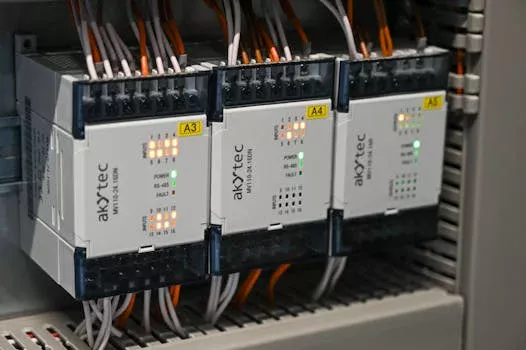
To ensure accurate comparisons, verify key specifications in supplier quotes. A critical first step is to verify capacity claims. Ensure the quoted flow rate represents peak capacity, including adequate surge handling (e.g., the ability to manage double the design flow for two hours). When evaluating MBR systems, carefully check membrane specifications. Flat sheet PVDF membranes, like those in our DF series, typically offer a longer lifespan of 5–10 years compared to hollow fiber membranes (3–7 years), and are often easier to clean and replace. Confirm the pore size is 0.1 μm or smaller to guarantee effective pathogen removal and compliance with strict effluent standards. Demand detailed energy consumption data, broken down by component (e.g., blowers, pumps, controls). Confirm the automation level; PLC control with remote monitoring capabilities significantly reduces labor costs by eliminating the need for a full-time on-site operator, a feature standard in our WSZ and MBR systems.
Learn more about our flat sheet MBR membrane modules and our automatic chemical dosing system.
Frequently Asked Questions
What is the cost of a 1000 GPD modular sewage treatment system?
For a 1000 GPD system (approximately 3.8 m³/day), expect costs to range from $18,000–$25,000 for an MBBR system and $28,000–$35,000 for an MBR system. These estimates are scaled from larger capacity units and represent the equipment cost only. Installation and civil works would be additional.
How much does a small industrial STP cost?
A small industrial Sewage Treatment Plant (STP) for capacities between 10–100 m³/day can cost between $20,000 and $100,000, with the final price heavily dependent on the specific contaminants present and the chosen treatment technology.
Are containerized STPs worth the extra cost?
Yes, containerized STPs are generally worth the approximately 20% higher capital expenditure. They offer a 60% faster installation time, significantly reducing civil work delays and potentially saving $10,000–$50,000 in site labor costs and project timelines.
What is the lifespan of a modular sewage plant?
The structural components of modular sewage plants, typically made of high-grade stainless steel or coated carbon steel, have a lifespan of 15–20 years, provided they are protected from corrosion.
Do modular systems meet environmental standards?
Yes, when properly designed and specified, advanced modular systems such as MBR and sophisticated A/O configurations can meet stringent environmental standards.
Explore our 2025 guide to package sewage treatment plants for food processing and our hospital wastewater treatment solutions.
Further Reading
Explore these in-depth articles on related wastewater treatment topics: