Why Preventive Maintenance Matters for Packaged Sewage Plants
Neglecting routine maintenance on packaged sewage treatment plants is a costly oversight that can lead to significant financial penalties, operational disruptions, and environmental damage. Untreated effluent discharge, a direct consequence of poor upkeep, can result in EPA fines exceeding $50,000 per violation. Preventive maintenance, however, is proven to reduce non-compliance risk by up to 80%, according to 2023 NOWRA data. Mechanical failures in critical components like blowers or pumps are the culprits behind 62% of unplanned downtime in packaged systems, as documented in EnviroBEE field reports. This downtime isn't a singular event; it's a cascade. For example, a clogged screen, seemingly minor, can lead to increased headloss, overwork and eventual overload of pumps, culminating in a complete system shutdown. Proactive care averts these expensive and disruptive scenarios, ensuring consistent compliance and operational reliability. For a comprehensive 12-step O&M protocol for prefabricated wastewater plants, consult our detailed guide.
Understanding Your Packaged Sewage Treatment System
The WSZ series, for instance, employs an anoxic/aerobic (A/O) biological contact oxidation process, designed for full automation and requiring minimal operator intervention under normal conditions. This process relies on specific biological and hydraulic parameters to achieve efficient treatment. Key among these are the hydraulic retention time (HRT), typically between 6–8 hours, and the sludge retention time (SRT), maintained at 10–15 days. In the aerobic zone, maintaining dissolved oxygen (DO) levels between 2–4 mg/L is crucial for microbial activity. These parameters are engineered to meet stringent effluent quality targets, such as Biochemical Oxygen Demand (BOD) below 20 mg/L, Chemical Oxygen Demand (COD) below 60 mg/L, and Total Suspended Solids (TSS) below 30 mg/L. These benchmarks are aligned with international standards like the EU Urban Wastewater Directive 91/271/EEC, ensuring your system operates within regulatory compliance.
Explore the capabilities of our fully automated underground package sewage treatment plant.
Daily Inspection Checklist for Optimal Performance
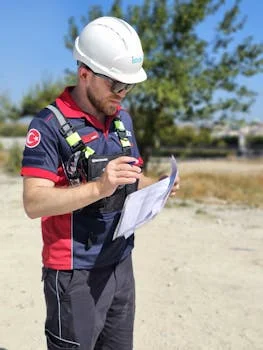
Daily inspections are the frontline defense against operational issues in packaged sewage treatment plants. A quick but thorough check can identify nascent problems before they escalate. Begin by inspecting the mechanical bar screen, such as those in the GX series, for debris accumulation. If more than 30% of the screen is clogged, immediate cleaning is necessary to prevent damage to downstream pumps. Simultaneously, verify the Programmable Logic Controller (PLC) alarm logs and SCADA readings. Look for any abnormal deviations in dissolved oxygen, pH levels (outside the 6.5–8.5 range), or flow rates. Monitoring effluent clarity is also vital; turbidity exceeding 5 NTU can indicate potential issues with membrane performance or settling processes, signaling a need for further investigation. For a guide on industrial-grade underground sewage treatment system maintenance, refer to our expert steps.
Weekly and Monthly Maintenance Tasks
Beyond daily checks, a structured weekly and monthly maintenance schedule is critical for preventing long-term degradation of system components. Weekly, test sludge settleability using the Sludge Volume Index (SVI) or Settling Test (SV30). An ideal SV30 range is 20–30%; values exceeding 40% often indicate sludge bulking or poor floc formation, which can impair treatment efficiency. Monthly, conduct a thorough inspection and cleaning of diffusers. Fouled diffusers can reduce oxygen transfer efficiency by as much as 40%, as observed in a Zhenjiang Municipal Case Study from 2024. If your system includes chemical dosing, check the chemical dosing pumps for calibration drift. For coagulants like ferric chloride (FeCl₃), a tolerance of ±5% is generally acceptable. Regular calibration ensures optimal chemical usage and treatment effectiveness. Consider integrating an automatic chemical dosing system for enhanced precision and reduced manual intervention.
| Task | Frequency | KPI/Benchmark | Potential Impact of Neglect |
|---|---|---|---|
| Sludge Settleability Test (SV30) | Weekly | 20–30% (Ideal Range) | Sludge bulking, poor floc formation, reduced treatment efficiency |
| Diffuser Inspection and Cleaning | Monthly | Visual inspection for fouling; ensure proper aeration | Reduced oxygen transfer efficiency (up to 40%), impaired biological activity |
| Chemical Dosing Pump Calibration | Monthly | ±5% tolerance for coagulants | Over- or under-dosing of chemicals, inconsistent treatment results |
| Mechanical Bar Screen Cleaning | Daily (or when >30% clogged) | Clearance of debris | Increased headloss, pump overload, system shutdown |
| PLC Alarm Log Review | Daily | No critical alarms; parameters within normal ranges | Early detection of process deviations, potential equipment failure |
Quarterly and Annual System Overhauls

Annually, perform a structural integrity check on buried tanks, paying close attention to corrosion or settlement, particularly in clay-rich soils. Quarterly, conduct a comprehensive electrical inspection. This includes examining motor windings for wear, checking control panels for secure connections, and verifying grounding resistance, which should ideally be below 5 Ω. Quarterly analysis of mixed liquor suspended solids (MLSS) is crucial for biological process stability. For a WSZ series system operating at a 50 m³/h load, a target MLSS range of 2,500–4,000 mg/L is recommended.
| Task | Frequency | KPI/Benchmark | System Component Focus |
|---|---|---|---|
| Structural Integrity Check | Annually | Visual inspection for corrosion, settlement, leaks | Buried tanks, concrete structures |
| Full Electrical Inspection | Quarterly | Motor winding integrity, control panel connections, grounding resistance (<5 Ω) | Motors, control panels, wiring, switchgear |
| Mixed Liquor Suspended Solids (MLSS) Analysis | Quarterly | 2,500–4,000 mg/L (for WSZ series at 50 m³/h) | Aerobic and anoxic bioreactors |
| Pump and Blower Performance Test | Annually | Amperage draw, vibration levels, noise output | All pumps and blowers |
| Calibration of Sensors (DO, pH, ORP) | Quarterly | Verify accuracy against calibration standards | Online monitoring instruments |
Maintaining Compliance and Maximizing Efficiency
Effective maintenance directly translates to sustained regulatory compliance and optimized operational efficiency. Regularly submitting effluent test results quarterly to local authorities is paramount, ensuring all parameters meet local discharge permits, such as the BOD5 limit of <20 mg/L stipulated in China's GB 18918-2002 standard. Implementing automated disinfection systems, like chlorine dioxide generators, can achieve a 99.9% pathogen kill rate without the residual chemical concerns associated with other methods. Integrating remote monitoring capabilities can significantly reduce the need for site visits by up to 60%, while simultaneously improving incident response times. This modern approach to upkeep ensures not only compliance but also cost savings and enhanced operational control.
Frequently Asked Questions
How often should I clean the screen on a package sewage treatment plant?
Clean the screen daily or immediately when it becomes approximately 30% clogged to prevent flow restriction and protect downstream equipment.
What causes sludge bulking in A/O systems?
Sludge bulking in aerobic-anoxic (A/O) systems is typically caused by low dissolved oxygen levels, a high food-to-microorganism (F/M) ratio, or the proliferation of filamentous bacteria. Maintaining DO levels above 2 mg/L and an SRT between 10–15 days are key preventative measures.
Can packaged plants handle industrial wastewater?
Yes, packaged plants can handle industrial wastewater, provided they are specifically designed for the anticipated organic and hydraulic loads. Our WSZ series, for example, is capable of treating wastewater with BOD levels up to 500 mg/L, often with the addition of appropriate pretreatment.
What is the expected lifespan of a packaged sewage treatment plant?
With diligent and proper maintenance, a well-designed packaged sewage treatment plant can have an expected lifespan of 15–20 years, according to EPA 2024 benchmarks.
Do I need an operator for automated systems?
For fully automated packaged sewage treatment plants, such as the WSZ series, a dedicated on-site operator is generally not required for daily operations. Routine inspections and scheduled maintenance are typically sufficient.
Related Equipment
- fully automated underground package sewage treatment plant — view specifications, capacity range, and technical data
- self-cleaning rotary mechanical bar screen for headworks protection — view specifications, capacity range, and technical data
Need a customized solution? Request a free quote with your specific flow rate and pollutant parameters.