An effective underground sewage treatment system maintenance guide includes inspecting mechanical components every 6–12 months, pumping sludge every 3–5 years based on 30% tank accumulation, and monitoring effluent COD and TSS weekly. For automated systems like HydropureWater’s WSZ series, sensor calibration and aeration checks are critical to sustain 90–95% BOD removal efficiency.
Why Maintenance Matters for Buried Wastewater Systems
Failure rates increase 300% in underground sewage treatment systems that are inspected less than once every three years, according to data from the EPA. The "out of sight, out of mind" nature of buried infrastructure is the primary driver of catastrophic failure for facility managers and plant engineers. Unlike surface-level plants where a leaking seal or a clogged intake is immediately visible, an underground system can operate in a state of progressive degradation for months before a total failure occurs. By the time effluent surfaces in the drainfield or a backup occurs in the plant’s main line, the cost of remediation often includes expensive excavation and complete biological reseeding.
Industrial systems fail 2.5x faster than residential counterparts when sludge levels are not monitored closely. This accelerated failure is due to higher influent loading and the presence of complex organic compounds that can inhibit microbial activity. Proactive buried wastewater system upkeep is the only way to avoid the high costs of emergency pumping and structural repairs. A well-maintained fully automated underground sewage treatment system can last upwards of 25 years, but neglect can shorten that lifespan to less than a decade.
Beyond equipment longevity, maintenance is a regulatory necessity. Non-compliance with discharge standards for Chemical Oxygen Demand (COD) or Total Suspended Solids (TSS) can result in heavy fines and operational shutdowns. A rigorous industrial septic maintenance protocol ensures that the biological processes—the heart of the system—remain stable despite fluctuations in influent temperature or volume.
Step 1: Inspect the Tank and Mechanical Components
Underground system mechanical components require a minimum annual inspection to prevent a 2.5x increase in failure rates compared to surface-mounted equipment. These components operate in a high-humidity, corrosive environment, where structural integrity and electrical connectivity are the first points of failure. Start by checking the watertight seals on all access risers. Any groundwater infiltration into the tank can hydraulically overload the system, washing out the beneficial bacteria required for treatment.
A comprehensive septic tank inspection checklist for industrial sites must include:
- Float Switches and Pumps: Manually trigger float switches to ensure pumps engage and disengage at the correct levels. Check for "ragging" or debris wrapped around pump impellers, which increases amperage draw and heat.
- Electrical Enclosures: Inspect for corrosion on terminals. In underground environments, hydrogen sulfide gas can migrate through conduits, corroding copper wires and causing intermittent PLC failures.
- Tank Integrity: Use a high-intensity light to check for cracks or signs of "biogenic sulfuric acid corrosion" above the water line in concrete tanks.
- Biofilm and Sludge: In the aerobic chambers, check the color of the biomass. A healthy biofilm should be brownish-tan; a black or greasy appearance indicates anaerobic conditions or grease overloading.
For those managing larger facilities, aligning these checks with industrial water treatment maintenance protocols ensures that both influent and effluent systems are synchronized. Regular mechanical audits prevent the small component failures that lead to major system bypasses.
Step 2: Pump and Remove Accumulated Sludge
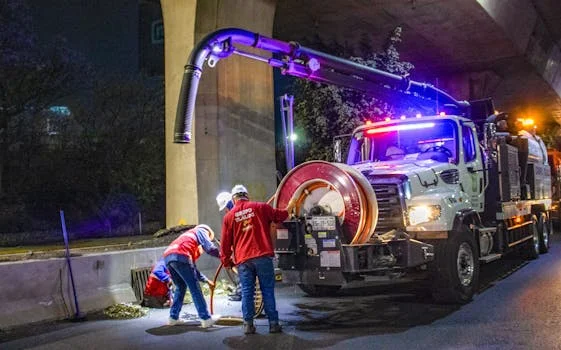
Sludge removal is required once accumulated solids reach 30% of the total tank volume to prevent solids carryover into the secondary treatment stage. Industrial and community-scale systems must be pumped based on actual accumulation data. Industrial systems with high BOD loads, such as food processing or textile facilities, often reach this 30% threshold every 2 years rather than the standard 3-to-5-year window suggested for domestic waste.
To determine the sludge pumping schedule, use a "Sludge Judge" or similar core sampler to measure the depth of the scum layer and the sludge blanket. If the bottom of the scum layer is within 3 inches of the bottom of the outlet tee, or if the sludge blanket is within 12 inches of the outlet, immediate pumping is required. When hiring a vacuum truck, ensure they pump through the manhole/riser, not the 4-inch inspection pipe, to ensure a complete cleanout of settled solids.
Failure to remove sludge leads to "solids carryover." These solids escape the primary tank and clog the aeration diffusers or the soil interface of the drainfield. Once a drainfield is clogged with sludge, it often requires complete replacement—a cost that can exceed $20,000 for industrial-scale systems. Proper sludge management is the single most effective way to protect your long-term infrastructure investment.
Step 3: Maintain Aeration and Biological Processes
Aeration systems must maintain dissolved oxygen (DO) levels between 2.0 and 4.0 mg/L to sustain the aerobic microbes responsible for 90-95% BOD removal. In an automated sewage treatment care routine, the blower and diffuser assembly are the most critical mechanical assets. If DO levels drop below 1.0 mg/L, the system will likely experience filamentous bulking, where "bad" bacteria thrive, preventing the sludge from settling and resulting in cloudy, high-TSS effluent.
Maintenance of the aeration zone involves:
- Blower Service: Clean or replace air filters every 3 months. Check belt tension and lubricate bearings according to the manufacturer’s intervals.
- Diffuser Inspection: Over time, calcium carbonate or biological growth can clog fine-bubble diffusers. If you notice large bubbles or "boiling" on the water surface rather than a fine mist, the diffusers need cleaning or replacement.
- Biomass Monitoring: For systems utilizing advanced MBR sewage treatment maintenance, chemical cleaning (CIP) of the membranes is necessary to maintain flux rates and prevent transmembrane pressure (TMP) spikes.
Consistent aeration is the difference between a system that meets discharge permits and one that produces odors and non-compliant waste. The Mixed Liquor Suspended Solids (MLSS) allows operators to balance the "food-to-microorganism" (F/M) ratio, ensuring the biology is neither starving nor overloaded.
Step 4: Monitor and Calibrate Sensors and Controls
Sensor calibration for pH, DO, and oxidation-reduction potential (ORP) must occur every six months to prevent automation logic errors caused by sensor drift. Sensors are prone to "fouling" and "poisoning" in the humid, high-gas environment of an underground tank. A DO sensor that drifts high will tell the PLC to turn off the blowers prematurely, leading to an anaerobic state and system failure.
Critical steps for wastewater sensor calibration include:
- Zero and Slope Calibration: Use standard buffer solutions to calibrate pH and ORP probes. For DO sensors, perform an air-calibration at the local barometric pressure.
- PLC Logic Verification: Ensure that high-level alarms actually trigger the notification system (SMS or SCADA). Verify that "lead-lag" pump logic is alternating the wear between primary and backup pumps.
- Visual Inspection of Cables: Check for "wicking," where moisture travels up the inside of a sensor cable jacket, eventually destroying the transmitter electronics.
Automation is a powerful tool for reducing labor costs, but it is only as reliable as the data it receives. Neglecting sensor maintenance often leads to "ghost" alarms or, worse, a silent failure where the system appears to be running correctly while discharging untreated raw sewage.
Step 5: Inspect and Protect the Drainfield or Discharge Zone
Surface water diversion and soil compaction prevention are the two most critical factors in extending the 20-year design life of a subsurface discharge zone. The drainfield is the final stage of treatment, where the soil filters out remaining pathogens. If the soil becomes saturated with rainwater or compacted by heavy machinery, its ability to accept effluent vanishes.
To maintain the discharge zone, facility managers must:
- Divert Runoff: Ensure that roof drains, parking lot runoff, and landscape irrigation are directed away from the drainfield. Excess water in the soil prevents effluent from percolating downward.
- Restrict Access: Never allow vehicles to drive over or park on the treatment system components or the drainfield. Compaction destroys the soil structure and can crush buried lateral lines.
- Vegetation Management: Keep the area covered in grass. Avoid planting trees or large shrubs within 30 feet of the system, as roots will aggressively seek out the nutrient-rich water inside the pipes, causing blockages.
Weekly inspections for "ponding" or surfacing effluent are essential during warm months. Odors in the drainfield area are an early warning sign that the soil is becoming anaerobic and may be nearing its hydraulic limit.
Step 6: Review Effluent Quality and Compliance Reports

Standard performance benchmarks for a healthy system include:
- BOD (Biochemical Oxygen Demand): Target <20 mg/L. High BOD indicates insufficient aeration or organic overloading.
- TSS (Total Suspended Solids): Target <30 mg/L. High TSS indicates poor settling or a need for sludge pumping.
- COD (Chemical Oxygen Demand): Monitor for spikes that suggest "shock loading" from industrial chemicals or detergents that may be killing the microbial population.
Logging these results daily or weekly creates a "paper trail" that protects the facility during environmental audits and provides the necessary data for engineers to troubleshoot performance issues without expensive site visits.
Step 7: Schedule Preventive Maintenance by System Type
Maintenance cycles vary significantly between Anaerobic/Oxidated (A/O) and Membrane Bioreactor (MBR) technologies due to the different mechanical stresses on the filtration media. While an A/O system like the WSZ underground integrated sewage treatment plant relies on gravity and biological settling, an MBR system uses physical barriers that require more frequent technical intervention.
High-load industrial sites should double the inspection frequency compared to standard residential or light commercial applications. The table below outlines the suggested maintenance intervals for the two most common underground technologies.
| Component/Task | WSZ Series (A/O) Frequency | MBR System Frequency | Threshold/Target |
|---|---|---|---|
| Mechanical Inspection | Every 6 Months | Every 3 Months | No corrosion; <10% pump wear |
| Sludge Depth Check | Every 6 Months | Monthly | Pump at 30% volume |
| Sensor Calibration | Every 6 Months | Every 3 Months | pH ±0.1; DO ±0.2 mg/L |
| Aeration Diffusers | Annual Clean | Bi-Annual Clean | DO 2.0–4.0 mg/L |
| Membrane Cleaning | N/A | Every 3–6 Months | Maintain Flux; TMP <30 kPa |
| Effluent Testing | Weekly | Weekly | BOD &
Get a Free Quote — Tell Us About Your Project
Contact Us
|