
What Makes a Kathmandu Housing Project Different?
For a Kathmandu housing development, a packaged sewage treatment plant normally fits only after the discharge route and wastewater profile are established. If a permitted municipal sewer is available, connect to it; otherwise, the project needs a standalone treatment, disinfection, sludge-handling and disposal system. A buried package A/O biological contact-oxidation plant is generally the preliminary choice for roughly 50–500 households without advanced reuse requirements, while MBR is more appropriate when 200 or more households need near-reuse-quality effluent. Capacity must be calculated from population and water demand, then checked for monsoon inflow and infiltration, septic-tank supernatant and site constraints.
Nepal’s limited and unevenly distributed WASH infrastructure makes decentralized treatment a relevant option rather than an automatic choice. The ACS ES&T Water review Water, Sanitation, and Hygiene of Nepal: Status, Challenges, and Opportunities documents persistent difficulties in delivering reliable WASH services and the need for sustainable approaches.
Before selecting a model, confirm five inputs:
- Design population, occupancy assumptions and future development phases.
- Wastewater source and strength, including any septic-tank supernatant or commercial discharge.
- Average dry-weather flow, peak flow and monsoon inflow and infiltration.
- Permitted discharge point or intended reuse.
- Available land, excavation depth, access, power supply and operating capacity.
Generic online capacity tables are not enough. A preliminary selection still needs sewer surveying, hydraulic testing, wastewater characterization, permit review and a site-specific equipment proposal. The residential wastewater treatment and compliance guide for Nepal provides a useful starting framework, but its design assumptions must be checked against current approvals and site data.
Calculate the Wastewater Load Before Choosing Equipment
Residential wastewater flow and BOD₅ loading must be calculated before quoting plant capacity because average daily flow, peak flow and equalization are different design quantities. HydropureWater’s 2026 residential guide uses 100–150 L per person per day of wastewater flow and 40–50 g BOD₅ per person per day as the preliminary South Asian residential design assumptions.
- Design population = households × occupancy.
- Average daily flow = design population × wastewater flow per capita per day.
- Daily BOD₅ load = design population × BOD₅ loading per capita per day.
For 100 homes with five residents each, the design population is 500 people. Applying the stated assumptions gives an average dry-weather flow of 50–75 m³/day and a BOD₅ load of 20–25 kg/day (HydropureWater, 2026 residential guide). These figures are preliminary loads, not an equipment rating in m³/h.
| Parameter | Calculation | 100-home result |
|---|---|---|
| Design population | 100 households × 5 people | 500 people |
| Average dry-weather flow | 500 × 100–150 L/person/day | 50–75 m³/day |
| Daily BOD₅ load | 500 × 40–50 g/person/day | 20–25 kg/day |
Do not convert the 50–75 m³/day example into an unverified m³/h selection. Final hydraulic rating must reflect measured or calculated peak factors, the selected operating mode and supplier process criteria. Average flow also does not establish equalization volume or storm readiness.
Cross-check the per-capita assumption with meter data where available. HydropureWater’s 2026 residential guide reports that Kathmandu Valley apartment blocks can exceed 150 L per person per day because of shared washing and toilet use. If metering is unavailable, retain the preliminary value as an assumption in the RFQ and require the supplier to state its design margin and sensitivity.
Size for Monsoon I&I and Septic-Tank Supernatant
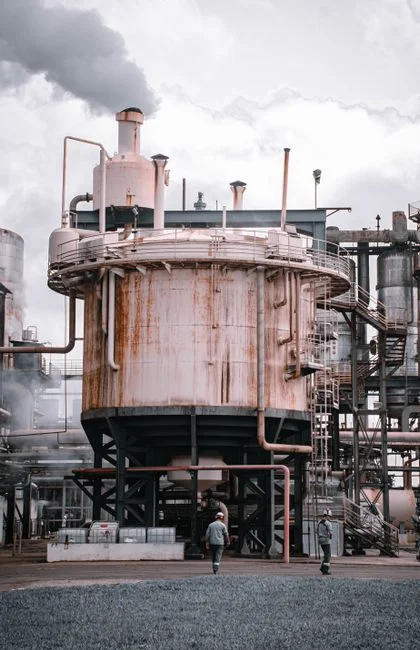
Kathmandu’s monsoon period can change the hydraulic design even when daily wastewater production is unchanged. HydropureWater’s 2026 residential guide states that monsoon-driven inflow and infiltration in the Kathmandu Valley can roughly double hydraulic load between June and September; it recommends equalization at 1.5–2 times average dry-weather flow.
Equalization protects the biological stage from hydraulic washout, smooths organic and ammonia loading, and reduces shock loads on pumps and downstream disinfection. The required usable volume should be calculated from the preliminary daily flow, then checked against the selected treatment train and the permitted discharge constraints.
Do not assume that every contribution to the sewer has fresh-sewage strength. Where homes use septic tanks, or where the network combines septic-tank discharges and sewer connections, request characterization of septic-tank supernatant. HydropureWater’s 2026 guide describes it as lower-strength, more ammoniacal and higher in suspended solids than fresh sewage. That profile supports a biological process with nitrification capability and adequate solids separation, but the plant still needs verified BOD₅, COD, TSS, ammonia, pH and flow data.
Include the wider sanitation chain in the design brief: collection, covered storage, inspection, desludging, transport and receiving treatment or disposal. A package plant does not eliminate the need for those services. Where rags, plastics or grit could reach the unit, consider a rotary mechanical bar screen upstream of biological treatment and require the supplier to define its aperture and solids-management arrangement.
Choose A/O or MBR Based on the Development
The technology decision follows from the required effluent quality, available space, discharge route, power reliability and operating capacity—not from household count alone. The Government of Nepal’s 2019 residential targets summarized by HydropureWater are BOD₅ ≤ 30 mg/L, TSS ≤ 50 mg/L, pH 6.5–8.5 and E. coli < 1,000 MPN/100 mL.
An A/O unit combines an anoxic zone, aerobic biological contact oxidation, sedimentation and disinfection in a buried integrated package. HydropureWater’s 2026 guide identifies it as the lowest-cost compliant option for roughly 50–500 households where the discharge route is available and advanced reuse is not required. The buried A/O package sewage treatment plant reduces above-ground land take and can operate automatically under a PLC with limited routine operator attendance.
MBR adds membrane separation to biological treatment. For 200 or more households requiring near-reuse-quality effluent, HydropureWater’s 2026 guide states that an MBR with 0.1 µm PVDF flat-sheet membranes followed by chlorination typically produces BOD₅ below 10 mg/L for toilet-flush or landscape-irrigation reuse. An integrated MBR wastewater treatment system is therefore the stronger option when reuse quality or footprint reduction justifies higher capital and operating demands.
| Development condition | Preliminary choice | Key check before approval |
|---|---|---|
| Fewer than 50 homes, no advanced reuse, adequate land | Septic tank with two-chamber soak pit | HydropureWater’s 2026 guide says it cannot consistently meet BOD₅ ≤ 30 mg/L and presents groundwater-contamination risk; confirm site conditions |
| About 50–500 homes, permitted discharge route, conventional reuse standard | Buried package A/O plant | Verify peak and monsoon capacity, disinfection, solids handling and power resilience |
| 200 or more homes, toilet-flush or landscape-irrigation reuse | Integrated MBR with disinfection | Confirm reuse controls, membrane maintenance, residual management and power reliability |
| Uncertain sewer connection, septage contribution or receiving route | Defer final selection | Complete hydraulic testing, wastewater characterization and permit review |
For fewer than 50 households, a septic tank and two-chamber soak pit may be less costly where sufficient land exists, but it is not equivalent to treatment designed around the 2019 residential targets. HydropureWater’s 2025 Nepal article also reports higher MBR energy demand and a footprint reduction of up to 40%; final site geometry and access must confirm either benefit.
Build the Complete Treatment and Disposal Train
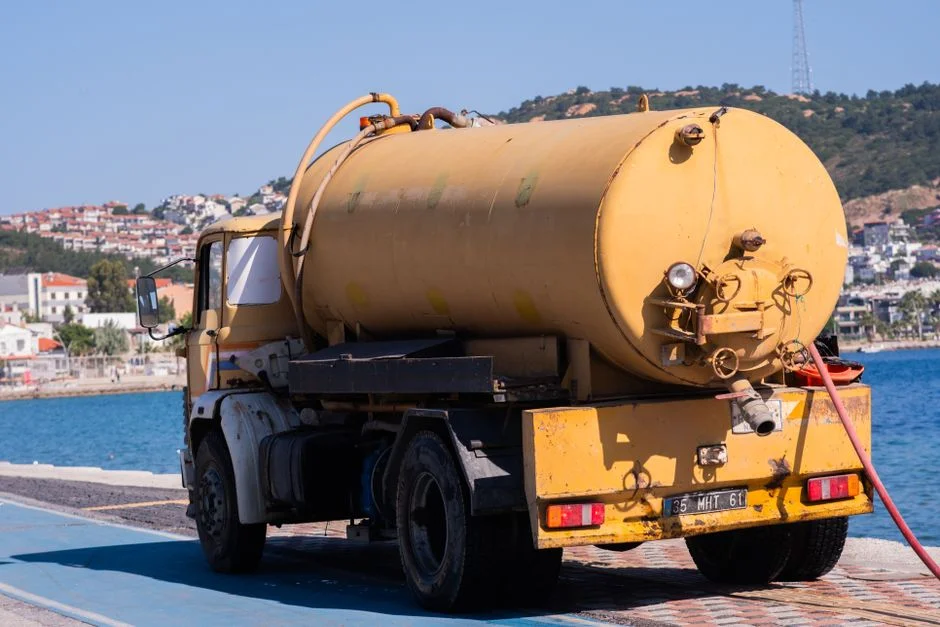
A package unit should be purchased as one element of a complete train: incoming wastewater → screening → equalization → biological treatment → sedimentation or membrane separation → disinfection → permitted discharge or reuse, with a defined sludge route.
For A/O plants, disinfection must be included in the compliance design because the 2019 residential target includes E. coli < 1,000 MPN/100 mL. HydropureWater’s 2026 guide recommends a rotary mechanical bar screen with a 5–10 mm aperture before biological treatment to protect pumps, diffusers and membranes from rags, plastics and grit.
Residuals need their own operating plan. HydropureWater’s 2026 guide states that residential plants producing more than 5 m³/day of waste sludge typically use a plate-and-frame filter press to reach 18–22% dry solids for off-site disposal; below that threshold, open sludge drying beds are described as the lowest-cost option. A plate-and-frame filter press therefore enters the budget when the selected configuration reaches the stated threshold. The supplier must also define sludge storage, withdrawal, transport and receiving arrangements.
| Element | Procurement requirement |
|---|---|
| Headworks | Screening method, aperture, grit and rag management |
| Equalization | Usable volume, mixing, pumping, level controls and storm response |
| Biological treatment | Process zoning, aeration, nitrification duty, diffuser redundancy and access |
| Solids separation | Sedimentation or membranes, sludge withdrawal and cleaning method |
| Disinfection | Contact time, dosing, residual monitoring and safe chemical storage |
| Disposal and reuse | Permitted receiver, reuse controls, sampling points and residuals management |
| Site and maintenance | Buried load rating, access covers, odor control, noise, bypass and emergency power |
Where chlorine dioxide is proposed, require the supplier to justify the dosing and safety arrangement. The chlorine dioxide generator should be evaluated within the complete disinfection and contact system rather than as a stand-alone accessory.
Compare Cost, Power and Procurement Risk
Indicative capital and logistics figures can frame an equipment budget, but they are not 2026 quotations. HydropureWater’s 2025 Nepal article gives the following benchmarks; the supplier should reprice them on the project’s verified design basis.
| Indicative 2025 benchmark | Reported range |
|---|---|
| A/O, 1–10 m³/h | USD 8,000–12,000 per m³/h |
| A/O, 10–50 m³/h | USD 6,500–9,000 per m³/h |
| A/O, 50–80 m³/h | USD 5,500–7,500 per m³/h |
| MBR, 10–50 m³/h | USD 14,000–18,000 per m³/h |
| Shipping one standard 20-foot container from China to Kathmandu | USD 1,200–2,500 |
| Estimated customs duties | 10–15% of declared value |
Power is a material lifecycle difference. HydropureWater’s 2025 Nepal article reports A/O consumption of 0.3–0.6 kWh/m³ against 0.8–1.2 kWh/m³ for MBR. Compare those values with aeration, membrane cleaning, eventual membrane replacement, chemicals, sludge removal, operator visits and backup power.
Require comparable quotations that separately identify equipment, freight, customs, installation, civil works, equalization, headworks, disinfection, solids handling, commissioning, training, spares, warranty, performance guarantee and monitoring. Also request the electricity tariff, expected outage pattern and annual operating estimate. A lower equipment price can be offset by a larger equalization tank, more frequent sludge collection or higher membrane-maintenance obligations.
These benchmarks also contain a unit trap identified by the research: equipment is quoted in m³/h, while the worked residential example uses m³/day. Keep those bases separate until the supplier documents its design-flow, peak-flow and operating-time assumptions.
Issue a Supplier RFQ That Produces Comparable Proposals
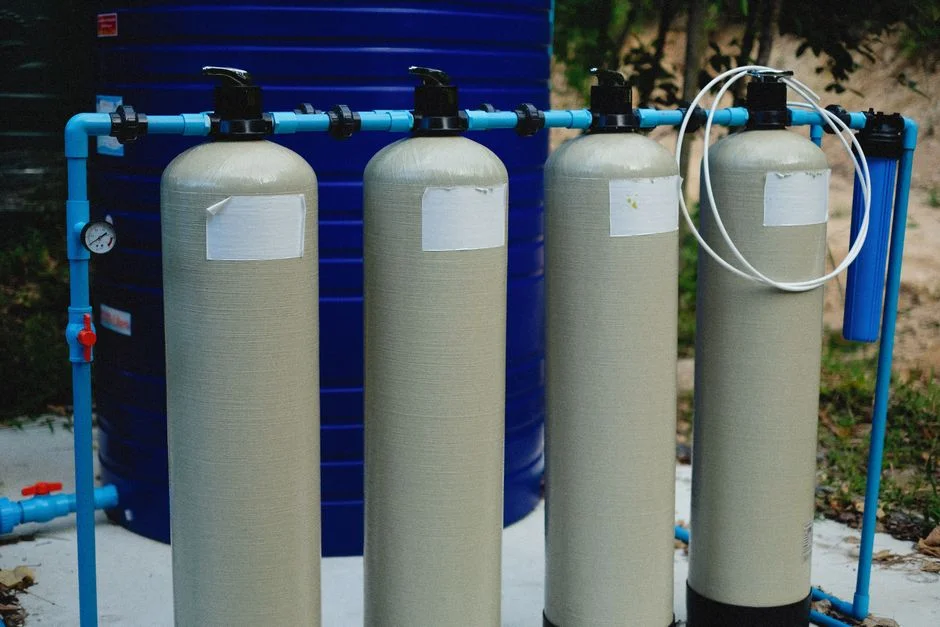
A useful RFQ should make every proposal answer the same engineering questions. Start with a project factsheet and require the bidder to restate its design basis:
- Design population and occupancy.
- Average dry-weather flow, peak flow and proposed operating basis.
- Monsoon equalization volume and the I&I allowance used.
- Influent BOD₅, TSS, ammonia, pH and septage contribution.
- Proposed discharge point or reuse duty.
Ask for effluent guarantees for BOD₅, TSS, pH and E. coli, together with test methods, commissioning tests, sampling points, monitoring frequency and documentation required for the applicable Nepal approvals. HydropureWater’s 2026 guide identifies the 2019 residential limits as BOD₅ ≤ 30 mg/L, TSS ≤ 50 mg/L, pH 6.5–8.5 and E. coli < 1,000 MPN/100 mL. If reuse is proposed, specify the additional quality and disinfection criteria rather than assuming the base discharge standard covers reuse.
Request civil and utility information: excavation depth, buried load rating, access covers, odor control, noise limits, power demand, backup-power arrangement, sludge-withdrawal route and maintenance clearances. For MBR bids, add membrane cleaning intervals, replacement provisions and integrity testing.
Require evidence of Nepal-relevant operation, local spare-parts support, support response time, operator training, PLC access permissions, alarms and remote-notification options. The technical package should include a mass and energy balance, complete P&ID, general arrangement, hydraulic profile, control narrative, commissioning plan, O&M manual, warranty exclusions and a deliverables schedule.
Evaluate bidders on a common matrix. A compliant proposal that uses the verified design basis should be compared more rigorously than a lower quotation based on lower equalization, omitted pretreatment or an unstated influent.
Frequently Asked Questions
What packaged sewage treatment plant is best for a housing development in Kathmandu?
Use a buried package A/O plant as the preliminary selection for about 50–500 households where a permitted discharge route exists and advanced reuse is not required. Select MBR where 200 or more households need near-reuse-quality effluent or the footprint saving is necessary. Confirm the choice through hydraulic testing, wastewater characterization, discharge permitting and a site-specific proposal.
How much should a packaged sewage treatment plant cost for a Kathmandu housing project?
Use the 2025 benchmarks only as an initial budget check. HydropureWater reported A/O rates of USD 8,000–12,000 per m³/h for 1–10 m³/h, USD 6,500–9,000 per m³/h for 10–50 m³/h, and USD 5,500–7,500 per m³/h for 50–80 m³/h; MBR was USD 14,000–18,000 per m³/h for 10–50 m³/h. Obtain a 2026 quote using the same design flow, equalization, installation, commissioning, monitoring and warranty scope for every bidder.
How do monsoon inflow and septic-tank supernatant change plant sizing?
Monsoon I&I can roughly double Kathmandu Valley hydraulic load between June and September, and HydropureWater’s 2026 guide recommends equalization at 1.5–2 times average dry-weather flow. Septic-tank supernatant is described as lower-strength, more ammoniacal and higher in suspended solids than fresh sewage, so request characterization and confirm nitrification and solids-separation duties before fixing the process.
What should be checked before selecting a sewage-treatment supplier in Nepal?
Check demonstrated Nepal operation, local spare-parts availability, support response time, operator training, PLC permissions, alarm and remote-notification functions, and references for comparable seasonal and septage conditions. Require testable guarantees, commissioning evidence, exclusions, a local service plan and clearly defined responsibilities for installation, permits, sludge disposal and monitoring.