Why Nepal's Residential Wastewater Challenge Is Different in 2026
More than 85% of urban Nepali households rely on onsite sanitation, and the few centralized treatment plants that exist are concentrated in Kathmandu — a 2026 review of Nepal's urban wastewater sector puts the ratio of wastewater treated to wastewater generated at a level the authors describe as "disconcertingly low" (ScienceDirect, 2026). That single statistic reframes the engineering task: a residential development outside the Kathmandu Valley sewer envelope is not connecting to a municipal interceptor; it is designing a standalone plant that must accept septic-tank effluent, cope with monsoon hydraulic peaks, and discharge to a soak pit, storm drain, or irrigation channel under the 2019 National Domestic Wastewater Effluent Standards. Generic STP design guides from South Asia assume a trunk sewer and 24/7 grid power; Nepal does not offer either in most peri-urban sites. The 2019 standards act as a de facto design specification for decentralized systems, and the regulatory gravity is real — enforcement sits under the Constitution of Nepal and the Nepal Standards (Certification Mark) Act, 2037 B.S. The consequence for engineers is that the 2019 effluent limits on BOD₅, TSS, pH, and E. coli become the binding design targets from day one. The same problem framing applies to Malaysian residential projects, where a comparable compliance chain is described in this residential wastewater treatment in Malaysia guide.
Nepal's 2019 Effluent Standards and the Legal Framework Behind Them
The Government of Nepal issued the National Standards for Domestic Wastewater Effluent in 2019 under the Nepal Standards (Certification Mark) Act, 2037 B.S., with the Constitution of Nepal as the overarching legal basis for enforcement. The standards set binding limits on BOD₅, TSS, pH, and E. coli for residential and municipal discharges, and they also publish tolerance limits for sugar, soap, dairy, pharmaceutical, cotton textile, wool processing, fermentation, and paper & pulp industries — relevant where a housing township sits next to a small factory cluster. For residential projects, the four governing parameters are the design targets, and the typical South Asian residential discharge envelope used as a working benchmark is BOD₅ ≤ 30 mg/L, TSS ≤ 50 mg/L, pH 6.5–8.5, and E. coli < 1,000 MPN/100 mL. These limits are regulator-defended rather than aspirational. The table below maps each regulated parameter to a typical residential design target and the unit process responsible for meeting it.
| Parameter | Typical residential discharge limit | Unit process that delivers compliance |
|---|---|---|
| BOD₅ | ≤ 30 mg/L | Biological stage (A/O contact oxidation or MBR) |
| TSS | ≤ 50 mg/L | Sedimentation or membrane filtration |
| pH | 6.5–8.5 | Equalization / on-site neutralization |
| E. coli | < 1,000 MPN/100 mL | Chlorine dioxide or chlorination contact tank |
Sizing a Residential Treatment Plant: Per-Capita Loading and Flow
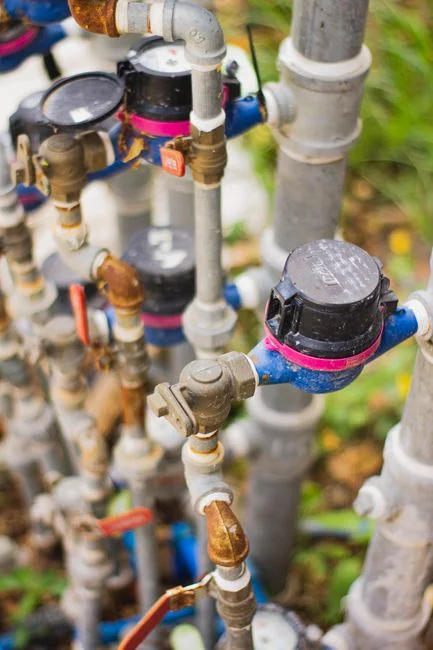
The standard South Asian residential design assumption is 100–150 L per capita per day of wastewater flow and 40–50 g per capita per day of BOD₅ loading, which together drive the hydraulic and organic load on any package plant. Worked through for a 100-household community at five persons per household, the design population is 500 people, the average dry-weather flow is 50–75 m³/day, and the BOD₅ load is 20–25 kg/day — numbers that map directly to a single skid- or buried-package-scale unit. Two Nepal-specific adjustments push the design upward. First, the monsoon-driven inflow and infiltration (I&I) in the Kathmandu Valley can roughly double hydraulic load between June and September, so the upstream equalization tank should be sized at 1.5–2× the average daily flow. Second, because over 85% of urban households use onsite sanitation (ScienceDirect, 2026), a residential plant must accept septic-tank supernatant — lower-strength, more ammoniacal, and higher in suspended solids than fresh sewage. That second point pushes the design toward biological treatment with nitrification, which is why a packaged buried package A/O sewage treatment plant is often the lowest-cost compliant option for sites in the 50–500 household band. Per-capita numbers should always be cross-checked against actual household metering where it exists, because Kathmandu Valley apartment blocks routinely exceed 150 L/person/day due to shared washing and toilet usage.
Three Process Options for Residential Communities: Septic Tank, Package A/O, and MBR
Three process trains cover the realistic design space for residential Nepal, with the choice driven by household count, reuse target, and site footprint. A septic tank with a two-chamber soak pit is the lowest-CAPEX option, suitable for under 50 households on a plot large enough for infiltration, but it cannot meet BOD₅ ≤ 30 mg/L consistently and poses a groundwater contamination risk. A package anoxic/aerobic (A/O) plant — an aerobic biological contact-oxidation stage with built-in sedimentation, typically buried to keep noise and footprint down and rated for 1–80 m³/day with fully automated operation — covers the 50–500 household band, hits the 2019 effluent limits when paired with chlorination, and runs unattended on intermittent power. A membrane bioreactor, whether as a full MBR membrane bioreactor system or built around a PVDF flat-sheet MBR membrane module, adds 0.1 µm submerged filtration to the activated-sludge stage, delivers near-reuse-quality effluent suitable for toilet-flush or landscape irrigation, and occupies roughly 60% of the footprint of an equivalent conventional plant. Order-of-magnitude CAPEX is roughly USD 50–80 per household for septic, USD 150–250 for package A/O, and USD 350–500 for MBR. The matrix below makes the trade-off explicit.
| Criterion | Septic tank + soak pit | Package A/O (WSZ series) | MBR (DF flat-sheet PVDF) |
|---|---|---|---|
| Household band | < 50 | 50–500 | 200+ with reuse |
| Effluent BOD₅ | Typically 50–100 mg/L | ≤ 30 mg/L with disinfection | < 10 mg/L |
| Footprint | Large (soak-pit area) | Compact, buried | ~60% of conventional |
| CAPEX order of magnitude | USD 50–80 / household | USD 150–250 / household | USD 350–500 / household |
| O&M frequency | Desludge every 2–3 years | Quarterly inspection | Membrane clean every 6–12 months |
| Operator required | No | No (automated) | Part-time, trained |
| Reuse potential | None | Limited (irrigation only) | Toilet flush, irrigation |
Pretreatment, Disinfection, and Sludge Handling for Residential Plants

Headworks, disinfection, and solids handling are the three unit operations that ensure a plant runs for years rather than clogging in months. A rotary mechanical bar screen with 5–10 mm aperture ahead of the biological stage protects pumps, diffusers, and membranes from rags, plastics, and grit. For disinfection, a chlorine dioxide generator producing ClO₂ on demand avoids the regulatory and transport problems of chlorine gas cylinders, achieves greater than 99% microbial kill on E. coli at typical 1–2 mg/L doses, and keeps residuals stable across the pH 6.5–8.5 band. For solids, waste activated sludge from residential plants producing more than 5 m³/day of waste sludge is typically dewatered with a plate-and-frame filter press to 18–22% dry solids for off-site disposal; below that threshold, open sludge drying beds remain the lowest-cost option. These components are essential for translating the 2019 standard into a working process train for plants above 50 households.
Decision Framework: Which System Fits Your Residential Project
The selection process relies on three rules that engineers and project managers can apply during initial planning. For under 50 households with no reuse target and sufficient land for a soak pit, specify a septic tank with a two-chamber soak pit, but plan an upgrade path for future biological treatment. For 50–500 households discharging to surface water, specify a WSZ-series package A/O plant with chlorination, sized for 1.5× average flow to absorb Kathmandu Valley monsoon I&I. For 200+ households with a water-reuse requirement, specify an MBR with PVDF flat-sheet membranes, and add chlorination on the reuse loop. Across all cases, septage logistics must be part of the design brief, as the 85% onsite-sanitation dependency (ScienceDirect, 2026) means desludging trucks and downstream treatment are the ultimate limiting factors. For projects where MBR is the chosen technology, the MBR installation and commissioning guide walks through the leak-test, aeration-start, and membrane-integrity steps that determine whether the plant hits its 2019 effluent targets.
Frequently Asked Questions
What is the minimum standard a residential wastewater treatment plant in Nepal must meet in 2026?
The 2019 National Domestic Wastewater Effluent Standards require residential discharge to meet BOD₅ ≤ 30 mg/L, TSS ≤ 50 mg/L, pH 6.5–8.5, and E. coli < 1,000 MPN/100 mL (Government of Nepal, 2019). The standards are issued under the Nepal Standards (Certification Mark) Act, 2037 B.S.
How many litres per person per day should a residential STP in Nepal be sized for?
Standard South Asian residential design assumes 100–150 L per capita per day of wastewater flow, with a per-capita BOD₅ load of 40–50 g/person/day. For a 100-household community at five persons, that yields 50–75 m³/day and 20–25 kg BOD₅/day.
What is the cheapest compliant treatment option for a small Nepali housing project?
A package A/O plant — anaerobic/aerobic biological contact oxidation with sedimentation and disinfection in a single buried unit — delivers compliance with the 2019 standards for roughly USD 150–250 per household at the 50–500 household scale, against USD 50–80 for a non-compliant septic + soak pit.
Can residential wastewater be reused for toilet flushing in Nepal?
Yes, an MBR with 0.1 µm PVDF flat-sheet membranes followed by chlorination typically produces effluent below 10 mg/L BOD₅, suitable for toilet-flush and landscape irrigation reuse. The same configuration cuts the plant footprint to roughly 60% of a conventional layout.
Why do Kathmandu Valley residential plants need oversized equalization?
Monsoon-driven inflow and infiltration in the Kathmandu Valley can roughly double hydraulic load between June and September, so equalization should be sized at 1.5–2× average dry-weather flow rather than the textbook 0.25×, otherwise the biological stage risks washout.