Why Residential Wastewater Treatment in Pakistan Is Now a 2026 Compliance Priority
Pakistan generates roughly 2,301 million m³ of municipal wastewater per year, yet less than 1% receives any treatment (Urbanet, 2022). Per-capita water availability has fallen from 5,600 m³ to about 1,000 m³, and approximately 80% of the population lacks access to clean drinking water, with the wastewater stream itself identified as a contamination pathway. For a typical Pakistani housing society, the engineering translation is straightforward: 150–200 L/person·day × ~5 persons/home × 1,000 homes ≈ 750–1,000 m³/day, with BOD 250–400 mg/L and COD 500–800 mg/L — typical South Asian residential loadings.
Those numbers are derived by adapting the ASTM E2717 Averages and Adjusted Averages Methods, which publish North American fixture-use parameters, to Pakistani occupancy: lower toilet flush volume, no in-sink garbage disposals, more trucked-in water in summer, and 5.2 persons average per household. With the macro problem reduced to a single project's daily flow, the regulatory question becomes operational rather than philosophical. Punjab EPA, Sindh EPA, KP EPA, and Balochistan EPA each administer the National Environmental Quality Standards (NEQS) under the Pakistan Environmental Protection Act, and any housing society above the NOC threshold (typically ≥10 kanals of developed area or ≥200,000 gallons/day discharge) must obtain an NOC and demonstrate ongoing compliance.
NEQS and Provincial Discharge Limits Every 2026 Project Must Hit
NEQS for municipal wastewater discharging to inland waters set BOD ≤ 80 mg/L, COD ≤ 150 mg/L, TSS ≤ 200 mg/L, oil & grease ≤ 10 mg/L, and pH 6–9. Provincial EPAs (Punjab, Sindh, KP, Balochistan) may impose tighter limits for housing societies reusing effluent for irrigation — typically fecal coliform ≤ 200 CFU/100 mL and turbidity ≤ 2 NTU for restricted landscape reuse. Compared with the EU Urban Wastewater Treatment Directive (91/271/EEC), Pakistani limits are less stringent on nitrogen and phosphorus, which means a well-designed A/O or MBR train can meet NEQS without a dedicated tertiary nutrient-removal step.
| Parameter | NEQS Inland Waters (mg/L) | Typical Provincial Reuse Limit | EU UWWD 91/271/EEC Equivalent |
|---|---|---|---|
| BOD | ≤ 80 | ≤ 30 | ≤ 25 (sensitive areas) |
| COD | ≤ 150 | ≤ 100 | ≤ 125 |
| TSS | ≤ 200 | ≤ 30 | ≤ 35 |
| Oil & Grease | ≤ 10 | ≤ 10 | — |
| pH | 6–9 | 6–9 | — |
| Fecal Coliform | — | ≤ 200 CFU/100 mL | ≤ 200 CFU/100 mL (reuse) |
The practical point for a developer or housing-society board: meeting NEQS is the minimum entry ticket, but DHA-, Bahria-, and Capital Development Authority-style master developers commonly set internal BOD ≤ 30 mg/L for landscape and park irrigation, which forces the selection of an MBR train rather than a conventional A/O or septic-plus-wetland scheme. Engineers should confirm the project's discharge destination (inland water body, irrigation reuse, or sewer offtake) before locking in technology.
Sizing a Residential Treatment Plant: Per-Capita Flow and Load
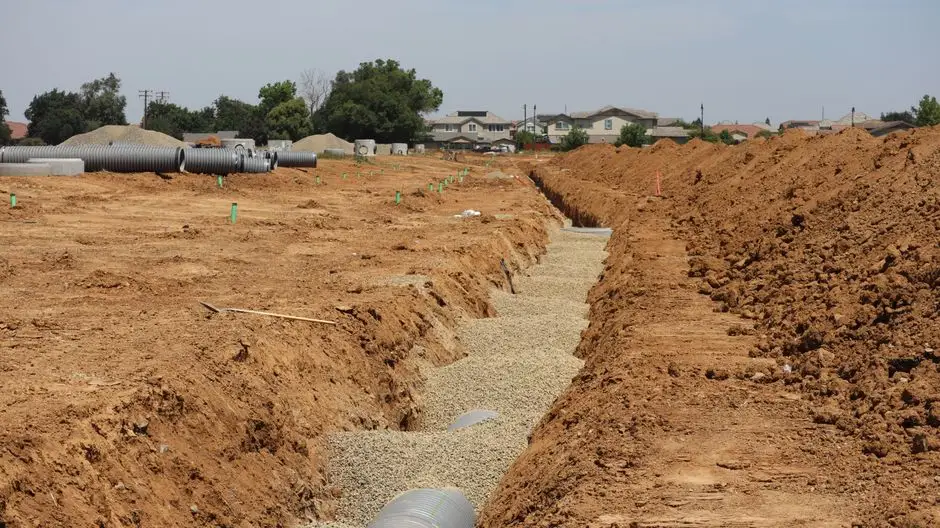
The per-capita flow band for Pakistani housing societies sits at 150–200 L/person·day, with middle-income developments trending to 130–160 L/person·day and upper-income gated communities with lawn irrigation reaching 200–250 L/person·day. Applying the ASTM E2717 Adjusted Averages Method to local occupancy (5.2 persons per household) and multi-unit blocks yields the 150–200 L/person·day baseline; the standard explicitly states its parameters "reflect North American averages and would need to be modified if used elsewhere," so the Pakistani engineer should adjust downward for lower flush volumes and adjust upward for summer water-truck top-ups.
Peak hydraulic design uses a peak factor of 2.5–3.0× average daily flow. A WSZ buried A/O package plant handles peak shock loading through an upstream equalization chamber that buffers diurnal swings; a septic-plus-wetland system relies on the inherent buffering of the septic tank but loses working volume during extended peaks. For a 1,000-home society at 1,000 m³/day average and 3.0× peaking, the hydraulic design point is 3,000 m³/day, or 125 m³/h — well within the 1–80 m³/h operating range cited for the WSZ buried A/O package sewage treatment plant when multiple trains are paralleled.
| Society Type | Homes | Persons/Home | L/person·day | Avg Flow (m³/day) | Peak 3.0× (m³/day) |
|---|---|---|---|---|---|
| Mid-income, 500 homes | 500 | 5.2 | 150 | 390 | 1,170 |
| Mid-income, 1,000 homes | 1,000 | 5.2 | 160 | 832 | 2,496 |
| Upper-income gated, 500 homes | 500 | 5.5 | 220 | 605 | 1,815 |
| Upper-income gated, 1,000 homes | 1,000 | 5.5 | 220 | 1,210 | 3,630 |
Three Process Trains That Work for Pakistani Housing Societies
Three realistic process trains dominate the 2026 Pakistani residential market. Train 1 is a septic tank feeding a subsurface constructed wetland; Train 2 is a buried A/O package plant (WSZ) with chlorination; Train 3 is an MBR membrane bioreactor package plant. Each maps to a different site constraint, power reliability profile, and reuse intent.
The septic-plus-wetland train offers the lowest CAPEX and near-zero power consumption but is land-hungry (5–8 m² per person equivalent) and typically achieves only 50–60% BOD removal, which is generally inadequate for NEQS unless followed by a polishing step. The WSZ buried A/O package sewage treatment plant combines anoxic/oxic contact oxidation, sedimentation, and chlorination in a single buried unit covering 1–80 m³/h, fully automated with no resident operator, and 60–70% smaller in land footprint than the septic-plus-wetland train; BOD removal is typically 85–92% and COD removal 80–88%, comfortably inside NEQS. The MBR installation and commissioning engineering guide describes the higher-end alternative, the MBR membrane bioreactor system, which uses a submerged 0.1 μm PVDF membrane to deliver effluent turbidity under 1 NTU and reuse-grade BOD ≤ 10 mg/L, TSS ≤ 5 mg/L at roughly 60% of the conventional activated-sludge footprint.
| Parameter | Septic + Constructed Wetland | WSZ Buried A/O | MBR Package Plant |
|---|---|---|---|
| Land footprint | 5–8 m²/PE | 1–2 m²/PE | 0.5–1 m²/PE |
| Power consumption | ~0 (gravity) | 0.3–0.5 kWh/m³ | 0.6–0.9 kWh/m³ |
| BOD removal | 50–60% | 85–92% | 95–99% |
| Effluent BOD | ~100–150 mg/L | ≤ 30–50 mg/L | ≤ 5–10 mg/L |
| Operator required | Periodic desludging | None (automated) | 0.5 FTE (membrane care) |
| Reuse suitability | None (polish needed) | Restricted irrigation | Unrestricted irrigation |
Decision rules: select WSZ for land-constrained, grid-reliable, NEQS-only sites where the discharge is to an inland drain. Select MBR when the society needs reuse-grade effluent on a tight footprint, has internal reuse mandates, or is located in a water-stressed zone where every cubic metre counts. Select septic-plus-wetland only when land is cheap, power is intermittent, and the developer can absorb the lower BOD removal with a polishing reed bed and downstream disinfection. The neighbouring Malaysia market, summarized in the Malaysia residential wastewater treatment 2026 guide, runs through a similar decision matrix with comparable technology choices, which is useful as a regional reference point.
Pretreatment and Disinfection: The Headworks Pakistan Sites Get Wrong
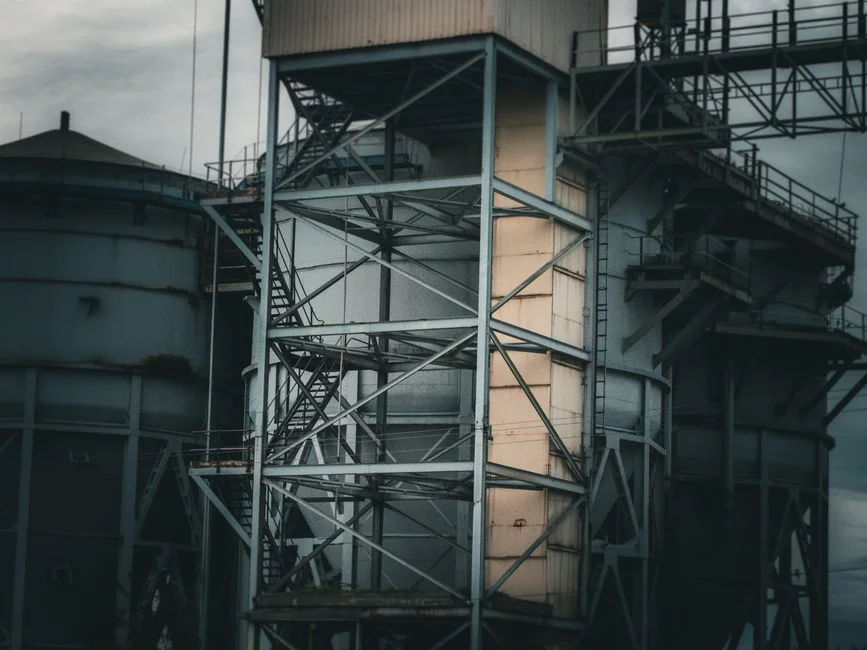
Field audits of municipal and housing-society STPs across Punjab and Sindh consistently identify the headworks as the most common design omission — fine screening and disinfection are skipped or undersized, and the downstream biological stage absorbs the resulting rags, grit, and pathogen load. The first defensive layer is a GX series rotary mechanical bar screen at 3–6 mm aperture to remove rags, plastics, and grit before the biological stage; the cleaner feed directly translates into lower sludge yield and more stable nitrification. For disinfection, an on-site chlorine dioxide generator in the 50–20,000 g/h capacity range delivers residual disinfection without the chlorination byproducts and cylinder-handling hazards of chlorine gas in a dense community.
For WSZ trains, a lamella clarifier for tertiary polishing ahead of chlorination operates at 20–40 m/h surface loading rate (a 30% reduction in chemical demand for the same residual versus conventional settling) and provides a protective buffer against TSS excursions. For MBR trains, the sub-micron membrane itself achieves >99.9% bacterial and viral log reduction, so disinfection can be reduced to a residual-maintenance dose rather than a primary kill step. Pretreatment and disinfection are not optional line items — they are the equipment that prevents NOC revocation when provincial EPA inspectors walk the site.
Sludge Handling: The 2026 Compliance Gap Most Societies Miss
A residential STP that meets NEQS on the water side can still be shut down if the sludge line is unmanaged. Provincial EPA inspections now routinely check for stored sludge, leak paths, and disposal records. A typical residential plant at 200 mg/L influent TSS produces roughly 0.5–0.8 kg of dry solids per m³ of wastewater treated, so a 1,000 m³/day society generates 500–800 kg DS/day, or about 2,000–3,200 kg wet cake/day at 22–25% dryness. The standard dewatering unit for this scale is a plate-and-frame filter press for sludge dewatering in the 1–500 m² filtration area range, available in manual, hydraulic, and PLC-controlled variants — manual for a 500-home society, PLC for a 10,000-home or multi-train site.
The dewatered cake at 22–25% DS can be hauled to a provincial-EPA-approved landfill or, where permitted, land-applied on non-food crops. Looking ahead, the Urbanet analysis identifies 20 million tonnes/year of solid waste with 45% organic content as a co-digestion substrate that could in principle make a WWTP energy-self-sufficient; this is a 2027+ roadmap item, not a 2026 procurement decision, but it is the direction provincial sustainability units are signalling. For Q4 2026 compliance, the defensible move is a properly sized filter press and a documented sludge disposal chain.
2026 CAPEX and OPEX Bands in PKR for a 1,000-Home Society
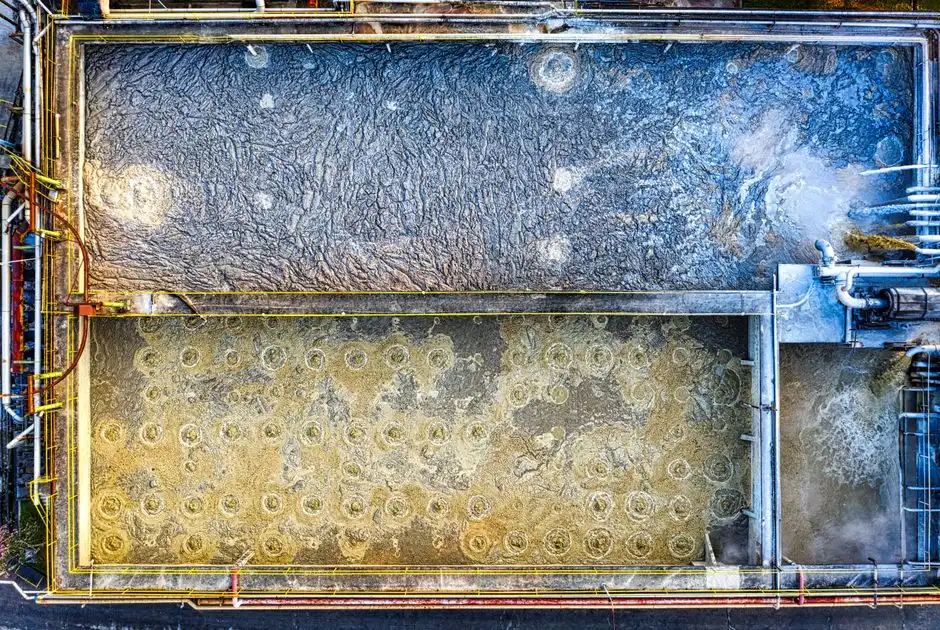
For a 1,000-home society at approximately 1,000 m³/day average flow, the engineering-estimate CAPEX bands in 2026 PKR are: septic-plus-constructed-wetland PKR 8–15 million, WSZ buried A/O package plant PKR 25–45 million, and MBR package plant PKR 55–90 million. These are process-scope estimates and the reader should request a firm quote. OPEX tracks differently: WSZ runs at PKR 25–40 per m³ treated (power, chlorine, sludge hauling), MBR at PKR 45–70 per m³ (with membrane replacement amortized over a 5–7 year cycle), and septic-plus-wetland at PKR 8–12 per m³ (dominated by periodic desludging). Over a 5–7 year lifecycle, the CAPEX premium for MBR is recovered only when the developer captures reuse revenue or avoids freshwater purchase for landscape irrigation.
| Cost Element | Septic + Wetland | WSZ Buried A/O | MBR Package |
|---|---|---|---|
| CAPEX (PKR M, 1,000 m³/day) | 8–15 | 25–45 | 55–90 |
| OPEX (PKR/m³) | 8–12 | 25–40 | 45–70 |
| Land area (m²) | 5,000–8,000 | 1,000–2,000 | 500–1,000 |
| Delivery + commissioning | 20–30 weeks (site-built) | 8–13 weeks (skid) | 10–16 weeks (skid) |
The WSZ buried A/O package sewage treatment plant ships as a factory-tested skid: 6–8 weeks for fabrication and FAT, 3–4 weeks for on-site civil works and installation, 1 week for commissioning, and 2 weeks for NOC submission to the provincial EPA — a 90-day end-to-end delivery narrative for the standard 1,000-home scope. On the import side, package plants from China to Pakistan attract ~17% GST plus ~5% customs duty; CIF Karachi or Lahore pricing from a single vendor absorbs these into one delivered number, removing the line-item ambiguity that complicates board-level approvals. The OPEX data aligns with the regional DAF system operating cost 2026 OPEX breakdown for tertiary equipment, which engineers can use as a sanity check on chemical and power assumptions.
Frequently Asked Questions
What flow rate per person should a Pakistani housing society design for?
Use 150–200 L/person·day for the average daily flow, with a peak factor of 2.5–3.0× for hydraulic design. Worked example: 1,000 homes × 5.2 persons/home × 160 L/person·day = 832 m³/day average, peaking at ~2,500 m³/day at the 3.0× factor. Upper-income gated communities with lawn irrigation can run 200–250 L/person·day.
Which is cheaper, MBR or A/O package plant?
CAPEX for a 1,000 m³/day WSZ A/O skid runs PKR 25–45 million versus PKR 55–90 million for an MBR of the same capacity — roughly 2× premium for MBR. OPEX is PKR 25–40/m³ for WSZ and PKR 45–70/m³ for MBR (membrane replacement amortized). The lifecycle crossover sits at 5–7 years and only closes if reuse revenue or freshwater avoidance is captured.
Does treated residential wastewater need chlorination in Pakistan?
Yes for NEQS compliance and for any society discharging to an inland water body or reusing for irrigation. An on-site chlorine dioxide generator is the safer community choice versus chlorine gas, with no cylinder handling and lower regulated disinfection-byproduct formation.
Can treated effluent be reused for landscape irrigation?
Yes, under a provincial EPA reuse permit. Typical reuse limits are BOD ≤ 30 mg/L, TSS ≤ 30 mg/L, fecal coliform ≤ 200 CFU/100 mL, and turbidity ≤ 2 NTU — these targets are reliably met only by an MBR train or an A/O train with downstream filtration and disinfection polishing.
How long does it take to install a packaged sewage plant in Pakistan?
For a 1,000-home WSZ skid: 6–8 weeks factory fabrication and FAT, 3–4 weeks on-site civil works and installation, 1 week commissioning, and 2 weeks for provincial EPA NOC submission — an end-to-end 90-day path. MBR trains run 10–16 weeks because of the additional membrane skid integration and clean-in-place commissioning.
Related Equipment
- MBR membrane bioreactor system — specifications, capacity range, and technical data