Start with the Oslo site's treatment obligation
The binding discharge route determines whether a packaged sewage treatment plant is required at all. For an Oslo housing development, the first decision is not whether to buy an A/O or MBR unit; it is whether wastewater will enter the municipal sewer, receive decentralized treatment, or follow a hybrid arrangement. Obtain the current Norwegian wastewater discharge permit and written confirmation from the municipality or receiving utility before ordering equipment. Veolia states that the Fuglevik upgrade in the Oslo Fjord is intended to meet stricter Norwegian nitrogen-removal requirements associated with a growing population. That is a regional planning signal, not a package-plant performance specification. Fuglevik’s reported 99% microplastic and particle removal, at least 70% nitrogen removal with expansion to over 85%, and 93% phosphorus removal describe a large municipal upgrade using proprietary technologies; they cannot be transferred to a housing-development package.
| Site decision | Information to establish | Equipment consequence |
|---|---|---|
| Discharge to municipal sewer | Connection requirements, receiving sewer capacity, pretreatment required and utility approval | The package may be unnecessary, or limited to local pretreatment |
| Discharge to surface water | Permit conditions, receiving-water assessment and specified pretreatment or final treatment | Process capacity and performance guarantees must follow the permit |
| Decentralized treatment | Site ownership, maintenance access, sludge route and monitoring obligations | Select a package only after the complete treatment train is defined |
| Hybrid arrangement | Division of responsibility between package plant and receiving utility | Define interfaces, sampling points and performance acceptance |
Decentralized treatment starts with a route-and-obligation register rather than a process catalogue. For each proposed discharge point, record the destination, permit authority, applicable limits, connection conditions and who will operate the facility. The approach is consistent with the site-specific A/O versus MBR selection for housing developments: treatment architecture must follow the confirmed discharge obligation.
Build the design basis from development flow data
A package plant should be sized from the wastewater expected through every occupancy phase, not from a nominal treatment-capacity label. Begin with the design population and occupancy schedule. Establish average daily wastewater flow, peak-hour and peak-day contributions, groundwater ingress, laundry flows, commercial kitchen discharges and any industrial tenant wastewater. Keep hydraulic capacity separate from pollutant capacity: a plant may have sufficient flow capacity while lacking biological capacity for the expected organic, nitrogen or phosphorus load.
| Design-basis item | Buyer input required | Supplier response required |
|---|---|---|
| Flow | Design population, occupancy phasing, average and peak wastewater flows, groundwater ingress | Stated design-flow basis, hydraulic calculation and duty allocation |
| Wastewater quality | Domestic wastewater characteristics plus kitchen, laundry or industrial contributions | Pollutant-loading basis and biological-capacity calculation |
| Reliability | Required redundancy, maintenance access and treatment during phased startup | Duty/standby configuration, redundancy philosophy and failure response |
| Residuals | Sludge acceptance, storage and withdrawal requirements | Sludge-production assumptions, storage volume and removal schedule |
| Physical constraints | Available area, access, burial depth and utilities | Equipment dimensions, civil interface, electrical load and lifting/maintenance access |
Ask each bidder to show the calculation behind its offer, including how hydraulic and biological duties are allocated and what happens when one treatment element is unavailable. The scale reference is regional, not a sizing analogue: COWI reports that Fuglevik was designed for wastewater from approximately 50,000 people and annually treats between 4.8 and 5.0 million m³. The same COWI project page describes the new facility as serving approximately 84,000 people, while Veolia describes the upgrade as serving approximately 85,000 people. These municipal-scale figures show the order of difference between a large treatment works and a housing package.
Construction-phase flows, interim sanitary arrangements and early housing occupancy can change both hydraulic loading and operating continuity. Record these conditions in the supplier’s design brief and link them to the commissioning and handover plan. For adjacent project planning, the housing package-plant design-basis method provides a sequence for separating flow, pollutant load, residuals and phased operation.
Compare integrated A/O and MBR package plants
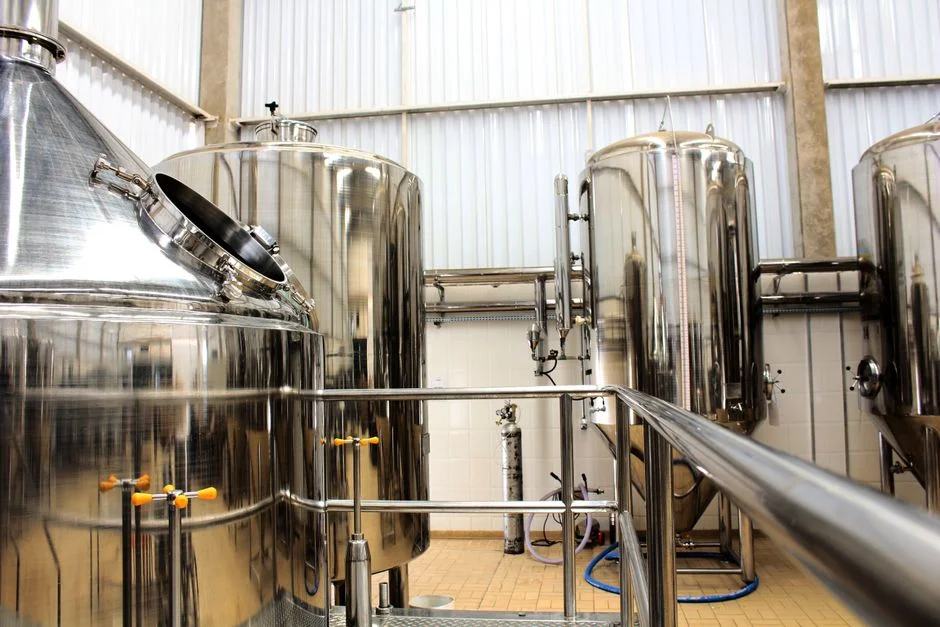
A/O and MBR should be compared by the treatment task they perform, not by process label alone. An integrated A/O package combines anoxic and aerobic biological contact oxidation, sedimentation and disinfection in one buried unit. HydropureWater states that its WSZ Series handles 1–80 m³/h, is fully automated and requires no operator. That architecture is relevant where conventional biological treatment, solids separation and disinfection satisfy the permit, with simpler operation and a buried installation favored.
| Selection factor | Integrated A/O package | Integrated MBR |
|---|---|---|
| Treatment train | Anoxic/aerobic biological contact oxidation, sedimentation and disinfection | Activated-sludge treatment with submerged PVDF membrane filtration |
| Stated capacity | 1–80 m³/h | 10–2,000 m³/day |
| Solids separation | Clarification is integral to the treatment route | Membrane filtration below 1 μm |
| Footprint | Buried installation can place landscaping above the unit | Supplier states a 60% smaller footprint than conventional systems; total installed area must still be verified |
| Primary selection logic | Use where conventional biological treatment and disinfection are sufficient | Use where low suspended solids, compactness or advanced separation has clear value |
| Owner attention | Automated package operation | Require membrane maintenance, replacement and fouling-control provisions |
HydropureWater describes the integrated MBR wastewater treatment system as combining activated sludge with submerged PVDF membranes, with filtration below 1 μm. The product states a 60% smaller footprint than conventional systems, but that claim alone does not settle the site comparison. Require a plan showing the treatment package, access routes, sludge handling, electrical equipment, controls and bypass provisions. For the alternative, the integrated A/O package sewage treatment plant can be installed below grade with landscaping above or mounted on a trailer for mobile deployment; siting and future relocation enter the evaluation.
Do not use Fuglevik to fill package-plant performance gaps. Veolia’s municipal results combine several proprietary technologies and resource-recovery systems. A development supplier must demonstrate its own process against the site’s permitted nitrogen, phosphorus, solids and disinfection requirements. Select A/O where the confirmed treatment objectives favor a simpler conventional train; select MBR where low solids, compactness or advanced separation provides enough value to justify additional process and maintenance complexity.
Design for Oslo's cold climate and year-round reliability
Cold-climate compliance must be specified equipment by equipment. Ask the supplier to identify exposed piping, valves, membranes, blowers, controls, instrumentation and access routes, then define the protection proposed for each. The local engineer should confirm the design winter temperature used in the calculation. Heating or temperature-control requirements must then be addressed for the selected biological process, membrane operation, disinfection and any storage or piping component where the supplier’s process criteria require it.
Reliability also depends on access and support. Require a maintenance-access plan covering media or membrane replacement, sludge withdrawal, odor control, electrical supply, inspections and emergency bypass arrangements. A below-grade installation may save usable surface area, but it can also constrain lifting, removal and operator access; the proposal should show how major components enter and leave the site.
COWI reports that Fuglevik’s life-cycle assessments compared 15 treatment technologies and found that operating processes can have greater climate and environmental impacts over time than construction. That finding supports asking for lifecycle operating evidence. Require proposals to define remote monitoring, alarm escalation, spare-parts strategy, service response and owner training. The wastewater treatment fault-diagnosis guide is useful for developing the alarm, inspection and escalation requirements that should be tested before handover.
Address nutrient removal, sludge and resource recovery
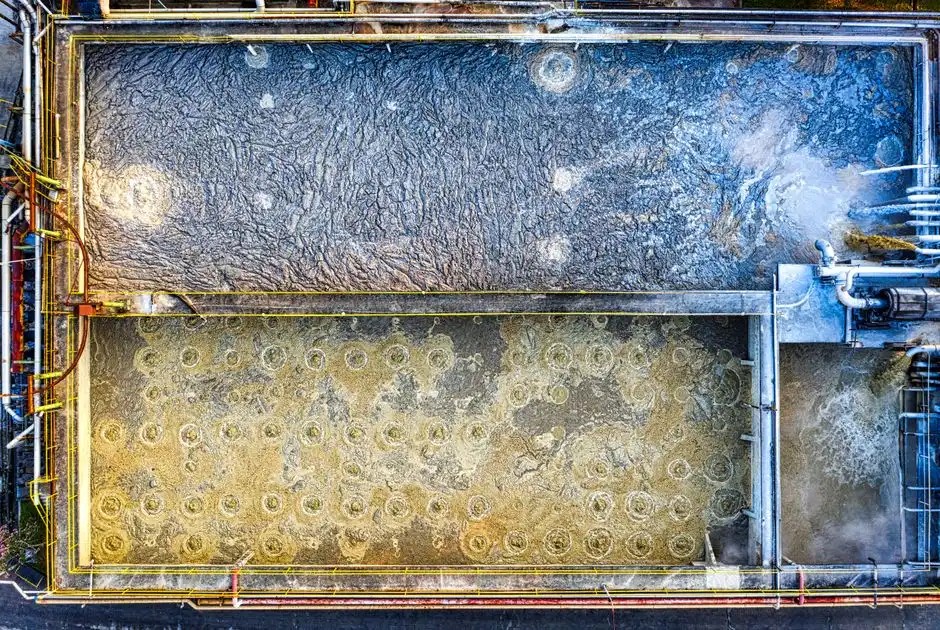
Nutrient removal must be demonstrated against the site’s permit, not inferred from the names “A/O” or “MBR.” Ask the process designer to show how the proposed train treats nitrogen and phosphorus under the expected loading, including the operating conditions and sludge-management provisions needed to sustain performance. This is particularly important where the Oslo Fjord context points toward tighter nutrient control but the development’s actual receiving route remains unconfirmed.
Resolve the residual-waste route before selecting equipment. Determine whether municipal works will accept the plant’s sludge, whether dewatering is required on site, or whether another disposal route applies. A plate-and-frame filter press may form part of a broader dewatering and logistics solution, but it should not be added merely because sludge will be produced. Include storage, withdrawal frequency, transport, disposal or acceptance cost, and operator workload in the whole-life comparison.
COWI reports that Fuglevik aims to reduce sludge transport, minimize chemical use and recover phosphorus from sludge. It also states that sludge can be used to produce biogas for internal energy use. These municipal resource-recovery objectives are not automatically proportionate to a package serving one housing development. Where biogas recovery is proposed, require a separate feasibility, gas-balance and safety assessment covering production, storage, utilization, ventilation and emergency control. Compare total energy use, chemicals, sludge handling, operator attention, replacement parts and disposal—not purchase price alone.
Compare supplier proposals on a common basis
Comparable quotations require the same project definition from every bidder. Require each proposal to identify the design population, flow basis, wastewater characteristics, treatment objectives, receiving route, permit conditions and ownership boundaries. Then compare guaranteed process performance, process drawings, civil and electrical requirements, installation sequence, commissioning tests and owner training against the same scope.
| Procurement check | Evidence to request | Reason it matters |
|---|---|---|
| Design basis | Population, flows, peaks, phasing, pollutant loads and permit basis | Confirms that all offers solve the same problem |
| Performance | Guaranteed effluent and process-performance criteria | Links the commercial offer to an enforceable duty |
| Installation | General arrangement, equipment dimensions, civil interfaces and utilities | Tests whether the package fits the Oslo site |
| Operations | Maintenance intervals, membrane replacement basis, sludge plan, spares and service support | Exposes long-term staffing and supply-chain requirements |
| Lifecycle | Energy, chemical and residual-disposal estimates alongside capital cost | Allows operating impacts to be compared consistently |
| References | Comparable cold-climate housing installations using the offered configuration | Tests the actual proposal rather than a generic product family |
COWI’s comparison of 15 technologies supports asking suppliers to quantify operating impacts, not merely construction materials or initial capital cost. The same approach should cover remote support, response time, training and consumables. For a broader commercial comparison, the packaged sewage treatment plant buyer’s guide illustrates how technical scope and commercial terms can be brought onto a common basis.
Frequently Asked Questions
What size packaged sewage treatment plant does an Oslo housing development need?
Capacity must be based on average and peak flows, wastewater characteristics, permit targets, occupancy phasing and the required redundancy strategy. A supplier’s headline capacity does not establish hydraulic or biological adequacy. Request the design-flow calculation, pollutant-loading basis, duty allocation and commissioning criteria.
Should an Oslo housing development choose A/O or MBR?
Choose A/O when conventional biological treatment, sedimentation and disinfection meet the confirmed objectives and simpler operation is the priority. Choose MBR when low suspended solids, compact installation or advanced separation has clear value. Compare total site area, operator attention, replacement needs and whole-life cost rather than treating either process as universally superior.
What should the packaged sewage treatment plant quotation include for budget approval?
Request a consistently scoped quotation covering process capacity, civil works, controls, sludge handling, winterization, installation, commissioning, training and service support. No site-specific price can be stated without the flow basis, treatment objectives, site constraints and supplier scope. Compare capital and lifecycle operating estimates using the same exclusions and assumptions.
Who confirms the discharge route and compliance requirements?
Obtain the binding route and conditions in writing from the