Why a Packaged Plant, and Why Yerevan in 2026
Armenia inherited 22 Soviet-era wastewater treatment plants, of which only the Yerevan facility remains in service, and even that one runs partial mechanical treatment only (GWP, 2025). Between 2013 and 2014, five replacement plants were commissioned, but lack of funding meant only mechanical structures were built, so biological effluent quality is still the exception rather than the rule (GWP, 2025).
For a new housing estate, discharging raw or mechanically screened sewage to the environment is no longer defensible, and waiting for a municipal biological upgrade is not a realistic programme. The Yerevan context sharpens the case further. The Ararat Valley around the capital has a high groundwater table and a documented risk of aquifer contamination from uncontrolled domestic discharge, so the GEF/Parakar project explicitly tracked the avoided load at about 12 t of nitrogen per year and 6 t of phosphorus per year once a treatment system replaced direct land disposal (GEF, undated rural project brief). On the receiving end, Veolia Jur runs 8 wastewater treatment stations and 1,759 km of sewerage in Yerevan, with the reconstructed Aeratsia station positioned for deep mechanical processing of the capital and adjacent settlements (Veolia Jur; yerevan.am, 2019). A factory-built packaged plant — buried underground or containerized — is the only route that lets a private developer hit a biological standard in the time it takes to build the housing, which is why a package wastewater treatment plant supplier guide approach is the right starting point.
Packaged Plant Categories That Fit a Housing Estate
The practical universe for a Yerevan housing estate narrows to two factory-built architectures: the underground A/O biological contact-oxidation unit, and the containerized or skid-mounted MBR package. The WSZ underground A/O package plant combines anoxic and aerobic contact oxidation, sedimentation and disinfection in a single buried tank with a 1–80 m³/h envelope, runs fully automatically without a dedicated operator, and can either be buried with landscaping above or trailer-mounted (HydropureWater WSZ product specification). The HydropureWater MBR package uses activated sludge with a submerged PVDF membrane rated below 1 μm, occupies roughly 60% of the footprint of a conventional activated-sludge plant, and covers 10–2,000 m³/day, producing near-reuse effluent (HydropureWater MBR product specification). The decision between them is driven by discharge route, not by brand preference. A mid-size Yerevan block whose treated effluent will go to the Veolia Jur sewer or to subsurface irrigation on the development's own land is a natural fit for the WSZ A/O unit: the biology is sufficient, the unit disappears into the site, and civil works stay shallow. A larger estate, a gated community, or any project where the developer wants reuse for landscape irrigation, car washing or toilet flushing should step up to the MBR package, because only an MBR-class effluent reliably meets the suspended-solids and disinfection targets for unrestricted reuse. Rural pond-based systems of the type piloted at Parakar — applicable only to small communities of about 10,000 with vacant land for free-surface ponds (GEF) — are not appropriate for an urban infill site in Yerevan. The Veolia Jur Aeratsia station is sized for deep mechanical processing of the capital and adjacent settlements (Veolia Jur), so any plant discharging to that grid must deliver biological-grade effluent, not just screened flow.
| Parameter | WSZ Underground A/O Package | Containerized / Skid MBR Package |
|---|---|---|
| Core process | Anoxic + aerobic contact oxidation, sedimentation, disinfection | Activated sludge + submerged PVDF membrane (< 1 μm) |
| Capacity envelope | 1–80 m³/h | 10–2,000 m³/day |
| Footprint vs. conventional | Compact, fully buried | ~60% of conventional activated-sludge footprint |
| Installation | Buried with landscaping above, or trailer-mounted | Containerized skid, surface or partial burial |
| Operator requirement | Fully automatic, no dedicated operator | Automatic, periodic membrane servicing |
| Effluent quality | Biological standard, suitable for sewer discharge or subsurface irrigation | Near-reuse, suitable for unrestricted landscape irrigation |
| Best-fit Yerevan scenario | Mid-size housing block, Veolia Jur sewer discharge, on-site subsurface irrigation | Larger estate, gated community, reuse for irrigation or toilet flushing |
Sizing a Packaged STP for a Yerevan Housing Development
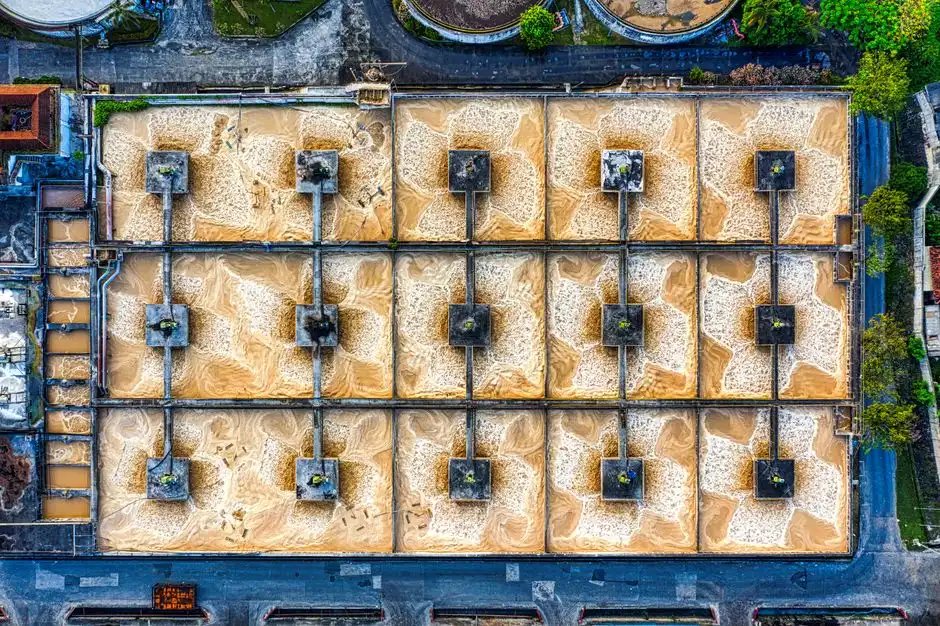
Sizing a packaged plant is a five-step technical exercise. Step 1 — population basis. Start from the design population (number of units multiplied by expected occupancy), then convert to an average dry-weather flow using a per-capita water-use figure. The supplied research does not quote an Armenian per-capita sewage flow, so this number must be confirmed with Veolia Jur or the design water utility for the specific district; do not substitute a generic textbook figure without that confirmation. Step 2 — peaking. Convert the average dry-weather flow to a peak hydraulic flow and a peak organic load using a peaking factor appropriate to the development size; the exact peaking factor is another project-specific input the engineer must justify in the design report. Step 3 — load envelope. Check that the design BOD, COD, TSS, total nitrogen and total phosphorus loads fall inside the chosen package's envelope. Nitrogen and phosphorus are not optional in this geography: the GEF/Parakar brief quantifies the avoided load at about 12 t N/yr and 6 t P/yr once treatment replaces uncontrolled discharge (GEF), so any plant that does not nitrify and remove phosphorus is leaving that benefit on the table. Step 4 — match the envelope. For typical residential blocks the WSZ A/O unit sits inside its 1–80 m³/h envelope (HydropureWater WSZ product specification); for projects where reuse drives the design, select the MBR package inside its 10–2,000 m³/day envelope (HydropureWater MBR product specification). Step 5 — footprint and burial. Confirm the site can host a buried WSZ unit with landscaping above, or a containerized MBR skid with crane access for membrane replacement, and confirm the burial depth against the local water-table position because the Ararat Valley groundwater is high (GEF). For a more detailed worked example of the hydraulic side, the containerized MBR STP sizing walkthrough covers the same logic in a different municipal context.
| Sizing Step | Input Required | Source / Action |
|---|---|---|
| 1. Population basis | Design population (units × occupancy), per-capita flow | Per-capita flow to be confirmed with Veolia Jur / local utility; no Armenian figure in the supplied research |
| 2. Peaking | Peak hydraulic and peak organic load factor | Project-specific; engineer to justify in the design report |
| 3. Load envelope | BOD, COD, TSS, TN, TP loads | Compare against WSZ or MBR envelope; N and P removal driven by Ararat Valley groundwater risk (GEF: ~12 t N/yr, ~6 t P/yr avoided at Parakar) |
| 4. Match envelope | Selected package | WSZ A/O at 1–80 m³/h, or MBR at 10–2,000 m³/day (HydropureWater product specifications) |
| 5. Footprint and burial | Site dimensions, burial depth, water table | Confirm against Ararat Valley high groundwater table (GEF) |
Discharge, Reuse, and Permitting Considerations
The single biggest design driver in Yerevan is what happens to the treated effluent, which dictates the technology choice, the disinfection step and the permit pathway. Route A is discharge to the Veolia Jur sewer. The developer needs a connection approval from Veolia Jur, confirmation of the pretreatment the sewer will accept, and a plant designed to a biological standard so the load reaching the 8 Veolia Jur treatment stations and the reconstructed Aeratsia deep-mechanical plant stays within the network's operating envelope (Veolia Jur). Route B is on-site subsurface irrigation. This is the right answer for Ararat Valley sites where the groundwater table is high and where the rationale demonstrated at Parakar — preventing about 12 t N/yr and 6 t P/yr from reaching the aquifer (GEF) — applies directly. A WSZ A/O underground unit with disinfection is sized for this duty, and the buried configuration protects the irrigation zone from surface cross-contamination. Route C is reuse for landscape irrigation or toilet flushing, and only MBR-class effluent with a submerged membrane rated below 1 μm (HydropureWater MBR product specification) reliably meets the suspended-solids and disinfection targets for unrestricted reuse. Reuse also typically requires an additional polishing step, with options such as a UV sterilizer or a chlorine dioxide generator for residual disinfection. Any reuse or discharge scenario in Armenia still requires the developer to engage the Ministry of Nature Protection and the Ministry of Territorial Administration, both of which were represented at the GWP stakeholder workshop on wastewater technologies (GWP).
Procurement Checklist and Cost Logic for 2026
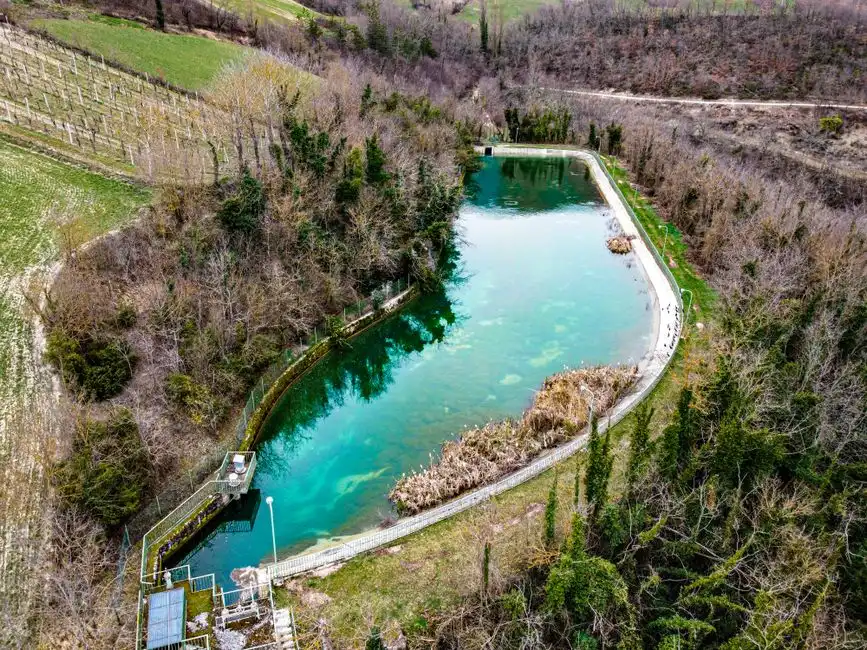
The Parakar master-plan figure of USD 1.5 million (GEF) is a municipal-scale pond-system benchmark and should not be read as a packaged-plant price. The cost drivers that actually move a packaged-plant bid are capacity in m³/day, the effluent-quality target (mechanical-only versus biological versus MBR reuse), and the civil works (burial depth, land-take, water-table management), not the pond CAPEX. The specification checklist a developer should take into the bid meeting is: (1) population and flow basis with the per-capita figure confirmed by the utility; (2) influent load basis (BOD, COD, TSS, TN, TP); (3) effluent targets tied to the chosen discharge route; (4) footprint and burial depth against the high Ararat Valley water table (GEF); (5) power supply and standby; (6) a Veolia Jur acceptance letter for sewer discharge; (7) operator training and an O&M manual; and (8) a sludge handling plan, because both A/O and MBR packages generate waste activated sludge that has to be dewatered. For a small housing estate, a HydropureWater plate-and-frame filter press is the right scale of sludge dewatering — simpler than a full mechanical belt line and sized for the volumes a packaged plant produces. For the broader bid logic in another municipal context, the effluent treatment plant buyer's guide is a useful reference.
Frequently Asked Questions
What per-capita flow should we use to size a packaged STP for a Yerevan housing estate?
The supplied research does not publish an Armenian per-capita sewage flow. The correct action is to request the design per-capita flow from Veolia Jur for the specific Yerevan district, because Veolia Jur operates the 1,759 km Yerevan sewerage network under the leasing treaty with the RA Government (yerevan.am, 2019) and holds the local flow data. Apply that figure to the design population and then add a project-specific peaking factor in the design report.
Should we choose the WSZ underground A/O package or the MBR package?
Choose the WSZ A/O unit (1–80 m³/h) when the treated effluent goes to the Veolia Jur sewer or to on-site subsurface irrigation, and choose the MBR package (10–2,000 m³/day) when the project requires reuse for landscape irrigation, car washing or toilet flushing, because only the MBR's submerged PVDF membrane rated below 1 μm reliably meets unrestricted-reuse targets (HydropureWater product specifications). The Ararat Valley groundwater context (GEF) makes nitrogen and phosphorus removal mandatory in either case, which both packages deliver.
What does Veolia Jur require before accepting our treated effluent into the Yerevan sewer?
Veolia Jur runs 8 wastewater treatment stations plus the reconstructed Aeratsia station for deep mechanical processing of the capital and adjacent settlements (Veolia Jur), so the practical requirement is a packaged plant that produces biological-grade effluent, a confirmed connection point and pretreatment compatibility with the sewer. The