
Which Rules Control a Hallie-Area Sewer Discharge?
Indirect sewer discharges are controlled through Clean Water Act section 307(b) and 40 CFR Part 403, while direct discharges to surface water follow the NPDES program under section 402. EPA states that industrial-user obligations arise from permits or equivalent control mechanisms issued by POTWs, together with applicable regulatory requirements. For mining and metals operations, 40 CFR Part 437 may apply to ore mining and dressing, and 40 CFR Part 433 may apply to metal finishing, but those categorical standards do not displace the receiving POTW’s requirements.
EPA’s 134-page Local Limits Development Guidance (published 2021-06-25) explains that prohibited discharges, categorical standards, and POTW local limits may all apply. Obtain the receiving POTW’s current sewer-use ordinance, the industrial-user permit or equivalent control mechanism, applicable categorical subcategory, monitoring and reporting requirements, and any state permit conditions governing separate surface-water outfalls. The research does not establish Hallie’s receiving POTW, limits, sampling schedule, or enforcement process, so those items must be confirmed directly rather than inferred.
| Compliance layer | What it controls | Evidence to obtain before design |
|---|---|---|
| Federal pretreatment requirements | Prohibited discharges and applicable categorical standards under 40 CFR Part 403 | Industrial classification and applicable subcategory |
| POTW local limits | Site-specific numeric or narrative limits protecting the POTW, its sludge, and receiving waters | Current sewer-use ordinance and permit |
| Permit and ordinance procedures | Monitoring, reporting, sampling, slug-load controls, and enforcement | Industrial-user control mechanism and monitoring plan |
| Separate direct discharges | NPDES obligations for surface-water outfalls | State-issued permit and applicable conditions |
EPA’s local-limits page identifies the industrial user’s point-of-connection discharge to the POTW collection system as the location where POTW local limits apply. That location should anchor the design basis. The broader mining wastewater characterization and local-limit workflow illustrates how document review and sampling should precede equipment selection.
Characterize Every Wastewater Stream Before Sizing Equipment
A mining operation’s average discharge can hide the stream that determines equipment capacity or treatment chemistry. Characterize mine drainage, contact water, process water, tailings or settling-pumpage, wash-down, stormwater, and dewatering streams separately before designing a blended treatment train. The observed mining-wastewater profile summarized in the supplied 2026 research includes pH of 2–4, total suspended solids in the hundreds to several thousand mg/L, dissolved Pb, Cu, Zn, Cd, Ni, and As, and potentially elevated sulfate and TDS. Those values are screening references, not Hallie limits or design influents.
For each stream, document average flow, sustained peak discharge, batch-dump and clean-out events, event duration, pH, metals, TSS, oil and grease, conductivity, and relevant process-reagent residuals. EPA’s Local Limits Development Guidance identifies three sampling contexts: at the POTW, in the collection system, and at industrial users. Industrial-user data are the practical basis for sizing because they reveal the stream before it reaches the sewer. No Hallie flow or influent data appear in the supplied research, so equalization and treatment capacity must remain open until representative site data are available.
| Wastewater source | Condition to investigate | Design implication |
|---|---|---|
| Acid mine drainage and contact water | Low pH, acidity, suspended solids, and metal content | Equalization, pH control, precipitation, and solids separation |
| Ore-processing water | Residual flotation, leach, or other process reagents and variable metals | Stream-specific chemistry controls and reagent management |
| Tailings and settling-pumpage | Fine solids, settled metals, and process-reagent carryover | Solids removal, sludge volume, and filtrate management |
| Wash-down and stormwater | Episodic solids, oil, and variable pH | Segregation, event storage, and potentially different treatment |
| Dewatering discharge | Variable geology-dependent metal loading | Separate characterization before it is blended |
Segregation matters because acidic drainage, reagent-bearing process water, and cleaner stormwater may require different chemical and solids-removal conditions. A combined sample can conceal an acidic slug or high-solids event. See biological treatment comparison for mining wastewater for the broader process context; however, biological treatment does not replace site-specific separation and compliance verification.
Build a Treatment Train from the Actual Discharge Limit
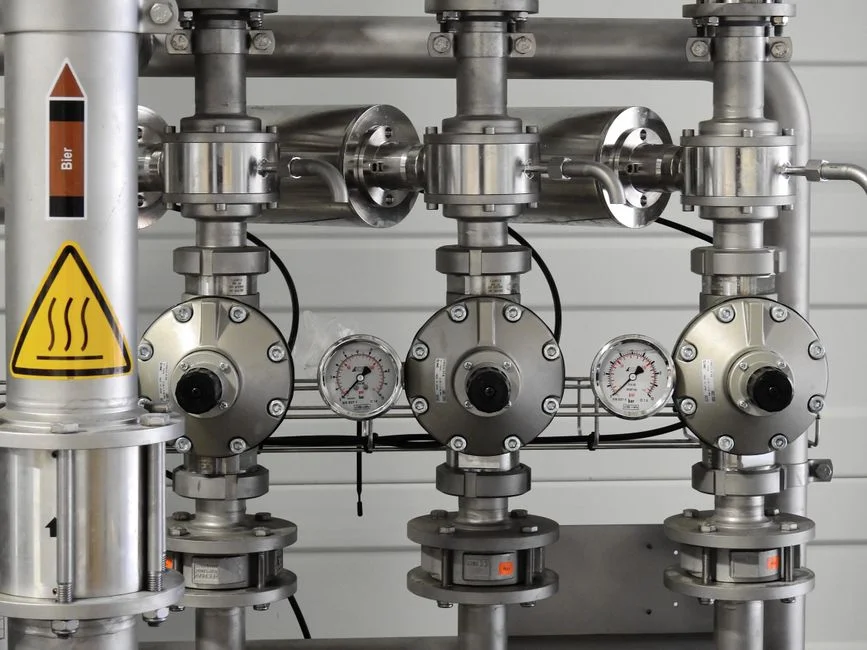
A compliant treatment train is a chain of controls derived from the governing discharge limit, not a shopping list of equipment. Begin with equalization to buffer variable flows and batch slugs. Size the hydraulic envelope from documented peak discharge and event duration, not average flow alone. Then adjust pH before metal precipitation; the operating pH must come from site chemistry and jar testing rather than a generic target. The supplied 2026 mining treatment research identifies hydroxide precipitation as the baseline and sulfide polishing as an option where the verified limit requires it. It reports hydroxide residuals of 0.5–2.0 mg/L versus sulfide residuals of 0.01–0.05 mg/L for Cu, Zn, Cd, and Ni, while noting higher reagent cost and H₂S-control requirements.
Coagulation and flocculation should form particles compatible with the next separation step. Choose DAF when oil, grease, buoyant solids, or floatable fines dominate; choose lamella clarification for dense metal-hydroxide sludge. The supplied comparison gives lamella surface loading of 20–40 m/h, but the value is a design reference, not proof that a particular Hallie flow will perform. A lamella clarifier for metal-hydroxide sludge should be checked against representative settling and sludge-handling data.
- Equalize: buffer sustained peaks and batch releases, and identify the available holding time for upset response.
- Adjust pH: establish the precipitation chemistry through testing and controlled reagent feed.
- Precipitate and flocculate: select hydroxide treatment or evaluate sulfide polishing against the actual limit.
- Separate solids: match DAF or lamella clarification to the dominant stream characteristic.
- Filter and polish: use multi-media filtration as a solids barrier before a membrane or as a polishing step; UF or RO is justified only by the governing limit or reuse objective.
- Monitor and handle residuals: record flow, pH, conductivity, chemical feed, sludge transfer, filtrate return, and alarms.
The PLC-controlled automatic chemical dosing system should be linked to the plant control narrative rather than treated as an isolated skid. A DAF machine is appropriate where floatable material governs; a multi-media filtration system protects downstream membranes when required. The supplied research recommends specifying filtered-water quality, including an SDI target where relevant, rather than relying on inlet turbidity alone.
Clarifier or DAF sludge needs a defined dewatering and disposal route. The research reports plate-and-frame filter-press cake at 25–35% dry solids. Evaluate a plate-frame filter press against generated sludge volume, target cake dryness, filtrate-return location, and disposal pathway. Clarified water is not the only compliance checkpoint.
Select Equipment by Stream Condition and Compliance Risk
Equipment selection must follow the stream’s physical and chemical properties and the required point-of-connection performance. The supplied catalog data for DAF covers 4–300 m³/h across 13 standard models; that is a product range, not evidence that Hallie flows fall within it. Lamella clarification is associated with 20–40 m/h surface loading and dense metal-hydroxide sludge in the supplied comparison. Require representative testing before relying on either performance reference.
| Decision | Select when | Require before acceptance |
|---|---|---|
| DAF versus lamella | DAF for oil-bearing or floatable solids; lamella for dense metal-hydroxide sludge | Site-chemistry testing, hydraulic basis, solids carryover data, and sludge-volume estimate |
| Multi-media filtration | Clarifier polishing or membrane protection is required | Required filtered-water quality and an SDI or other protection target where relevant |
| UF or RO | The governing limit or reuse objective requires membrane polishing | Upstream chemistry, recovery basis, pretreatment criteria, and concentrate route |
| Sludge dewatering | Separated sludge requires handling or disposal | Generated sludge volume, cake target, filtrate return, and disposal pathway |
For membrane systems, the supplied research recommends a UF water treatment system or industrial RO purification system only when required and when upstream chemistry will protect the membranes. Specify a recovery curve rather than accepting a generic nameplate value.
Ask each supplier for mining or aggregate references at comparable flow and chemistry, and require performance evidence rather than a catalogue statement. Also require one integrated control narrative linking flow, pH, chemical feed, separation, filtrate return, sludge transfer, and alarm response. A bid that prices equipment but omits those interfaces does not provide a comparable installation scope.
Verify Compliance Before the First Discharge
Compliance is demonstrated by operating evidence linked to each applicable requirement, not by equipment acceptance alone. EPA’s Local Limits Development Guidance (2021-06-25) states that permits or equivalent control mechanisms determine an indirect discharger’s obligations; the supplied research provides no verified Hallie monitoring frequency or acceptance test, so both must be obtained from the controlling permit, sewer-use ordinance, and POTW.
- Build a traceability matrix: connect every categorical requirement, prohibited discharge, and local limit to its treatment step, sample point, analytical method, monitoring frequency, and responsible operator.
- Perform startup and stabilization testing: verify pH control, solids carryover, metal removal, flow handling, chemical feed, and filtrate or sludge-return streams before accepting the full discharge.
- Use representative samples: do not rely only on favorable grab samples; characterize operating conditions and relevant batch events.
- Retain evidence: keep influent and effluent results, flow records, calibration records, chemical-use data, bypass alarms, and corrective-action logs.
- Test contingencies: define responses to an upset, high-strength batch, power loss, chemical-delivery failure, or exceedance, including safe holding or diversion without compromising the POTW.
The point-of-connection discharge should be the final compliance checkpoint, but upstream data must remain available to diagnose excursions. Use the DAF versus clarifier decision for mining wastewater and the related mining clarification comparison as engineering references, not substitutes for Hallie permit conditions or acceptance testing.
What Should a Hallie-Area Vendor Quote Include?
A comparable quotation requires the regulatory basis, site wastewater data, design assumptions, and operating obligations—not simply equipment capacity and price. Issue the POTW’s current sewer-use ordinance, the industrial-user permit or equivalent control mechanism, and the applicable categorical subcategory with the request for proposal. Provide separate average and sustained peak flows, batch-event information, and representative analyses for every wastewater stream.
| Vendor submission | Required content | Buyer check |
|---|---|---|
| Process design | Process flow diagram, mass balance, equipment sizing basis, and stream-by-stream treatment logic | Does every assumption trace to site data or a stated source? |
| Equipment comparison | DAF versus lamella and filtration versus UF or RO, where technically credible | Is the selected option tied to chemistry and compliance risk? |
| Chemicals and controls | Consumption estimate, dosing philosophy, flow, pH and conductivity monitoring, alarms, and interlocks | Are reagent demands tied to jar-test results? |
| Residuals | Sludge volume, dewatering duty, filtrate return, and disposal route | Is there a complete mass balance for solids and liquid? |
| Compliance | Sampling plan, startup protocol, acceptance criteria, O&M assumptions, and recordkeeping plan | Do criteria match the actual permit and ordinance? |
| Commercial | Itemized equipment, freight assumptions, site work, commissioning, exclusions, warranty, and schedule | Can competing scopes be compared on the same basis? |
Request verified mining or aggregate references at comparable flow and water chemistry. The supplied research contains no complete-system price range, Hallie flow, or supplier lead time. A defensible quotation therefore requires documented flows, chemistry, governing limits, selected unit operations, site conditions, and supplier scheduling; a generic budget number would conceal those assumptions.
Frequently Asked Questions
Do federal categorical standards prove that a Hallie-area plant can discharge to sewer?
No. The applicable categorical standard, POTW local limit, prohibited-discharge rule, industrial-user permit, and sewer-use ordinance may all apply. EPA’s Local Limits Development Guidance (2021-06-25) makes this hierarchy explicit, while its local-limits guidance page states that POTW local limits apply at the industrial user’s point-of-connection discharge. Obtain the controlling documents before treating any treatment claim as proof of compliance.
What should a buyer request when budgeting a complete mining pretreatment system?
Request an itemized quotation tied to average and sustained peak flows, each stream’s representative analysis, batch events, governing limits, selected unit operations, chemical consumption, site work, commissioning, and residual handling. The supplied research provides no complete-system price range, so a defensible budget cannot be stated without those inputs. Also request stated exclusions and delivery or commissioning assumptions so that quotes can be compared on the same scope.
How should a buyer select and size treatment equipment?
Select equipment from stream chemistry, physical contaminants, peak discharge, event duration, required effluent quality, and sludge handling. For example, the supplied research reports a DAF product range of 4–300 m³/h across 13 models and lamella surface loading of 20–40 m/h; neither is a Hallie sizing conclusion. Ask the supplier to show how its proposed capacity and hydraulic loading follow from site data, then require representative testing.
Can one combined sample represent all mining wastewater at the site?
No. A combined sample can conceal an acidic slug, reagent-bearing process water, or high-solids event. Characterize mine drainage, contact water, process water, tailings or settling-pumpage, wash-down, stormwater, and dewatering streams separately, then document how they will be segregated and combined at the point-of-connection discharge.