Which treatment should a Cave City factory choose?
Cave City mining and metals factories should choose DAF when wastewater contains floatable or flocculable material, including oils, FOG, colloidal solids, or conditioned metal-bearing precipitates. They should favor conventional or lamella clarification for dense, readily settleable mineral fines, tailings, grit, and metallurgical sludge. Neither device removes dissolved metals by itself: capture depends on pH control, coagulation, flocculation, and separation of the resulting solids. For mixed streams, test pretreatment and treatment sequencing before buying both mechanisms. Base the final decision on representative characterization, peak and batch flows, chemical conditioning, effluent targets, and the downstream sludge route—not average flow or a generic model table.
Disolved air flotation pressurizes water, dissolves air under pressure, and releases microbubbles into the wastewater. The bubbles attach to suspended or conditioned particles, which rise and are removed by a skimmer. Heavier material falls into a bottom collection zone and is withdrawn separately (HydropureWater, 2026 factory guide). A gravity clarifier instead relies on settleable particles moving to a bottom collection zone; a lamella clarifier adds inclined plates to increase effective settling area within a compact structure.
The selection rule is therefore conditional: favor DAF for a floatable or flocculable load, favor conventional or lamella clarification for heavy solids that settle readily, and consider a combined arrangement only when representative testing establishes distinct treatment duties. A unit called a “flotation clarifier” is still a DAF device, not a gravity-settling clarifier. Procurement documents should identify the separation mechanism rather than rely on the product category. Industrial DAF equipment and a lamella clarifier for heavy settleable solids should be compared against the same wastewater and targets.
| Selection basis | Preferred primary mechanism | Required proof |
|---|---|---|
| Oil, FOG, buoyant fines, or conditioned precipitate | DAF | Representative floatability and conditioned solids test |
| Dense mineral fines, grit, tailings, or metallurgical sludge | Conventional or lamella clarification | Particle density, settleability, and solids-loading basis |
| Substantial heavy solids plus floatable contaminants | Pretreatment followed by a justified treatment train | Stream-specific pilot or test data |
| Dissolved metals | Chemical treatment plus separation and polishing | Total and dissolved metal results under defined pH and dose conditions |
Compare the contaminant fractions each unit can remove
DAF and clarification should be matched to the fraction that must be removed, not to the most convenient equipment name. DAF is aligned with suspended solids, FOG, oils, colloidal material, and conditioned metal-bearing precipitates. Its performance depends strongly on coagulation and flocculation: the resulting floc must contact bubbles effectively. Conventional and lamella clarification are aligned with dense mineral fines, tailings, grit, and metallurgical sludge that settle readily. Lamella plates increase effective settling area, but they do not change the gravity-separation mechanism.
Fluence’s mining application guidance, reproduced in the HydropureWater 2026 selection article, states that DAF is not well suited to high levels of heavier, non-floating particles such as silt and clay. That boundary condition must be checked against particle-size and settleability data. A high TSS result alone does not distinguish a floatable precipitate from dense tailings fines.
Heavy material such as sand and gravel may be better removed before either primary separator. Hydrocyclones can pre-remove high-density solids, while mechanical screening can protect downstream equipment from gross solids. The mechanical bar screen option for gross-solids protection should be evaluated where the waste stream contains debris likely to damage pumps, recycle equipment, or the selected separator.
| Wastewater fraction | DAF role | Clarification role | Procurement action |
|---|---|---|---|
| Oils, greases, and floatable material | Strong primary match after conditioning | Not the primary mechanism | Measure free oil, emulsions, temperature, and FOG |
| Colloidal solids and buoyant floc | Target after effective conditioning | Limited without a suitable settling response | Run jar tests and assess overflow quality |
| Metal-bearing precipitate | Capture conditioned particulate metals | Capture only the fraction that settles | Separate total metals from dissolved metals |
| Dense fines, tailings, grit, and metallurgical sludge | Poor fit at high non-floating loads | Primary match when settleable | Obtain particle-size, density, and settleability data |
| Heavy sand and gravel | Prefer upstream removal | Prefer upstream removal | Evaluate hydrocyclone or screening pretreatment |
| Dissolved metals | No direct removal | No direct removal | Define pH, precipitation, separation, and polishing |
For a mixed stream with substantial sand and significant FOG, upstream solids removal may protect both mechanisms and produce more useful operating data. A clarifier can precede DAF when a defined colloidal or buoyant fraction remains after bulk solids separation. However, redundant equipment should not be purchased without representative testing, a measurable polishing duty, and acceptance criteria. The broader DAF versus clarifier selection guide provides additional mechanism detail, but the bid comparison must remain tied to the factory’s own streams.
Build the treatment train around the actual wastewater
The equipment is one unit operation in a treatment train, not the treatment objective. A defensible sequence is: characterize each source; equalize flow and loads; remove gross solids where needed; adjust pH and condition solids; select the primary separator; polish or recycle as required; then dewater, store, and dispose of the sludge. This sequence keeps pretreatment, chemical demand, hydraulic variation, and downstream handling visible in the same design.
Chemical conditioning should be integrated into controls, not added later as an accessory. A PLC-controlled coagulant and flocculant dosing skid should coordinate with pH, flow, level, and equipment operation. Clearwater’s conditioning arrangement uses 15–45 seconds of flash mix in flocculation tubes or longer contact in impeller mix tanks; the actual dose and contact time should be established empirically through jar testing (Clearwater guidance reproduced in the HydropureWater 2026 article).
The Logan, Utah study reported an optimum aluminum sulfate dose of 30 mg/L for algae and phosphorus removal in lagoon effluent (Utah State University, 2011). That result is not a mining-water default. It demonstrates the underlying procurement rule: chemical dose and contact time belong to the wastewater and objective being tested.
| Train stage | Scope to define | Bid evidence |
|---|---|---|
| Characterization and equalization | Source-by-source flow, batch events, load variation | Measured profile and equalization duty |
| Pretreatment | Gross solids, pH, equalization | Removal objective and downstream protection basis |
| Conditioning | Coagulant, flocculant, pH control, contact time | Jar-test protocol and dose-control strategy |
| Primary separation | DAF, conventional clarification, or lamella clarification | Design duty and performance criteria |
| Polishing or reuse | Filtration, membranes, or other required treatment | Downstream quality boundary |
| Sludge route | Removal, storage, dewatering, and disposal | Expected solids volume, moisture, and handling sequence |
Primary separation does not automatically produce reuse-quality water. A DAF or clarifier effluent may still require filtration or membrane treatment before process-water recycling, discharge, or another specified use. Include that polishing boundary in the RFQ rather than allowing the separator supplier to imply that all reuse requirements are met. The ultrafiltration boundary for process-water recycling should be evaluated where the reuse objective requires it.
The Missouri Department of Natural Resources guidance supports evaluating process alternatives, documenting assumptions, assessing each unit operation, and reviewing the complete treatment system rather than equipment in isolation. Its wastewater guidance also cautions that locally adopted rules may affect design, making site-specific confirmation necessary.
Size DAF and clarifiers from peak conditions and mass loading
Average flow cannot size either device reliably. Require source-by-source flow, peak flow, batch-discharge profiles, stormwater contribution, equalization data, TSS, particle-size distribution, settleability, solids density where available, oils and greases, temperature, pH, alkalinity, total and dissolved metals, and chemistry variability. The supplier should then show how those inputs affect hydraulic capacity, mass loading, chemical demand, skimmer or underflow capacity, and sludge handling.
The HydropureWater 2026 research presents DAF hydraulic loading of 2–6 gpm/ft² and an air-to-solids ratio of 0.01–0.05 ml of air per mg of solids as design guidance. These are not universal guarantees. Require the supplier to state its design basis, identify the applied conditions, and verify the basis against the actual wastewater.
For variable mining flows, evaluate peak solids loading in lb/hr as well as hydraulic flow. The cited research identifies peak solids loading as critical to DAF skimmer and sludge-handling capacity. A unit that meets average hydraulic flow can still be overwhelmed by a batch discharge or high-solids event.
For clarification, request the design surface-loading rate, effective settling area, flow-distribution method, sludge collection, and withdrawal arrangement. The high-efficiency lamella clarifier specification lists 20–40 m/h and up to 30% lower chemical consumption, but those are product-specific values that require project verification. The DAF catalog covers 4–300 m³/h across 13 models; Clearwater’s April 27, 2026 publication distinguishes FPAC, FPBC, and FPHF configurations by flow and solids duty. None of these ranges establishes suitability for a specific Cave City stream.
| Design input | DAF screening requirement | Clarifier screening requirement |
|---|---|---|
| Hydraulic profile | Peak, batch, and equalized flow | Peak, batch, and equalized flow |
| Solids duty | Peak mass loading and skimmer capacity | Surface loading, settling area, and underflow capacity |
| Conditioning | Defined coagulant, flocculant, pH, and contact assumptions | Defined flocculation or conditioning assumptions |
| Feed characteristics | Floatability, particle behavior, oils, colloids | Density, particle size, and settleability |
| Acceptance test | Same wastewater, sampling plan, test method, and target as clarifier | Same wastewater, sampling plan, test method, and target as DAF |
The comparison rule is strict: screen DAF and gravity clarification against the same wastewater, chemical-conditioning assumptions, hydraulic profile, sampling plan, and performance criteria. If a supplier evaluates only its preferred process, require a written explanation of how the alternative was screened and rejected.
Compare installed cost, operating cost, and sludge handling
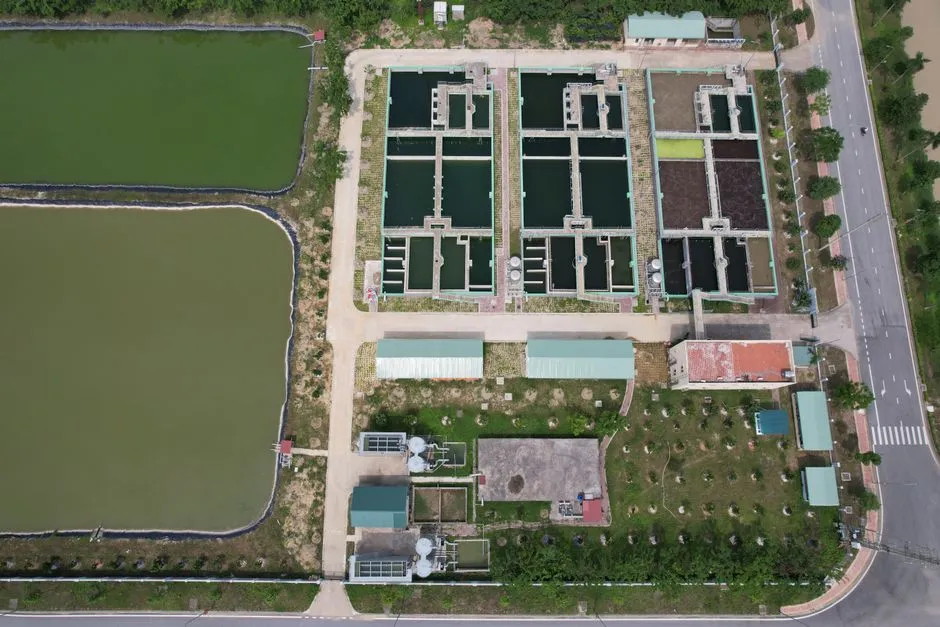
Purchasing teams should compare complete treatment trains, not tank purchase prices. Require separate pricing or explicit assumptions for pretreatment, pH control, chemical dosing, controls, utilities, installation, maintenance, labor, sludge removal, dewatering, storage, and disposal. A separator bid that leaves these items undefined is not comparable.
The research contains conflicting capital-cost evidence. One comparison places industrial DAF capital cost at $80,000–$350,000 and conventional circular clarifiers at $50,000–$200,000, while another places DAF capital expenditure at $150,000 to over $1.5 million (HydropureWater research). These conflicting ranges demonstrate the need for a site-specific quotation; they should not be presented as a reliable 2026 market range.
The same research reports DAF energy use of 0.5–1.5 kWh/m³ and says clarifier civil construction can increase total project cost by 30%–50% compared with modular DAF systems. These claims require project-specific validation because materials, excavation, civil work, transfer pumping, controls, and site conditions can change the result.
| Cost or ownership category | Information required in each bid |
|---|---|
| Capital equipment and installation | Tank, separation area, recycle, transfer pumps, controls, foundations, utilities, and site work |
| Chemicals and conditioning | Assumed dose, chemical consumption, control strategy, and sensitivity to actual water chemistry |
| Operations | Energy demand, labor, maintenance, spare parts, and service scope |
| Sludge | Expected volume and moisture, storage time, dewatering, transport, and disposal |
| Risk allowance | Batch events, chemical variability, corrosion, fouling, and off-design operation |
DAF sludge is skimmed and normally moves to dewatering, while lamella clarification uses sludge recirculation. Compare storage time, moisture content, dewatering method, disposal frequency, and existing equipment with the selected separator. The sludge filter press for the selected treatment train ranges from 1 m² to 500 m² and offers manual, hydraulic, or fully automatic PLC-controlled operation. Do not treat potentially thicker conditioned DAF sludge as a guaranteed dewatering saving; require expected sludge characteristics and a defined disposal route.
Set Cave City compliance and vendor-bid requirements
Federal pretreatment requirements provide context for mining and metal-bearing waste streams, including EPA categorical standards, but they do not establish an unverified Cave City discharge limit. The buyer must identify the site’s actual permit, receiving sewer or treatment facility, applicable state rules, local ordinances, and any permit-specific monitoring and performance conditions. A bid should not claim that equipment “meets all limits” without naming the governing requirement and the wastewater condition tested.
Define each acceptance criterion by wastewater source, chemical doses, flow, temperature, test method, sampling point, and sampling frequency. Require every bid to identify the tank, effective separation area, solids-handling arrangement, recycle system, controls and instrumentation, utilities, materials, installation inputs, maintenance tasks, spare parts, and service scope.
For DAF, request the recycle system, saturation method, skimmer capacity, sludge-discharge arrangement, conditioning strategy, air-to-solids design basis, and contingency for batch events. For lamella clarification, request the plate arrangement, effective settling area, sludge recirculation, bottom collection, withdrawal design, and expected underflow characteristics. These requirements prevent a seller from substituting product labels for an engineering scope.
| Bid item | DAF response | Clarifier response |
|---|---|---|
| Separation principle | Microbubble flotation and skimming | Gravity settling and bottom withdrawal |
| Design basis | Hydraulic loading, mass loading, air-to-solids, conditioning | Surface loading, effective area, settling, collection |
| Solids handling | Skimmer capacity, sludge trough, discharge method | Bottom collection, recirculation, withdrawal |
| Controls | Recycle, saturation, chemical feed, level, alarms | Flow distribution, sludge withdrawal, level, alarms |
| Compliance evidence | Comparable wastewater and defined acceptance test | Comparable wastewater and defined acceptance test |
| Materials | Corrosion rationale tied to chemistry and temperature | Corrosion rationale tied to chemistry and temperature |
Request material options and the underlying corrosion rationale. Clearwater’s April 27, 2026 publication identifies 304SS as its standard DAF material, with 316SS, polypropylene, and other options available on request. Do not accept a material list without a design basis tied to the actual chemistry and temperature. Also request site-specific test plans, pilot results, or comparable references; case studies are evidence, not guarantees, and every commitment should identify the wastewater, doses, flow, temperature, test method, sampling point, and acceptance criterion on which it depends.
Use a five-step equipment decision path
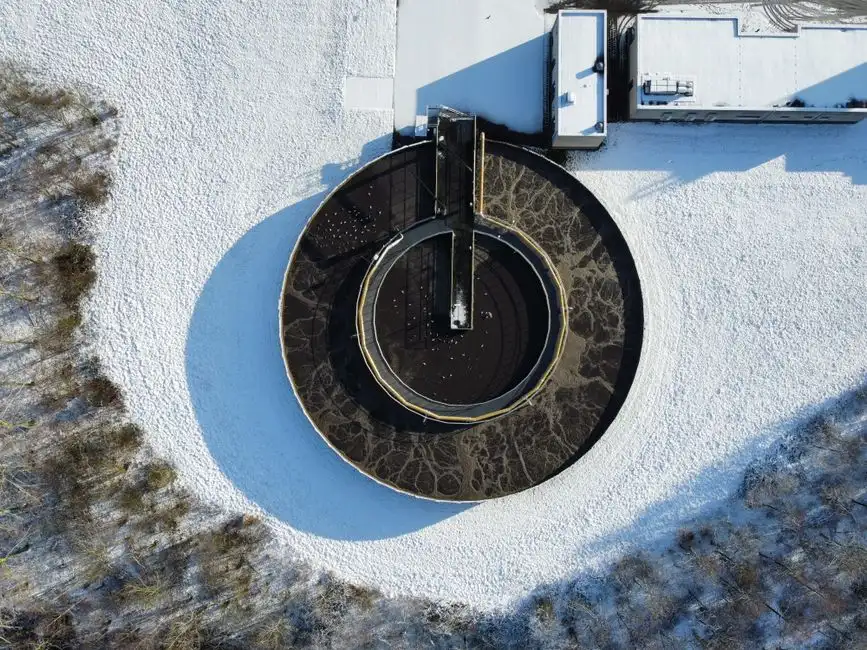
- Characterize each stream separately. Do not use one averaged plant sample to represent process water, contact water, washdown, and stormwater.
- Identify the fraction to remove. Distinguish dense mineral fines, colloidal solids, floatable contaminants, particulate metals, and dissolved metals.
- Screen technologies against the same basis. Compare DAF, conventional clarification, lamella clarification, and pretreatment using identical chemistry, hydraulic profiles, sampling methods, and targets.
- Pilot-test the selected mechanism. Verify peak solids loading, conditioning, effluent quality, sludge behavior, and operation during representative batch events.
- Compare complete treatment trains. Include chemical dosing, controls, sludge dewatering, installation, utilities, maintenance, disposal, and permit-specific acceptance conditions before making the recommendation.
The final selection should follow this sequence rather than begin with a preferred product. The mining and metals wastewater sewer-limit guide illustrates why the same treatment equipment must be tied to verified site requirements. A bid recommendation becomes defensible only when the permit basis, representative wastewater data, and complete-train economics agree.
Frequently Asked Questions
Can a Cave City factory select DAF or a clarifier from average flow and a generic capacity table?
No. Final sizing needs source-by-source flow, peak and batch-discharge profiles, stormwater contribution, equalization data, TSS, particle-size distribution, settleability, solids density where available, oils and greases, temperature, pH, alkalinity, total and dissolved metals, and chemistry variability. Require the bidder to show how these inputs govern hydraulic loading, peak mass loading, chemical demand, and sludge capacity.
What performance evidence should a supplier provide for comparable mining wastewater?
Ask for a site-specific test plan, pilot result, or reference under comparable wastewater and operating conditions. Require the wastewater source, chemical doses, flow, temperature, test method, sampling point, sampling frequency, and acceptance criterion. Generic removal percentages without test conditions should not count as an equipment-selection basis.
How should buyers compare DAF and clarifier pricing without choosing the wrong low-price option?
Request a complete-train quotation or stated assumptions for pretreatment, pH control, chemical dosing, controls, utilities, installation, maintenance, labor, sludge removal, dewatering, storage, and disposal. Conflicting capital-cost ranges in the research make a site-specific quotation necessary. Compare the treatment objective and sludge route, not the separator price alone.
How can a buyer verify the applicable Cave City wastewater requirements?
Confirm the site’s discharge or pretreatment permit, receiving sewer or treatment facility, state requirements, local ordinances, and the applicable EPA mining and metal-bearing waste-stream framework. No specific Cave City limit should be assumed from a generic article. Put the verified requirement and test method directly into the RFQ and acceptance criteria; the site-specific mining wastewater compliance workflow provides a structured verification approach.