Determine Which Rules Control the Sewer Discharge
Mining and metals plants near Middletown meet sewer pretreatment limits by obtaining the applicable industrial discharge authorization, characterizing each wastewater stream, and treating pollutants before discharge to the publicly owned treatment works. The permit must reflect 40 CFR 403, applicable categorical standards, local Sewer Use Ordinance requirements, and site-specific limits. A treatment train may combine pH control, chemical conditioning, solids removal, filtration, and monitored sampling, but equipment selection must follow the permit and waste characterization—not a generic mining recipe. Operators must also maintain records, manage slug discharges, report significant changes, and demonstrate proper operation through inspections and compliance monitoring.
Start with the actual receiving POTW and facility permit, not a general mining permit template. The City of Middletown, New York sample permit incorporates Sewer Use Ordinance §389, 40 CFR 403, applicable National Categorical Standards, and federal requirements identified as 40 CFR 405–471. It also requires the permittee to pretreat or control wastewater to comply with those requirements. For a mining or metals operation, the written permit and sewer-use requirements establish the enforceable local limits; categorical pretreatment standards and applicable mining rules may add separate obligations.
Do not treat the cited document as a complete mining permit. It is expressly a grease, oil, and sand interceptor operating permit issued under the City’s industrial pretreatment program. Obtain the facility’s actual authorization, any applicable categorical requirements, and written confirmation of the discharge point before designing a treatment train. The broader mining-plant sewer-limit compliance workflow explains why jurisdiction and permit identity must be established first.
The federal framework is also broader than the POTW permit alone. The US EPA states that 40 CFR Part 436 covers wastewater from mine drainage, mineral processing operations, and stormwater runoff, and that Mineral Mining regulatory requirements are incorporated into NPDES permits (US EPA, Mineral Mining and Processing Effluent Guidelines). A sewer-discharge permit does not replace direct-discharge obligations. Conversely, rules from Middletown Township, Pennsylvania, are not Middletown, New York rules and must not be imported into the New York evaluation.
| Authority or document | Role in the decision | What to obtain |
|---|---|---|
| Facility industrial discharge permit | Site-specific authorization, limits, monitoring, reporting, and operating duties | Current permit, appendices, discharge map, and all required compliance schedules |
| Middletown Sewer Use Ordinance §389 | Local pretreatment, prohibition, monitoring, and enforcement framework | Current ordinance and written interpretation from the City |
| 40 CFR Part 403 | National Pretreatment Program framework | Applicability determination and any applicable categorical standards |
| 40 CFR Part 436 and applicable NPDES requirements | Federal mining and processing framework | Written applicability determination, especially for direct-discharge pathways |
Characterize Each Waste Stream Before Selecting Treatment
A defensible mining wastewater characterization must map flow and chemistry by source because storm drainage, wash water, and process effluent can have different contaminants and operating patterns. Begin with a process-water map covering mine drainage, mineral processing operations, stormwater runoff, floor drainage, washdown, and equipment or vehicle wash streams that are permitted or proposed for sewer discharge. Mark which streams enter the sewer, which are diverted, and where they combine. This prevents a clean composite sample from masking a high-strength batch.
Request representative analytical data for the parameters required by the permit and POTW. Depending on the process, the investigation may need to cover pH, suspended solids, metals, iron, arsenic, manganese, organic compounds, metalloids, oil and grease, and process-specific constituents. The permit should define the required analytes, sampling point, frequency, and analytical method; it should not be supplemented with an unapproved sampling list that distracts from the compliance demonstration.
Commercial mining-treatment guidance identifies suspended solids, acidic conditions, metals, heavy metals, organic compounds, metalloids such as iron, arsenic, and manganese, and elevated salinity as common concerns (Genesis Water Technologies, Mining Water Treatment: How to Meet Stricter Standards). Those are screening concerns, not universal concentrations or automatic local limits. A defensible sampling program must establish the actual magnitude and variability at this site.
Hydraulics are treatment data too. Document average and peak flow, production cycles, storm-driven inflows, batch discharges, and the volume and concentration of slug loads. The cited City of Middletown permit expressly covers accidental, episodic, non-customary batch, slug, upset, and bypass discharges in its problem-reporting requirements. Equalization and storage should therefore be evaluated against actual operating sequences, not merely an average daily flow.
Review sample history whenever production, ore, reagents, rainfall, recycling, or operating practices change. A single clean sample cannot establish compliance across different chemistry or a slug event. The mining-wastewater solids and sludge separation guide is useful when the characterization identifies a solids-handling problem, but even that assessment must begin with representative stream data.
Build a Treatment Train Around the Permit Conditions
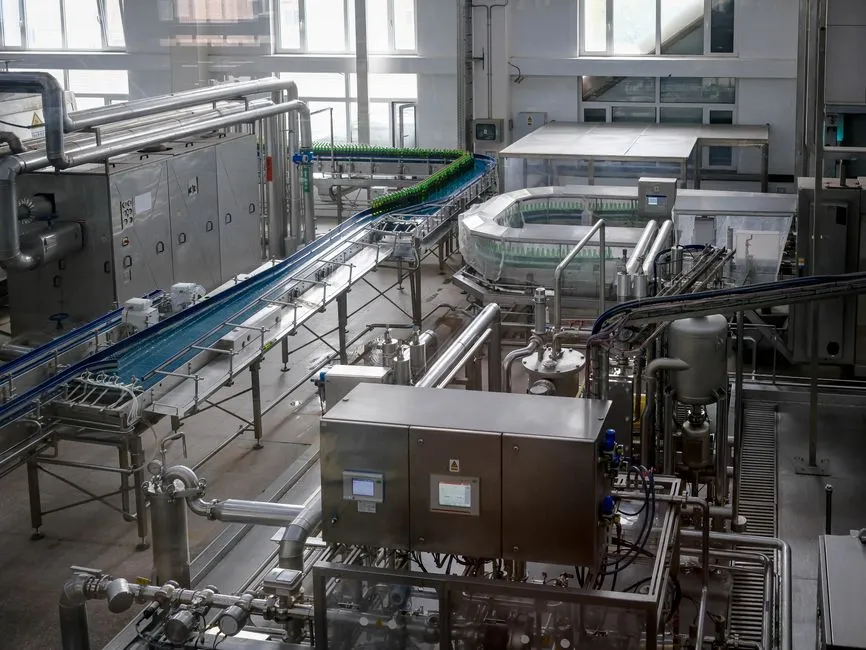
The appropriate treatment train converts measured pollutants into permit-relevant removal steps: segregate and equalize streams, adjust pH, condition solids, remove the resulting floc or float, filter residual particles, monitor the permitted discharge, and control discharge flow. Each step should have a defined operating objective and response to upset. If a step is not needed by the characterization, it adds cost and failure points without creating a stronger compliance case.
For metals-bearing mining water, the commercial treatment sequence begins with pH adjustment so dissolved metals can precipitate. Coagulants and flocculants then combine suspended solids and small metal particles into larger clumps that can be removed by clarification or flotation before filtration (Genesis Water Technologies, Mining Water Treatment: How to Meet Stricter Standards). This sequence supports metals precipitation and suspended solids removal, but the permitted target and final effluent must still be established from the facility’s permit and analytical data.
Equipment functions can then be matched to the treatment step. An PLC-controlled pH and chemical dosing system can automate pH adjustment, coagulant, and flocculant feed. A DAF system for mining pretreatment can remove suspended solids, floatable oil and grease, and colloidal material. The integrated mine-water purification system combines coagulation, flocculation, sedimentation, filtration, and automatic backwash. UF is an option for fine solids and colloids.
Catalog capacity is a selection input, not proof that a unit will comply. The following specifications come from the supplied equipment catalogs:
| Equipment | Catalog specification | Selection question |
|---|---|---|
| Dissolved Air Flotation system | Capacity from 4 to 300 m³/h across 13 standard models | Does the selected model cover measured hydraulic peaks and the required floatable-solids or oil-bearing fraction? |
| JY integrated purification system | Capacity from 10 to 200 m³/h; feed turbidity up to 3,000 mg/L; treatment below 3 mg/L | Are feed chemistry, turbidity, flow, and claimed outlet performance consistent with permit conditions and site data? |
| Ultrafiltration system | Flow from 2,000 to 40,000 L/h; 0.03-micron PVDF membranes; feed turbidity up to 300 ppm | Will the membrane protect the required final polish while remaining inside its feed and operating envelope? |
Compliance must be demonstrated in the selected process, using the waste characterization, permit conditions, hydraulic peaks, chemical demand, sludge handling, and monitoring plan. A catalog value cannot establish compliance with a facility’s metallic or categorical limits. Final acceptance criteria should therefore come from the actual permit and confirmed performance testing, not from a product description.
Prove Compliance Through Monitoring and Operating Controls
Compliance monitoring must connect the treatment process to the authorized discharge. Use representative monitoring from relevant process flows and at the permitted discharge point, with the sampling locations, frequencies, analytes, and methods specified by the City, permit, and applicable standards. Include process measurements needed to explain an effluent result, such as pH, flow, chemical dosage, and treatment-unit operating status, without replacing the required compliance sample.
The cited City permit defines the minimum audit trail for every wastewater sample: collection date, exact place, method, and time; names of the persons taking the sample; analysis date; analyst; analytical technique; results; and quality-assurance and quality-control data. These records allow an inspector to connect the sample to the discharge event and evaluate data quality. The facility should also preserve instrument calibration and maintenance records, chain-of-custody documentation, laboratory reports, and production and operating logs.
The same permit requires monitoring records and results to be retained for at least three years, with the retention period extended while litigation concerning environmental violations remains unresolved (City of Middletown, New York, Department of Public Works, Industrial Pretreatment Program Grease, Oil and Sand Interceptor Operating Permit). A document-management system should preserve the full record through the longer applicable period and make it available to the City, NYSDEC, and EPA for inspection.
| Control area | Evidence to maintain | Compliance relevance |
|---|---|---|
| Representative sampling | Sample location, time, method, collector, analysis date, analyst, results, and QA/QC data | Supports the permit’s required monitoring record |
| Treatment operation | Flow, pH, chemical dosage, unit status, maintenance, and operating deviations | Demonstrates proper operation and explains effluent variation |
| Reduction or loss of treatment | Production or discharge reduction records, restoration actions, and notifications | Shows response when treatment efficiency is lost or reduced |
| Access and inspection | Monitoring-chamber access, equipment security, and inspection correspondence | Supports representative sampling and City oversight |
Operation and maintenance are compliance controls, not administrative extras. The cited permit calls for proper operation and maintenance, adequate funding, operator staffing and training, and laboratory and process controls. It also requires production or discharges to be controlled when treatment efficiency is reduced or a facility loses or fails. A rotary mechanical bar screen can protect downstream pumps and biological processes from solids and debris, but its inclusion or specification must follow the facility’s solids characterization and POTW requirements rather than an assumption that every screen is permit-required.
Manage Slug Discharges, Changes, and Permit Renewal

Slug control is the operating and administrative system that prevents a routine event from becoming a prohibited discharge. Under the cited City permit, the permittee must immediately notify the POTW after an accidental discharge, non-routine or episodic discharge, non-customary batch discharge, spill, slug discharge, slug load, upset, bypass, or other event that may violate a limit or cause problems in the collection or treatment system.
The immediate notice must identify the discharge location, date and time, discharge type, concentration, and volume, and the actions taken to minimize the noncompliant discharge. The cited permit then requires a detailed written report within five business days. That report must describe the cause and discharge, state the duration of noncompliance with exact dates and times, explain the response if the event continues, and document steps taken to stop, reduce, eliminate, and prevent recurrence.
Before a slug reaches the sewer, the operating plan should define isolation, diversion, equalization, automatic discharge control, chemical-dosing response, and manual stop criteria. A slug control plan and spill control plan may be requested by the City, and documentation of hazardous-waste generation and disposal may also be required. These documents should align with the facility’s contingency study and emergency response arrangements.
Changes in operations require advance review. The cited permit requires a report of changed conditions at least 30 days before facility expansion, production increases, process modifications, changes in pretreatment, changes in products, or changes in waste disposal that affect the wastewater. The City may require a compliance schedule and progress reports for a required pretreatment system.
Permit administration is part of the same control system. Under the cited permit, industrial permits must be renewed no later than five years after issuance, and a renewal application must be submitted at least 180 days before expiration. The City may conduct annual and unannounced inspections and may require monitoring chambers, a representative sampling point, and secure access for City equipment. Renewal preparation should include current monitoring data, process changes, production information, pretreatment status, and corrective actions.
Choose Equipment and a Supplier Using a Compliance-First Checklist
A compliant equipment proposal should begin with the permit and characterization, not a product model. Require each supplier to map its proposed equipment to measured pollutants, enforceable limits, required flow range, worst-case batch conditions, and the operating controls needed to prevent exceedances. Nominal capacity alone does not establish adequate treatment.
Compare candidate systems by treatment function. DAF is appropriate where the objective is recovery or removal of floatable solids and an oil-bearing fraction. JY combines clarification and filtration within an integrated treatment train. UF can provide fine-solids and colloid separation where its feed and operating conditions fit. Automatic dosing provides controlled pH adjustment and chemical conditioning. The process should follow the required sequence rather than forcing every stream through the same unit.
| Procurement check | Information the supplier must provide | Why it matters |
|---|---|---|
| Permit and pollutant mapping | Proposed treatment step, expected removal mechanism, and relevant permit condition | Connects equipment selection to the compliance basis |
| Design envelope | Characterized flow and chemistry, peak and batch conditions, and operating limits | Prevents selection from an average-flow-only basis |
| Materials and controls | Materials of construction, instrumentation, control logic, alarms, redundancy, and fail-safe response | Addresses chemical compatibility and upset response |
| Operations and verification | Maintenance requirements, operator training, start-up support, manual, and acceptance tests | Supports proper operation, maintenance, and monitoring records |
| Cost basis | Quoted scope, installation assumptions, utilities, chemicals, sludge handling, and lifecycle exclusions | Allows an auditable budget comparison |
Ask the supplier what happens during power loss, chemical depletion, high turbidity, instrument failure, or an upstream upset. The proposal should state how the plant reduces or stops discharge, who receives the alarm, and what operating records support the response. For a UF option, require the supplier to confirm how the specified ultrafiltration system fits the actual feed chemistry, turbidity, hydraulic peak, cleaning requirements, and permitted monitoring plan.
Capital and operating cost must be estimated from site data: flow, analyses, chemistry, installation constraints, treatment targets, utilities, chemical demand, residuals, and sludge handling. The supplied research contains no defensible Middletown equipment price or budget range, so any quotation should be treated as a site-specific proposal rather than a market-wide price. A purchasing decision should not convert missing site inputs into assumed savings or compliance guarantees.
Frequently Asked Questions
Which rules determine the sewer limits for a mining or metals facility near Middletown?
The controlling requirements are the facility’s actual industrial discharge permit, Middletown’s Sewer Use Ordinance §389, 40 CFR Part 403, any applicable National Categorical Pretreatment Standards, and applicable federal mining requirements. The City permit also identifies prohibited and local-limit provisions. Confirm applicability with the City and responsible agencies in writing; do not rely on the cited grease, oil, and sand interceptor form as a mining-specific permit.
Should a JY, DAF, or UF system be selected first?
No. Select it from the treatment function required by the permit and confirmed characterization. DAF addresses floatable solids and oil-bearing material, JY provides integrated coagulation, flocculation, sedimentation, and filtration, and UF addresses fine solids and colloids within its feed envelope. The decisive checks are permit condition, pollutant concentration, hydraulic peak, batch conditions, residual handling, and monitoring location.
Can treated mining wastewater be reused instead of discharged to the sewer?
Reuse may be a project objective, but it is not sewer authorization. Mining wastewater can be treated for process reuse when technically and financially feasible (Genesis Water Technologies, Mining Water Treatment: How to Meet Stricter Standards). Reuse and direct environmental discharge remain subject to different regulatory requirements, so a reuse decision should not replace the POTW permit review or categorical and mining applicability analysis.
How should a supplier be selected without defensible local price or lead-time data?
Request a process proposal tied to the permit, treatment objectives, operating envelope, controls, O&M plan, acceptance criteria, residual handling, and compliance records. Require verified performance conditions, materials of construction, instrumentation, maintenance, redundancy, training, start-up support, and operating documentation. Because the supplied research provides no reliable Middletown price or lead time, ask for a written quotation and delivery schedule based on the defined scope rather than using an assumed range.
What site information is needed for a defensible cost estimate?
Request characterized flow and chemistry, representative analytical results, installation constraints, permit targets, treatment objectives, utility requirements, chemical consumption, residual or sludge handling, and monitoring costs. The estimate should show which engineering assumptions were used and which site information remains outstanding. No verified local equipment cost appears in the supplied research, so a budget cannot be responsibly stated without a scoped quotation.