What a Decanter Centrifuge Does in a Mining Wastewater Plant
A decanter centrifuge is a continuous solid-liquid separator that can dewater mining tailings, wash-plant sludge and other high-solids process streams while recovering clarified liquid for reuse. Dense solids move toward the rotating bowl wall, while a screw conveyor transports them along the conical beach to a cake discharge. In a mining water-recovery train, the equipment receives conditioned slurry, separates solids from liquid, discharges dewatered cake, and sends the clarified stream to reuse or further treatment.
Alfa Laval states that centrifugal force can be up to 4,000 times greater than gravitational force, but this is a supplier statement rather than a site-specific performance guarantee. A decanter centrifuge is primarily a solids-dewatering and liquid-recovery stage; it does not remove dissolved metals or other dissolved chemical species. Feed conditioning and upstream solids removal may therefore be required. The automatic chemical dosing system can be evaluated as part of feed preparation, where conditioning chemistry is required.
Centrifugal separation begins when dense particles migrate outward toward the rotating bowl wall and the less-dense liquid forms an inner layer. According to Alfa Laval, the solids are continuously moved by a screw conveyor rotating at a different speed from the bowl. This speed differential transports the separated solids out of the separation zone and along the conical section, or beach, where further liquid removal produces a dewatered cake.
For a mine, the practical flow is more important than the name of the machine:
- Slurry is collected, screened and conditioned as required.
- A controlled feed pump meters the stream into the centrifuge.
- Solids and liquid are separated within the rotating bowl.
- Clarified process water is recovered through the liquid outlet.
- Dewatered cake leaves the bowl and enters conveyors, stockpiles or another permitted handling route.
This equipment does not replace clarification, dissolved-metal removal, biological treatment or discharge compliance assessment. It should be positioned as one stage whose performance is defined by the actual feed and required outputs.
Which Mining Streams Are Suitable for Centrifugal Dewatering?
Tailings, wash-plant sludge and similar process streams are the strongest candidates when continuous operation, water recovery and waste-volume reduction justify a continuous solids-bowl centrifuge. The Minerals study of bauxite-tailings dewatering reports that washed bauxite tailings can consist mainly of ultra-fine kaolinite, making dewatering challenging. That finding makes feed characterization decisive: a stream containing difficult-to-settle fines should not be selected on flow rate alone.
| Suitability factor | Engineering interpretation |
|---|---|
| Continuous, high-solids feed | Favors a continuous separation duty with defined dry-solids loading. |
| Fine kaolinite-rich tailings | Requires representative settling, rheology and pilot dewatering assessment. |
| Variable feed composition or flow | Requires control response and surge-load testing rather than an assumed average-duty selection. |
| Low-solids wash water | May require clarification before it becomes a suitable dewatering duty. |
| Clarified-water reuse objective | Requires a quality limit and subsequent treatment review, not a solids-separation claim alone. |
Request the complete feed profile before comparing machines: solids concentration, particle-size distribution, mineralogy, abrasiveness, pH, temperature, viscosity, flow rate and required liquid quality. Include solids that may pass the upstream screen because a nominally suitable tailings stream can contain a different size fraction or solids content than its name implies. A high-efficiency sedimentation tank may be relevant when clarification or feed preparation must precede the centrifuge.
Dewatering and contaminant removal must remain separate decisions. A centrifuge separates entrained or suspended solids from liquid, but clarified process water can still contain dissolved contaminants. Test it against the intended reuse or discharge requirement before treating it as recovered product water.
Use a qualitative screen rather than an assumed application match. Continuous and reasonably consistent feed favors decanter centrifugation. Highly variable, low-solids or difficult-to-handle streams warrant comparative pilot testing. No supplied source establishes a universal feed-solids threshold, so any supplier claiming one should substantiate it against the mine’s representative sample.
Design Inputs Engineers Need Before Specifying a Decanter
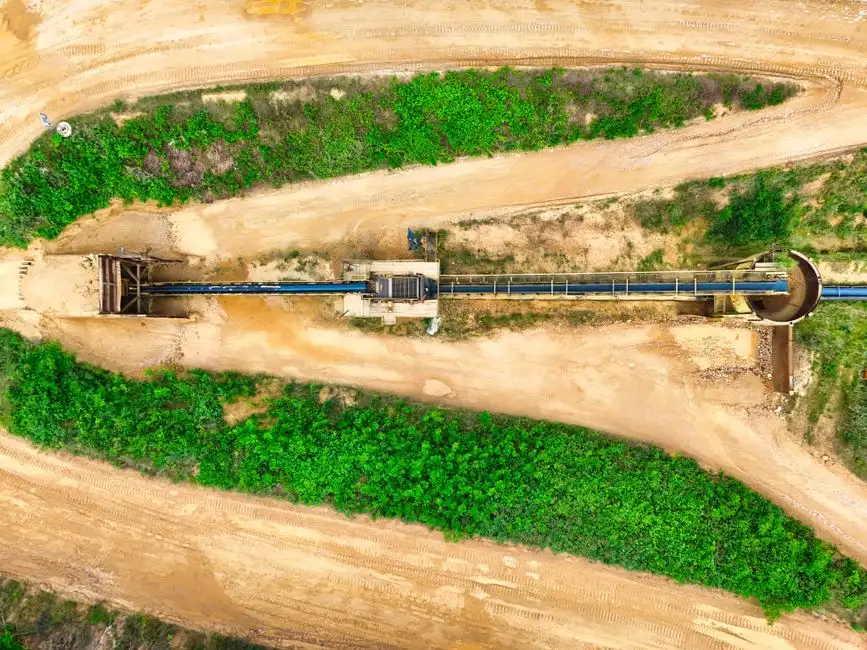
A centrifuge should be sized from a documented solids and water balance, not from the nameplate capacity of a generic mining unit. The table below separates the minimum feed data from the output and site constraints that determine the final selection.
| Design category | Information required for quotation and comparison |
|---|---|
| Primary feed | Feed flow, feed solids concentration and hourly dry-solids load. |
| Solids characterization | Particle-size distribution, mineralogy, solids density and abrasiveness. |
| Liquid-phase conditions | Chemistry, pH, temperature, viscosity and required clarified-water quality. |
| Separation outputs | Target filter-cake dry-solids concentration, clarified-water recovery objective and allowable solids in the recovered liquid. |
| Material handling | Expected cake form, discharge point, transport method and stockpile or disposal constraints. |
| Site constraints | Footprint, floor loading, power supply, maintenance access, bunding, noise limits and upstream and downstream connection points. |
Use performance figures as benchmarks to challenge, not guarantees to insert into a purchase specification. CDE reports that its mining dewatering system can produce filter cake with up to 65% dry solids concentration. The scope is a supplier-reported system result, not a universal limit for every decanter or tailings stream. A representative trial should determine whether the selected machine can approach the required cake dry-solids concentration on the actual duty.
The ChemEngineering paper, Resolved Simulation for the Prediction of Classification in Decanter Centrifuges, identifies particle settling, sediment build-up, consolidation and sediment transport as dynamic phenomena that complicate prediction of solid-bowl centrifuge classification. Accordingly, pilot acceptance should measure more than a single cake sample. It should record performance through stable operation, loading changes and representative startup and shutdown conditions.
Clarify whether the objective is maximum cake dryness, maximum liquid recovery, minimum solids in the clarified stream or a defined balance between them. These objectives can conflict. The required bowl, conveyor configuration, feed arrangement and power system must therefore follow from the agreed duty envelope. The supplied research does not provide universal bowl-sizing rules, k-factors, capacities or power values. Request those outputs only after the supplier has reviewed representative feed data and test results. A review of valves, media and other treatment parts can help identify site interfaces that should be included in the scope.
Comparing Decanter Centrifuges with Filter Presses and DAF Systems
A decanter centrifuge, a filter press and a DAF system perform different primary duties, so selection should begin with the required separation rather than a general preference for continuous equipment. A decanter provides continuous solids discharge; a plate and frame filter press separates sludge by filtration; DAF removes suspended solids, oil and grease, and colloidal matter through flotation. One unit may also be used downstream of another.
| Decision factor | Decanter centrifuge | Plate and frame filter press | DAF system |
|---|---|---|---|
| Primary function | Continuous solids dewatering and liquid recovery. | Sludge dewatering by filtration. | Removal of floatable, suspended and colloidal matter. |
| Operating mode | Continuous solids discharge. | Batch filtration and cake release; the cited range includes manual, hydraulic and fully automatic PLC operation. | Treatment through flotation and solids removal. |
| Main comparison issue | Feed consistency, dry-solids load, cake dryness, clarified-water quality and abrasive wear. | Filtration area, cycle requirements, cake handling and plant labor or automation level. | Target contaminant type, feed quality and required clarification before downstream treatment. |
| Applicable role in the mine train | Primary dewatering stage for suitable continuous solids streams. | Alternative dewatering route where filtration and batch operation fit the duty. | Clarification or pretreatment where its flotation duty is relevant. |
The plate and frame filter press for sludge dewatering is the direct dewatering comparator. Its product range spans filtration areas from 1 m² to 500 m² and offers manual, hydraulic and fully automatic PLC operation, as described in the supplied product research. These options affect operating labor, automation and controls requirements, but they do not establish a universal economic advantage for one mining duty.
The DAF pretreatment system serves a different function. Its catalog covers high-efficiency removal of suspended solids, oil and grease, and colloidal matter across 4–300 m³/h. It may precede dewatering when those contaminants must be removed, but it should not be treated as a like-for-like substitute for a decanter.
Compare the routes against continuous duty, peak solids loading, cake dryness, footprint, recovered-water quality, maintenance access, downstream cake handling and the cost of recovery versus filtration. The supplied research contains no comparable project pricing for these mining duties, so procurement should request site-specific capital, operating and maintenance quotations. A broader sludge dewatering equipment decision framework can support the broader equipment comparison.
Protecting Equipment in Abrasive Mine Slurry
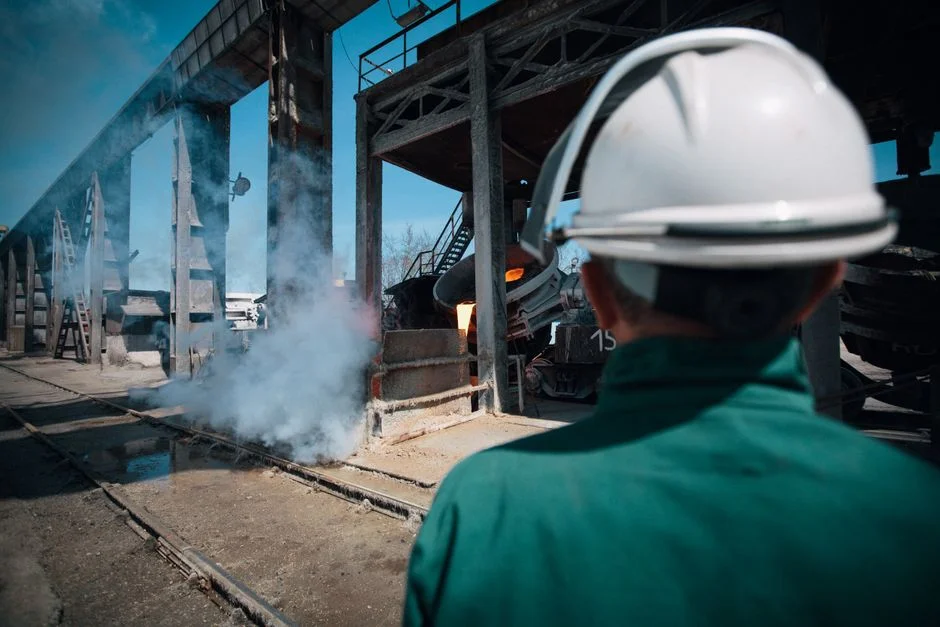
Wear protection must be designed around the feed zone, solids-discharge zone, bowl and scroll, which Alfa Laval identifies as wear-prone areas. Abrasion-resistant materials selected for the process can protect these surfaces, while Alfa Laval states that parts contacting the separation stream use high-grade stainless steel. The material package should be reviewed against the actual mineralogy, pH, temperature and particle-size distribution rather than accepted as a standard configuration.
Operating control is equally important. Alfa Laval describes VFD-assisted adjustment of the screw conveyor’s differential speed combined with torque monitoring. When solids loading rises, the conveyor differential speed can be adjusted to avoid torque overload and maintain stable cake discharge. Under lighter loading, reducing the differential speed can limit wear and energy consumption. The supplier description establishes the control principle; the mine’s response limits still need to be established during commissioning.
Adjustable pond depth provides another operating variable for separation performance, start-up and cleanability. Wear-resistant discharge protection, including conveyor protection, should be evaluated where solids impact the discharge path. These features are process safeguards, not substitutes for a wear-part replacement plan.
Build the mine-specific maintenance plan around condition trends rather than generic intervals copied from another equipment class. The records should include:
- Wear-part inspection and replacement criteria.
- Feed consistency, especially changes in solids load and particle characteristics.
- Conveyor torque, differential speed and any drive alarms.
- Vibration, bearing condition and drive alignment.
- Cake discharge, cake moisture and downstream handling behavior.
- Leaks, unusual noise and changes in recovered-water solids.
For replacement planning, request the recommended wear-part list, material grades and local support arrangements. The available water-treatment parts and media scope can be reviewed to identify interfaces, but wear-component availability and lead time must be confirmed for the selected centrifuge rather than assumed from a general parts category.
Pilot Testing, Commissioning and Operational Acceptance
Representative centrifuge pilot testing should prove the selected machine against the mine’s actual solids balance, not only against clean water or a synthetic slurry. Use a five-stage sequence to move from feed characterization to operational handover.
| Stage | Required activity | Acceptance evidence |
|---|---|---|
| 1. Define the duty | Characterize representative feed and agree feed flow, dry-solids load, required cake dry solids, clarified-water solids and recovery objectives. | Signed duty envelope and sampling plan. |
| 2. Run a representative trial | Test the actual feed and compare results with the supplier’s proposed performance curve. | Stable and variable-load test records. |
| 3. Measure performance | Record feed rate, feed solids, torque, differential speed, cake discharge, clarified-water solids and recovered-water flow. | Time-based performance data and mass balance. |
| 4. Inspect and commission | Check wear, vibration, noise, leaks, guard interlocks, access routes and downstream cake handling. | Punch list with verified corrective actions. |
| 5. Transfer operations | Document start-up, shutdown, flushing, blockage response, spare-parts strategy and operator training. | Approved procedures, training records and commissioning certificates. |
Define acceptance in operating terms. For cake, specify the required dry-solids concentration, how samples are taken and the permitted variability. For recovered liquid, specify the solids limit, flow objective and sampling method. For equipment protection, include the operating envelope for feed solids, torque, differential speed and vibration. These criteria should be agreed before the trial so they cannot be rewritten after the preferred result is known.
Include the downstream system in the trial. A satisfactory bowl result is not complete if the cake cannot discharge consistently, the clarified-water line cannot accept the required flow, or the cake-handling system causes repeated operating interference. Conversely, a dewatering trial that excludes a real feed fraction may overstate performance.
Support requirements should be contracted. Alfa Laval describes a service network that includes parts, remote assistance, monitoring and preventive maintenance. Treat that as an example of the scope to request, not as a universal service commitment. A supplier proposal should identify response arrangements, diagnostic support, critical spares, training and the responsibilities assigned to mine personnel. The process-control cost framework for wastewater treatment provides relevant context for assessing monitoring and control investment.
Frequently Asked Questions
What performance can a mining decanter centrifuge be expected to deliver?
Supplier benchmarks must be handled as stated limits, not guaranteed site results. CDE reports cake with up to 65% dry solids in its mining dewatering system, while Alfa Laval states that centrifugal force can be up to 4,000 times gravitational force. Neither figure establishes cake dryness or recovery for an unspecified tailings stream. Require representative pilot testing using the mine’s own feed, including variable-load conditions, before accepting performance criteria.
How should a buyer select a supplier and size the centrifuge?
Request a documented duty envelope covering feed flow, solids concentration, hourly dry-solids load, particle-size distribution, chemistry, abrasiveness, required cake dryness and clarified-water quality. Then ask each supplier to demonstrate how its proposed configuration addresses that envelope, including the test protocol, bowl and drive selection basis, wear strategy, site constraints and performance records. The supplier should also identify pilot and scale-up responsibilities in the contract.
Is a decanter centrifuge the best option for ultra-fine bauxite tailings?
It may be, but ultra-fine kaolinite-rich tailings can be difficult to dewater, as the Minerals bauxite-tailings study indicates. Compare a decanter with relevant alternatives using the same representative feed and agreed cake, water-recovery and solids-quality targets. Include the rheology, particle-size and mineralogy data required to interpret the results.
What should the operating-risk and maintenance plan cover?
Require a plan for wear-part inspection, feed-consistency control, torque and differential-speed trends, vibration, bearings, drive alignment, cake discharge and downstream handling. The plan should also define start-up, shutdown, flushing and blockage response, with critical spare-parts responsibilities agreed in the supply scope. Confirm site access, safety guarding, bunding and service arrangements before acceptance.