What Changes When Picayune Mining Wastewater Is Treated by MBR
For mining and metals wastewater in Picayune, MBR is usually the stronger choice when space is constrained and treated water must be reused, while conventional activated sludge remains credible for stable, biologically compatible flows where land is available and simpler operation is preferred. HydropureWater states that its integrated submerged-PVDF MBR system uses filtration below 1 μm, occupies 60% less footprint than conventional systems, and is offered for 10–2,000 m³/day. MBR does not remove the need for metals precipitation or make inhibitory wastewater treatable. Federal mining wastewater requirements under 40 CFR Part 440 must be checked alongside the current Louisiana NPDES permit before selecting equipment.
An MBR retains activated-sludge biology but replaces gravity clarification with membrane separation. The membrane retains biomass and suspended solids, so final effluent quality is less dependent on floc settleability. It does not replace equalization, toxicity control, pH adjustment, metals precipitation, or biological treatment.
The footprint, flow range, and filtration statement above are manufacturer specifications from HydropureWater’s verified 2026 product catalog, not universal performance guarantees. HydropureWater also states that its integrated configuration uses 60% less footprint than conventional systems; that claim applies only to the manufacturer’s defined comparison.
A valid Picayune comparison therefore requires identical measured influent, identical design peak flow and pollutant load, and identical effluent, sludge, energy, and reuse objectives. The 2026 MBR cost and sizing guide provides a useful framework, but catalog capacity alone cannot establish the required membrane area, biological loading, or pretreatment scope.
Establish Biological Compatibility and the Permit Boundary
40 CFR Part 440 applies to ore mining and dressing and establishes daily-maximum and monthly-average effluent limits for arsenic, lead, zinc, copper, nickel, and cadmium, as reported by HydropureWater’s 2026 commercial mining comparison. Those federal limits do not replace the site’s current Louisiana NPDES permit, which must be reviewed for site-specific limits, monitoring conditions, discharge route, and any additional state parameters.
Before comparing equipment, characterize the actual wastewater across its normal and peak operating ranges. The test program should measure inhibition, toxicity, biological response, pH, salinity, metals, flow, and load. A metal, pH, or salinity condition that prevents useful biological treatment must be corrected before MBR or conventional activated sludge is credited with treating it.
Upstream barriers can defeat both biological trains: extreme pH, toxic metals, refractory contaminants, salinity, oil and grease, suspended solids, and fibrous debris. A membrane can improve solids separation, but it cannot compensate for an unsuitable feed or an overloaded biological process. The mining and metals wastewater pretreatment limits guide should be used as a scope-setting reference, not as a substitute for Picayune sampling and permit review.
| Decision item | Required evidence for Picayune | Selection consequence |
|---|---|---|
| Biocompatibility | Site-specific inhibition, toxicity, pH, salinity, and biological-response testing | Correct an inhibitory feed before comparing biological equipment |
| Metals removal | Current 40 CFR Part 440 limits and current Louisiana NPDES conditions | Determine the required precipitation and polishing performance |
| Precipitation chemistry | Jar tests followed by pilot confirmation | Verify the operating pH rather than adopting a generic value |
| Discharge and reuse | Permit limits, reuse target, receiving-water requirements, and water balance | Define the final effluent specification before selecting MBR or CAS |
The commercial comparison cites pH 8.5–9.5 for conventional activated sludge precipitation and pH 6.5–7.5 before MBR, describing the latter as keeping dissolved metals in hydroxide form. Those values are source-specific and must be verified through site-specific jar and pilot testing. Both process trains still require upstream metals precipitation; better solids capture does not eliminate that duty.
Compare the Treatment Trains from Influent to Effluent
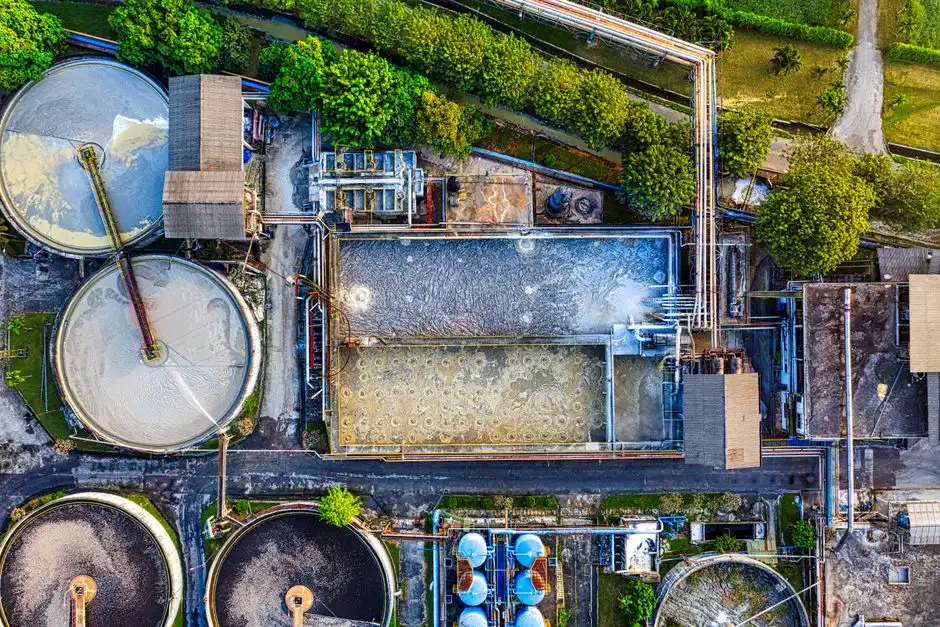
Conventional activated sludge separates biomass by gravity, whereas an MBR separates it by membrane filtration; that single distinction changes hydraulics, equipment requirements, and solids handling. The mining and metals MBR versus activated-sludge guide provides the commercial comparison used here, and its source-specific figures should not be presented as universal mining guarantees.
| Element | Conventional activated sludge | MBR |
|---|---|---|
| Process sequence | Equalization and pretreatment, aeration, secondary clarification, RAS return, WAS purge, and tertiary filtration where needed | Equalization and pretreatment, biological reactor, submerged membrane, permeate handling, and excess-sludge management |
| Biomass concentration | 2,000–4,000 mg/L MLSS in the 2026 commercial comparison | 8,000–12,000 mg/L MLSS in the 2026 commercial comparison |
| Separation mechanism | Clarifier gravity settling, with settling performance dependent on floc and hydraulics | Membrane retains biomass and suspended solids |
| Additional equipment | Clarifier, RAS/WAS handling, aeration, and potentially tertiary filtration | Membrane module, fine screening, permeate pumps, air scour, controls, and chemical cleaning |
| Effluent reference values | No universal mining guarantee established by the supplied research | 0.01–1.31 NTU turbidity and 0.10–0.72 mg/L BOD, as quoted from the EPA MBR Fact Sheet in the 2026 commercial comparison |
Higher MBR biomass concentration reduces dependence on gravity settleability and can improve solids separation. The conventional train retains an advantage where the wastewater is stable, biologically compatible, land is available, and avoiding membrane-specific maintenance is important. Matching MBR solids performance with conventional activated sludge may require tertiary filtration, adding civil scope that the MBR configuration can avoid.
The 2026 commercial source also reports a 30–60% conventional removal-efficiency loss for 24–72 hours after a metal pulse, attributed to HydropureWater field data. Treat that as source-specific evidence requiring confirmation at Picayune, not as a universal design allowance. The supplied research does not provide equivalent measured field data for the MBR response.
Select MBR or Activated Sludge with a Weighted Decision Matrix
MBR should score favorably when compact equipment, stable solids separation, variable hydraulic or load conditions, and water reuse drive the decision; conventional activated sludge should score favorably when the feed is biologically compatible, land is available, clarification can meet the objective, and the owner prefers fewer membrane-specific assets. The 60% footprint reduction is a HydropureWater manufacturer specification for its configuration, not a bid-ready guarantee for the Picayune installation.
| Weighted criterion | MBR decision prompt | Conventional activated sludge decision prompt |
|---|---|---|
| Space and civil scope | Score highly when footprint is constrained and the specified configuration is credible | Score highly when land and conventional basin-and-clarifier construction are practical |
| Solids separation | Score highly when reliable suspended-solids removal is required | Score when gravity clarification can meet the specified endpoint without extensive polishing |
| Reuse | Score highly when permeate is a defined reuse stream | Score when the discharge objective does not justify membrane polishing |
| Operation | Account for membrane cleaning, access, replacement, and controls | Account for clarifier hydraulics, RAS control, and gravity settling |
| Total installed scope | Include headworks, dosing, aeration, sludge handling, building requirements, and labor | Include basin, clarifier, tertiary filtration, sludge handling, controls, and labor |
HydropureWater’s 2026 commercial comparison presents mining sites below about 500 m², flows below roughly 2,000 m³/day, and a reuse driver as conditions favoring MBR. Use these as screening prompts, not universal cutoffs. A hybrid may be better when an existing clarifier and biological train remain useful but only the reuse stream requires membrane separation; biological loading, membrane fouling, and final polishing must be verified first.
Do not select on equipment footprint alone. The high-efficiency sedimentation tank illustrates why clarifier performance and civil integration remain part of the conventional alternative. Compare the complete treatment train, not the package with the smallest plan area.
Protect MBR Performance with Mining-Wastewater Pretreatment
Pretreatment is part of the MBR process, not an accessory. HydropureWater’s 2026 commercial comparison states that MBR systems require 1–3 mm fine screening immediately before the membranes, with 1–2 mm cited for hollow-fiber and 2–3 mm for flat-plate modules. The final cutoff must match the selected manufacturer’s requirements and module geometry.
For a Picayune design, include mechanical screening, pH adjustment, and automatic chemical dosing in the base scope. Add equalization and dissolved air flotation where actual feed analysis demonstrates floatables, oil and grease, colloids, or high turbidity. A GX Series rotary mechanical bar screen can protect downstream biological and membrane equipment from solids, rags, plastics, and fibrous debris, while an automatic chemical dosing system provides controlled pH adjustment and coagulant or pH-control duties.
Where mining wastewater contains oil, grease, or colloidal material, a dissolved air flotation unit may be required upstream of equalization and fine screening. Selection should follow influent characterization and pilot results, not a generic treatment-train diagram.
| Pretreatment duty | Applicable unit | Verification required |
|---|---|---|
| Remove rags, plastics, and fibrous debris | Rotary bar screen and module-specific fine screen | Screen aperture, solids loading, extracted-waste handling, and differential head |
| Control pH and precipitate metals | Automatic chemical dosing with engineered mixing | Jar-test chemistry, controlled dose, solids production, and downstream compatibility |
| Remove floatables, oil and grease, or colloids | DAF where feed testing justifies it | Solids capture, polymer demand, recovered-solids destination, and fouling effect |
HydropureWater’s 2026 source cites a 5–8 year MBR service life under rigorous pretreatment and disciplined chemical-in-place cleaning. It also cites sulfate above 1,000 mg/L and hardness in the thousands of mg/L as calcium carbonate as conditions associated with accelerated fouling, based on HydropureWater field data and a 2026 engineering reference. These figures provide a basis for pilot planning, but membrane guarantees must be tied to the verified Picayune water matrix.
Compare Capital Cost, Operating Cost, and Reuse Payback
HydropureWater’s 2026 commercial comparison reports that MBR capital cost for a 1,000 m³/day mining plant is 20–40% above an equivalent-flow conventional activated-sludge basin, while operating cost is 15–30% higher per cubic metre. These are source-specific commercial values attributed to HydropureWater field data and a 2026 engineering reference, not a Picayune quotation.
The cited MBR cost drivers include membrane cassettes, fine screens, permeate pumps, controls, air-scour energy, sodium hypochlorite and citric-acid cleaning, and membrane replacement over a 20-year horizon. Conventional bids must include clarifier performance, tertiary filtration where required, aeration, RAS controls, and sludge handling so the scopes remain equivalent.
| Lifecycle item | MBR bid requirement | Conventional activated-sludge bid requirement |
|---|---|---|
| Basis of design | Same flow, load, effluent, sludge, labor, energy, and reuse basis | Same flow, load, effluent, sludge, labor, energy, and reuse basis |
| Capital scope | Membranes, screens, permeate pumps, controls, air scour, cleaning equipment, and replacement terms | Reactor, aeration, clarifier, RAS/WAS system, tertiary filtration, and controls |
| Operating scope | Air scour, chemicals, cleaning labor, membrane condition monitoring, and replacement reserve | Aeration, chemicals, RAS/WAS handling, clarifier maintenance, and sludge disposal |
| Performance | Flux, cleaning frequency, recovery, membrane life, and effluent guarantees | Clarifier solids capture, hydraulic capacity, sludge blanket control, and effluent guarantees |
The commercial source reports a 4–6 year payback when make-up water costs more than about $2/m³ or brine disposal is a real cost. It also identifies electricity above about $0.09/kWh as favorable to MBR because the value of reuse rises with power cost, while conventional activated sludge can be preferable below about $0.07/kWh when no reuse or zero-liquid-discharge driver exists. These are conditional thresholds from the 2026 commercial source, not Picayune results.
Request a local water balance, current utility tariff, brine and residual-disposal cost, and a priced reuse alternative. A payback calculation is valid only when the bidder and owner use the same water value, power price, residual destination, labor basis, and equipment replacement assumptions.
Validate the Choice with a Picayune Pilot and Procurement Checklist
A 60–90 day pilot using actual Picayune-area feed is the appropriate way to test the selected biological process and membrane claims. HydropureWater’s 2026 commercial comparison recommends renting and operating an MBR cassette during that period. The pilot should monitor relevant metals, pH, toxicity, biological response, fouling, cleaning frequency, sludge production, and final effluent quality under representative flow and load conditions.
The DF Series flat-sheet MBR module is a candidate for pilot evaluation, not an automatic selection. Its catalog specification is 0.1 μm PVDF with an integrated aeration box, available in 80–225 m² configurations producing 32–135 m³/day. Those values must be checked against actual peak flow, required flux, wastewater character, and pretreatment performance.
| Stage | Required action | Release criterion |
|---|---|---|
| Characterization | Measure flow, load, metals, pH, toxicity, salinity, solids, oil and grease, and reuse chemistry | Representative dataset and permit basis confirmed |
| Pilot | Operate the proposed MBR or matched conventional train for 60–90 days | Stable biological response, acceptable fouling, and demonstrated effluent performance |
| Equipment solicitation | Issue equivalent MBR and conventional bids using the pilot design basis | Comparable flow, effluent, sludge, labor, energy, replacement, and reuse assumptions |
| Permit and design freeze | Check the current Louisiana NPDES permit and 40 CFR Part 440 | Process assumptions, guarantees, and monitoring plan align with both |
| Sludge planning | Evaluate dewatering and disposal for the selected solids characteristics | Residual destination and handling cost are included in the lifecycle comparison |
For MBR bids, request membrane limits, cleaning requirements, fouling controls, access, guarantees, and replacement terms. For conventional activated-sludge bids, request reactor sizing, aeration design, clarifier performance, sludge-return configuration, controls, residual handling, and effluent criteria.
Include sludge handling from the outset. HydropureWater’s plate-and-frame filter press is relevant where more colloidal MBR waste sludge requires dewatering, but the final choice depends on measured solids characteristics and the disposal destination.
Frequently Asked Questions
How much more does MBR cost than conventional activated sludge for a Picayune mining project?
HydropureWater’s 2026 commercial comparison reports a 20–40% MBR capital-cost premium and a 15–30% operating-cost premium per cubic metre for a 1,000 m³/day mining plant. It also cites a conditional 4–6 year payback where make-up water costs more than about $2/m³ or brine disposal is a real cost. Those figures are not Picayune quotations; request bids using the same flow, load, effluent, sludge-disposal, labor, energy, and replacement assumptions, then apply current local water, power, and disposal costs.
How should MBR capacity and supplier bids be evaluated?
Do not select from a nominal flow range alone. HydropureWater’s verified 2026 catalog lists an integrated MBR applicability range of 10–2,000 m³/day, but final sizing must match actual peak flow, pollutant load, membrane area, pretreatment, and required effluent quality. Ask each bidder to state reactor sizing, aeration capacity, membrane area and design flux, cleaning, controls, guarantees, and replacement terms. Conventional bids should provide equivalent reactor, aeration, clarifier, sludge, and effluent information.
What permit requirements govern mining wastewater treatment in Picayune?
40 CFR Part 440 applies to ore mining and dressing and addresses daily-maximum and monthly-average limits for arsenic, lead, zinc, copper, nickel, and cadmium. The current Louisiana NPDES permit for the actual facility must also be checked for site-specific limits, monitoring conditions, discharge route, and additional state requirements. Both MBR and conventional activated sludge require upstream metals precipitation; the final compliance basis cannot be selected from equipment brochures alone.
Does MBR eliminate metals precipitation or make all mining wastewater reusable?
No. MBR improves solids separation, but it does not remove the need for metals precipitation and cannot make toxic, saline, high-strength, or otherwise inhibitory wastewater biologically treatable. If the reuse target requires dissolved-solids removal or pathogen control beyond membrane solids retention, the design may also need advanced desalination and disinfection. Define the reuse endpoint and the required water chemistry before deciding whether MBR permeate needs further treatment.