The 30-Second Decision Rule for an Eolia Mining Site
For Eolia, US mining and metals sites in 2026, MBR beats conventional activated sludge when the footprint is under about 500 m², flow is below roughly 2,000 m³/day, and a water-reuse driver exists — MBR runs 8,000–12,000 mg/L MLSS, cuts footprint by ~60%, and rides out the 30–60% metal-shock efficiency loss a clarifier cannot, at a 20–40% CAPEX premium. Compliance is anchored to 40 CFR Part 440 effluent limits for arsenic, lead, zinc, copper, nickel, and cadmium.
Score the site against three binary questions before you read any further:
- Is the available footprint below 500 m²? (MBR removes the secondary clarifier and the sand filter from the train.)
- Does a reuse or ZLD driver exist? (A "reuse driver" is concrete: make-up water cost above ~$2/m³, real brine-disposal expense, an on-site RO feed demand, or a written ZLD mandate.)
- Is the design flow below 2,000 m³/day? (Above ~5,000 m³/day, CAS pulls ahead on per-m³ cost; the contested mid-band is ~1,000 m³/day, which is the canonical mid-sized mining skid flow.)
Scoring: three yes answers → MBR. Two yes → MBR. Zero or one yes → CAS, or a hybrid clarifier-plus-MBR polish on the reuse stream only. The Eolia regional overlay pushes the answer toward MBR: arid-West water scarcity raises the value of every m³ of reuse, 40 CFR Part 440 sets the federal heavy-metal ceilings, and the state typically layers selenium and sulfate limits on top of the federal numbers. Per EPA 40 CFR Part 440, the daily-max and monthly-average limits for As, Pb, Zn, Cu, Ni, and Cd are the parameters that decide which biological process gets specified.
Why Eolia Mining Influent Breaks Conventional Activated Sludge
Mining and metals influents routinely arrive at the secondary stage with BOD/COD ratios below 0.3, hardness in the thousands of mg/L as CaCO₃, sulfate often above 1,000 mg/L, and TDS climbing past 5,000 mg/L in arid districts where fresh make-up water is scarce (HydropureWater field data, 2026). That matrix violates almost every design assumption in a CAS textbook.
Low BOD/COD ratio, high TDS, and high hardness all drive filamentous bulking in secondary clarifiers. The floc is what carries metals out in CAS — once bulking starts, the floc leaves with the effluent and the metals go with it. Heavy metals at mg/L levels (As, Pb, Zn, Cu, Ni, Cd) shock biomass during upset events; CAS systems typically lose 30–60% of their removal efficiency for a 24–72 hour window after a metal pulse (HydropureWater field data, 2026). Salinity above roughly 5,000 mg/L TDS inhibits nitrifiers, and the standard 5–15 day SRT of a CAS basin does not give slow-growing autotrophs enough time to recover; an MBR at 30–60 day SRT does. Cyanide, ammonia, and thiosulfate from cyanidation circuits add an oxygen-demand swing that a clarifier cannot ride out without equalization volume. CAS fails on mining feed because the feed breaks the settling step the rest of the train depends on.
How MBR and CAS Actually Work in a Mining Train
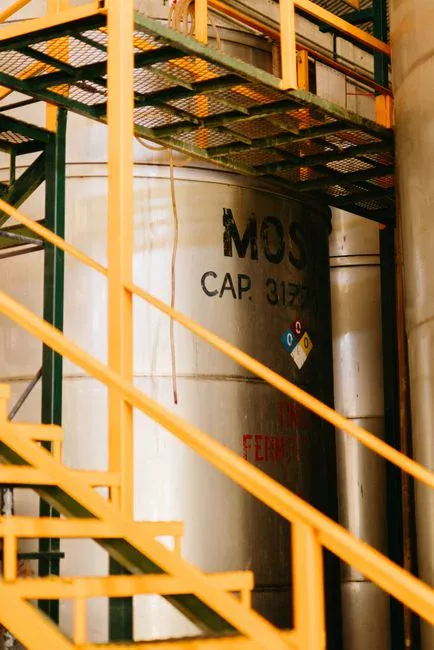
A conventional activated sludge system is an aeration tank followed by a secondary clarifier. Microorganisms break down dissolved organics in the aeration basin, mixed liquor flows to the clarifier, biological solids settle by gravity, settled sludge is returned as RAS with a WAS purge, and clarified water exits over the weir. Typical biomass is 2,000–4,000 mg/L MLSS, and the whole train is vulnerable to bulking and shock (Lamella-clarifier engineering reference, 2026).
A membrane bioreactor replaces the secondary clarifier and the sand filter with a submerged membrane module — PVDF hollow-fiber or flat-sheet, nominal pore size under 1 μm — sitting inside an aerated biological tank. Because the membrane physically retains solids, MLSS is decoupled from settleability and routinely runs 8,000–12,000 mg/L, sometimes to 15,000 mg/L (Jijingi et al., 2024; Lamella-clarifier engineering reference, 2026). The dominant 2026 module formats are DF-series flat-sheet at 0.1 μm with an integrated aeration box, hollow-fiber bundles (ZeeWeed, Memcor) needing 1–2 mm screening, and Kubota-style flat-plate modules needing 2–3 mm — a procurement-spec decision that drives both CAPEX and headworks design. For a deeper walk through the process and 2026 sizing numbers, see the MBR system explainer with 2026 cost and sizing data.
MBR vs CAS Parameter Table for Mining and Metals Service
The table below consolidates the parameters a process engineer will copy into their own evaluation memo. MBR numbers are drawn from the EPA Membrane Bioreactor Fact Sheet (Calls Creek and Cauley Creek facilities) and from Jijingi et al. (2024); CAS numbers are typical secondary-clarifier performance for municipal-style activated sludge.
| Parameter | CAS (secondary clarifier) | MBR (submerged PVDF) |
|---|---|---|
| MLSS | 2,000–4,000 mg/L | 8,000–12,000 mg/L (up to 15,000) |
| SRT | 5–15 days (non-nitrifying); 1–5 days (nitrifying) | 30–60 days |
| Effluent TSS | 10–30 mg/L | Near detection limit |
| Effluent turbidity | Variable | 0.01–1.31 NTU (EPA MBR Fact Sheet) |
| Ammonia-N | Variable | 0.10–0.72 mg/L (EPA MBR Fact Sheet) |
| Footprint ratio | 1.0 (baseline) | ~0.4 (≈60% reduction in concrete and civil scope) |
| CAPEX premium | Baseline | +20–40% |
| OPEX premium | Baseline | +15–30% per m³ |
| Membrane life | N/A | 5–8 years |
| Replacement cycle | N/A | 7–12 years (Lamella-clarifier engineering reference, 2026) |
| Metal-shock resilience | 30–60% removal loss for 24–72 h after a metal pulse | Biomass retained; effluent quality stable |
The 40 CFR Part 440 Compliance Frame in Eolia
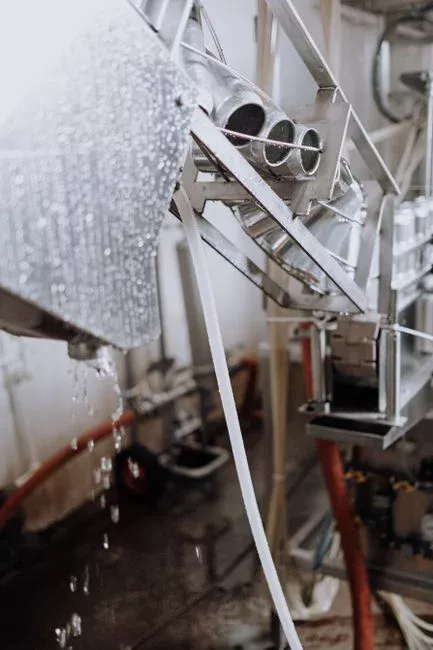
40 CFR Part 440 (Ore Mining and Dressing) sets daily-maximum and monthly-average effluent limits for the heavy metals that drive the MBR vs CAS choice: arsenic, lead, zinc, copper, nickel, and cadmium. Both technologies still need upstream precipitation to hit those numbers — typically pH 8.5–9.5 with lime or caustic for a CAS train, and pH 6.5–7.5 ahead of the membranes for an MBR train to keep dissolved metals in hydroxide form (per EPA 40 CFR Part 440). A polishing UV or RO step is only required for true reuse.
The state may layer selenium and sulfate limits on top of the federal numbers — a common pattern in the Eolia region and across the arid West. Any spec for the area should pull the current state-level NPDES permit language and check the selenium/sulfate overlay before freezing the design. CAS still requires tertiary filtration to match MBR effluent on TSS and turbidity; that filtration is the civil footprint MBR avoids.
CAPEX, OPEX, and Reuse Payback for a 1,000 m³/day Eolia Plant
For a 1,000 m³/day mining plant in the Eolia area, MBR CAPEX runs 20–40% above an equivalent-flow CAS basin because of the membrane cassettes, fine screens, permeate pumps, and PLC upgrade (HydropureWater field data, 2026; Lamella-clarifier engineering reference, 2026). OPEX runs 15–30% higher per m³, driven by air-scour energy, periodic chemical cleaning with sodium hypochlorite and citric acid, and membrane replacements over a 20-year horizon.
The reuse payback math is what flips the answer for an Eolia project. When make-up water is above ~$2/m³ or brine disposal is a real cost, MBR permeate reuse typically pays back the CAPEX premium in 4–6 years. Two OPEX swing factors dominate: the electricity tariff (above ~$0.09/kWh favors MBR because reuse value rises with power cost) and the dollar value of reused water (above ~$2/m³ is the threshold that activates payback). OPEX for chemical cleaning is best controlled with an automatic chemical dosing system for lime, caustic, or coagulant so membrane CIP is not left to operator memory. For a deeper cross-technology comparison in the same mining-and-metals reuse frame, see the MBR vs MBBR comparison for mining process water.
Pretreatment and Sludge Handling That Decide MBR Reliability
Most MBR failures in mining service trace back to skipped pretreatment. All MBR systems require 1–3 mm fine screens immediately before the membranes, with the cutoff driven by module type — 1–2 mm for hollow-fiber, 2–3 mm for flat-plate. Undersized screening is the single most common cause of torn membranes and shortened cassette life. A GX-series rotary bar screen at the headworks is the standard mining-duty answer. Most mining flows also need pH adjustment to 6.5–7.5 before the MBR to keep dissolved metals precipitated as hydroxides; pair the screen with the same automatic chemical dosing system for lime, caustic, or coagulant called out above. For high-turbidity or oil-laden mine-water feeds upstream of equalization, a dissolved air flotation system upstream of equalization removes floatables and protects the fine screens — the same selection logic appears in the DAF vs clarifier selection for metals wastewater write-up. MBR waste sludge has lower settleability and more colloidal particles than CAS waste activated sludge, so a plate-and-frame filter press for MBR waste sludge is the right dewatering choice to hit 25–35% dry solids for landfill or backfill.
Procurement Checklist and Pilot Recommendation
The procurement memo is shorter than people think. Run the three-question 30-second score first, then hand procurement a five-line checklist:
- Influent characterization — 7-day composite of metals, hardness, sulfate, TDS, BOD, COD
- Equalization volume — in hours of average flow
- Fine-screen spec — cutoff in mm, matched to module type
- Membrane warranty length — in years
- 10-year membrane replacement cost — in $/m² of membrane area
Before committing CAPEX, rent one MBR cassette for a 60–90 day pilot against the actual Eolia-area feed and verify metals removal at the real influent matrix. The DF-series flat-sheet MBR module at 0.1 μm is a current format to specify for the pilot, and an integrated MBR system for the 10–2,000 m³/day flow band ships in the exact range that defines most metals-plant retrofits.
Frequently Asked Questions
For a 1,000 m³/day mining plant in Eolia, is MBR worth the 20–40% CAPEX premium?
Yes, when a reuse driver exists (make-up water above ~$2/m³, brine-disposal cost, or a ZLD mandate) and footprint is constrained under ~500 m². The CAPEX premium typically pays back inside 4–6 years through reuse revenue. Without a reuse driver and on a power tariff below ~$0.07/kWh, CAS or a hybrid clarifier-plus-MBR polish on the reuse stream is the cheaper answer (HydropureWater field data, 2026).
What 40 CFR Part 440 limits apply to MBR vs CAS effluent from ore mining?
40 CFR Part 440 sets daily-maximum and monthly-average effluent limits for arsenic, lead, zinc, copper, nickel, and cadmium. Both MBR and CAS still need upstream precipitation (pH 8.5–9.5 for CAS, 6.5–7.5 for MBR) to hit those numbers; MBR's better TSS and turbidity performance reduces the tertiary filtration load but does not remove the precipitation requirement (per EPA 40 CFR Part 440).
How long do MBR membranes actually last in mining service with high hardness and sulfate?
5–8 years under rigorous pretreatment and disciplined CIP. Sulfate above 1,000 mg/L and hardness in the thousands of mg/L as CaCO₃ accelerate fouling and shorten the interval between chemical cleaning cycles; reinforced PVDF fibers and automatic CIP extend service life in those matrices (HydropureWater field data, 2026).
Can an existing CAS basin be retrofitted with an MBR cassette, or is it full replacement?
An existing aeration basin can usually host submerged cassettes if the basin volume supports 8,000–12,000 mg/L MLSS and the depth accommodates the module. The secondary clarifier, sand filter, and most tertiary equipment are decommissioned; permeate pumps, fine screens, PLC, and CIP skids are added. The retrofit is rarely a full replacement, but equalization and headworks upgrades typically accompany it (Lamella-clarifier engineering reference, 2026).
When does CAS still beat MBR for a US mining site in 2026?
CAS still wins on large dilute flows above ~5,000 m³/day, sites with electricity below ~$0.07/kWh, no reuse or ZLD driver, and existing aeration basins that have 20+ years of useful life left. In those cases, retrofitting the existing CAS is cheaper than installing an MBR, and the effluent meets permit without membrane investment (HydropureWater field data, 2026).