Why Stoney Fork Operators Hit the Pretreatment Question Differently
Stoney Fork sits in Snyder Township, Union County, PA — a Central Pennsylvania ridge-and-valley community with no centralized sanitary sewer, a coal-prep and aggregate-wash industrial base inherited from the Mifflinburg–Bucknell coal belt, and an acid-mine-drainage (AMD) legacy that bleeds low-pH, metal-bearing water into site runoff after storm events. The practical question for a Stoney Fork-area operator is not whether to pretreat but which legal pathway to take: route to a receiving Publicly Owned Treatment Works (POTW) under a 40 CFR Part 403 pretreatment program, or hold an individual PA DEP Water Quality Management (WQM) / NPDES permit and discharge directly to waters of the Commonwealth. Both pathways trace back to the EPA NPDES industrial wastewater framework, with categorical effluent guidelines at 40 CFR Part 420 (iron and steel), Part 421 (nonferrous metals), and Part 440 (ore mining and dressing) that set the federal floor (per EPA NPDES industrial wastewater framework). A jurisdictional note matters here: Snyder Township falls under PA DEP Region 1 (Northcentral), not Region 2 (Southwest) — confirm regional office coverage before any permit application lands. The pathway decision, not the categorical ceiling, is the variable that determines equipment scope.
The Categorical Limit Table an Operator Sizes Against in 2026
The federal floor for Stoney Fork-area operations is set by 40 CFR Part 440 (Ore Mining & Dressing), 40 CFR Part 421 (Nonferrous Metals), and 40 CFR Part 420 (Iron and Steel). The representative 2026 daily-maximum (DM) and monthly-average (MA) values an engineer pastes into a spec are summarized below; confirm against EPA Attachment 3-1 (2024-12) and the local IU permit, because site-specific limits can override the categorical floor.
| Subcategory | Parameter | Daily Max | Monthly Avg | Notes |
|---|---|---|---|---|
| 40 CFR 440 Subpart B (Metals Mining) | TSS | 50 mg/L | 25 mg/L | Geometric mean of valid daily values |
| 40 CFR 440.40 / 440.60 (Aggregate Crushing) | TSS | 45 mg/L | 30 mg/L | Crushed Stone / Construction Sand & Gravel |
| 40 CFR 440 Subpart J (Coal Preparation) | TSS | 50 mg/L | 25 mg/L | pH 6.0–9.0 at all times |
| 40 CFR Part 421 (Nonferrous Secondary Smelters/Brass Mills) | Cu | 0.5 mg/L | — | Local POTW limits may run 1.0 mg/L or stricter |
| 40 CFR Part 421 | Pb | 0.6 mg/L | — | Confirm with receiving POTW |
| 40 CFR Part 421 | Zn | 1.0 mg/L | — | Amphoteric above pH 11.0 |
| 40 CFR Part 420 (Iron & Steel) | TSS, O&G, metals | Subcategory-specific | — | Applies only if integrated steel finishing routed to POTW |
| All subcategories | pH | 6.0–9.0 SU | — | Not to be exceeded on any single grab |
Self-monitoring minimum is 4 grabs out of any 7 consecutive days for categorical parameters. The daily-max is the value not to be exceeded on any single grab; the monthly-average is the geometric mean of valid daily values across the reporting month (per EPA program rules, 2024-12). A critical warning for sizing work: the receiving POTW's local ordinance can be stricter than the federal categorical limit. A Union County POTW may impose a 1.0 mg/L Cu ceiling on top of the 40 CFR 421 limit, and the local pretreatment program under 40 CFR 403 has independent enforcement authority. Operators who size equipment only to the federal floor often find the local limit is the binding constraint — confirm the IU permit before issuing a purchase order.
The 2026 Reference Treatment Train for Stoney Fork-Area Sites
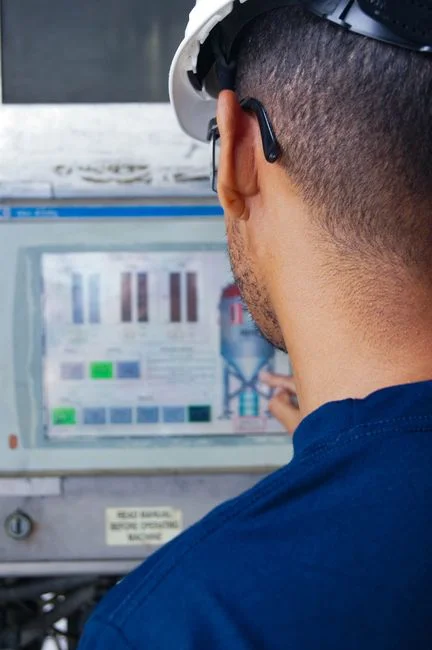
Coal-prep, aggregate-wash, and nonferrous finishing sites in the Snyder Township footprint work against a five-stage physical-chemical train designed to handle pH and flow spikes from haul-road runoff while keeping a small footprint.
Stage 1 — Equalization. An 8–24 hour hydraulic retention time (HRT) earthen or concrete basin with mechanical mixing smooths influent flow, equalizes pH swings (often 2.5–4.5 in acid-mine-drainage blends), and buffers shock loads from intermittent batch wash cycles. Coarse solids settle here; supernatant is decanted forward.
Stage 2 — pH adjustment. Lime (Ca(OH)₂) or caustic (NaOH) is dosed to a controlled setpoint of pH 8.5–9.5, the optimum window for hydroxide precipitation of Fe, Mn, Cu, Pb, Zn, Ni, and Cd. Online pH probes feed a PLC-controlled chemical dosing system with PID control; accuracy of ±0.2 pH units is sufficient to keep metals solubility curves in the precipitation range. Fe³⁺ precipitates as ferric hydroxide above pH 4; Mn²⁺ requires pH ≥ 9 for complete removal.
Stage 3 — Coagulation and flocculation. A rapid-mix chamber (G ≈ 700 s⁻¹, 30–60 s) injects coagulant (ferric chloride or polyaluminum chloride) followed by a slow-mix chamber (G ≈ 50–100 s⁻¹, 15–20 min) with an anionic polymer flocculant. The objective is to neutralize colloidal surface charge and bridge particles into 1–5 mm flocs that the next stage can float.
Stage 4 — Dissolved air flotation (DAF). Pressurized recycle at 5–7 bar saturates the flocculated stream with air; on release, micro-bubbles 20–80 µm in diameter attach to the flocs and float them to the surface, where a skimmer removes the float. A Dissolved Air Flotation (DAF) system in the 4–300 m³/h capacity range is the workhorse of mining and metals pretreatment; published field data show 85–95% TSS removal and 70–90% total-metals removal in similar applications (HydropureWater field data, 2025–2026), which is the load reduction that puts the rest of the train comfortably below federal categorical ceilings. For head-to-head trade-offs between DAF and lamella clarification, see the DAF vs clarifier mining guide with 2026 field data.
Stage 5 — Multimedia filtration. A multimedia filtration vessel with anthracite (0.8–1.2 mm effective size, 0.55 specific gravity) over silica sand (0.45–0.55 mm, 2.65 SG) over garnet (0.20–0.30 mm, 4.0+ SG) polishes the DAF effluent to < 5 mg/L TSS and < 1 NTU.
| Stage | Equipment | Operating Window | Typical Removal |
|---|---|---|---|
| 1 — Equalization | Earthen/concrete basin + mixer | HRT 8–24 h | Smoothing, coarse grit |
| 2 — pH adjustment | Lime/caustic + PLC dosing | pH 8.5–9.5, ±0.2 SU | Sets metals precipitation |
| 3 — Coag/floc | Rapid + slow mix | G 700 s⁻¹ / 50–100 s⁻¹ | 1–5 mm flocs formed |
| 4 — DAF | Pressurized recycle 5–7 bar | 4–300 m³/h | 85–95% TSS; 70–90% metals |
| 5 — Multimedia filter | Anthracite/sand/garnet | < 5 mg/L TSS, < 1 NTU | Final polish |
Cu/Pb/Zn pH optimization deserves attention: Cu minimum solubility sits at pH 9.0–10.0, Pb at 9.5–10.5, Zn at 10.0–11.0. Amphoteric metals (Pb, Zn) can re-solubilize above pH 11.0, so bench-scale testing is required for mixed-metal streams before the setpoint is locked in (HydropureWater field data, 2025–2026).
Sludge Handling Under RCRA and the Dewatering Line
The DAF float and the multimedia filter backwash combine into a hydroxide-bearing sludge at 1–3% dry solids. If the sludge carries a listed metal (Pb, Cd) at a concentration that exceeds its RCRA toxicity characteristic under 40 CFR 261.24, it is an F006 wastewater treatment sludge and must be handled under RCRA. A plate-and-frame filter press produces cake at 25–35% dry solids — a 10:1 volume reduction over the as-produced sludge, with attendant savings on haul tonnage and landfill tipping fees. A lamella high-efficiency sedimentation tank ahead of the press pre-thickens sludge to 5–8% dry solids, cutting polymer demand by 30–50% and reducing press cycle time. The dewatered cake is typically disposed at a RCRA Subtitle D municipal solid waste landfill in central PA after a TCLP pass; metals-recovery smelter reintroduction is available where the metals load justifies it, but in Union County most operators default to landfill after TCLP.
Direct Discharge vs POTW: A 2026 Decision Matrix
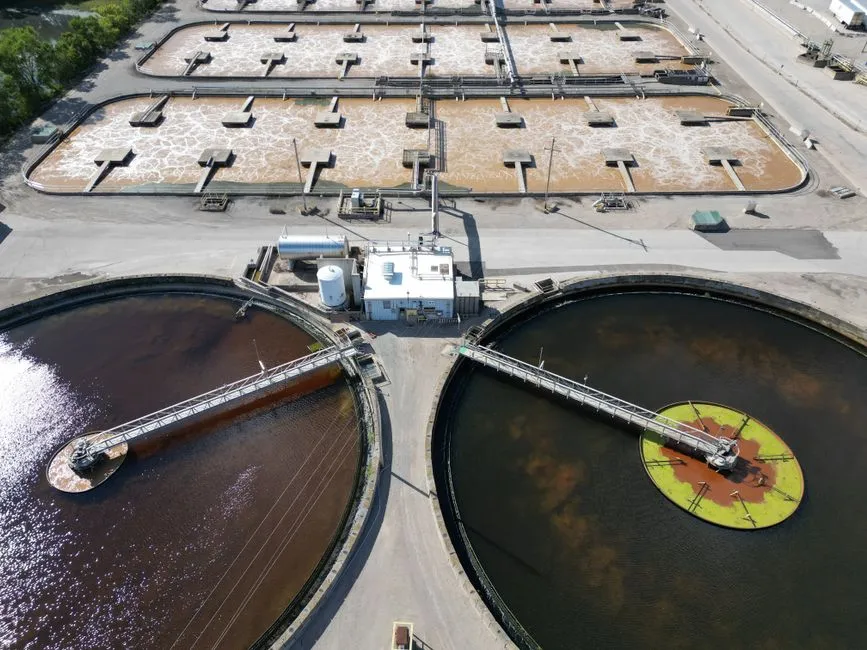
Mining and metals sites near Stoney Fork select compliance pathways based on geography, haul economics, and effluent chemistry. The decision matrix below captures the 2026 trade-offs in the Union County context.
| Factor | Direct Discharge (PA DEP WQM / NPDES) | POTW Discharge (40 CFR 403 Pretreatment) |
|---|---|---|
| Permitting authority | PA DEP Region 1 (Northcentral), EPA Region 3 oversight | Receiving POTW's pretreatment program; PA DEP / EPA on appeal |
| Applicable limits | Federal categorical limits from 40 CFR 420/421/440, plus water-quality-based effluent limits (WQBELs) | POTW local limits — often stricter on Cu, Zn, oil & grease, pH |
| Site-fit heuristic | No POTW within economic haul distance; flow > 50,000 gpd; downstream water-quality classification allows discharge | Site within 5–10 miles of an accepting POTW; flow < 50,000 gpd; metals load dominated by Cu/Zn |
| Self-monitoring | Whole-effluent toxicity (WET) testing, biomonitoring, full categorical parameter list | Categorical parameter list; POTW may accept reduced self-monitoring at low-flow sites |
| Cost profile | Higher — full treatment train, on-site lab, biomonitoring contract | Lower — pretreatment train sized to local limits; hauler pays for POTW treatment |
| Typical Stoney Fork fit | Aggregate wash, coal prep, sandstone quarry | Smaller brass/mill products finishing shops routed to a downstream POTW |
Small aggregate wash and coal-prep operations in Union County generally pursue individual PA DEP WQM/NPDES permits because hauling is uneconomic at their flow rates; larger nonferrous and fabricated-metals finishers route to POTWs where the receiving municipality accepts industrial loads.
2026 Cost Envelope by Flow Tier
The total installed cost for a mining wastewater pretreatment system in 2026 ranges from $250,000 for a small-scale modular skid to over $2,000,000 for a high-capacity, automated facility (HydropureWater 2026 market data). Costs depend primarily on flow rate (gpm/m³/h), specific chemical constituents, and the need for sludge dewatering equipment. Ongoing OpEx — chemical reagents, power, and hazardous waste disposal fees — typically runs 15–25% of initial CapEx annually.
| Tier | Flow Band | Installed CapEx (2026) | Footprint | Automation |
|---|---|---|---|---|
| Small modular skid | ≤ 25 m³/h | $250,000–$600,000 | ~50 m² | PLC + local HMI |
| Mid-capacity packaged | 25–100 m³/h | $600,000–$1,200,000 | ~150 m² | PLC with remote telemetry |
| High-capacity automated | > 100 m³/h | $1,200,000–$2,000,000+ | ~400 m²+ | Full SCADA, on-line analyzers |
The Dissolved Air Flotation (DAF) system and the multimedia filtration vessel are the two largest line items in most scopes; a 4–300 m³/h DAF capacity range covers the full Stoney Fork profile. A regional comparison using field data from nearby Appalachian operations is available in the DAF vs clarifier trade-offs in 40 CFR Part 437 / 440 applications and the DAF vs clarifier comparison for mining wastewater.
Self-Monitoring, BMR, and What Survives a 40 CFR 403 Audit
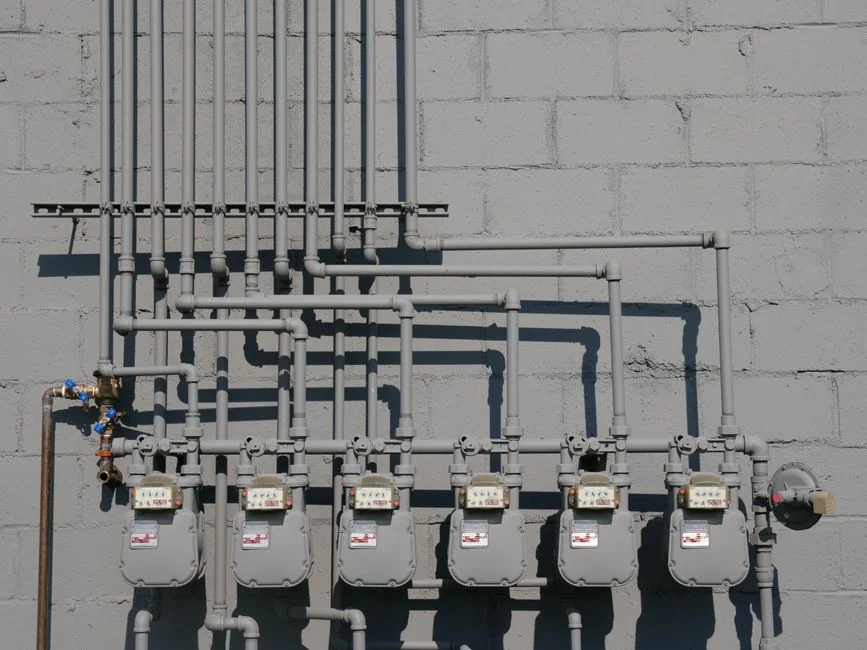
Equipment that meets the limit is only half the compliance picture — a 40 CFR 403 audit fails on the self-monitoring record more often than on the effluent number. The Baseline Monitoring Report (BMR) is required within 180 days of becoming a categorical Significant Industrial User (SIU) per 40 CFR 403.12(b); a 90-day Compliance Report follows once limits apply. Compliance sampling for most categorical parameters runs a minimum of twice yearly, with 24-hour flow-proportional composites for metals and grabs for pH and temperature (per EPA program rules, 2024-12).
| Record | Cadence / Trigger | Method | Authority |
|---|---|---|---|
| Baseline Monitoring Report (BMR) | Within 180 d of CIU status | 24-h flow-proportional composites | 40 CFR 403.12(b) |
| 90-day Compliance Report | Once categorical limits apply | Same as BMR | 40 CFR 403.12(d) |
| Routine compliance sampling | Minimum semiannual | 24-h flow-proportional (metals); grab (pH, temp) | 40 CFR 403 Appendix A; IU permit |
| Slug/spill notification | Any slug load or accidental discharge | Phone within 24 h, written within 5 days | 40 CFR 403.12(p); IU permit |
| Lab certification | Per analytical event | 40 CFR Part 136 methods | 40 CFR Part 136 |
Chain-of-custody, lab certification under 40 CFR Part 136, and calibrated on-site flow measurement are the three records the inspector pulls first in any Significant Noncompliance (SNC) determination. A single TSS exceedance above 50 mg/L at the monitoring manhole can put the IU permit on the path to SNC within a quarterly reporting cycle, with CWA §309 civil penalties up to $64,618 per day per violation in 2026-adjusted figures (per EPA civil penalty policy, 2025). The realistic failure mode involves a batch haul-out rinse pushing a 30-minute slug of high-TSS, low-pH water into the equalization basin, the basin underflows, the DAF solids loading doubles for an hour, and the next 24-hour composite at the manhole returns at 180 mg/L TSS. The fix is a four-stage pretreatment train with a defensible self-monitoring record — slug control plans, BMP plans, and spill-notification procedures are written into the IU permit and must be on site for inspection.
Frequently Asked Questions
What TSS limit applies to a coal-prep or aggregate-wash plant near Stoney Fork under 40 CFR Part 440?
Coal preparation under 40 CFR Part 440 Subpart J and metals mining under Subpart B both apply a 50 mg/L daily-maximum / 25 mg/L monthly-average TSS ceiling, while aggregate crushing under 40 CFR 440.40 / 440.60 commonly applies 45 mg/L daily-max / 30 mg/L monthly-average. Confirm against EPA Attachment 3-1 (2024-12) and the local IU permit because site-specific local limits can be stricter than the federal categorical floor. Operationally, size the equalization basin to at least 8 hours of HRT so a 30-minute batch slug does not push the next 24-hour composite above 50 mg/L.
How much does a mining/metals pretreatment system cost in 2026?
The 2026 envelope runs from $250,000 for a small-scale modular skid (≤ 25 m³/h) to over $2,000,000 for a high-capacity, automated facility (> 100 m³/h), with OpEx at 15–25% of initial CapEx annually for chemical reagents, power, and hazardous waste disposal fees (HydropureWater 2026 market data). The DAF unit and the multimedia filtration vessel are the two largest line items; a 4–300 m³/h DAF capacity range covers the full Stoney Fork profile. Budget for an on-site lab or contract biomonitoring line if direct discharge is the chosen pathway.
What is the most common compliance failure mode for a small Stoney Fork-area operator?
The dominant failure mode is a 30-minute high-TSS, low-pH slug from a batch haul-out rinse that overruns the equalization basin, doubles the DAF solids loading for an hour, and produces a 24-hour composite above 50 mg/L TSS at the monitoring manhole. That single exceedance can put the IU permit on the path to Significant Noncompliance (SNC) within a quarterly reporting cycle, with CWA §309 civil penalties up to $64,618 per day per violation in 2026-adjusted figures (per EPA civil penalty policy, 2025). The defense is a 40 CFR 403.12(b) BMR filed within 180 days of CIU status, 24-h flow-proportional composites analyzed by a 40 CFR Part 136-certified lab, and a slug control plan on site for inspection.