Why East Finley, PA Mining and Metals Plants Need Pretreatment in 2026
East Finley Township sits in Washington County, PA, within PA DEP Region 2 (Southwest) — a jurisdiction that overlays the Pennsylvania bituminous coal belt, the historic coal-prep and coke works corridor, and an active aggregate-wash sector along Ten Mile Creek and its tributaries. The township itself does not have a centralized sanitary sewer system, so the practical question for an operator is not "do we pretreat?" but "do we route to a receiving POTW under a local pretreatment program, or do we hold an individual PA DEP WQM/NPDES permit and discharge directly to waters of the Commonwealth?" Both pathways trace back to the EPA NPDES industrial wastewater authority, which sets the umbrella for categorical and site-specific permits in 2026. Federal categorical effluent guidelines at 40 CFR Part 420 (iron and steel manufacturing), Part 421 (nonferrous metals), and Part 440 (ore mining and dressing) establish numeric effluent limits that override weaker local rules — and Pennsylvania's program, as administered through the EPA Region 3 delegation to PA DEP, enforces those limits through Water Quality Management (WQM) permits. A note on nomenclature: the "Finley" appearing in current tungsten-exploration news refers to IRIS Metals' Finley Basin project in Granite County, Montana, where IRIS is targeting a historical 850,000-ton at 0.68% WO₃ resource with a 7,000-metre 2026 drill program; that is not the East Finley covered in this guide, which is the Washington County, PA township. The applicable regulatory floor is summarized in the EPA NPDES industrial wastewater regulatory framework.
2026 Pretreatment Limits and Pollutants of Concern
Federal categorical limits for mining and metals operations in 2026 apply as daily maximums and monthly averages, with a minimum sampling frequency of 4 grabs out of any 7 consecutive days for self-monitoring. Coal prep and ore-mining facilities work primarily against 40 CFR Part 440 Subpart J (coal preparation) and Subpart B (metals mining); nonferrous secondary smelters and brass mills against 40 CFR Part 421; integrated iron and steel works against 40 CFR Part 420. The table below lists representative 2026 daily-maximum (DM) and monthly-average (MA) values that an East Finley operator would size against.
| Parameter | Typical DM (mg/L) | Typical MA (mg/L) | Source |
|---|---|---|---|
| Total Suspended Solids (TSS) | 50 | 30 | 40 CFR 440.102 / 420.02 |
| Oil & Grease | 20 | 15 | 40 CFR 420.02 / 440.102 |
| Total Copper (Cu) | 1.0–3.0 | 0.5–1.5 | 40 CFR 421 Subparts G–L |
| Total Lead (Pb) | 0.6 | 0.4 | 40 CFR 421 / 440 |
| Total Zinc (Zn) | 1.5–2.6 | 0.8–1.5 | 40 CFR 421 / 440 |
| Total Nickel (Ni) | 1.0 | 0.5 | 40 CFR 421 Subpart M |
| Total Cadmium (Cd) | 0.35 | 0.20 | 40 CFR 421 / 440 |
| Total Iron (Fe) | 10 | 5.0 | 40 CFR 440 |
| Total Manganese (Mn) | 4.0 | 2.0 | 40 CFR 440 |
| pH range | 6.0–9.0 standard units at all times | 40 CFR 420 / 421 / 440 | |
| Total Residual Chlorine | 0.5 | 0.2 | 40 CFR 420 / 440 |
Two practical points apply to the federal table. Daily-maximum values are not to be exceeded on any single grab, and the monthly-average is the geometric mean of valid daily values across the reporting month. Furthermore, the receiving POTW's local ordinance can be stricter than the federal categorical limit; a Washington County POTW may impose a 1.0 mg/L Cu ceiling on top of the 40 CFR 421 limit, and the local pretreatment program under 40 CFR 403 has independent enforcement authority. Operators who size equipment only to the federal categorical floor often find their permit is the binding constraint.
The Five-Stage Process Train That Meets the Limits
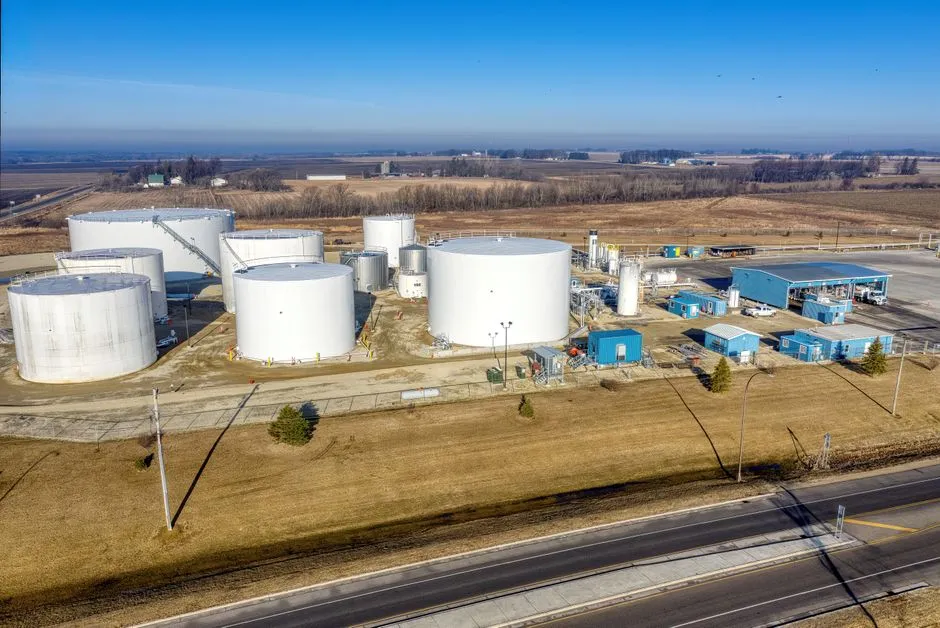
The 2026 reference train for an East Finley coal-prep, aggregate-wash, or nonferrous metals site is a five-stage physical-chemical sequence designed to handle pH and flow spikes from haul-road runoff while maintaining a small footprint.
Stage 1 — Equalization. An 8–24 hour hydraulic retention time (HRT) earthen or concrete basin with mechanical mixing smooths influent flow, equalizes pH swings (often 2.5–4.5 in acid mine drainage blends), and buffers shock loads from intermittent batch wash cycles. Coarse solids settle here; supernatant is decanted forward.
Stage 2 — pH adjustment. Lime (Ca(OH)₂) or caustic (NaOH) is dosed to a controlled setpoint of pH 8.5–9.5, the optimum window for hydroxide precipitation of Fe, Mn, Cu, Pb, Zn, Ni, and Cd. Online pH probes feed a PLC-controlled chemical dosing system with PID control; accuracy of ±0.2 pH units is sufficient to keep metals solubility curves in the precipitation range. This stage also handles high-iron acid mine drainage, where Fe³⁺ precipitates as ferric hydroxide above pH 4 and Mn²⁺ requires pH ≥ 9 for complete removal.
Stage 3 — Coagulation and flocculation. A rapid-mix chamber (G ≈ 700 s⁻¹, 30–60 s) injects coagulant (ferric chloride or polyaluminum chloride) followed by a slow-mix chamber (G ≈ 50–100 s⁻¹, 15–20 min) with an anionic polymer flocculant. The objective is to neutralize colloidal surface charge and bridge particles into 1–5 mm flocs that the next stage can float.
Stage 4 — Dissolved air flotation (DAF). Pressurized recycle at 5–7 bar saturates the flocculated stream with air; on release, micro-bubbles 20–80 µm in diameter attach to the flocs and float them to the surface, where a skimmer removes the float. A DAF micro-bubble flotation unit in the 4–300 m³/h capacity range is the workhorse of mining and metals pretreatment; published field data show 85–95% TSS removal and 70–90% total-metals removal in similar applications (HydropureWater field data, 2025–2026), which is the load reduction that puts the rest of the train comfortably below federal categorical ceilings.
Stage 5 — Multimedia filtration. A multimedia filtration vessel with anthracite (0.8–1.2 mm effective size, 0.55 specific gravity) over silica sand (0.45–0.55 mm, 2.65 SG) over garnet (0.20–0.30 mm, 4.0+ SG) polishes the DAF effluent to < 5 mg/L TSS and < 1 NTU. Published roughing-filtration performance shows that physical-stage systems can achieve 90% turbidity reduction across a range of mining-influenced waters (per Performance of a horizontal roughing filtration system for the pretreatment of greywater, OpenAlex, 2016), supporting multimedia filtration as a reliable final polishing step before pH neutralization and discharge.
Sludge Handling and Metals Recovery
The DAF float and the backwash from the multimedia filter combine into a hydroxide-bearing sludge at 1–3% dry solids. If the sludge carries a listed metal (e.g., Pb, Cd) at a concentration that exceeds its RCRA toxicity characteristic (40 CFR 261.24), it is a F006 wastewater treatment sludge and must be handled under RCRA. The standard dewatering line is a plate-and-frame filter press producing cake at 25–35% dry solids — a 10:1 volume reduction over the as-produced sludge, with attendant savings on haul tonnage and landfill tipping fees. A lamella high-efficiency sedimentation tank ahead of the press pre-thickens sludge to 5–8% dry solids, cutting polymer demand by 30–50% and reducing press cycle time. The dewatered cake is typically disposed at a RCRA Subtitle D municipal solid waste landfill in southwestern PA after a TCLP pass; for coal-prep sites historically operating under West Penn Power / Consolidation Coal consent decrees, this disposal pathway is well precedented. Where the metals load justifies it, hydroxide sludge can be sent to a metals-recovery vendor for smelter reintroduction, but in Washington County most operators default to landfill after TCLP. For deeper coverage of the full treatment train and zero-discharge variants, the heavy metal wastewater treatment engineering specs guide is a useful adjacent reference.
POTW Discharge vs. Direct Discharge — Choosing the Right Path
Mining and metals sites near East Finley select compliance pathways based on geography, haul economics, and effluent chemistry. The decision matrix below captures the 2026 trade-offs in the Washington County context.
| Decision Factor | Direct Discharge (PA DEP WQM / NPDES) | POTW Discharge (40 CFR 403 Pretreatment) |
|---|---|---|
| Permitting authority | PA DEP Region 2 (Southwest), with EPA Region 3 oversight | Receiving POTW's pretreatment program; PA DEP/US EPA on appeal |
| Effluent limits | Federal categorical limits from 40 CFR 420/421/440, plus any water-quality-based effluent limits (WQBELs) | POTW local limits — often stricter on Cu, Zn, oil & grease, pH |
| Best-fit site profile | No POTW within economic haul distance; flow > 50,000 gpd; downstream water-quality classification allows discharge | Site within 5–10 miles of an accepting POTW; flow < 50,000 gpd; metals load dominated by Cu/Zn |
| Monitoring burden | Whole-effluent toxicity (WET) testing, biomonitoring, full categorical parameter list | Categorical parameter list; POTW may accept reduced self-monitoring at low-flow sites |
| Capex/Compliance cost | Higher — full treatment train, on-site lab, biomonitoring contract | Lower — pretreatment train sized to local limits; hauler pays for POTW treatment |
| Common East Finley case | Aggregate wash, coal prep, sandstone quarry | Smaller brass/mill products finishing shops routed to a downstream POTW |
Small aggregate wash and coal-prep operations in Washington County generally pursue individual PA DEP WQM/NPDES permits because hauling is uneconomic at their flow rates; larger nonferrous and fabricated-metals finishers route to POTWs where the receiving municipality accepts industrial loads. Operators considering the POTW route should also review the fabricated metals pretreatment compliance guide and the oil and grease discharge standards guide for cross-jurisdictional comparison.
Frequently Asked Questions
What federal categorical standard applies to a coal-prep plant near East Finley, PA?
Coal preparation plants are regulated under 40 CFR Part 44
Frequently Asked Questions
What are the federal categorical pretreatment limits for mining plants in 2026?
In 2026, mining and mineral processing facilities must adhere to 40 CFR Part 436 and Part 440, which mandate specific concentration limits for pollutants before discharging into a Publicly Owned Treatment Works (POTW). While limits vary by subcategory, typical daily maximums for metals often include Total Suspended Solids (TSS) at 45 mg/L and specific metal concentrations such as Lead at 0.6 mg/L, Zinc at 1.0 mg/L, and Copper at 0.5 mg/L. Facilities must also comply with any additional local limits established by the specific sewer authority in Washington County.
How does a DAF system help meet metals limits before sewer discharge?
A Dissolved Air Flotation (DAF) system is highly effective for removing emulsified oils and suspended metal particles that are difficult to settle via gravity alone. By saturating wastewater with pressurized air and releasing it into the tank, the system creates micro-bubbles that attach to metal precipitates and float them to the surface for mechanical skimming. This process can reduce TSS and heavy metal concentrations by 85% to 95%, ensuring that final effluent remains well below the strict discharge thresholds required for industrial sewer pre-treatment.
Do mining plants near East Finley PA discharge to a POTW or directly to a stream?
Most mining and metals processing plants in the East Finley area are required to discharge into a Publicly Owned Treatment Works (POTW) if they are connected to the regional municipal sewer infrastructure. If a facility discharges directly to a local stream or waterway, it must obtain an individual National Pollutant Discharge Elimination System (NPDES) permit under the Clean Water Act, which typically imposes significantly stricter water quality-based effluent limits compared to pretreatment standards for sewer discharge.
What pH is needed to precipitate copper, lead, and zinc from mine water?
Effective chemical precipitation of these heavy metals requires precise pH adjustment, typically achieved using lime or caustic soda. Copper generally reaches minimum solubility at a pH range of 9.0 to 10.0, while lead precipitation is most efficient between 9.5 and 10.5. Zinc requires a slightly higher alkaline environment, often peaking in removal efficiency between 10.0 and 11.0. Operators must perform bench-scale testing to determine the optimal setpoint, as exceeding a pH of 11.0 can occasionally cause amphoteric metals like lead and zinc to re-solubilize.
How much does it cost to install a mining wastewater pretreatment system in 2026?
The total installed cost for a mining wastewater pretreatment system in 2026 generally ranges from $250,000 for a small-scale modular skid system to over $2,000,000 for a high-capacity, automated facility. Costs are highly dependent on the flow rate (measured in gallons per minute), the specific chemical constituents requiring removal, and the need for sludge dewatering equipment. Ongoing operational expenditures, including chemical reagents, power consumption, and hazardous waste disposal fees, typically add 15% to 25% of the initial capital investment annually.