Heavy Metal Wastewater Treatment System Specs That Drive Compliance
A hybrid DAF-RO-MBR heavy metal train sized at 50–500 m³/h removes cadmium, copper, nickel, and zinc at ≥99.9% under influent loads of 1–1,000 mg/L and pH 2–12. Typical energy use is 1.2–2.5 kWh/m³. Industry OPEX often falls in the $0.80–$2.50/m³ band. Effluent targets match EPA 40 CFR 433 daily maxima when pre-treatment stays in control.
Field energy splits near 0.3 / 0.8 / 0.5 kWh/m³ for DAF, RO, and MBR explain most of that 1.2–2.5 kWh/m³ band when recovery and aeration setpoints stay near design.
A metal finishing plant in Ohio faced a $2.1 million fine after nickel discharge exceeded the EPA 40 CFR 433 daily maximum of 2.38 mg/L. The older chemical precipitation train could not track influent that swung from pH 2 to 12 and from about 50 mg/L to more than 1,000 mg/L total metals. Dosing lagged, sludge settleability collapsed, and effluent drifted out of permit within a few unstable production weeks.
Under EPA 40 CFR 122.41, daily penalties can reach $37,500 per violation day, so unstable chemistry becomes a cash drain fast. Most plants we size for plating and finishing run at the lower end of metal load most shifts, then spike during bath dumps. That pattern is why a staged DAF, industrial RO, and MBR polish train is specified when permit headroom is thin and reuse is on the roadmap.
Conventional precipitation still has a place for bulk hydroxide formation, yet it rarely holds monthly averages when influent variance is this wide. Operators then overdose lime or sulfide, raise sludge mass, and still miss dissolved fractions that pass clarifiers. The hybrid flowsheet below exists to separate solids capture, dissolved-ion concentration, and final polish into stages that can be tuned independently.
Technology Comparison for Industrial Metal Removal
Technology choice for industrial metal removal hinges on removal efficiency, OPEX, influent pH, and metal concentration range. Chemical precipitation remains economical for bulk loads above roughly 500 mg/L at alkaline pH, yet it loses control when pH or load swings hard. Adsorption and ion exchange polish streams in the 1–50 mg/L band but need regeneration or media change-out on a fixed cycle that procurement must budget as OPEX, not a surprise shutdown cost.
Membrane filtration with RO or NF holds 99–99.9% rejection across pH 2–12 and 1–1,000 mg/L, at higher energy intensity. Algal-bacterial symbiotic systems (ABSS) can reach 90–98% under low-flow, controlled conditions; large industrial scale-up is still limited outside pilot niches. The table below keeps the same selection ranges used for first-pass screening on EPC and plant-engineering reviews.
| Technology | Removal Efficiency (%) | Influent pH Range | Metal Concentration Range (mg/L) | CAPEX ($/m³/h) | OPEX ($/m³) | Footprint (m²/m³/h) | Compliance Suitability (EPA/EU/WHO) |
|---|---|---|---|---|---|---|---|
| Chemical Precipitation | 90–95% | 8–12 | 500–1,000 | $500–$1,200 | $0.50–$1.20 | 1.5–3 | Moderate (with post-treatment) |
| Adsorption (Activated Carbon/Ion Exchange) | 95–99% | 4–8 | 1–50 | $800–$1,500 | $0.80–$1.50 | 0.8–1.5 | High (for specific metals) |
| Membrane Filtration (RO/NF) | 99–99.9% | 2–12 | 1–1,000 | $1,500–$3,000 | $1.20–$2.50 | 0.3–0.8 | Excellent |
| Algal-Bacterial Symbiotic System (ABSS) | 90–98% | 6–7 | 1–100 | $1,000–$2,000 | $0.60–$1.00 | 2–5 | Limited (low-flow, specific conditions) |
For variable industrial streams that must hit tight permits, plants typically pair a DAF system for solids and FOG, an industrial RO system for dissolved metal concentration, and an MBR Membrane Bioreactor Wastewater Treatment System for final polish.
Hybrid DAF-RO-MBR Engineering Specs
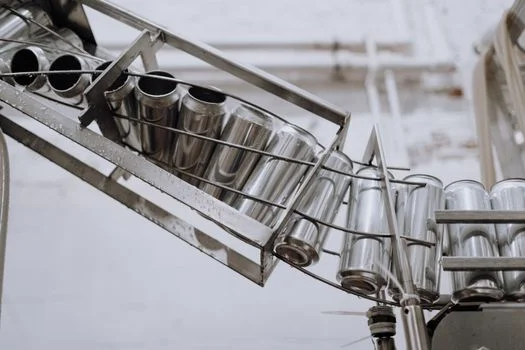
Hybrid DAF-RO-MBR trains are built for variable metal-bearing wastewater, with design removal of ≥99.9% for Cd, Cu, Ni, and Zn across the influent window above. The DAF system strips suspended solids, oils, greases, and some insoluble precipitates before membranes see the water. That step cuts fouling risk and keeps RO differential pressure from climbing too early in a cleaning cycle.
After DAF, the industrial RO system concentrates dissolved metals and routinely rejects more than 99% of common bivalent ions such as nickel, copper, and zinc when membranes and anti-scalant control are sound. Concentrate can move to recovery or regulated disposal on a path toward zero-discharge wastewater treatment. RO permeate then enters the integrated MBR system, which removes residual organics, fine solids, and trace contaminants before discharge or reuse.
Field packages in the 50–500 m³/h band keep a compact footprint of about 0.5–2 m² per m³/h by stacking DAF, skid RO, and MBR rather than spreading multiple clarifiers. Sludge from DAF typically lands at 0.5–1.5 kg/m³ of treated water before dewatering. Mercury duty is called out separately at ≥99% removal because Hg chemistry and polishing media differ from the common divalent set.
| Parameter | Specification | Notes |
|---|---|---|
| System Flow Rate | 50–500 m³/h | Scalable with parallel treatment trains for higher capacities. |
| Influent pH Range | 2–12 | Pre-treatment pH adjustment may be required for optimal DAF/RO performance. |
| Influent Metal Concentration | 1–1,000 mg/L | Handles high variability typical of industrial metal-bearing wastewater. |
| Influent TSS | 50–500 mg/L | Effectively managed by DAF pre-treatment. |
| Removal Efficiency (Cd, Cu, Ni, Zn) | ≥99.9% | Achieves ultra-low effluent concentrations. |
| Removal Efficiency (Hg) | ≥99% | Meets stringent mercury discharge limits. |
| Effluent Quality (Cadmium) | <0.1 mg/L | Meets EPA 40 CFR 433 (0.11 mg/L) and EU/WHO guidelines. |
| Effluent Quality (Copper) | <1.2 mg/L | Meets EPA 40 CFR 433 (1.2 mg/L) and EU/WHO guidelines. |
| Effluent Quality (Nickel) | <2.38 mg/L | Meets EPA 40 CFR 433 (2.38 mg/L) and EU/WHO guidelines. |
| Energy Consumption | 1.2–2.5 kWh/m³ | DAF: ~0.3 kWh/m³, RO: ~0.8 kWh/m³, MBR: ~0.5 kWh/m³ (HydropureWater field data, 2025). |
| System Footprint | 0.5–2 m²/m³/h | Compact design compared to conventional multi-stage systems. |
| Sludge Production | 0.5–1.5 kg/m³ | DAF sludge requires dewatering, typically with a plate and frame filter press. |
These engineering specs keep compliance, membrane life, and reuse options on the same flowsheet rather than as afterthought add-ons for auditors and lenders.
What MBR specs matter beyond a Toray label?
MBR specs that govern metal-bearing polish duty are membrane material, design flux, MLSS window, and cleaning chemistry—not the brand stamp alone. Buyers often search Toray MBR datasheets when they need proven hollow-fiber performance references, yet the controlling checks are sustainable flux under your COD and solids load, air-scour energy, and chemical cleaning interval. Match those parameters to the duty of an integrated MBR polish stage after RO, then confirm warranty terms against your peak temperature and oxidant profile before purchase.
How do Cu, Pb, and Se discharge limits get applied?
Copper discharge for metal finishing is capped at 1.2 mg/L as a daily maximum under EPA 40 CFR 433 in the same framework that sets nickel at 2.38 mg/L and cadmium at 0.11 mg/L. Lead and selenium are not assigned universal numbers inside that single table for every plant; they follow the categorical standard and local permit that apply to the specific industrial category. Confirm Cu, Pb, and Se limits on the facility’s permit fact sheet before freezing RO recovery and polishing targets.
CAPEX, OPEX, and ROI Cost Breakdown
CAPEX for metal-removal plants scales with technology class and hydraulic capacity, while OPEX is driven by energy, membranes, and chemicals. Precipitation trains start lower on capital, then spend more on reagents and sludge haulage over a multi-year horizon. Hybrid DAF-RO-MBR packages sit higher on CAPEX, typically $1,500–$3,000 per m³/h, and buy back risk through tighter effluent control and reuse potential on a zero-discharge path.
Metal finishing sites often see OPEX near $0.80–$1.50/m³; electronics plants commonly land at $1.20–$2.00/m³; mining matrices with higher loads and remote power can reach $1.50–$2.50/m³. Energy usually takes 30–40% of OPEX, membrane replacement 20–30%, and chemical dosing 15–25% when pH control and anti-scalants stay disciplined. Maintenance adders of about $0.10–$0.30/m³ for DAF, $0.20–$0.50/m³ for RO, and $0.15–$0.40/m³ for MBR should sit in the same spreadsheet as power.
| Cost Category | Parameter / Industry | Cost Range | Notes |
|---|---|---|---|
| CAPEX ($/m³/h) | Chemical Precipitation | $500–$1,200 | Lower initial investment, higher chemical/sludge handling OPEX. |
| Adsorption | $800–$1,500 | Media replacement/regeneration is a significant OPEX factor. | |
| DAF-RO-MBR Hybrid System | $1,500–$3,000 | Higher initial investment, lower long-term compliance risk, potential for water reuse. | |
| Algal-Bacterial Symbiotic System (ABSS) | $1,000–$2,000 | Emerging technology, specific application niches. | |
| OPEX ($/m³) | Mining Industry | $1.50–$2.50 | High metal concentrations, complex matrices, often remote locations. |
| Electronics Industry | $1.20–$2.00 | Diverse metal types, stringent discharge limits for electronics industry wastewater treatment. | |
| Metal Finishing Industry | $0.80–$1.50 | Variable influent, often includes nickel, copper, zinc. | |
| ROI Calculation Example | 100 m³/h DAF-RO-MBR System | 2–4 years payback | Assuming $2.5M CAPEX, $1.20/m³ OPEX, and $37,500/day EPA fine avoidance. |
| Key OPEX Drivers | Energy Consumption | 30–40% of OPEX | Primarily for pumps, RO, and MBR aeration. |
| Membrane Replacement | 20–30% of OPEX | RO and MBR membranes (3-5 year lifespan). | |
| Chemical Dosing | 15–25% of OPEX | For pH adjustment, coagulants, anti-scalants. | |
| Maintenance Costs ($/m³) | DAF System | $0.10–$0.30 | Routine cleaning, pump maintenance. |
| RO System | $0.20–$0.50 | Membrane cleaning, pump/instrumentation checks. | |
| MBR System | $0.15–$0.40 | Membrane cleaning, aeration system maintenance. |
A worked ROI case for a 100 m³/h hybrid at about $2.5M CAPEX and $1.20/m³ OPEX shows a 2–4 year payback when avoided EPA daily penalties near $37,500/day are treated as the compliance downside, not as a marketing claim. Regional CAPEX and OPEX benchmarks for industrial buyers are expanded in the Ho Chi Minh City wastewater treatment plant cost and Taichung wastewater treatment plant cost breakdowns.
How to Select the Right System for Your Industry

System selection for metal-bearing wastewater starts with measured influent pH, metal concentration, flow, and the permit limits that actually bind the site. Map pH across 2–12, total metals across 1–1,000 mg/L, and average versus peak flow across about 1–500 m³/h before locking a process train. Each technology class wins only inside a defined envelope; forcing a polish unit to do bulk removal usually inflates OPEX without buying permit margin.
Use this checklist before issuing a bid package:
- Confirm daily-max and monthly-avg limits for each regulated metal on the current permit.
- Log pH and metal peaks for at least two production cycles, including bath dumps.
- Separate FOG and TSS loads that belong in DAF from dissolved ions that need RO.
- Set RO recovery against scaling indices and concentrate disposal options.
- Define reuse quality if zero-discharge wastewater treatment is a corporate target.
- Budget membrane replacement on a 3–5 year cycle inside OPEX, not only CAPEX.
- Require redundant capacity of about 1.1–1.2× average flow for critical lines.
| Influent Characteristic | Recommended Technology | Typical Application | Justification |
|---|---|---|---|
| High Concentration (>500 mg/L), High pH (8–12), Moderate Flow | Chemical Precipitation | Mining, Battery Manufacturing, Electroplating (primary treatment) | Cost-effective for bulk metal removal, readily forms insoluble hydroxides. |
| Low Concentration (<50 mg/L), Neutral pH (4–8), Low-Moderate Flow | Adsorption (Ion Exchange/Activated Carbon) | Electronics, Textile Dyeing, Pharmaceutical (polishing) | High removal efficiency for trace metals, suitable for specific ion removal. |
| Variable Influent (pH 2–12, 1–1,000 mg/L), Strict Compliance, Moderate-High Flow | DAF-RO-MBR Hybrid System | Metal Finishing, Specialty Chemical, Pharmaceutical, Complex Industrial | Robust, adaptable, achieves highest removal efficiencies for diverse and fluctuating streams, supports zero-discharge goals. |
| Low Flow (<50 m³/h), Low Concentration (<100 mg/L), Controlled Conditions | Algal-Bacterial Symbiotic System (ABSS) | Urban Wastewater, Pilot Scale Industrial, Algal Research | Sustainable, low-energy biological treatment for specific niches. |
A 200 m³/h electronics plant with about 10 mg/L copper at stable pH 6 often fits adsorption at roughly $160K CAPEX and about $0.90/m³ OPEX when the duty matches copper wastewater treatment engineering specs. A finishing line with nickel peaks near 500 mg/L and swinging pH usually needs the hybrid train described in the nickel wastewater treatment specs and compliance guide.
Who This Is For / Next Step
This page is for plant engineers, EPC teams, and procurement managers comparing precipitation, adsorption, and hybrid membrane trains for metal finishing, electronics, or similar categorical dischargers. Teams chasing only municipal BOD/TSS permits without a metal panel will find simpler secondary trains more economical. Look elsewhere if the duty is mainly fluoride or hydrofluoric acid—those streams need calcium precipitation or activated alumina paths covered in the HF wastewater treatment guide and fluoride wastewater treatment system guide.
If you already have flow, metal panel, and permit limits, send them through the request-quote form so a duty-specific DAF-RO-MBR sketch and OPEX band can be sized against your peaks.
Frequently Asked Questions
What are the EPA limits for metals in metal-finishing wastewater?
EPA 40 CFR 433 sets daily maxima for metal finishing wastewater, including 2.38 mg/L nickel, 1.2 mg/L copper, 0.11 mg/L cadmium, and 0.015 mg/L mercury. EU Industrial Emissions Directive 2010/75/EU and WHO guidance can be tighter for some metals, including mercury values near 0.005 mg/L in referenced guidelines. Plants that only meet precipitation norms often still need membrane polish when local permits adopt the stricter end of that range.
How often do RO membranes need replacement in a metal-removal train?
RO membranes typically last 3–5 years on metal-bearing duty when pre-treatment, recovery, and cleaning stay inside design. Influent solids, scaling ions, and cleaning frequency dominate life more than nameplate flux alone. Annual cleans with citric acid for scale and sodium hydroxide for organics are common practice to hold differential pressure and salt rejection.
Can a DAF-RO-MBR system treat fluoride or hydrofluoric acid wastewater?
A standard DAF-RO-MBR train is not the primary design for high fluoride or hydrofluoric acid loads. Fluoride control usually starts with calcium fluoride precipitation or activated alumina adsorption before any membrane stage. Use the dedicated HF and fluoride guides linked above when those ions dominate the load sheet.
What is the energy use of a hybrid DAF-RO-MBR system?
Hybrid DAF-RO-MBR energy use typically ranges from 1.2–2.5 kWh/m³ under the field split of about 0.3 kWh/m³ for DAF, 0.8 kWh/m³ for RO, and 0.5 kWh/m³ for MBR. RO high-pressure pumps often account for roughly 50–60% of the total. Efficient pumps and VFDs can cut overall draw by about 20–30% when the hydraulic profile allows turndown.
How do I size a treatment system for my facility?
Sizing starts from measured influent flow (m³/h), metal concentrations (mg/L), and permit targets. A practical capacity check is System capacity (m³/h) = Influent flow rate × (1 + redundancy factor). Use about 1.2× for critical lines that must absorb peaks and maintenance outages, or about 1.1× when online spare volume already exists.