What Treatment Does a Sialkot Data Center Actually Need?
A data center in Sialkot needs source-separated wastewater treatment and a reuse-oriented cooling tower blowdown train, not an undifferentiated treatment plant. Cooling blowdown typically requires physical filtration, antiscalant conditioning, reverse osmosis where high recovery is justified, and disinfection before cooling makeup reuse. The train must be sized from measured blowdown and water chemistry: CTBD may contain 1,200–6,000 mg/L TDS, 10–50 mg/L suspended solids and residual treatment chemicals, according to Genesis Water Technologies’ 2026 brief. Final design must also address NEQS, current Khyber Pakhtunkhwa requirements and the receiving sewer or environment.
Cooling tower blowdown, or CTBD, is the controlled purge from a recirculating cooling loop. Evaporation removes water, while dissolved salts, treatment chemicals and other contaminants remain in the circulating water. A Sialkot data center should therefore segregate four streams before selecting equipment: cooling tower blowdown, sanitary wastewater, process wastewater, and maintenance or emergency discharges. Their confirmed sources and intended destinations determine whether each stream can be reused, biologically treated, physically separated or discharged.
The engineering objective is to reduce freshwater consumption and controlled discharge without transferring contaminants into the cooling loop, sewer, soil or surface water. The supplied research does not establish Sialkot’s current permit limits, receiving-sewer capacity, groundwater quality, facility cooling configuration or local reuse conditions. Those are gating inputs, not assumptions to be filled in by the equipment supplier.
| Stream | Primary contaminants and controls | Provisional treatment decision |
|---|---|---|
| Cooling tower blowdown | TDS, scaling minerals, suspended solids, biocides, inhibitors and dispersants | Physical filtration, chemical conditioning, UF where required, RO if high-quality makeup reuse is justified |
| Sanitary wastewater | Organic matter and pathogens | Separate biological treatment, disinfection and reuse assessment |
| Process wastewater | Site-specific contaminants that may inhibit biology or membranes | Equalization, segregation and controlled pretreatment before reuse or discharge |
| Maintenance and emergency discharges | Unpredictable chemicals, solids and contaminants | Isolation, sampling, inspection and authorized disposal; no automatic diversion to recovery |
The site decision framework has three endpoints: reuse, compliant discharge or zero liquid discharge. The choice depends on freshwater reliability, the permit route, receiving-system capacity, concentrate-management options and the recovery objective. A general data-center cooling blowdown guide can support the technical comparison, but Sialkot-specific approvals and site data remain necessary.
Start with a Measured Water Balance
Treatment capacity should come from reconciled site measurements, not a generic flow assumption. Meter makeup water, CTBD, evaporation, process wastewater and sanitary wastewater, while monitoring conductivity, pH and suspended solids. Genesis Water Technologies gives the relationship as blowdown ratio = 1/(CoC−1): at 4 cycles of concentration, blowdown is 25% of makeup volume; at 6 cycles, it is 20%.
Increasing CoC from 4 to 6 therefore reduces blowdown by 20%, not 50%, according to Genesis Water Technologies. The same source warns that fouling, microbiologically influenced corrosion and scaling risks increase above 5–6 cycles without advanced treatment. The operating target should consequently be selected through cooling-loop chemistry, materials and control review rather than water savings alone.
The same source reports that 20–40% of intake water may leave as blowdown. Use that range only for initial screening: Genesis Water Technologies reports that actual blowdown can exceed theoretical calculations by 15–30% because of unmeasured losses and emergency dumps. Seasonal evaporation, variable cooling load, chemical dosing, carryover and control logic must be included in the Sialkot design basis.
| Water-balance item | How to establish it | Design use |
|---|---|---|
| Makeup water | Site metering and source-water analysis | Water-use baseline and feed chemistry |
| CTBD | Continuous flow measurement plus operating log | Primary treatment design flow |
| Evaporation | Cooling-system water balance reconciled to metered inputs and outputs | CoC and intake-reduction assessment |
| Sanitary and process wastewater | Separate submeters and sampling points | Sizing of each treatment train |
| Emergency and maintenance discharges | Incident log, estimated worst case and approved disposal route | Equalization and contingency capacity |
Before buying equipment, reconcile at least one representative operating period. The facility-specific values should state average, peak and emergency flows, together with the analysis frequency and instrument accuracy. The metering and treatment components specified for the project should support both routine operation and the first 30 days of performance optimization.
Match Treatment to Each Wastewater Stream
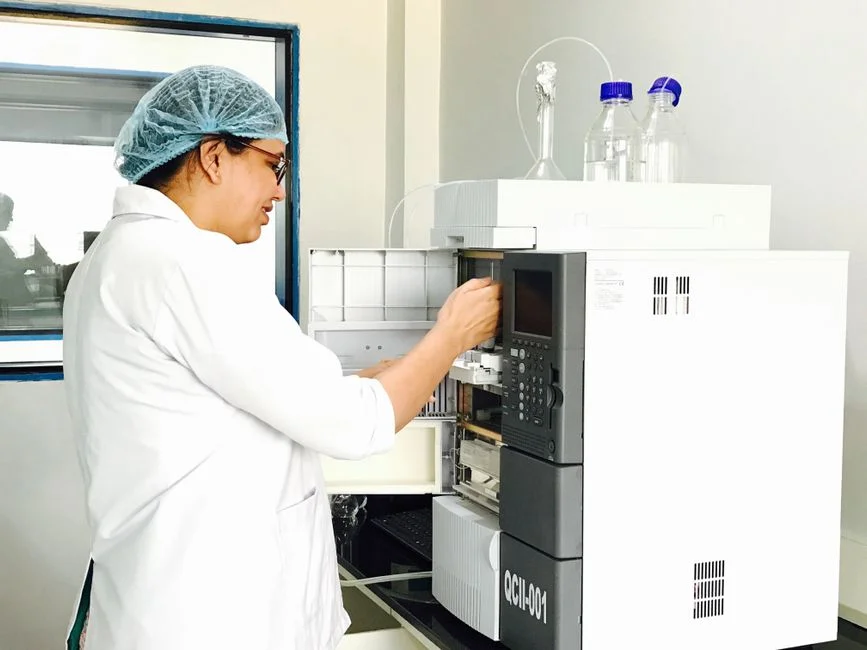
Cooling tower blowdown is the main recovery opportunity because it contains water already withdrawn, conditioned and used in the cooling loop. Its treatment must address concentrated dissolved solids, suspended solids, scaling minerals and residual cooling chemicals. Sanitary wastewater should remain separate because mixing it with high-TDS blowdown increases the biological treatment load and changes membrane-feed chemistry.
For sanitary wastewater, specify an integrated biological process appropriate to the measured flow, effluent objective and reuse requirement. Process wastewater needs segregation where contaminants could inhibit biology or damage membranes, followed by equalization and controlled release. Maintenance and emergency streams must be isolated and sampled; their authorized disposal route should not depend on automatic diversion into the blowdown recovery train.
UF is the higher-barrier option where reliable removal of bacteria, colloids and suspended solids is required before RO or reuse. The specified UF system for cooling blowdown pretreatment uses 0.03-micron PVDF membranes, has a stated capacity of 2,000–40,000 L/h, and provides automatic backwash and air scour. Where lower-complexity reuse or solids removal is sufficient, compare DAF with conventional clarification. The specified DAF machine range is 4–300 m³/h and addresses suspended solids, FOG, oil and colloidal matter.
| Treatment stage | Function | Applicability to Sialkot data-center streams |
|---|---|---|
| Equalization and segregation | Buffers variable flow and prevents incompatible streams from mixing | Apply separately to CTBD, process wastewater and sanitary wastewater where their flows differ |
| DAF or clarification | Removes suspended solids, oil, FOG and colloidal matter | Potential physical pretreatment where low-complexity recovery is sufficient |
| UF | Creates a barrier against bacteria, colloids and suspended solids | Preferred higher-barrier pretreatment before RO or sensitive reuse |
| Biological treatment | Reduces biodegradable sanitary and qualifying process contaminants | Separate treatment train for sanitary wastewater; process compatibility must be demonstrated |
| Physical recovery and authorized disposal | Separates contaminants and routes residual liquid for an approved destination | Maintain for maintenance, upset and emergency streams |
Where a common biological system is proposed for sanitary and process wastewater, require proof that process contaminants will not inhibit the biology or upset the reuse specification. The integrated sewage treatment option can be evaluated for sanitary wastewater, but it does not remove the need to characterize CTBD and process streams independently.
Protect RO from Scaling and Biological Growth
A dependable high-recovery CTBD train requires solids removal, scaling control and biological control in that order. Begin with multimedia filtration or equivalent solids removal to protect downstream membranes. The specified multi-media filter targets suspended solids, turbidity and colloids and provides SDD protection for downstream RO.
Use UF where the reuse endpoint requires a stronger barrier against bacteria, colloids and suspended solids. Both multimedia filtration and UF address feed turbidity; UF also provides the biological-barrier function identified by Genesis Water Technologies in its 2026 CTBD guidance.
Condition the feed for silica, calcium, magnesium and alkalinity before RO. Antiscalant and pH control must be selected against the actual Sialkot CTBD analysis rather than a generic chemical recipe. IDE’s 2026 review identifies silica, calcium carbonate and calcium sulfate as the principal scaling constraints that limit conventional brackish-water RO to 75–80% recovery.
Where on-site biological control is required, the specified chlorine dioxide generator range includes manual configurations from 50 g/h and fully automated systems up to 20,000 g/h for industrial cooling loops and process wastewater. UV is another option for final polishing or disinfection; the specified UV sterilizer range includes self-cleaning, outdoor and open-channel configurations.
| Barrier | Primary purpose | What it does not replace |
|---|---|---|
| Media filtration | Suspended-solids and turbidity removal before sensitive equipment | Does not replace scaling control or a defined biological barrier |
| UF | Removal of suspended solids, colloids and bacteria | Does not remove dissolved salinity by itself |
| Antiscalant and pH control | Control of membrane scaling risk | Does not replace solids removal |
| Chlorine dioxide | On-site biological control | Does not protect membranes from suspended solids or scaling |
| UV | Final disinfection or polishing | Does not replace upstream filtration, antiscalant or membrane-protection design |
Disinfection and pretreatment should not be treated as substitutes. UV and chlorine dioxide address biological control; filtration and UF reduce particulate fouling; antiscalant and pH control manage dissolved-salt precipitation. Each must be selected against the feed analysis and the final cooling-water chemistry program.
Choose the Right Recovery and Discharge Endpoint
Cooling-tower makeup reuse is the highest-value endpoint where feed chemistry and cooling chemistry are compatible. Genesis Water Technologies’ 2026 Bannu guide reports typically 60–85% recovery for CTBD-to-makeup treatment. Conventional brackish-water RO normally reaches only 75–80% before scaling becomes difficult, according to IDE’s 2026 review, so recovery must be established with conservative local chemistry rather than a headline target.
A modular UF-plus-RO train is appropriate when recovered permeate reduces freshwater demand and brine disposal is feasible. The industrial RO system for cooling tower makeup reuse should be quoted with the feed analysis, recovery definition and concentrate route, while the automatic chemical dosing system should be tied to the selected scaling-control program.
Physical separation followed by compliant discharge may be more practical when local reuse acceptance, sewer capacity, water chemistry or capital constraints do not support RO. Partial ZLD can provide 80–90% volume reduction and should be evaluated where freshwater alternatives are weak or discharge is severely constrained. Full ZLD is a last-resort endpoint where no acceptable discharge route exists.
| Endpoint | When it fits | Principal decision to verify |
|---|---|---|
| Reuse through UF plus RO | Freshwater reduction is valuable and the recovered water suits cooling makeup | Feed chemistry, recovery, cooling compatibility and concentrate route |
| Physical treatment and compliant discharge | Lower-complexity treatment is sufficient and an approved receiving route exists | Current discharge limits, sewer acceptance and receiving-system capacity |
| Partial ZLD | Discharge is constrained but not fully excluded | Volume-reduction requirement, energy supply and residual brine or solids route |
| Full ZLD | No acceptable discharge path and freshwater alternatives are unavailable | Feasibility, energy cost, equipment complexity and residual management |
Every pathway requires verification against NEQS, current Khyber Pakhtunkhwa environmental requirements, sewer-agreement conditions and the receiving environment. The supplied research provides no Sialkot-specific numerical discharge limits, so none should be stated as an assumed permit requirement.
Concentrate management belongs inside the train, not after RO procurement. The high-efficiency sedimentation tank may support selected physical-treatment arrangements, but each RO option should identify concentrate quantity and chemistry, authorized disposal or reuse, required pretreatment, storage and emergency response.
Budget for Treatment Without Treating Public Benchmarks as a Quote
Published 2026 benchmarks provide a screening basis, not a Sialkot quotation. HydropureWater’s 2026 Bannu guide documents a 50,000 GPD RO skid for CTBD at $250,000–$500,000 installed and $1.50–$3.00 per thousand gallons treated in OPEX. The same source documents full CTBD ZLD at $3–8 million CAPEX and $5–15 per thousand gallons OPEX.
That Bannu guide also documents an MVC brine concentrator for 10,000–30,000 GPD at $1–3 million CAPEX and 15–25 kWh per 1,000 US gallons of distillate. These figures come from a different Pakistani city and do not establish Sialkot pricing, freight, duties or local installation costs.
| Published benchmark | Stated scope | 2026 published range |
|---|---|---|
| RO skid | 50,000 GPD CTBD treatment | $250,000–$500,000 installed; $1.50–$3.00 per thousand gallons OPEX |
| Full ZLD | Data-center CTBD | $3–8 million CAPEX; $5–15 per thousand gallons OPEX |
| MVC brine concentrator | 10,000–30,000 GPD concentrate | $1–3 million CAPEX; 15–25 kWh per 1,000 US gallons of distillate |
Request a budgetary quotation against a specific feed analysis, design flow, recovery target, reuse endpoint and concentrate route. Require freight to Sialkot, customs and duties, foundations, electrical works, PLC integration, spares, membrane replacement, chemicals and operator training to be itemized separately. The 2026 coagulant and chemical-dosing design guide can support clarification of dosing-system scope, but it is not itself a project quotation.
Evaluate total cost of water through avoided freshwater purchases, avoided treatment, avoided discharge, utility-risk reduction and sustainability value. This avoids the common mistake of comparing equipment purchase prices while leaving membranes, chemicals, power, logistics, operators and concentrate disposal outside the commercial model.
Build a Supplier-Ready Specification and Commissioning Plan
A defensible supplier package starts with the missing site information. Issue a data request covering source-water analysis, CTBD analysis, seasonal flow profile, current chemical program, cycles of concentration, cooling-system materials, reuse target, discharge route, utility costs and electrical availability. The facility must also identify who controls cooling chemistry and who owns discharge permitting.
Require guaranteed design flows, feed and permeate limits, a clear recovery definition, membrane-fouling criteria, cleaning method, backup power, bypass controls, alarms and PLC/SCADA integration. The specification should define how performance is demonstrated under variable cooling load and what happens during power loss, chemical-out-of-condition, high turbidity and concentrate-route failure.
Include local operating requirements: trained operators, chemical storage, PPE, spare membranes or critical elements, remote support and preventive-maintenance procedures. Freight, installation, utilities, commissioning support and response times should be contractual rather than implied.
The FAT should verify equipment construction, controls, materials and instrument loops; the SAT should verify flow balancing, conductivity and turbidity instrumentation, automatic backwash, dosing interlocks, membrane cleaning, permeate quality and concentrate handling. For sanitary wastewater, add biological process performance, disinfection and reuse criteria. For process wastewater, add contaminant-segregation controls and pretreatment confirmation.
Treat the first 30 days as an optimization period, comparing measured blowdown and water quality with the design water balance. Use the DAF versus clarifier comparison to verify the selected physical-treatment rationale and the 2025 skid-mounted wastewater treatment guide as a reference for integrated skid scope.
Frequently Asked Questions
What wastewater treatment capacity does a Sialkot data center need?
Size each stream from measured flows and analyses. Use the water balance and source-segregation tables rather than a generic data-center flow rule, and include average, peak and emergency conditions.
Is UF or RO required for cooling tower blowdown?
UF is the stronger pretreatment and biological barrier; RO is required when dissolved-salt removal and high-quality cooling makeup reuse justify it, while physical treatment may suffice for a lower-complexity recovery path. The decision requires CTBD chemistry, reuse requirements and concentrate options.
How much should a blowdown treatment system cost?
Use the published 2026 benchmarks only for screening, then obtain a site-specific quotation. Require freight to Sialkot, duties, local foundations, electrical and PLC works, commissioning, spares, chemicals, operator training and concentrate management to be priced separately.
Which compliance and supplier documents should be required?
Require design calculations, performance guarantees, test certificates, material certificates, electrical and PLC documents, FAT/SAT protocols, operating manuals, chemical data, spare parts and maintenance plans. Also obtain written confirmation of the assumed permit route and receiving-system requirements.
When is ZLD justified in Sialkot?
ZLD is justified when freshwater alternatives are unavailable and discharge is effectively prohibited or infeasible. Otherwise, modular reuse treatment with a defensible concentrate route should be evaluated first; the data center wastewater and cooling blowdown guide and engineering guide for data-center cooling blowdown treatment provide comparison points, not Sialkot-specific approvals.