Why Delhi Data Centres Cannot Treat Blowdown as Waste Anymore
Delhi NCR sits inside one of India's most overdrawn water basins: the Delhi Jal Board (DJB) supplies roughly 3,900 MLD against an urban demand that exceeds 5,000 MLD on a normal summer day, so any new hyperscale or colocation build is immediately competing with households, agriculture, and industry for the same allocation. Hyperscale developers routinely top up shortfalls with private tankers at premium cost and with borewell abstraction in notified overexploited blocks — a path that the Central Ground Water Authority now restricts for new IT parks. Against that squeeze, cooling-tower blowdown (CTBD) is the largest single consumptive stream inside a Delhi data-hall fence: at 4–6 cycles of concentration (COC), 25–30% of make-up water is lost as blowdown (Genesis Water Technologies, 2026), and during Delhi's April–June wet-bulb peaks of 28–32°C that fraction can climb further because operators have to bleed more aggressively to hold scale index.
The regulatory ceiling is just as binding. CPCB Schedule VI prescribes inland surface discharge limits of BOD ≤30 mg/L (3-day, 27°C), COD ≤250 mg/L, suspended solids ≤100 mg/L, oil & grease ≤10 mg/L, pH 5.5–9.0, and chloride ≤1,000 mg/L — and brackish CTBD at 4 COC alone runs 1,200–2,500 mg/L TDS, so direct discharge fails on residual TDS and chlorides even after the BOD is satisfied. The Climate Neutral Data Centre Pact (2025) further caps Water Usage Effectiveness (WUE) at 0.4 L/kWh for new builds in water-stressed basins, which is a level most Delhi halls cannot meet on DJB make-up alone. The same logic that drove reclaimed-water substitution of up to 300 MGD across Texas power plants (Cartagena Vaca et al., 2026) applies to Delhi: treat CTBD as an internal resource, not a waste stream.
Cooling Tower Blowdown Chemistry in a Delhi Context
Delhi make-up water is dominated by the Yamuna and by DJB-treated surface water, with a smaller borewell fraction where abstraction is still permitted. The table below shows how sparingly soluble species stack up as the cooling tower concentrates the circulating water, and why silica — not TDS — sets the recovery ceiling for any RO-based reuse train.
| Parameter | Delhi make-up (Yamuna / DJB treated) | CTBD at 4 COC | CTBD at 6 COC |
|---|---|---|---|
| Total Dissolved Solids (mg/L) | 600–1,200 | 2,400–4,800 | 3,600–7,200 |
| Total hardness as CaCO3 (mg/L) | 400–800 | 1,600–3,200 | 2,400–4,800 |
| Silica as SiO2 (mg/L) | 60–120 | 240–480 | 360–720 |
| Chloride (mg/L) | 150–400 | 600–1,600 | 900–2,400 |
| Temperature (°C, summer peak) | 25–30 | 30–38 | 32–40 |
| Suspended solids (mg/L) | 5–15 | 10–50 | 15–60 |
Once concentrate SiO2 exceeds roughly 150–180 mg/L at 75% RO recovery, conventional antiscalants can no longer hold the induction period of silica polymerisation, and the membrane scales within hours (IDE Technology, 2026). The same paper documents that conventional brackish-water RO on CTBD plateaus at 75–80% recovery for exactly this reason. Delhi's 60–120 mg/L silica make-up therefore forces a designer either to accept a conservative RO recovery around 50–65%, or to remove silica upstream by warm lime softening, ion exchange, or a high-pH precipitation step, or to split salt removal from osmotic limits using a fluidised-bed reactor that withdraws CaCO3 and silica as dense pellets (IDE MAXH₂O principle, IDE Technology, 2026).
Two other CTBD-specific loads shape membrane compatibility. First, treatment-chemical residues — phosphonates, polymeric dispersants, oxidising biocides (ClO2 or HOBr), and trace chromate in legacy systems — accumulate in proportion to COC and can foul RO membranes or breach CPCB Schedule VI on metals (Genesis Water Technologies, 2026). An automatic antiscalant and biocide dosing skid with non-phosphate, low-toxicity chemistry keeps those residuals inside the membrane envelope. Second, suspended solids at 10–50 mg/L, biofilm fragments, and corrosion products in the blowdown make a DAF pre-treatment ahead of RO or a multimedia side-stream filter essential to keep the SDI15 below 3 before the high-pressure pump.
Three Treatment Trains That Actually Work in Delhi
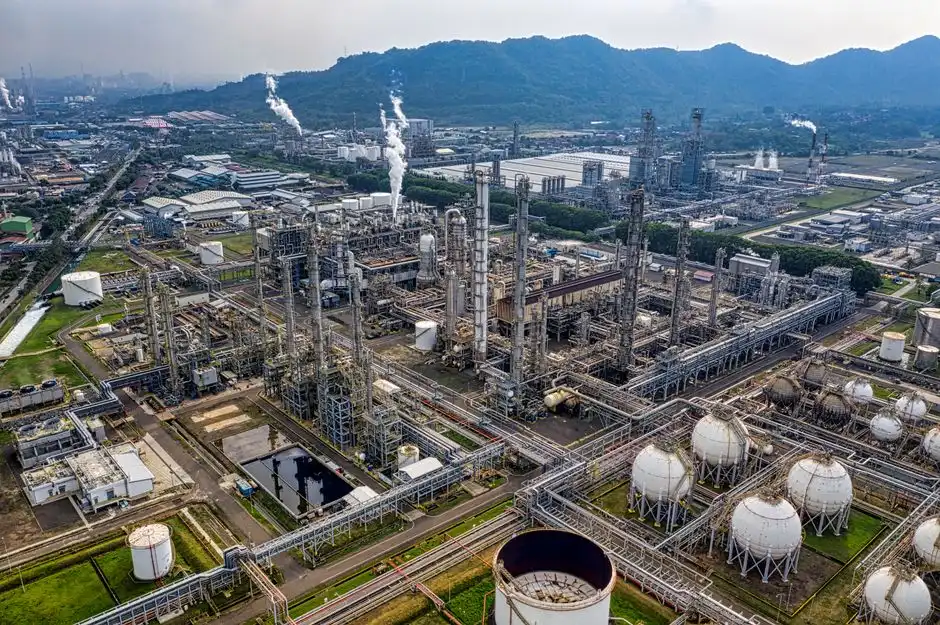
Three configurations cover almost every procurement scenario a Delhi EPC will see. The choice is driven less by technology availability and more by what the site is allowed to discharge, how much freshwater the operator is willing to keep drawing, and how much plot area the hyperscale developer is willing to give to a water block.
| Train | Core unit operations | Overall recovery | Plot footprint | Indicative CAPEX (INR, 2026) |
|---|---|---|---|---|
| A — Reuse-grade RO | Side-stream filtration (1–5% of circulation) → DAF / multimedia filter → antiscalant dosing → RO at 50–75% recovery → permeate polish → blend to cooling-tower make-up | 60–75% | ~60 m² | ₹1.0–2.5 cr (sourced from USD 50K–200K side-stream + USD 250K–500K RO package at ~₹83/USD) |
| B — RO + MVC partial ZLD | RO at 75–80% recovery → MVC evaporator at 95–98% recovery on concentrate → distillate <10 mg/L TDS reused; 20–30% solids brine to off-site disposal or crystalliser | ~95–98% | ~150–200 m² | ₹8–25 cr (sourced from USD 1–3M MVC block + RO upstream) |
| C — Full ZLD with crystalliser | RO → MVC / brine concentrator → thermal crystalliser → solid salt cake | 95–99% | ~300 m² + crystalliser shed | ₹25–66 cr (sourced from USD 3–8M full ZLD block) |
Train A relies on an industrial RO system for cooling tower blowdown reuse sized to the make-up deficit. It is the only configuration that consistently fits inside the available plot of a brownfield colocation hall, but it cannot by itself hit the CNDCP 0.4 L/kWh WUE cap on a Delhi summer day because discharge to sewer is still required for the 25–40% concentrate stream. Train B adds an MVC evaporator on the RO concentrate to reach an overall recovery of about 98.75%, reduces freshwater draw to a small polishing stream, and produces a distillate below 10 mg/L TDS that can be blended directly back to the cooling tower (Genesis Water Technologies, 2026). MVC energy demand sits at 15–25 kWh per 1,000 US gallons of distillate, which is the line item that determines OPEX (Genesis Water Technologies, 2026). Train C, full ZLD, is justified only when municipal discharge is legally unavailable, when the plot sits in a notified groundwater-overexploited block, or when the operator has committed to a WUE below 0.2 L/kWh as a board-level water-positive target. For most Delhi projects, Train B is the realistic 2026–2028 envelope, with Train A retained as a phase-1 deployable system that can be upgraded to Train B once freshwater tariffs or DJB allocation tighten.
Two design principles recur across all three trains and are worth lifting from the high-recovery architecture literature. The first is separation of salt removal from osmotic limits: by withdrawing sparingly soluble silica and CaCO3 as controlled precipitates in a fluidised-bed reactor rather than letting them accumulate in solution, the downstream RO operates inside its induction window and the MVC sees a near-pure NaCl brine (IDE Technology, 2026). The second is dynamic RO flushing — short production periods alternated with high-velocity flush pulses — which keeps the membrane surface below the supersaturation threshold without resorting to interstage boosting. The comparable Hong Kong CTBD engineering guide applies the same logic to a silica-different but humidity-different make-up profile, and is useful for cross-checking antiscalant dose assumptions on tropical summer days.
Sizing the Train for a Representative 10 MW Delhi Hall
A 10 MW evaporative-cooled hall in Delhi NCR at 4 COC draws roughly 600 kL/day of make-up during the April–June peak, of which 25–30% is purged as blowdown (Genesis Water Technologies, 2026). That puts the design CTBD flow at 150–180 kL/day at 1,200–2,500 mg/L TDS — consistent with the 100 MW ≈ 2 ML/day benchmark in IDE's CTBD reference (IDE Technology, 2026). Train A then needs an RO sized for ~180 kL/day of feed: at 75% recovery the unit delivers ~135 kL/day of permeate for blending back to the cooling tower and produces ~45 kL/day of concentrate, which can be sent to sewer after TDS compliance or forwarded to an MVC in Train B. Train B stacks the same RO with a 5–10 kL/h MVC on concentrate; overall recovery climbs to ~98.75%, freshwater draw from DJB or borewell falls to under 10 kL/day in steady state, and the skid block occupies roughly 150–200 m². Indicative Indian CAPEX, converted at ~₹83/USD from the Genesis Water Technologies 2026 bands, is ₹1.0–2.5 cr for Train A and ₹8–25 cr for Train B, with Train C full ZLD reaching ₹25–66 cr once a crystalliser shed and solids handling are included. Those numbers bracket the procurement conversation a Delhi CFO will expect to see on a Monday morning, but the final figure swings on feed TDS, target WUE, and whether existing side-stream filtration and DAF skids can be re-used from a prior build phase. A useful cross-check for the membrane step is the NF vs RO engineering comparison for CTBD, since high-silica Yamuna make-up generally forces RO over NF, whereas a softer borewell blend can sometimes justify NF at lower operating pressure.
CPCB and DJB Compliance: What the Discharge Has to Hit
CPCB Schedule VI's general effluent limits for discharge into inland surface water are the binding numbers for any concentrate or sidestream that exits the site fence. For a CTBD reuse plant the parameters that actually drive design are BOD3 ≤30 mg/L, COD ≤250 mg/L, suspended solids ≤100 mg/L, oil & grease ≤10 mg/L, pH 5.5–9.0, and chloride ≤1,000 mg/L; TDS is not numerically fixed in Schedule VI but the chloride cap and the typical 1,500 mg/L TDS trigger applied by many SPCBs effectively force RO on any concentrate that has not been polished. Delhi Pollution Control Committee consent to operate typically caps total daily effluent volume and, for new hyperscale builds in notified overexploited blocks, may require zero liquid discharge outright; that is the regulatory path that pushes a project from Train A to Train B or C before commissioning, not after. The place-based logic in Santoro & Catucci (2026) supports counting CTBD reuse toward the facility's net freshwater-positive declaration, since the substitution is one-to-one and the indirect water penalty of the reuse train is below 0.1% of the displacement benefit (Cartagena Vaca et al., 2026). At audit, the EHS file has to show logged antiscalant dose, biocide residuals, RO clean-in-place frequency, and a calibrated blowdown flow meter — without that paper trail, even a compliant train fails consent renewal.
Choosing the Right Train: A Decision Framework
Three questions decide the train. First, is municipal sewer discharge permitted and is WUE ≤0.6 L/kWh acceptable? If yes, Train A. Second, is sewer restricted, or is WUE ≤0.4 L/kWh mandated under the CNDCP 2025 cap? If yes, Train B. Third, is ZLD legally required, or does freshwater cost justify a full crystalliser block? If yes, Train C. Plot area is a hard secondary filter: Train A fits in ~60 m², Train B needs ~150–200 m², Train C needs ~300 m² plus a covered crystalliser shed, and many Delhi-NCR plots cannot release that footprint without sacrificing white-space area. The summary table below is the one to paste into a board paper.
| Train | Recovery | CAPEX band (INR, 2026) | OPEX band (INR / kL permeate) | CPCB Schedule VI risk | Freshwater saved vs DJB baseline |
|---|---|---|---|---|---|
| A — Reuse-grade RO | 60–75% | ₹1.0–2.5 cr | ~₹10–25 | Low (concentrate to sewer after polishing) | 40–55% |
| B — RO + MVC partial ZLD | ~95–98% | ₹8–25 cr | ~₹30–60 | Very low (distillate <10 mg/L TDS reused) | 85–95% |
| C — Full ZLD | 95–99% | ₹25–66 cr | ~₹60–120 | Negligible (no liquid discharge) | 95–99% |
Design choice should also reflect whether the local irrigation canal, Najafgarh drain outfall, or adjacent industrial estate can absorb a residual 30–45 kL/day of polished concentrate as a shared-value outlet (Santoro & Catucci, 2026) — that place-based outlet can be the difference between Train A and Train B on a given site. For the full cost stack — civil works, ETP housing, common effluent tie-in — the 2026 ETP CAPEX and OPEX breakdown gives the line items to fold into a vendor quote, and the Accra data center CTBD engineering guide is a useful comparator for grid-carbon and freshwater-cost sensitivity when the EPC is asked why Train B is preferred over Train A at a Delhi tariff structure.
Frequently Asked Questions
What cycles of concentration (COC) should a Delhi cooling tower target in 2026?
Delhi's summer wet-bulb of 28–32°C forces a practical range of 4–6 COC, with 4 COC as the safer baseline to keep LSI under control on Yamuna make-up; pushing to 6 COC saves freshwater but tightens the silica envelope to roughly 360–720 mg/L SiO2 in the blowdown and demands RO recovery below 60% on conventional antiscalant programs (Genesis Water Technologies, 2026; IDE Technology, 2026).
What is the binding silica limit for RO recovery on Delhi CTBD?
Once concentrate SiO2 exceeds about 150–180 mg/L at 75% RO recovery, conventional antiscalants can no longer hold the silica polymerisation induction period, and the membrane scales within hours — this is the practical ceiling that drives Delhi designs toward either a warm lime / ion-exchange softening step upstream or a fluidised-bed precipitation reactor that withdraws silica as pellets (IDE Technology, 2026).
What WUE should a new hyperscale Delhi data centre be designed to hit?
The Climate Neutral Data Centre Pact (2025) caps WUE at 0.4 L/kWh for new builds using potable make-up in water-stressed basins; on a 10 MW Delhi hall that target effectively requires Train B (RO + MVC at ~98.75% recovery) rather than Train A, since Train A's sewer discharge keeps WUE in the 0.6–0.8 L/kWh band during the April–June peak (Santoro & Catucci, 2026).
Which CPCB Schedule VI parameter most often blocks CTBD discharge?
For a CTBD stream the practical blocker is chloride ≤1,000 mg/L — brackish blowdown at 4 COC on Delhi make-up runs 600–1,600 mg/L chloride and fails this cap on its own, which is why even a polishing RO stage is required before any concentrate is sent to municipal sewer (CPCB Schedule VI, general effluent limits).
When does full ZLD (Train C) become economically defensible in Delhi?
Train C is defensible when ZLD is legally mandated in a notified groundwater-overexploited block, when freshwater procurement cost (DJB + tanker + borewell CAPEX amortisation) crosses the OPEX breakeven with Train B, or when the operator has committed to a sub-0.2 L/kWh WUE; otherwise the ₹25–66 cr CAPEX and ₹60–120/kL OPEX of full ZLD are hard to defend against Train B at Delhi's grid-carbon factor (Genesis Water Technologies, 2026).
Related Equipment
- multi-media filter for CTBD side-stream filtration — specifications, capacity range, and technical data
- UF pretreatment for high-recovery RO — specifications, capacity range, and technical data