Which Rules Control a Bee Spring Sewer Discharge?
Sewer compliance is determined at the point of discharge, but the controlling documents for a plant near Bee Spring must be identified before equipment is specified. Federal pretreatment rules establish the baseline, while the receiving sewer authority’s current permit, local-limit schedule, sewer-use ordinance and industrial-user requirements may impose additional or more restrictive conditions. The applicable federal category depends on the operation: 40 CFR Part 440 applies to applicable ore mining and dressing subparts, while 40 CFR Part 433 applies to metals finishing. A mining or metals process near Bee Spring generally needs an on-site train combining equalization, chemical treatment, solids separation and dissolved-metals polishing, but the final design must follow verified local requirements rather than conditions reported for another municipality.
40 CFR Part 403, the General Pretreatment Regulations, prohibits pass-through that reduces the publicly owned treatment works’ treatment efficiency, contaminates its sludge, or causes the POTW to violate its own discharge limits. A categorical standard adds parameter-specific requirements; it does not establish whether a proposed industrial discharge is acceptable at the connection point.
For an ore mine, quarry or aggregate operation, the correct Part 440 subpart must be selected according to the mine category. A hard-rock mine, sand-and-gravel operation and aggregate facility should not be assumed to share one national limit. For a metals-finishing facility, Part 433 controls total chromium, nickel, zinc, lead and cadmium (HydropureWater, 2026).
Before sizing tanks or selecting a separator, obtain the current Bee Spring sewer-use ordinance, receiving POTW permit, local-limit schedule, discharge permit and any industrial-user agreement. Confirm which authority receives the flow and whether sector-specific or site-specific conditions apply. The Carrizo Springs permit, local limits and flow data described by HydropureWater (2026) are a comparable small-POTW example, not evidence of Bee Spring requirements.
| Document or rule | What it controls | Buyer action |
|---|---|---|
| 40 CFR Part 403 | General pretreatment prohibitions, including pass-through affecting POTW operation, sludge or permit compliance | Document the receiving POTW’s treatment basis and prohibited-discharge conditions |
| 40 CFR Part 440 | Applicable ore-mining and dressing categorical subpart | Classify the mine or aggregate operation before selecting treatment targets |
| 40 CFR Part 433 | Metals-finishing categorical requirements for total chromium, nickel, zinc, lead and cadmium | Use only after confirming that the facility falls within the applicable category |
| Bee Spring authority documents | Local limits, sewer-use terms, monitoring, sampling and discharge authorization | Request the current, dated documents directly from the receiving authority |
This preliminary regulatory check is consistent with mining-plant sewer compliance guidance, but the Bee Spring authority’s current records control the project.
Build the Treatment Train from the Wastewater Source
The process train should begin with the wastewater source and its compliance risk, not with a generic package of equipment. Equalization comes first, followed by chemical control, solids separation, polishing and sludge handling, with each unit assigned a measurable treatment objective.
For aggregate wash or quarry dewatering, HydropureWater’s Carrizo Springs example (2026) identifies TSS, lead and zinc as frequent design drivers. For metals finishing, the same source identifies total chromium, nickel and zinc as common drivers. These are industry-context parameters, not Bee Spring limits.
Equalization should absorb batch wash cycles, startup flows and off-spec dumps. The cited example recommends 24–48 hours of equalization with online pH and conductivity monitoring and diversion of off-spec flow to holding capacity. From there, flow can pass through pH adjustment and chemical precipitation, then an industrial DAF system for mining wastewater to remove suspended solids, precipitated metals, FOG and colloidal material. An PLC-controlled chemical dosing system can coordinate reagent addition and diversion decisions.
Residual dissolved metals require downstream polishing. Reactive filtration is the logical next step where the design basis supports it; ion exchange or membrane treatment may be necessary for arsenic, selenium or another species that is not adequately removed. Hexavalent chromium requires a separate reduction step before precipitation. The example uses sodium metabisulfite or ferrous sulfate at approximately pH 2.0, with 30–60 minutes of reaction time and ORP confirmation, followed by precipitation at pH 8.5–9.5 (HydropureWater, 2026). These are example conditions, not universal recipe settings.
| Wastewater source | Primary risk | Treatment sequence to evaluate | Evidence required |
|---|---|---|---|
| Aggregate wash or quarry dewatering | Suspended solids and selected dissolved metals | Equalization, pH control, precipitation as justified, DAF or clarification, polishing if required | Flow survey, TSS and metals profile, local-limit comparison |
| Metals finishing | Total chromium, nickel, zinc, lead and cadmium under Part 433 | Equalization, reduction where Cr(VI) is present, precipitation, solids separation and polishing | Speciation, ORP response, metals mass loading and permit limits |
| Off-spec batch dump | Short-duration concentration and flow excursion | Divert to holding capacity, characterize and release only after acceptance criteria are met | Maximum dump volume, constituent range and release procedure |
Final pH, reagent dose, residence time and polishing selection should follow representative influent characterization, verified permit limits and treatment trials.
Choose DAF, Clarification or a Combined Treatment Strategy
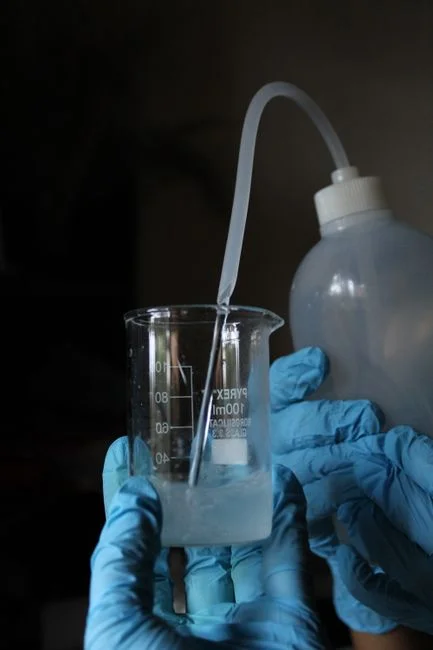
DAF is the stronger candidate when the wastewater contains significant colloidal fines, free oil, FOG or precipitated solids that must be removed before polishing. Clarification remains appropriate when the solids are predominantly settleable, and a lamella clarifier can combine flocculation, sludge recirculation and inclined-plate separation. The decision should be based on representative wastewater rather than a preference for one equipment type.
HydropureWater (2026) publishes a DAF range of 4–300 m³/h across 13 standard models. That is a published selection envelope, not an unlimited capacity claim or a basis for selecting equipment without an influent and hydraulic design basis.
The Carrizo Springs example reports 90–95% TSS reduction with DAF while cautioning that DAF rarely reduces dissolved metals to microgram-per-liter concentrations (HydropureWater, 2026). Efficient solids capture therefore does not demonstrate compliance with a dissolved-metals requirement. A downstream polisher may still be necessary.
The central sizing error is to select a solids separator before defining the required dissolved-metals concentration. Both alternatives also need hydraulic, chemical and sludge criteria. A comparison of DAF and clarifiers for mining wastewater provides a useful selection framework, while the chemical-wastewater solids-separation guide addresses the interaction between chemistry and separation.
| Selection condition | Preferred evaluation | Key limitation to test |
|---|---|---|
| High colloidal fines, free oil or FOG | DAF | Confirm dissolved-metals polishing and chemical consumption |
| Predominantly settleable solids | Clarification or lamella clarifier | Verify flocculant performance and solids capture under variable flow |
| Variable chemistry with both settleable and floatable solids | Combined flocculation and solids-separation evaluation | Assess recovery, sludge yield and upset sensitivity |
| Very low dissolved-metal target | Solids separation followed by reactive filtration, ion exchange or membranes | Do not use TSS removal as evidence of dissolved-metal compliance |
Use jar or pilot testing to compare effluent quality, chemical consumption, sludge generation and sensitivity to hydraulic and metal-loading upsets. If a lamella unit is considered, request the high-efficiency sedimentation tank data and verify performance with representative wastewater.
Control Dissolved Metals and Chemical Wastes
Suspended and dissolved fractions must be controlled and sampled separately. A clear DAF effluent can still exceed a dissolved-metals limit because dissolved contaminants remain in the water phase. Treatment selection should therefore distinguish TSS capture from dissolved-metal removal and avoid inferring one from the other.
Hydroxide precipitation is a standard candidate for several metals, but HydropureWater (2026) states that it is less effective for selenium. Ion exchange or membrane polishing may therefore be required where selenium is present and the applicable sewer limit remains unmet. A multi-media filtration system may be evaluated for reactive polishing, subject to representative-media and contaminant testing.
Chromium requires an ordered process. First, reduce Cr(VI) to Cr(III) under controlled conditions with ORP monitoring; second, precipitate the resulting Cr(III); third, filter the solids. A dedicated residual-metals polisher is needed when reactive filtration, ion exchange or membranes must close the gap between process effluent and the sewer limit.
Sludge management belongs in the initial process design. The cited example describes plate-and-frame dewatering from 1–3% solids sludge to 25–35% dry-solids cake and estimates an additional $80,000–$200,000 for that dewatering scope (HydropureWater, 2026). A plate-and-frame filter press should be evaluated against expected sludge mass, solids characteristics, desired cake moisture and the actual disposal route.
Toxicity remains a material uncertainty. A 2024 academic review by Elsevier reported that some treatment technologies can generate highly toxic sludge and that evidence concerning adsorbent reuse, toxic-sludge management and system economics remains incomplete.
| Control question | Required evidence | Procurement implication |
|---|---|---|
| Will the effluent meet dissolved-metal limits? | Dissolved and total-metal analyses before and after each relevant unit | Specify a polisher; do not rely on DAF TSS-removal performance |
| Is Cr(VI) reduction complete? | ORP trend, reaction-time validation and total-chromium analysis | Require monitored reduction before precipitation |
| How much sludge will be generated? | Representative testing and mass balance for dry solids and wet tonnage | Price dewatering and disposal with stated assumptions |
| Is the residue appropriately characterized? | Waste classification and applicable disposal criteria | Do not assume nonhazardous disposal from sludge appearance |
Size the System for Slugs, Monitoring and Records
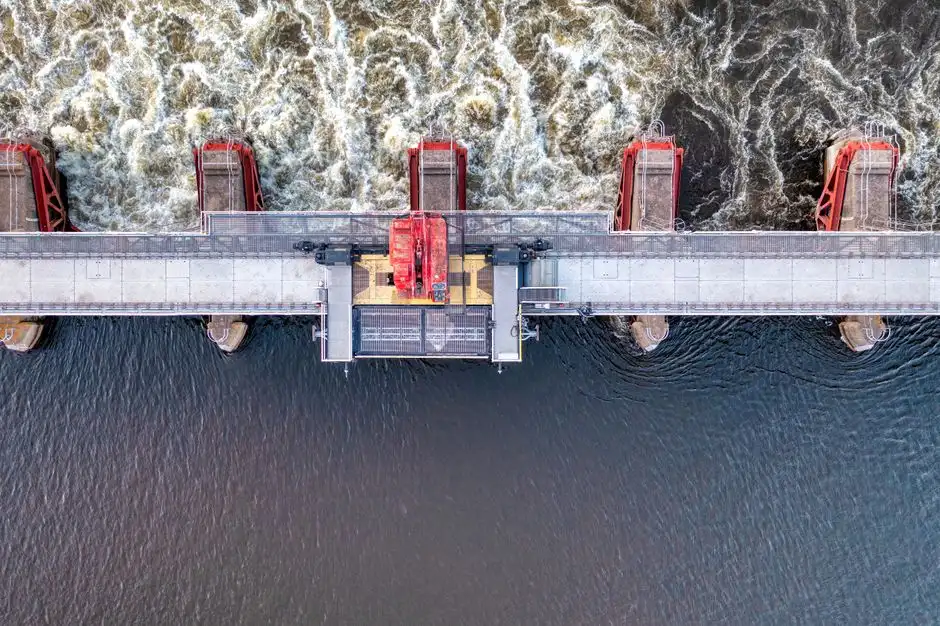
Equipment sizing should use the plant’s actual flow chronology, not only an average daily discharge. Batch wash cycles, equipment startup and rainfall-driven runoff can create short peaks that are invisible in monthly totals. The Carrizo Springs example identifies episodic industrial loads as a key risk at a small receiving POTW (HydropureWater, 2026).
Provide the equalization and off-spec holding capacity supported by those records. In the cited example, 24–48 hours of equalization with online pH and conductivity monitoring is used to trigger diversion. A rotary mechanical bar screen may protect downstream equipment from debris, but it does not substitute for flow equalization, solids removal or compliance monitoring.
Monitoring should cover the regulated discharge point, upstream process controls and the diversion system. Use grab samples for event characterization and composite samples where the permit requires a time-weighted representation. The analytical program should include flow, pH, conductivity, metals, TSS, oil and grease, plus every parameter named in the current Bee Spring permit.
Records should allow an auditor to reconstruct plant performance, not merely see one compliant sample. Require calibration records, chemical-use logs, sludge-generation data, diversion events, laboratory results and corrective-action records. Trend pH, conductivity, flow and metals against production, wash cycles, startup periods and runoff events. A recurring increase in metals or chemical demand can identify an overloaded precipitation stage, DAF unit or polisher before a discharge violation occurs.
Biological treatment should be added only when the wastewater characterization supports it. HydropureWater’s example (2026) suggests an MBBR only when raw-wastewater ammonia exceeds 20 mg/L. That is a screening condition from the example, not a substitute for analysis of toxicity, carbon availability, temperature and regulatory objectives.
Set the 2026 Equipment and Operating Budget
The 2026 budget must separate treatment-train capital, optional polishing, sludge dewatering and recurring operating costs. HydropureWater (2026) gives an order-of-magnitude capital range of $350,000–$900,000 for a packaged 50–200 m³/day train comprising equalization, pH adjustment and precipitation, DAF, reactive filtration and automatic dosing. Automation level, polishing intensity and included civil work affect the result, so these are screening values rather than quotations.
The same source estimates an additional $150,000–$400,000 for either an MBBR or a reverse-osmosis polisher where applicable; they should not be treated as simultaneously required. A further $80,000–$200,000 is estimated for plate-and-frame sludge dewatering. Every bid should identify whether tanks, foundations, wiring, controls, installation, commissioning and sludge handling are included.
Chemical consumption and sludge hauling remain major operating-cost lines. HydropureWater (2026) estimates 0.8–1.5 kWh/m³ for the reference treatment train and reports 2026 Texas industrial-waste disposal surcharges of $80–$140 per wet ton. The cited Dimmit County example assumes a 60–120-mile one-way haul; that distance is a logistics illustration, not a Bee Spring disposal route or price.
| Budget item | 2026 reference value | Scope and verification required |
|---|---|---|
| Packaged 50–200 m³/day core train | $350,000–$900,000 | Equalization, pH/precipitation, DAF, reactive filtration and automatic dosing; confirm civil-work scope |
| MBBR or reverse-osmosis addition | $150,000–$400,000 | Use only if characterization or residual contaminants justify the applicable option |
| Plate-and-frame dewatering | $80,000–$200,000 | Confirm cake yield, press capacity, polymer needs and disposal route |
| Electrical use | 0.8–1.5 kWh/m³ | Use for preliminary operating comparison; request the bidder’s connected-load calculation |
| Industrial-waste disposal | $80–$140 per wet ton in 2026 | Obtain a quote for the actual waste classification, moisture content and transport distance |
Require performance guarantees tied to the final permit limits and a defined influent envelope, with exclusions and remedies stated clearly. Reference budget logic in the industrial treatment-system guide and chemical-wastewater equipment comparison.
Request These Documents Before Ordering Equipment
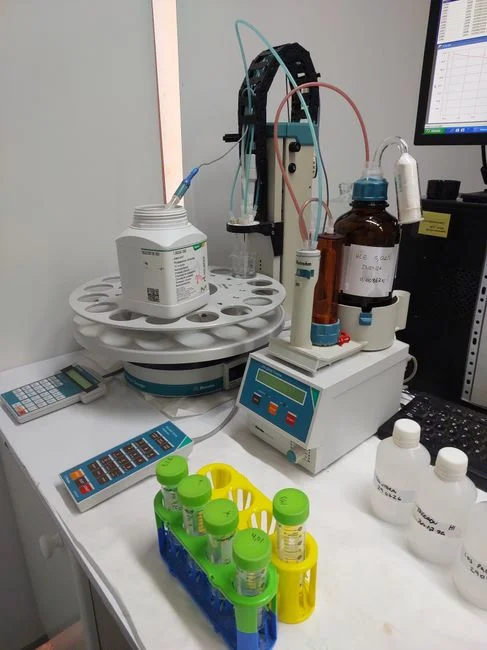
A defensible proposal begins with documents that establish jurisdiction, wastewater character, design flow and disposal responsibility. The receiving-authority file should contain the current sewer permit, local-limit table, sewer-use ordinance, discharge permit and any industrial-user agreement. If the industrial user or flow is new, also request the procedure for permit or ordinance applicability.
The owner’s process file should include process descriptions, a water balance, production and wash schedules, chemical inventory, rainfall and runoff information, historical discharge records, hazardous-waste determinations and preliminary sludge-generation estimates. These records distinguish continuous industrial effluent from episodic wash water or contaminated stormwater.
Require a representative influent and effluent analytical dataset. It should cover metals, TSS, pH, oil and grease, toxicity characteristics where applicable, and every parameter listed in the permit. Separate total and dissolved fractions where a dissolved-metals limit applies. For hexavalent chromium, include the analytical method, speciation procedure and ORP-based reduction data.
Each bidder should state:
- The applicable federal category and basis for that classification.
- The assumed design flow, peak flow and influent envelope.
- Each treatment step, its design objective and expected effluent contribution.
- Final effluent targets tied to a dated permit or local-limit source.
- Chemical use, sludge output, controls, utilities and operator attendance requirements.
- Pilot results, FAT or SAT protocols, operator training, spare parts, warranty and ongoing technical support.
Every proposed limit should identify its source, jurisdiction and date. The supplied research does not establish Bee Spring’s numeric local limits, so a bidder should not substitute a permit or cost from another municipality without a written basis. The industrial acquisition wastewater-requirements guide illustrates the due-diligence sequence, but the governing records must still come from the actual Bee Spring sewer authority.
Frequently Asked Questions
What capital budget should a mining or metals plant near Bee Spring allow for pretreatment?
Use $350,000–$900,000 as a 2026 screening range for a packaged 50–200 m³/day train containing equalization, pH/precipitation, DAF and reactive filtration with automatic dosing. The HydropureWater estimate (2026) also identifies $150,000–$400,000 for an MBBR or reverse-osmosis addition where justified, and $80,000–$200,000 for plate-and-frame dewatering. Ask bidders to itemize civil works, tanks, wiring, controls and installation before assigning the budget.
How should DAF or a clarifier be sized for variable mining wastewater?
Size from the actual flow chronology, including batch washes, startup discharges and runoff, not the average daily flow alone. HydropureWater (2026) reports 90–95% TSS reduction with DAF but notes that DAF rarely produces dissolved-metal concentrations at microgram-per-liter levels. Use representative jar or pilot testing to establish the required downstream polishing, chemical consumption and sludge yield.
What records are needed to demonstrate that pretreatment is operating consistently?
Retain flow, pH, conductivity, metals, TSS and oil-and-grees results, together with calibration records, chemical use, sludge generation, diversion events and corrective actions. Sampling should include the regulated discharge point and the locations needed to diagnose the process. Trend the data against production, wash cycles and rainfall so recurring overloads can be addressed before a discharge violation.
How can a buyer reduce compliance risk when selecting an equipment supplier?
Require a supplier to identify the applicable rule category, dated Bee Spring permit basis, design flow, influent envelope, treatment objectives, sludge assumptions and all exclusions. Request pilot data, FAT or SAT protocols, operator training, warranty, spares and support as contractual deliverables. Do not accept performance claims based only on TSS removal or on permit data from another municipality; the industrial wastewater requirements guide outlines the documents to verify.