
Why Carrizo Springs Discharges Need a Dedicated Pretreatment Train
The City of Carrizo Springs WWTP operates under TCEQ TPDES permit WQ0010145001 (Core Data Record RN101721124, status ACTIVE) at a site roughly 0.5 miles northeast of the intersection of Peña Street and US-83 in Dimmit County, with a permitted average daily flow of 0.7 MGD and a 0.35 MGD peak hourly limit, leaving very little hydraulic headroom for episodic industrial loads (per TCEQ Central Registry query, 2026). On August 5, 2024, the Carrizo Springs City Council voted 4-0 to issue an RFP for the WWTP wet well rehabilitation and to fund it with ARPA funds — a clear signal that the plant's headworks and biological trains are operating at finite capacity and are vulnerable to slug events from any industrial contributor connected to the collection system (per City of Carrizo Springs Special Session Minutes, 2024-08-05). On December 14, 2021, Council adopted Ordinance No. 826, a 5-year wastewater rate plan with 3% annual increases beginning January 2022, confirming the city's posture of funding incremental system upgrades rather than relaxing acceptance criteria for high-strength industrial waste (per City Council Regular Session Minutes, 2021-12-14).
For a mining, aggregate wash, or metals finishing contributor connected to this collection system, the practical implication is severe: there is no dilution buffer, no equalization basin inside the POTW dedicated to your flow, and no negotiating leverage against slug violations. A 4× upset in metals or a 1,000-gallon spill of process water reaches the headworks within minutes and can blow through biological treatment in a single pass. The 0.7 MGD permitted annual average means a 50 m³/day industrial contributor represents roughly 3% of the plant's total hydraulic load; a 500 m³/day contributor at 30% of design flow is operationally significant and would almost certainly trigger a permit amendment and a site-specific local limit evaluation. Pretreatment therefore must be designed as a complete, on-site unit — not as a partial polisher that assumes downstream help.
Which Pretreatment Rules Apply to a South Texas Mining or Metals Site
Federal baseline authority rests on 40 CFR Part 403, which establishes the General Pretreatment Regulations and prohibits "pass-through" of pollutants that reduce POTW treatment efficiency, cause sludge contamination, or violate the POTW's own TPDES effluent limits. On top of Part 403 sit the categorical standards: 40 CFR Part 440 governs ore mining and dressing, with subparts for the specific subcategory of mine you operate (e.g., Subpart B for hardrock mines, Subpart J for sand and gravel), and typically sets lead, zinc, copper, and total suspended solids as the most-restrictive parameters (per EPA effluent guidelines, current as of 2026). 40 CFR Part 433 applies to metals finishing and controls total chromium, nickel, zinc, lead, and cadmium with daily maximums and monthly averages; hexavalent chromium is the operationally most-difficult parameter because its 0.1 mg/L daily maximum often requires a dedicated reduction step. Centralized waste treaters fall under 40 CFR Part 437, and if your facility accepts off-site wastewaters, that part applies in addition to your primary category.
The state overlay is the TCEQ-administered TPDES pretreatment program, which delegates day-to-day enforcement to the POTW in most cases, including the City of Carrizo Springs. Because the city's permit is ACTIVE under WQ0010145001, the local sewer-use ordinance (Ordinance 665 as amended by 826) is enforceable, and the city may impose local limits stricter than the federal categorical standards — typically for total toxic organics, pH range (most municipal ordinances enforce 6.0–10.0 standard units), oil & grease (commonly 100–200 mg/L daily maximum), and metals covered by local limits derived from the POTW's own headworks analysis. For a typical aggregate wash or quarry dewatering stream, 40 CFR Part 440 sets the most-restrictive limit and the dominant parameters are usually TSS (50 mg/L daily maximum at the regulated discharge point inside your fence line) and metals of concern from blasting residues or sulfide ore oxidation — often lead and zinc. For a metals finishing shop discharging to the same WWTP, Part 433 governs and total chromium, nickel, and zinc are most likely to drive your treatment train design. A site-specific categorical determination, not a generic assumption, should be made before sizing equipment.
The Pretreatment Train: Step-by-Step Process Design
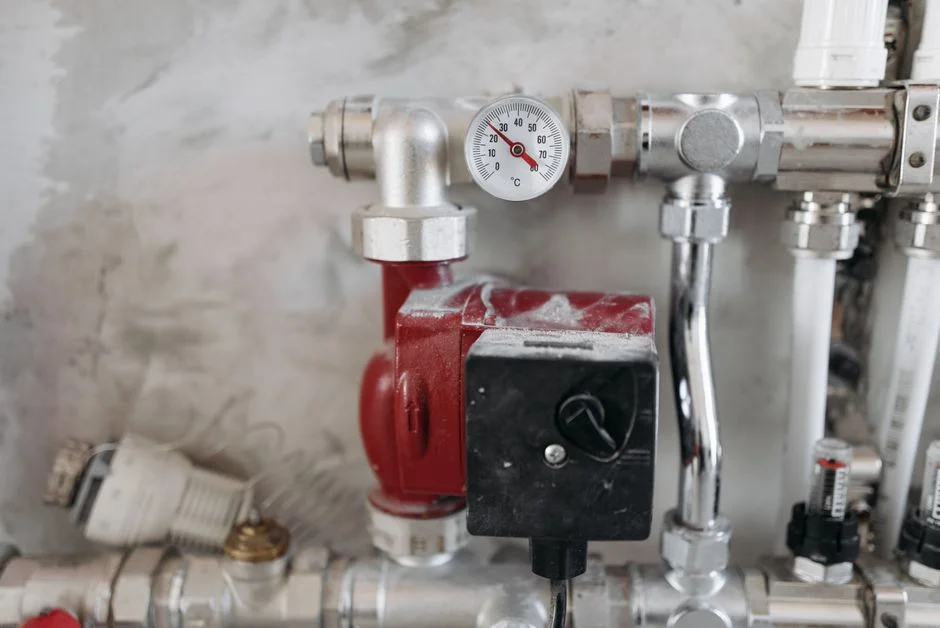
A defensible pretreatment train for a 50–500 m³/day South Texas mining or metals contributor discharging to the Carrizo Springs WWTP is a five-step sequence sized for slug control. The flow path runs: equalization → pH adjustment and chemical precipitation → Dissolved Air Flotation (DAF) system for solids and FOG → reactive filtration for metals polishing → optional ion exchange or membrane polisher for arsenic, selenium, or hexavalent chromium. Each step has a defined hydraulic residence and a defined effluent quality that feeds the next operation without the need for intermediate storage.
- Equalization (24–48 h residence): A 1,200–6,000 m³ tank, typically concrete or bolted carbon steel with an HDPE liner, fed by gravity or pumped from a batch sump. Mechanical mixers and an inlet splitter keep suspended solids from settling. Online pH and conductivity probes feed the SCADA and trigger diversion to a separate "off-spec" compartment on excursion. This is the single most important non-treatment unit in the train — without it, batch wash cycles and shift-pattern flows will produce slug violations regardless of how well the downstream chemistry is tuned.
- pH adjustment and chemical precipitation (15–30 min reaction): Lime slurry (typically 5–10% Ca(OH)₂) or caustic (NaOH) raises pH to 8.5–10.0 in a two-stage reactor train. Coagulants — ferric chloride (FeCl₃) at 50–150 mg/L, or alum at 100–300 mg/L — are dosed in the second stage. Anionic flocculant (0.5–2.0 mg/L) is added just before DAF to build a settleable/flotable floc. Lead, zinc, copper, and cadmium precipitate as metal hydroxides and are 95–99% removed in this step; minimum solubilities for most divalent metals sit at pH 9.0–9.5, which is why the upper end of that range is targeted.
- DAF (20–40 min hydraulic): A circular or rectangular flotation unit with hydraulic retention of 20–40 minutes and air-to-solids ratios of 0.005–0.015 lb air/lb solids. DAF achieves 90–95% TSS reduction, typically polishing effluent TSS to 20–50 mg/L, and captures 60–80% of influent FOG on a well-tuned unit. Skimmed sludge at 3–6% dry solids is sent to a sludge holding tank ahead of mechanical dewatering.
- Reactive filtration (10–20 min bed contact): Upflow sand or engineered media filter, often media-coated with reactive chemistry (a well-known design pattern) for polishing residual dissolved metals to microgram-per-liter levels. A reference installation in Burrillville, RI achieved 8 µg/L (0.008 mg/L) copper in mine-influent water, a level consistent with the tightest municipal metals objectives in North America (per Nexom mining case data).
- Ion exchange or membrane polisher (optional): Strong-base anion exchange resins for selenium and arsenic to <0.01 mg/L, or reverse osmosis for combined polishing. Only required where categorical limits are below what precipitation + DAF + reactive filtration can reliably deliver.
Heavy Metals Removal: Typical Influent vs. Pretreatment Targets
The table below is a practical engineering reference for South Texas mining and metals contributors. "Typical influent" represents ranges observed in aggregate wash, quarry dewatering, and metals finishing wastewaters without on-site treatment; "achievable pretreatment effluent" reflects what a tuned precipitation + DAF + reactive filtration train can sustain; "common local limit" is the order-of-magnitude discharge ceiling a small South Texas POTW would set under TCEQ oversight. The single best first action for any project is to read the details behind a parameter like lead in the lead removal process guide before you commit to a chemistry package.
| Parameter | Typical mining/finishing influent (mg/L) | Achievable pretreatment effluent (mg/L) | Common local sewer limit (mg/L) | Primary removal mechanism |
|---|---|---|---|---|
| Lead (Pb) | 0.5–10 | <0.1 (often <0.05) | 0.1–0.5 | Hydroxide precipitation at pH 9.0–10.0 |
| Zinc (Zn) | 1–50 | <0.5 (often <0.1) | 1.0–2.0 | Hydroxide precipitation at pH 9.0–9.5 |
| Copper (Cu) | 0.5–20 | <0.1 (down to 0.008 with reactive filtration) | 0.5–1.0 | Hydroxide precipitation + reactive filtration |
| Nickel (Ni) | 0.5–15 | <0.2 | 0.5–1.0 | Hydroxide precipitation at pH 9.5–10.0 |
| Total Chromium (Cr) | 0.5–25 | <0.1 | 0.5–1.0 | Cr(VI) reduction to Cr(III) at pH ~2.0, then precipitation |
| Cadmium (Cd) | 0.05–2.0 | <0.05 | 0.1–0.3 | Hydroxide precipitation at pH 10.0–10.5 |
| Selenium (Se) | 0.05–1.0 | <0.02 (with ion exchange) | 0.05 | Anion exchange or membrane |
| Arsenic (As) | 0.05–2.0 | <0.01 | 0.05–0.1 | Co-precipitation with FeCl₃ at pH 7.5–8.0, or anion exchange |
Hexavalent chromium is the parameter that most often breaks a precipitation-only design. Reduction of Cr(VI) to Cr(III) is required first, typically with sodium metabisulfite (Na₂S₂O₅) or ferrous sulfate (FeSO₄) at pH ~2.0, with a 30–60 minute reaction time and ORP monitoring to confirm the reduction endpoint. Only then does the Cr(III) precipitate cleanly at pH 8.5–9.5. A common engineering shortcut is to skip the reduction step and rely on coprecipitation; this rarely achieves the 0.1 mg/L total chromium limit that TCEQ typically applies for POTW discharge in Texas, and it will eventually trigger a non-compliance event. Selenium behaves differently — it is poorly removed by hydroxide precipitation and almost always requires an ion exchange or membrane polisher to meet <0.05 mg/L.
Process Selection for Variable and Cold-Weather Flows
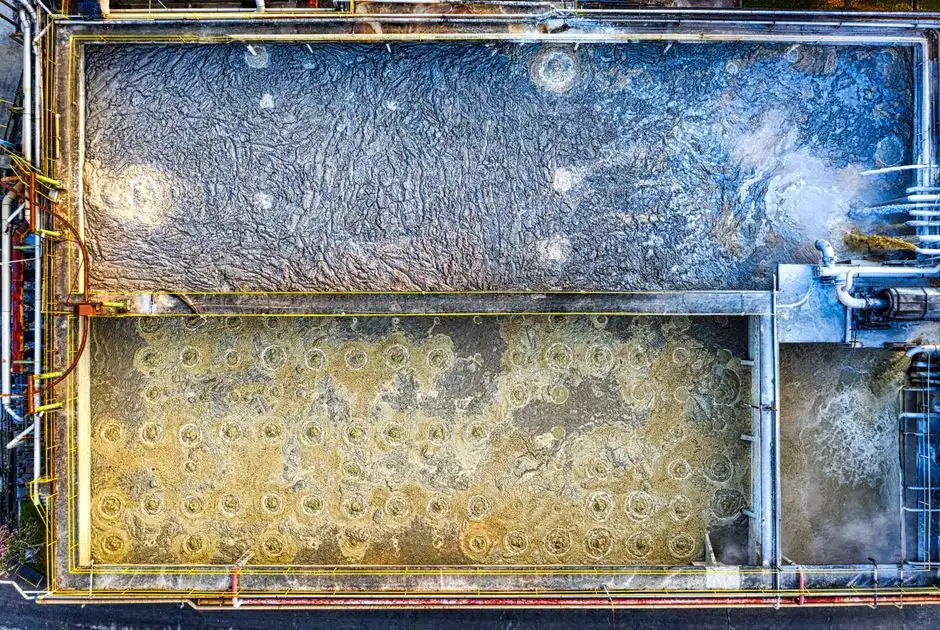
South Texas operations rarely face sustained cold, but winter cold snaps push pond temperatures into the 8–12°C range for days at a time, and intermittent mining operations produce 5–10× swings in hydraulic and pollutant loading over a single week. A two-stage biology approach is the most defensible design: an upstream sedimentation tank for grit and coarse solids removal ahead of the chemistry train, followed by an MBBR for ammonia and nitrate polishing where the influent carries blasting residues, amine-based flotation reagents, or fuel-contaminated runoff. MBBR systems built on HDPE carrier media retain biomass under variable loading and tolerate ammonia spikes better than activated sludge because the biofilm is protected inside the media — they do not wash out on peak flow (per MBBR design references, 2026).
For very cold or winter discharge scenarios, SAGR post-lagoon nitrification has been demonstrated at water temperatures below 1°C (34°F) with more than 100 full-scale North American installations, and is the technology of choice for cold-climate mining effluents that must discharge year-round. In a South Texas context where most winters stay above freezing, the SAGR advantage is less about cold tolerance and more about turndown capability and low operator attention. DAF is preferred over gravity clarifiers whenever feed is high in colloidal fines or free oil, because the flotation mechanism captures both within a single tank and produces a thicker sludge that dewaters more economically — the comparison is covered in more detail in a DAF vs clarifier selection for mining wastewater context. For a 50–500 m³/day South Texas operation, the most defensible combination is equalization + pH/precipitation + DAF + reactive filtration as the core train, with an MBBR added only if ammonia exceeds 20 mg/L in the raw wastewater.
Cost Snapshot: 2026 CapEx and OpEx for a Mid-Size Operation
Order-of-magnitude 2026 capital cost for a packaged 50–200 m³/day pretreatment skid — equalization, pH/precipitation, DAF, and reactive filtration, with an automatic chemical dosing system for pH and precipitant control — runs roughly $350,000–$900,000 USD depending on automation level, metals polishing intensity, and how much site civil work is included. Adding an MBBR for ammonia or a reverse osmosis polisher for selenium/arsenic typically adds $150,000–$400,000. Sludge dewatering via a plate and frame filter press for hydroxide sludge dewatering adds another $80,000–$200,000 but is almost always justified on operating cost, because it converts a 1–3% solids sludge to a 25–35% dry solids cake that can be hauled to a Subtitle D landfill or, in Texas, managed under 30 TAC Chapter 312 industrial sludge requirements.
| Cost line | 2026 typical range (USD) | Driver / assumption |
|---|---|---|
| Packaged pretreatment skid (50–200 m³/day) | $350,000–$900,000 | EQ + pH/precip + DAF + reactive filtration, packaged |
| MBBR ammonia add-on | $150,000–$400,000 | Only if raw NH₃-N > 20 mg/L |
| RO / ion exchange polisher | $100,000–$300,000 | Only for Se or As below 0.05 mg/L |
| Sludge dewatering (plate & frame press) | $80,000–$200,000 | Includes polymer dosing skid |
| Annual lime/caustic | $40,000–$120,000/yr | Assumes 200–500 mg/L dosing at 200 m³/day |
| Annual flocculant/polymer | $10,000–$30,000/yr | 1–2 mg/L anionic polymer |
| Sludge hauling (Dimmit County) | $30,000–$80,000/yr | ~150–400 wet tons/yr at 25% cake; 60–90 mile haul |
| Power (aeration + pumps) | $25,000–$60,000/yr | 0.8–1.5 kWh/m³ at South Texas rates |
| Labor / maintenance | $40,000–$90,000/yr | 0.5–1.0 FTE allocated |
The two largest OpEx lines are lime/caustic and sludge hauling, and both are local-cost-sensitive. In Dimmit and surrounding counties, hauling distance to the nearest permitted industrial waste landfill is 60–120 miles one-way, and 2026 disposal surcharges in Texas industrial markets are running $80–$140 per wet ton at the gate. Sludge minimization at the chemistry step (tighter pH control, polymer optimization) is usually the highest-ROI operational lever because it directly reduces both lime consumption and wet tonnage. A detailed mining pretreatment for sewer discharge in a comparable small-POTW setting walks through the budget logic for a parallel case.
Frequently Asked Questions
What TCEQ permit governs discharges to the Carrizo Springs WWTP?
TCEQ TPDES permit WQ0010145001, held by the City of Carrizo Springs (Regulated Entity RN101721124, CN600241418, status ACTIVE), located approximately 0.5-mile northeast of the intersection of Peña Street and US-83. The permit authorizes an annual average daily flow of 0.7 MGD with a 0.35 MGD peak hourly limit.
Do mining and metals plants have to pretreat before sewer discharge?
Yes. Federal authority is 40 CFR Part 403 (General Pretreatment Regulations) plus the applicable categorical standard — typically 40 CFR Part 440 for ore mining and dressing, or 40 CFR Part 433 for metals finishing. TCEQ enforces the delegated pretreatment program and the local POTW sewer-use ordinance (Ordinance 665 as amended by 826 in Carrizo Springs) sets site-specific discharge limits.
What is the most common cause of pretreatment non-compliance for mining contributors?
Slug discharges from batch wash cycles, equipment startup, and off-spec product dumps. The most effective mitigation is 24–48 hours of equalization with online pH and conductivity monitoring that triggers diversion of off-spec flow to a separate holding compartment.
Can DAF alone meet metals limits?
No. DAF removes suspended and precipitated metals efficiently (90–95% TSS reduction) but rarely polishes dissolved metals to microgram-per-liter levels. Reactive filtration or ion exchange is normally added downstream of DAF to achieve categorical compliance.
How cold can biological pretreatment operate?
MBBR is robust across the full South Texas range and tolerates normal winter temperatures. SAGR post-lagoon nitrification has been demonstrated at water temperatures below 1°C (34°F) with more than 100 full-scale North American installations, and is the right choice for cold-climate year-round discharge.