What does a factory in Isfahan need: DAF, ETP or both?
A factory in Isfahan generally needs a DAF unit when its wastewater contains removable oil, grease, FOG, colloidal material or suspended solids that must be separated before biological treatment; a DAF is a unit operation within an industrial ETP, not a complete plant by itself. An ETP may combine primary physical and chemical treatment, secondary aerobic or anaerobic biological treatment, and tertiary treatment. Selection should follow representative wastewater analysis, average and peak flow, reuse or discharge targets, and sludge-handling constraints. For Isfahan, local pilot evidence showed that DAF could treat high-turbidity filter-backwash water, but that result does not replace factory-specific testing.
Choose a DAF-first configuration when the main problem is recoverable oil, grease, FOG or floatable solids and the clarified water can proceed to a biological or polishing stage. Choose a complete industrial effluent treatment plant when the wastewater also contains dissolved biodegradable organics and requires biological treatment, final clarification, disinfection or reuse preparation. In some cases, the correct purchase is a combined train: an oil-water separator, chemical conditioning, DAF, biological treatment and tertiary polishing.
Dissolved air flotation is a physico-chemical separation step in which small air bubbles attach to suspended material and give the floc a high upward separation rate. In a refinery treatment train, for example, an API separator first removes free-floating oil and sediment; chemical treatment then destabilizes emulsions, and DAF captures residual fine oils and solids before biological reactors (Quora, July 2015). This sequence illustrates why a DAF skid cannot be treated as a substitute for the full ETP.
Before requesting quotations, use the following boundary check:
| Wastewater and objective | Indicative configuration | Procurement decision |
|---|---|---|
| Free-floating oil, sediment and emulsified oil | Oil-water separator, pH adjustment, coagulation and flocculation, DAF | DAF-based pretreatment package, with downstream treatment defined separately |
| Dissolved biodegradable organics | DAF or clarification followed by aerobic or anaerobic biological treatment | Complete ETP rather than a standalone flotation skid |
| Internal or process-water reuse | Physical, chemical and biological treatment with additional polishing as required | Define the reuse specification before selecting tertiary equipment |
| Municipal discharge | Treatment train matched to the factory permit and receiving-water requirements | Confirm compliance with the responsible Iranian authority; do not apply a generic internet limit |
The final configuration also depends on flow variation, available footprint, utilities, controls and the route for DAF sludge. Use the 2026 DAF unit selection framework to translate these conditions into a supplier brief.
Characterize the wastewater before selecting equipment
Representative factory wastewater data is the minimum basis for selecting a DAF or complete ETP. A single clean-water sample, or a laboratory result from a production day that excludes cleaning and shutdown discharges, will not represent the operating envelope well enough for equipment sizing.
Build the data request around three sampling campaigns: normal production, intensive cleaning or batch discharge, and shutdown or upset conditions. Each sample should be associated with its source, date, flow condition and production activity. The laboratory should analyze flow, temperature, pH, suspended solids, oil and grease, FOG, colloids, COD and BOD, plus contaminants specific to the factory process. Identify whether the proposed DAF will receive the untreated stream, a segregated high-oil stream, or combined factory effluent.
Do not treat a generic COD or suspended-solids number as a sufficient sizing basis. The supplier needs the measured water matrix, including the oil and solids load entering each proposed unit, the expected variability, and the chemical demand established through jar or pilot testing where necessary. No Iranian discharge limit should be assumed from a general webpage: the applicable factory permit, receiving-water conditions and requirements of the responsible authority must define the target.
| Input to obtain | Why it affects selection |
|---|---|
| Representative samples by production condition | Separates normal wastewater from cleaning, batch and upset streams that may change DAF loading and biological feed quality. |
| Average flow, peak flow and operating duration | Sets hydraulic capacity and clarifies whether equalization is required before treatment. |
| Oil, grease, FOG, suspended solids, colloids, COD and BOD | Identifies the separation duty, chemical-conditioning requirement and need for biological treatment. |
| Temperature and pH | Influences chemical use, biological activity and material or process selection. |
| Intended discharge or reuse route | Defines the required treatment boundary and any tertiary or disinfection stage. |
| Factory-specific contaminants | Prevents a generic treatment train from overlooking a process-specific toxic or persistent pollutant. |
The Isfahan study by IWA Publishing examined DAF for spent filter-backwash water from a water treatment plant. It is useful as bounded local feasibility evidence, not as a performance guarantee for factory wastewater: the pilot produced effluent turbidity above 20 NTU when raw turbidity exceeded 800 NTU, with low chemical requirements and a single dosing stage (IWA Publishing, 2008). Factory effluent may contain pollutants and hydraulic conditions absent from that study.
Use the Iran DAF compliance and supplier checklist to structure the permit review, sampling plan and request for information sent to bidders.
Match each wastewater problem to the treatment process
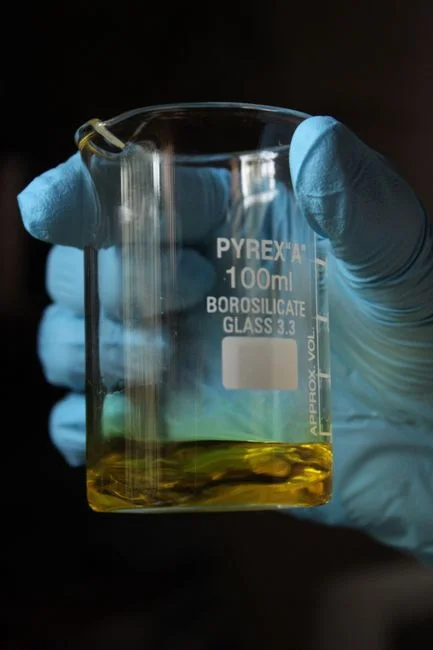
The treatment train should follow the contaminants, not the available equipment catalogue. A practical sequence separates free oil and heavy material, conditions the remaining wastewater, removes floatable solids, treats dissolved biodegradable pollution and then applies only the polishing required by the discharge or reuse objective.
- Preliminary separation: use gravity separation or an API separator where free-floating oil and heavy sediment are present. The refinery ETP example described by Quora identifies the API separator as the initial gravity-based stage.
- Chemical conditioning: use pH adjustment, coagulation and flocculation when emulsified oil must be destabilized or fine solids must be aggregated before flotation.
- Dissolved air flotation: use an industrial DAF system for suspended solids, FOG, oil and grease, and colloidal matter. Recycle water is pressurized with air; depressurization releases micro-bubbles commonly described as 10–100 microns in diameter, which attach to particles and rise for skimming (Quora, July 2015).
- Biological treatment: include aerobic or anaerobic biological wastewater treatment where dissolved biodegradable organics remain. Emulsified oil reaching biological reactors can inhibit oxygen transfer and damage the microbial population, so oil removal ahead of biology is a process safeguard, not an optional refinement.
- Clarification: use compact clarification or lamella separation where settled solids must be removed effectively. HydropureWater’s DAF guidance lists lamella-clarifier surface-loading rates of 20–40 m/h and states that chemical consumption can be reduced by up to 30%; these figures require project-specific confirmation.
- Tertiary treatment: add filtration, membrane treatment or disinfection according to the reuse or discharge specification. An integrated MBR wastewater treatment system combines biological treatment and membrane filtration where near-reuse-quality effluent and a compact footprint are required. The same manufacturer guidance lists an MBR range of 10–2,000 m³/day and filtration below 1 μm; suitability must be demonstrated against the actual effluent specification.
| Measured problem | Primary treatment step | Required downstream check |
|---|---|---|
| Free-floating oil and heavy sediment | Oil-water separator or API separator | Verify recovered-oil handling and residual emulsified oil |
| Emulsified oil, FOG, colloids and suspended solids | pH adjustment, coagulation, flocculation and DAF | Establish chemical demand and downstream biological suitability |
| Dissolved biodegradable organics | Aerobic or anaerobic biological treatment | Confirm final solids separation and effluent compliance |
| Process-water reuse | DAF, biological treatment and specified polishing | Test against the actual end-use quality requirements |
| Near-reuse quality with a compact installation | Integrated MBR where justified | Validate membrane feed quality, cleaning and replacement arrangements |
For a more detailed equipment comparison, the industrial DAF manufacturer selection guide explains the application checks to make before accepting a flotation package. The ETP or DAF procurement framework also illustrates why treatment objectives must determine the train rather than nominal flow alone.
Size the DAF and ETP around the complete operating envelope
Hydraulic capacity must be based on peak flow and required treatment duration, not the daily wastewater average. A DAF selected only from average flow can be overloaded during a batch discharge, cleaning operation or production surge, with consequences for flotation performance, sludge capture and downstream biological treatment.
Ask the supplier to state the design flow, operating duration, hydraulic reserve, equalization strategy and selected model. HydropureWater lists 13 standard DAF models from 4 to 300 m³/h with automatic skimming in its DAF selection guidance. That range identifies available configurations, but it does not prove that any model fits a given factory; the application, control strategy and treatment duty still govern selection.
Evaluate flow and contaminant loading together. The DAF should be checked against oil loading, suspended-solids loading, expected chemical demand and the availability of recycle flow. No generic removal percentage should become a contractual guarantee without representative testing and a defined acceptance method.
| Sizing or design item | Information the buyer must provide | Supplier response required |
|---|---|---|
| Hydraulic basis | Average flow, peak flow, operating duration and batch-discharge profile | Design flow, selected model and treatment sequence |
| DAF loading | Oil, grease, FOG, suspended solids and colloid characterization | Documented application fit, including recycle and loading assumptions |
| Chemical demand | Water matrix and desired separation performance | Dosing concept, control method and jar or pilot-test basis |
| Local feasibility | Isfahan water and wastewater characteristics | Clearly separate any 2008 backwash-water pilot evidence from factory design assumptions |
| Installation | Footprint, utilities, access, operating schedule and noise constraints | General arrangement, utility requirements and maintenance clearances |
The Isfahan pilot provides one bounded check: IWA Publishing reported effluent turbidity above 20 NTU when raw turbidity exceeded 800 NTU, with low chemical requirements and a single dosing stage (2008). It does not establish factory DAF capacity, chemical consumption or guaranteed performance.
Before finalizing the configuration, resolve the operating schedule, maintenance access, compressed-air or recycle-pump requirements, electrical supply, noise constraints and available footprint. The DAF unit selection framework helps frame those inputs, while the DAF configuration and reuse guide shows how discharge and reuse objectives change the required treatment boundary.
Plan the Isfahan supplier, commissioning and acceptance process

A defensible supplier proposal must define the treatment objective, flow basis, process stages, equipment sizing, utilities, chemical requirements, sludge-handling method, controls and exclusions. A price attached to an undefined flow or a generic “removal efficiency” is not comparable.
Include local implementation in the commercial offer: installation conditions, electrical requirements, operator training, commissioning support, spare-parts availability, maintenance access and the responsible local service party. Clarify whether foundations, chemical-storage systems, odor control, site utilities, sludge dewatering and waste-disposal arrangements are included.
| Stage | Buyer check | Required evidence before acceptance |
|---|---|---|
| Technical proposal | Confirm process basis, exclusions and sizing assumptions | Drawings, equipment schedule, utility and chemical list |
| Local implementation | Verify electrical, foundation, access and service arrangements | Installation drawings and named local responsibility |
| Commissioning and training | Test controls, equipment interlocks and operating instructions | Training record, commissioning report and operating manual |
| Performance acceptance | Use representative wastewater and agreed measurements | Documented test results against the contract criteria |
| Sludge management | Define collection, dewatering, storage and disposal routes | Approved method and a filter-press evaluation where sludge dewatering is required |
Agree acceptance measurements before shipment, using the factory’s representative wastewater and the permit or reuse specification. Confirm that DAF sludge and chemical residues will be collected, dewatered and disposed of through an approved route. A filter press can be evaluated for sludge dewatering only after the process design establishes the solids quantity and characteristics.
The Iran DAF compliance and supplier checklist provides a practical basis for comparing local implementation, commissioning and support commitments.
Frequently Asked Questions
How should a buyer select a DAF or ETP supplier in Isfahan?
Require a proposal tied to representative wastewater analysis, peak flow, treatment targets, utilities, controls and sludge handling. During site review, ask the supplier to identify who performs local installation, commissioning, operator training and repairs, and request spare-parts availability and service-response commitments in the offer.
What information is needed before sizing a DAF or complete ETP?
Provide average and peak flow, operating duration, oil and grease, FOG, suspended solids, colloids, COD, BOD, pH, temperature, factory-specific contaminants, and the required discharge or reuse specification. Ask each bidder to show which values were used for equipment sizing and identify any equalization, pilot-testing or chemical-trial assumptions.
How should the buyer establish the cost basis for a quotation?
Request an itemized quotation covering the selected process, equipment, tanks, pumps, controls, materials, utilities, chemical dosing, installation, commissioning, training, spares, sludge handling and exclusions. There is no defensible universal DAF price without the wastewater analysis, flow, treatment targets, materials, controls and local installation requirements.
What compliance risk should be checked before ordering equipment in Iran?
Check the factory’s current discharge permit and requirements of the receiving authority rather than relying on a generic online limit. Require the supplier to map the proposed outlet, sampling points and acceptance measurements to those permit conditions, with the buyer retaining responsibility for confirming the applicable regulatory requirements.