What Regulations Govern a Craynor Sewer Discharge?
Start with the receiving sewer authority, not a generic treatment package. A defensible design identifies the sewer authority and its written industrial discharge or pretreatment requirements, determines the mineral category, and then checks federal, state, and local obligations against each discharge stream. EPA’s 40 CFR Part 436 covers wastewater from mine drainage, mineral processing operations, and stormwater runoff, and its requirements are incorporated into NPDES permits; however, satisfying an NPDES permit does not establish that every local sewer limitation is met (US EPA, undated; HydropureWater, 2026-02). The operator must therefore establish which requirements apply at the proposed connection before fixing equipment capacities or chemical doses.
Part 436 was promulgated in 1975 and amended in 1976, 1977, 1978, and 1979. Current permit terms and the subpart applicable to the operation must be checked during project design because the historical amendment record does not establish present applicability (US EPA, undated). The mineral-category check should include the Dimension Stone, Lightweight Aggregates, Lithium, Ball Clay, Feldspar, Talc/Steatite/Soapstone/Pyrophyllite, and Garnet subparts identified in the supplied research (HydropureWater, 2026-02). These subparts are listed as reserved, so no federal numeric limit should be inferred from their listing alone. The operator must confirm whether the operation is covered by an active subpart and then evaluate state and POTW requirements independently.
| Compliance layer | Question the engineer must resolve | Basis to attach to the design |
|---|---|---|
| Federal categorical standard | Does the mineral and discharge fall within an applicable 40 CFR Part 436 subpart? | Current EPA subpart review and facility mineral/process description |
| NPDES permit | Which requirements are incorporated into the facility’s permit, and to which discharges? | Current permit and applicable state documentation |
| State program | Are there additional state mining or water-quality conditions? | State permit and regulator correspondence |
| POTW pretreatment | What local limits, monitoring rules, fees, and connection conditions apply? | Written sewer authority requirements and discharge permit |
This sequence also prevents a common purchasing error: treating the broadest advertised product specification as if it were the governing limit. For a mine acquisition or a new discharge, the author’s wastewater due diligence for a mining plant acquisition provides a useful diligence model, but its jurisdiction must be replaced with Craynor-specific permit documents and limits.
Classify and Characterize Each Wastewater Stream
Mining wastewater must be separated by source before a treatment train is selected because acid drainage, processing water, tailings-pond effluent, and dewatering discharge do not impose the same contaminant-removal duties. Acid rock drainage forms when oxygen and water react with sulfide minerals such as pyrite and pyrrhotite, producing acidic water that mobilizes metals, sulfate, and other dissolved solids (Society for Mining, Metallurgy & Exploration, undated). Ore-processing water can instead carry suspended solids from crushing, milling, and washing, or process reagents and dissolved constituents from flotation, leaching, and chemical treatment. Tailings-pond effluent can combine fine solids, leached metals, and residual processing chemicals, while dewatering discharge varies with geology (AMPAC USA, 2025-09, as cited in HydropureWater, 2026-02).
Build the mining wastewater characterization plan around representative sampling of each stream rather than one historical plant average. The laboratory package should cover pH, TSS, the locally regulated metals, and other dissolved constituents relevant to the permit and intended reuse. For acid drainage, include sulfate and the dissolved metals associated with site mineralogy; for process water, identify process reagents; for tailings and dewatering discharges, quantify solids and metal loading separately. The supplied research establishes no Craynor-specific flow range, so average and peak discharge must be measured or calculated from plant records rather than selected from a generic product band.
| Stream | Characteristic contaminants and drivers | Data required for design |
|---|---|---|
| Acid mine drainage | Low pH; dissolved metals and sulfate | Representative pH, flow, metal profile, sulfate, TSS, and sample-date variability |
| Ore-processing water | Suspended solids, salts, process reagents, and metals | Unit-process samples, reagent inventory, pH, TSS, conductivity, and regulated constituents |
| Tailings-pond effluent | Fine solids, leached metals, and processing chemicals | Solids-loading profile, settleability data, metal and reagent results, and discharge variability |
| Dewatering discharge | Variable mineral loading according to geology | Source-specific samples, peak pumping records, pH, TSS, and metal profile |
Use enough sampling rounds to establish the range of pH, solids loading, and metal concentrations, with additional rounds during wet periods or major process changes. Where a water-reuse claim is proposed, test the intended reuse application rather than assuming that meeting sewer limits also makes the water suitable for process reuse. The project’s mining acquisition wastewater requirements review is also a reminder that operating history, separation practices, and future production plans belong in the sampling plan.
Build the Pretreatment Treatment Train
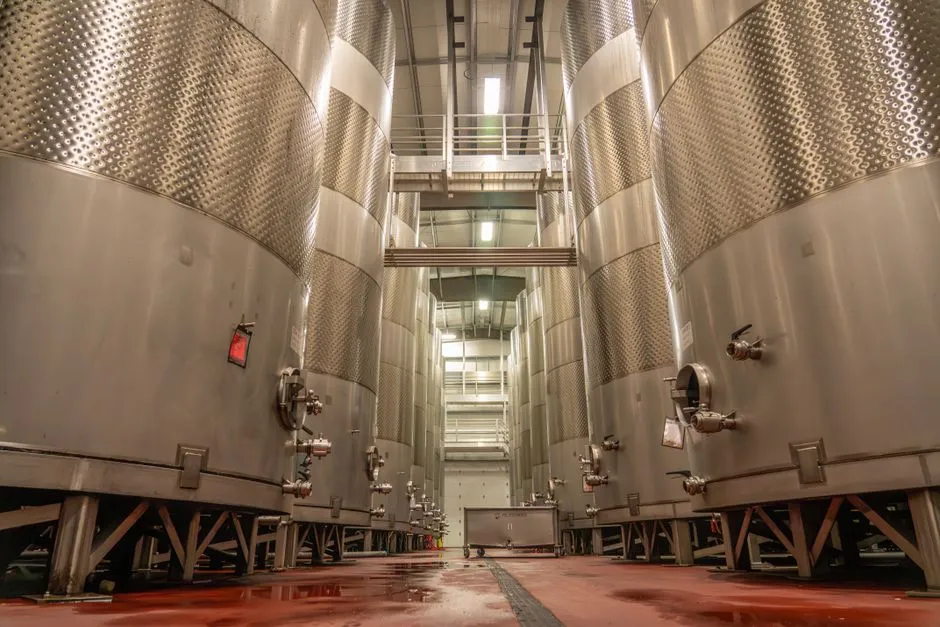
A defensible mining treatment sequence starts with equalization, follows with pH correction and chemical precipitation, and then separates precipitated solids before polishing the remaining dissolved constituents. The sequence cannot be reversed without losing treatment function or creating a solids-handling problem. Equalization should dampen flow and chemistry variation, and basin volume and pumps should be based on the highest anticipated daily discharge rather than the average (HydropureWater, 2026-02). Automatic pH adjustment then creates conditions for dissolved metals to precipitate, but the chemical dose and final pH must be established through stream-specific testing and pilot work rather than copied from another mine.
Coagulants and flocculants aggregate suspended solids and fine metal particles into flocs that can be separated. DAF is appropriate where floc is buoyant or the stream contains oils and floatable fines; a lamella clarifier is favored where sludge volume and footprint drive selection (Genesis Water Technologies, 2025-11, as cited in HydropureWater, 2026-02). HydropureWater’s lamella catalog reports 20–40 m/h surface loading and up to 30% chemical-consumption reduction, while its DAF catalog covers 4–300 m³/h; these are equipment envelopes, not a final site selection (HydropureWater product catalogues, undated). A DAF system for mining solids separation and the high-efficiency lamella clarification option therefore need the same stream-specific solids-loading, floc, and sludge-volume review.
Multimedia filtration removes residual suspended material and colloids before sensitive downstream equipment. If RO is included, the specification should set the required filtered-water SDI rather than relying only on inlet turbidity (HydropureWater, 2026-02). Multi-media filtration for RO and pretreatment protection is then a design input, not a substitute for feed characterization.
RO is justified when dissolved metals or salts remain above sewer limits or reuse requires further polishing. The supplied research reports greater than 99% rejection of dissolved metals and salts, 50–70% recovery for AMD feed, and 70–85% recovery for the RO stage of a zero-liquid-discharge train (AMPAC USA, 2025-09, as cited in HydropureWater, 2026-02). A reverse-osmosis system for dissolved-metal and salt removal must be priced and sized from a feed-specific mass balance. Chemical-precipitation sludge then requires dewatering; the plate-and-frame catalogue covers 1–500 m², but the required area depends on generated solids, target cake condition, and operating cycle (HydropureWater product catalogue, undated). A plate-and-frame filter press for mining sludge dewatering is selected only after those quantities are established.
| Design stage | Primary purpose | Inputs required before final sizing |
|---|---|---|
| Equalization | Dampen hydraulic and chemistry variation | Average and peak discharge, surge history, operating storage |
| pH correction and precipitation | Remove dissolved metals through chemical precipitation | Jar or pilot testing, metal species, dose-response, final pH |
| Coagulation and flocculation | Aggregate solids and fine metal particles | Solids loading, reagents, mixing and settling tests |
| DAF or lamella clarification | Separate precipitated or floatable solids | Floc characteristics, oil loading, solids, sludge volume, footprint |
| Multimedia filtration | Remove residual suspended material and colloids | Turbidity, target filtrate quality, downstream SDI requirement |
| RO, if required | Reduce residual dissolved metals and salts | Feed conductivity, scaling analysis, recovery curve, reuse target |
| Sludge dewatering | Produce a managed cake from precipitation sludge | Generated solids, cake target, cycle time, filtrate destination |
Select Equipment Against the Discharge Limit
Equipment selection should begin with the contaminant and local limit, then test fit against flow, footprint, reuse objectives, and operating constraints. A product catalogue establishes a possible operating envelope; it does not demonstrate compliance at the Craynor site. DAF addresses suspended solids, FOG, oil and grease, and colloidal material. Multimedia filtration addresses residual suspended solids, turbidity, and colloids. UF handles fine colloids and conditions RO feed, while RO addresses dissolved salts and metals that remain after precipitation and clarification. A filter press then handles the metal hydroxide sludge created by chemical precipitation (HydropureWater, 2026-02).
A compact integrated system is suitable only when its published envelope matches the application. HydropureWater’s JY catalogue states a capacity of 10–200 m³/h and treatment of turbidity up to 3,000 mg/L to below 3 mg/L, with chemical addition and clarification steps included (HydropureWater product catalogue, undated). The integrated JY treatment system should therefore be checked against actual peak flow, feed turbidity, chemistry, and required treatment steps rather than treated as a generic quarry package.
UF is another alternative where its envelope fits. HydropureWater’s UF catalogue specifies 2,000–40,000 L/h, 0.03-micron PVDF membranes, automatic backwash, air scour, and capacity for up to 300 ppm turbidity (HydropureWater product catalogue, undated). The UF system for fine-colloid removal and RO pretreatment still requires a feed-specific comparison with multimedia filtration.
Published recovery is not a guarantee. HydropureWater’s industrial RO catalogue states recovery rates up to 95%, while the supplied mining research gives 50–70% for AMD feed and 70–85% for a zero-liquid-discharge RO stage (HydropureWater product catalogue, undated; AMPAC USA, 2025-09). The supplier should provide a feed-specific recovery curve and membrane projection, not a nameplate figure. Quotations should also require PLC controls, pre-wiring, contained chemical tanks, sludge-removal access, monitoring points, and plant-control-system integration. An automatic chemical-dosing system with PLC and HMI integration should be compared on control response, containment, maintenance access, and compatibility with the selected chemistry—not on skid dimensions alone.
| Problem or objective | Primary equipment | Selection check |
|---|---|---|
| Suspended solids, FOG, oil, and floatable fines | DAF | Floc buoyancy, floatable loading, sludge handling |
| Residual solids, turbidity, and colloids | Multimedia filter or UF | Filtrate target, SDI, feed solids, backwash and waste stream |
| Dissolved metals or salts above sewer limits | RO | Feed-specific recovery, scaling, concentrate disposal, and reuse quality |
| Chemical-precipitation sludge | Filter press | Solids generated, cake target, filtration cycle, filtrate destination |
| Accurate chemical addition | Automatic dosing skid | PLC/HMI integration, containment, probe and duty arrangement |
Validate Performance Before Sewer Discharge?
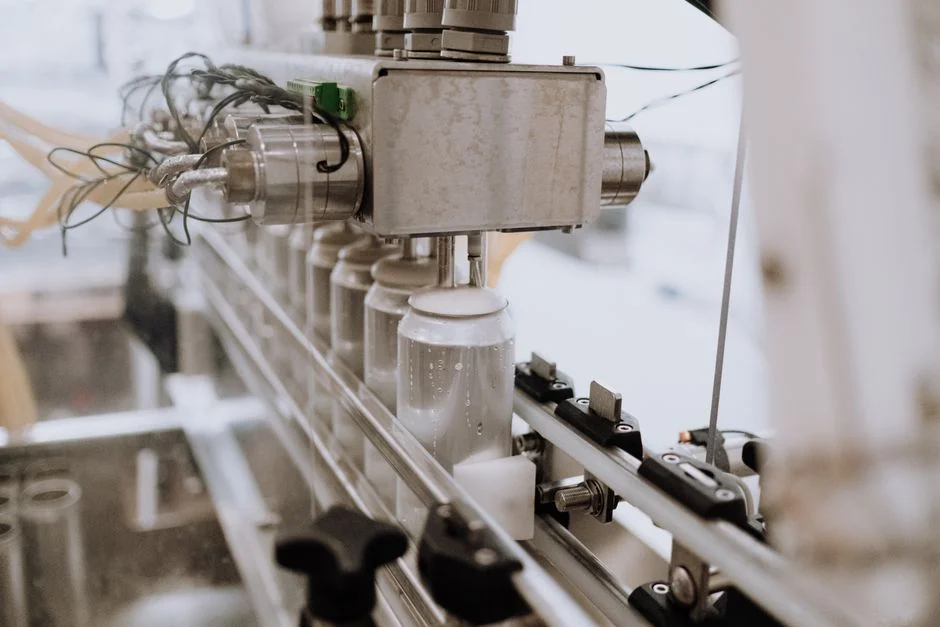
Pilot or bench testing is the step that converts a conceptual treatment sequence into defensible design values. Test the actual stream before fixing chemical doses, pH setpoints, clarification loading, filtration targets, or RO recovery. The test program should compare results with each locally enforced limit and with the intended reuse specification. This is especially important where the final train combines pH-dependent metal precipitation, clarification, and a membrane-polish stage: acceptable results from one unit do not establish integrated performance.
The monitoring plan should track pH, flow, TSS, turbidity, conductivity, and every locally regulated metal. Add process reagents, oil and grease, or other parameters where the permit or stream characteristics require them. The operating control concept should include automatic chemical dosing under PLC control and a single HMI covering chemical injection, flow, pH, and conductivity (LiqTech, 2025-08, as cited in HydropureWater, 2026-02). Sampling locations should be defined before commissioning so each unit operation can be evaluated independently as well as at final discharge.
Commissioning records should include calibration certificates, batch or continuous monitoring results, operating logs, chemical-use records, sludge-handling records, and corrective-action documentation. This creates an auditable link between the selected settings and permit performance. If an excursion occurs, troubleshooting should distinguish chemical dose, pH control, clarification carryover, filtration breakthrough, and membrane or scaling issues; the 2026 engineering guide to effluent TSS exceedances is useful for that diagnostic discipline.
Reuse economics should be tested alongside compliance. The supplied research reports 40–60% freshwater-intake reduction where internal reuse is enabled by RO (AMPAC USA, 2025-09). That is an evaluation point, not a universal project saving. Compare the cost of purchased water, disposal, treatment chemicals, energy, concentrate handling, and recovered-water value using the site’s measured flows and verified recovery. Where biological treatment is part of the larger site strategy, the separate comparison of MBR and conventional activated sludge for mining wastewater should be evaluated against the actual stream and receiving-sewer constraints.
Prepare a Basis of Design for Supplier Quotes?
Comparable quotations require one controlled design basis. Submit the receiving sewer’s current pretreatment permit, numerical discharge limits, monitoring requirements, connection conditions, and any applicable NPDES or state documentation. Attach average and peak flow by stream; representative influent pH, TSS, turbidity, conductivity, and metal profile; relevant process-reagent information; sampling dates; and the variability observed across rounds. These inputs allow suppliers to size equalization, treatment units, controls, and sludge handling against the same compliance problem.
State whether internal reuse is part of the project and identify the intended application. If reuse is included, request a feed-specific recovery projection, water balance, concentrate-disposal route, and final-water quality rather than accepting a generic recovery percentage. Define the required treatment sequence, sludge-handling objective, available footprint, utility requirements, control philosophy, operator skill level, and commissioning documentation. For chemical systems, define containment and access; for clarification, define sludge-removal requirements; and for RO, define pretreatment, scaling control, membrane cleaning, and concentrate management.
Also require each bidder to state its exclusions and assumptions clearly, including which analyses remain the owner’s responsibility. A compliant bid should identify the proposed unit-operation basis, nominal and peak hydraulic duty, chemical-storage assumptions, duty/standby arrangements, controls, monitoring points, utilities, commissioning tests, operator training, and documentation.
The supplied research publishes no complete Craynor-area system price and no universal site flow band. Request a quotation against the collected basis of design instead of comparing a generic turnkey price range. Price comparisons become meaningful only when bidders are solving the same permit limits, stream chemistry, hydraulic duty, reuse objective, and sludge route.
Frequently Asked Questions
How should a mining or metals operation near Craynor size a pretreatment system?
Do not size from a published product-capacity band. First divide the wastewater by source, then establish average and peak flow, representative chemistry, solids loading, and variability for each stream. DAF catalogue capacity, UF throughput, and integrated-system envelopes are screening references only; final sizing requires the local limits, peak discharge, tested chemical response, clarification loading, filtration targets, and sludge-dewatering duty. A pilot test should confirm the selected values before equipment is ordered.
What should a buyer request when budgeting for Craynor-area mining wastewater treatment?
Request a quote against a controlled basis of design containing stream-specific flow and chemistry, the sewer permit and numerical limits, reuse objectives, utility and footprint requirements, sludge handling, controls, commissioning, and operator documentation. The supplied research provides no complete-system price for Craynor-area operations, so do not substitute an assumed generic price. Ask bidders to separate equipment, foundations and installation, chemical systems, piping and controls, sludge handling, taxes, freight, commissioning, and long-term consumables so differences can be evaluated.
Which treatment unit is most appropriate for a mining wastewater stream?
Choose the unit operation from the contaminant and required outcome. Use pH adjustment and precipitation for dissolved metals, coagulation and flocculation to form separable particles, DAF for buoyant floc or floatable material, lamella clarification where footprint and sludge volume govern, multimedia filtration or UF for residual solids and colloids, RO for residual dissolved metals or salts, and a filter press for chemical-precipitation sludge. For a compact installation, compare the integrated JY treatment option against the same feed-specific design checks used for larger modular equipment.
How can an operator reduce the risk of noncompliance when selecting a treatment supplier?
Require evidence tied to the proposed unit operations, feed-specific performance data, integrated PLC and HMI controls, commissioning support, and complete operating documentation. The supplier should identify which project values are assumptions and provide pilots, calculations, or other validation for chemical doses, clarification performance, membrane recovery, and sludge handling. Also require a regulatory review that keeps 40 CFR Part 436 and NPDES obligations separate from the local POTW discharge limits; equipment performance in one layer does not establish compliance in another.
Related Equipment
- DAF system for mining solids separation — specifications, capacity range, and technical data