Which rules control a Liggett sewer discharge?
Mining and metals plants near Liggett, United States meet sewer pretreatment limits by complying with Clean Water Act §307(b), 40 CFR Part 403, applicable categorical standards and the receiving POTW’s sewer-use ordinance. A POTW enforces pretreatment through its local control mechanism, while federal categorical standards establish minimum requirements and local limits protect the treatment works, sludge and workers. A mine may also need NPDES coverage for separate surface-water discharges, so the sewer-discharge permit cannot substitute for the mine’s other environmental authorizations.
Classification follows the actual operation and effluent. 40 CFR Part 437 covers ore mining and dressing, while 40 CFR Part 433 covers metal finishing activities such as plating, pickling and anodizing. The supplied commercial references are inconsistent in their references to Parts 436, 437 and 440; none supports treating one part as universally applicable. A Liggett-area engineer should ask the POTW and the facility’s permitting counsel to resolve the classification against the regulated processes and applicable subpart.
| Requirement layer | What it controls | Procurement consequence |
|---|---|---|
| Clean Water Act §307(b) and 40 CFR Part 403 | Indirect discharge to a POTW, including pretreatment prohibitions, monitoring and local limits | Obtain the receiving POTW’s current ordinance and the facility’s industrial discharge permit or equivalent control mechanism |
| 40 CFR Part 437 or Part 433 | Categorical pretreatment standards, where the operation and subpart apply | Confirm classification with the POTW before using numerical targets in equipment sizing |
| 40 CFR Part 436, as applicable to mining and processing operations | Mineral-mining and processing effluent provisions associated with NPDES requirements | Do not substitute this framework for the sewer-path requirements under Part 403 |
| NPDES authorization | Direct discharges to surface water | Evaluate separately when the site has stormwater, drainage or other outfalls |
| POTW local limits and permit conditions | Site-specific concentration, loading, monitoring and enforcement requirements | Use these controlling numbers to set treatment guarantees |
EPA’s Local Limits Development Guidance, published June 2021, is guidance rather than a binding regulation. EPA states that the applicable permit, regulation or local requirement controls, and that obligations for indirect dischargers arise through POTW permits, equivalent control mechanisms or regulatory requirements. For a Liggett project, that means the written local instrument, not a general web benchmark, should appear in the basis of design. For related process assumptions, see the wastewater requirements for a mining-plant acquisition.
Build the Liggett compliance basis before selecting equipment
The receiving POTW and its written local requirements must be identified before treatment equipment is selected, because “Liggett-area pretreatment limits” are not a defensible engineering specification. Obtain the current sewer-use ordinance, the facility’s industrial discharge permit or equivalent control mechanism, approved monitoring methods, sampling points, reporting requirements and prohibited-discharge provisions. Confirm whether the facility is classified as a categorical industrial user and which subpart governs it.
EPA’s local-limits sequence in the June 2021 guidance is: determine pollutants of concern; collect and analyze data; calculate maximum allowable headworks loadings; designate and implement local limits; and address collection-system concerns. For the industrial user, the result should be a compliance table identifying daily maximum, monthly average, instantaneous, loading-rate and slug-discharge provisions where they apply. Concentration limits alone do not establish whether a sudden release is permissible.
The research gives representative 2026 POTW benchmarks of zinc at 0.3–1.0 mg/L monthly average and copper at 0.3–0.5 mg/L monthly average, compared with a cited 40 CFR Part 437 limit of 1.0 mg/L daily maximum and 0.5 mg/L monthly average for zinc (HydropureWater, 2026). These are benchmarks, not Liggett requirements. The controlling POTW ordinance and the facility’s written authorization must supply the final numbers.
The minimum bidder package should include peak and average flow, stream-by-stream analytical results, pH, TSS, total and dissolved metals, sulfate, TDS, process chemicals, anticipated batch discharges and the final discharge limits. A mining-wastewater treatment reference can support internal technical review, but it does not replace site data or POTW approval.
Characterize each mining and metals wastewater stream
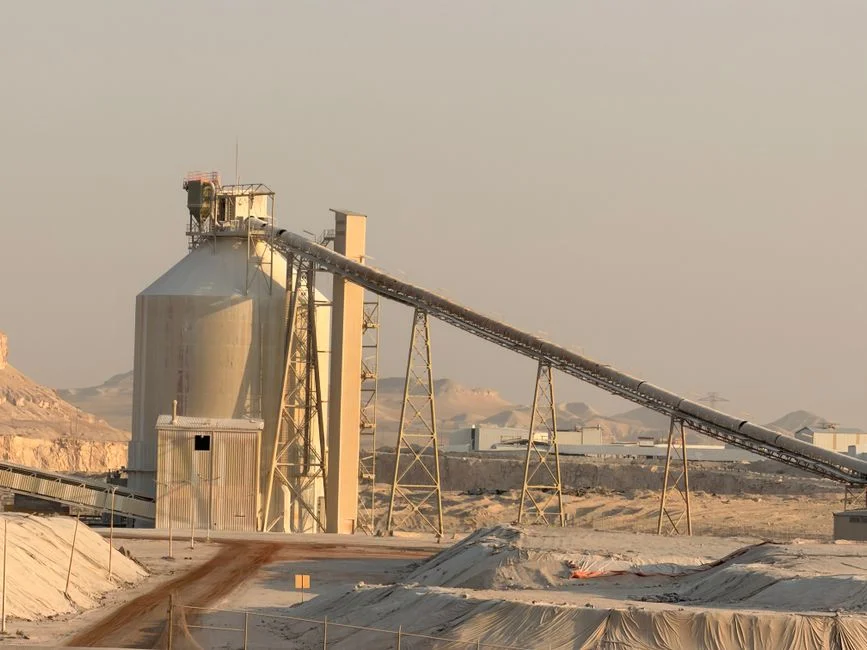
Each wastewater stream must be characterized separately because acid mine drainage, ore-processing water, tailings-pond effluent, dewatering discharge and metal-finishing effluent do not share a default treatment train. The Tenino mining reference identifies AMD, flotation, heap-leach, cyanide-gold, chlorination, tailings-pond and dewatering streams as materially different, with process water potentially containing cyanide, ammonia or chloramines (HydropureWater, 2026-02). A metal-finishing operation may add plating, pickling or anodizing streams requiring separate evaluation under Part 433.
For screening, the mining pretreatment reference reports raw acid drainage and spent-process pH of 2–4, suspended solids from hundreds to several thousand mg/L, dissolved Pb, Cu, Zn, Cd, Ni and As, and elevated sulfate and TDS (HydropureWater, 2026). Those values are a source profile, not Liggett influent data. Sampling must establish the actual range.
| Stream or parameter | Required characterization | Design implication |
|---|---|---|
| Acid mine drainage | pH, acidity, total and dissolved metals, sulfate, TDS and flow variability | pH correction, hydroxide precipitation, solids separation and usually equalization |
| Ore-processing water | Metals, TSS, process reagents, conductivity and batch timing | Stream-specific dosing and clarification; sulfide polishing if residuals require it |
| Tailings-pond effluent | TSS, turbidity, total and dissolved metals, sulfate and seepage characteristics | Filtration and sludge-management capacity |
| Dewatering discharge | Flow profile, pH, metals, TSS and geology-specific variability | Determine whether segregation is better than full equalization |
| Metal-finishing effluent | Total and dissolved metals, pH, TSS, cyanide where used, oil and grease where applicable | Confirm Part 433 applicability and potentially provide a segregated polishing train |
| Total versus dissolved metals | Filtered and unfiltered laboratory fractions | Distinguishes treatment by precipitation, clarification, filtration or membrane polishing |
The survey should also record dump-leach cycles, mill clean-outs, shift changes and other batch events because they define the hydraulic and chemical peaks. Include cyanide only where the extraction circuit uses it, ammonia or chloramines where relevant, and oil and grease where metalworking or equipment washing contributes. The plant-acquisition wastewater requirements provide a useful example of treating permit transfer and stream characterization as separate workstreams.
Size equalization and chemical control for peak discharges
Equalization must be sized around batch-load attenuation and controllable pH, not average flow alone. The commercial mining reference gives an equalization heuristic of 8–24 hours of average daily flow and explains that a 4-hour basin may pass upstream spikes into clarification (HydropureWater, 2026). This is a basis-of-design heuristic, not a universal dimension; actual detention depends on batch volume, allowable release rate, rainfall or drainage variability and downstream hydraulic capacity.
Equipment selection should use the peak 2-hour flow with 20–30% turndown, as described in the same 2026 reference. Ask bidders to state whether their quoted hydraulic capacity is the peak 2-hour flow, sustained design flow, equalization release rate or another duty basis. Mixing these definitions is a common cause of an undersized clarifier or dosing system.
Staged chemical dosing under PLC control is preferable to fixed feed. The reference states that a combined dosing skid can maintain pH within a ±0.2 band, compared with a target range of 6.5–9.0, while noting that the final precipitation setpoint must be established by jar testing for the actual metals and water chemistry (HydropureWater, 2026). An automatic pH and coagulant dosing system should therefore be specified around feedback control, reagent-specific pumps, duty/standby arrangement, low- and high-level alarms and controlled response to abnormal influent.
The control risk is material: the source reports that a 1 pH-unit departure from the precipitation optimum can reduce removal efficiency by an order of magnitude, potentially moving zinc from below 1 mg/L to above 10 mg/L (HydropureWater, 2026). That figure is a cited process sensitivity, not a predicted Liggett result. Jar tests and a written pH-control narrative should establish the operating window, chemical dose, residual metal response and action taken when the setpoint is lost.
Select the metals-removal and solids-separation train
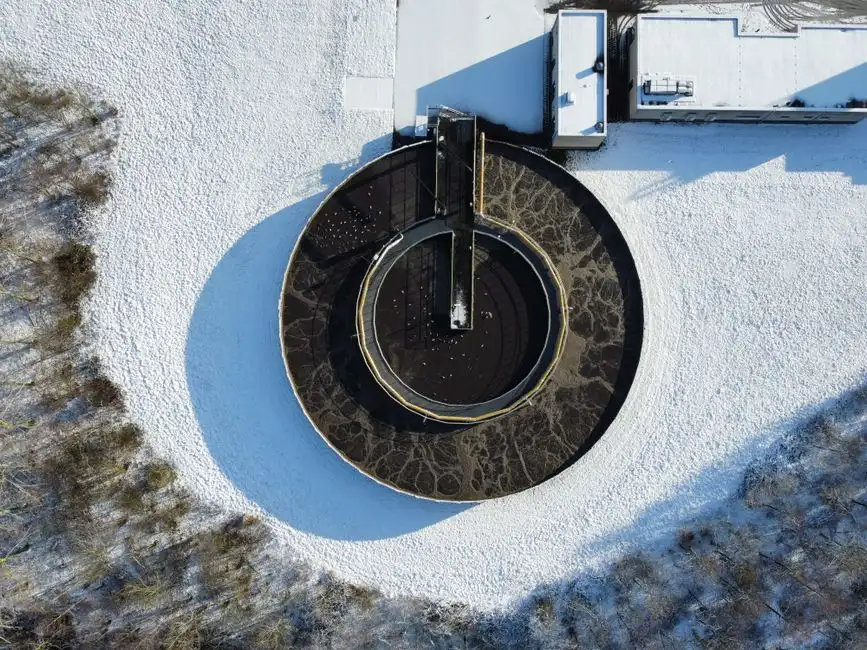
Hydroxide precipitation is the usual first-stage metals-removal process, but DAF or lamella should follow the solids properties rather than a preferred brand. The 2026 mining reference reports 85–95% total metals removal from properly controlled precipitation systems and identifies 20–40 m/h hydraulic loading for lamella operation with polymer aid (HydropureWater, 2026). Neither figure substitutes for jar and pilot testing with the site’s water.
Sulfide precipitation is a polishing option where hydroxide residuals cannot meet the local limit. The source reports sulfide residuals of 0.01–0.05 mg/L for Cu, Zn, Cd and Ni, compared with 0.5–2.0 mg/L for hydroxide, but also 2–4 times higher reagent cost and a need for sealed reactors with H₂S scrubbing (HydropureWater, 2026). Use sulfide on a slipstream where that tradeoff is justified rather than assuming whole-flow sulfide treatment.
| Decision condition | Preferred solids-separation route | Reason |
|---|---|---|
| Oil, grease, buoyant floc or fine colloidal solids are present | DAF | The source reports 5–25 m/h hydraulic loading and 90–98% TSS removal for its DAF systems (HydropureWater, 2026) |
| Primary sludge is dense metal-hydroxide floc and footprint is constrained | Lamella | The source reports 20–40 m/h surface loading and roughly one-third the footprint of a conventional clarifier (HydropureWater, 2026) |
| Both oil-bearing and dense hydroxide solids are present | DAF followed by lamella | Sequential removal may be justified; verify with representative testing and a solids balance |
| Residual metals remain above target after clarification | Sulfide polishing on a controlled slipstream | Use only when the stricter residual and reagent, containment and venting requirements are justified |
For a direct equipment comparison, use the DAF versus lamella clarifier for mining wastewater decision guide. A DAF system for mining solids separation fits streams where floatable material is useful, while a lamella clarifier for metal hydroxide sludge fits dense floc and constrained sites. Neither removes free oil as effectively as DAF, according to the supplied comparison.
Polymer can improve floc formation, but the cited dose of 0.5–3 mg/L must be confirmed through testing (HydropureWater, 2026). A multimedia filter for final solids polishing provides a final TSS barrier; the source reports a 1–2 m/h filtration rate and residual TSS below 10 mg/L. Backwash, solids disposal and filtrate handling must be included in the bid.
Decide when membrane polishing is necessary
Membrane treatment should be selected only when precipitation, clarification and multimedia filtration cannot meet the applicable limit or reuse target. Persistent dissolved metals, sulfate or TDS can justify RO; residual colloids can justify UF before RO. A membrane bid should include feed chemistry, scaling calculations, recovery, concentrate disposal, cleaning chemicals and redundancy.
The Tenino reference reports AMD RO recovery of 50–70% and 70–85% for the RO stage of a zero-liquid-discharge train (HydropureWater, 2026-02). The same source reports rejection above 99% for dissolved metals and salts in the referenced RO systems. These are literature benchmarks, not guaranteed site performance. Actual recovery depends on feed salinity, temperature, pressure, membrane condition and pretreatment.
Multimedia filtration should protect the membrane train, while ultrafiltration for RO pretreatment can remove residual colloids where required. The subsequent reverse osmosis system for mining wastewater should be projected against the sewer limit and any reuse requirement.
LiqTech’s 2025-08 supplier information describes ceramic membranes as chemically resistant, robust and low-fouling in harsh mining service. That is useful evidence for material selection, but it is not a universal performance guarantee. Require compatibility testing with the actual process water and a defined cleaning and replacement strategy.
Manage sludge, monitoring and compliance risk

Chemical precipitation creates metal-bearing hydroxide sludge, so dewatering and disposition are part of pretreatment performance rather than ancillary civil work. The commercial reference reports that a plate-and-frame filter press produces cake at 25–35% dry solids (HydropureWater, 2026). A filter press for metal-bearing sludge should be sized around peak sludge production, cycle time, cake handling, filtrate return and the permitted disposal route.
The monitoring chain must connect every permit parameter to a treatment step, instrument, sample point, alarm and response. Flow, pH, TSS and the identified metals should be monitored at the equalization outlet, after clarification and at the final discharge. Flow and pH can support continuous process control; metals and other permit parameters require the specified laboratory methods and frequencies.
| Compliance element | Minimum bid requirement | Failure response |
|---|---|---|
| Parameter limits | Exact daily maximum, monthly average, instantaneous and loading conditions from the controlling document | Alarm, hold or divert flow where authorized, investigate, sample and notify according to the permit |
| Monitoring points | Equalization outlet, post-clarification and final discharge | Locate the deviation, confirm with a repeat sample and prevent an undetected release |
| Sludge | Mass balance from reagent addition through dewatering | Reduce chemical feed, adjust solids handling or stop discharge if containment cannot be maintained |
| Bypass and slug control | Defined restrictions, isolation, storage and reporting sequence | Prevent uncontrolled discharge and preserve evidence for the POTW |
| Records | Calibration, operating logs, laboratory results, chemical usage and corrective actions | Retain records required by the controlling industrial-user mechanism |
The sewer path requires control of POTW impacts and worker safety, whereas NPDES self-monitoring addresses direct surface-water discharges; the sources therefore should not be combined into one monitoring narrative. Before ordering, verify the final sewer-use ordinance, analytical methods, frequency, bypass restrictions and reporting protocol with the POTW. A biological treatment comparison is available in the biological treatment comparison for mining wastewater, but biological polishing is not a substitute for the required metals and solids control.
Turn the basis of design into a supplier request
A defensible bid must separate guaranteed final-effluent values from nameplate capacity, generic removal claims and assumptions. The supplier should attach a compliance schedule showing every permit parameter, treatment step, online instrument, laboratory sample point, alarm, verification method and corrective response. For pretreatment requirements for fabricated metals plants, the same parameter-by-parameter structure applies.
Give every bidder the same basis of design: peak and average flow, stream segregation, duration and frequency of batch discharges, representative chemistry, final local limits, operating philosophy, utility requirements and sludge-disposal route. Require the bid to state duty and standby assumptions, chemical consumption, sludge yield, footprint, utilities, controls, alarms, training, commissioning and acceptance testing.
| Bid topic | Information to require | Reason for the check |
|---|---|---|
| Guaranteed performance | Parameter-by-parameter final limits under representative influent | Separates demonstrated compliance from a removal percentage |
| Hydraulic basis | Peak 2-hour flow, turndown, equalization release and process-flow diagram | Exposes assumptions affecting every downstream unit |
| Controls and verification | PLC narrative, instrument list, alarms, sample points and test method | Connects equipment operation to the permit |
| Sludge balance | Reactive sludge generation, thickening, dewatering, filtrate and final disposition | Prevents an untreated or uncontained residue stream |
| Exclusions | Equalization, linings, chemical storage, backwash, sludge transport, membrane pretreatment and concentrate disposal | Prevents hidden gaps between equipment and civil scope |
| Acceptance test | Representative influent, exact local limits, duration, deviations and remedies | Creates an objective test rather than a generalized claim |
Ask for an equipment and operating-cost breakdown rather than relying on a generic installed-price range. The wastewater treatment operating cost breakdown can structure the comparison around chemicals, sludge, energy, labor, residuals and maintenance. A performance test should identify what happens when a value is missed; a percentage removal claim without a defined acceptance basis is not sufficient.
Frequently Asked Questions
What pretreatment limits apply to a mining or metals plant discharging to sewer near Liggett?
The controlling limits come from Clean Water Act §307(b), 40 CFR Part 403, the applicable categorical standard and the receiving POTW’s written local requirements. Identify the POTW and obtain the current sewer-use ordinance and industrial discharge permit or equivalent control mechanism. Do not use a representative national benchmark as a Liggett limit.
How much does mining wastewater pretreatment cost before sewer discharge?
There is no defensible project price without confirmed flow, chemistry, local limits, sludge handling and the selected treatment scope. Request itemized equipment, installation, chemical, labor, energy, sludge-disposal and residual-management costs. As a process tradeoff, sulfide reagents cost 2–4 times more than hydroxide treatment in the supplied 2026 source; hydroxide precipitation with sulfide polishing on a slipstream may reduce that cost, but jar testing and the final POTW limit must decide the configuration.
What flow data should be used to size equalization, dosing and clarification?
Provide both peak and average flow, batch-release timing and the allowable sewer discharge rate. The 2026 reference uses 8–24 hours of average daily flow as an equalization heuristic and peak 2-hour flow with 20–30% turndown as an equipment-selection condition. Treat these as basis-of-design inputs, then validate detention and release against the POTW’s slug-control conditions and representative monitoring data.
How should a buyer select a wastewater treatment supplier near Liggett?
Require a parameter-by-parameter guarantee tied to the exact local limits, a hydraulic basis, controls and alarm narrative, complete sludge balance, utilities, exclusions and an acceptance-test protocol using representative influent. Check that claimed unit-operation performance is demonstrated at comparable flow and chemistry. A generic removal percentage, without sampling points, test duration, deviation consequences and a stated influent, is not a procurement guarantee.