The Regulatory Stack That Governs Insull-Area Mining Discharges
Every US mine generating wastewater must hold a National Pollutant Discharge Elimination System (NPDES) permit before any water leaves the site, per EPA industrial wastewater requirements. For an engineer at a plant near Insull, the first design decision is identifying which effluent guideline applies, because the numeric limits and the controlling authority differ depending on what is being mined and where the water goes. Most metal-bearing rock operations fall under 40 CFR Part 440 (Ore Mining and Dressing, NAICS 2122); operations extracting industrial minerals such as limestone, sand, gravel, and the 15 named subparts under 40 CFR Part 436 — including Dimension Stone (A), Lightweight Aggregates (H), Mica (I), Trona (P), Rock Salt (Q), Mineral Pigments (T), Lithium (U), Fire Clay (AA), Attapulgite and Montmorillonite (AB), Kyanite (AC), Shale and Common Clay (AD), Aplite (AE), Kaolin (AG), Ball Clay (AH), Feldspar (AI), Talc/Steatite/Soapstone/Pyrophyllite (AJ), and Garnet (AK) — fall under Part 436 instead.
Smelting is not covered by Part 440; it falls under 40 CFR Part 420 Subpart C (Iron and Steel) or 40 CFR Part 421 (Nonferrous Metals Manufacturing). Where the plant discharges to a publicly owned treatment works (POTW) rather than directly to surface water, 40 CFR Part 403 (General Pretreatment) layers on top, and the local POTW's specific discharge limits are typically the controlling number for sewer discharges near a small unincorporated community like Insull. The legacy footprint also matters: the US inventory exceeds 500,000 abandoned or inactive mines (McLemore 2008, cited in SME's Mining and Water Quality briefing), so even operating plants must consider whether historical drainage commingles with their own process streams.
| Applicability Question | Federal Rule | What It Covers | Typical Insull-Area Operation |
|---|---|---|---|
| Extracting metal-bearing ore (copper, lead, zinc, gold, silver, molybdenum)? | 40 CFR Part 440 (Ore Mining & Dressing) | Active mines, mills, beneficiation; NAICS 2122 | Small precious-metals or base-metals operation |
| Extracting industrial minerals? | 40 CFR Part 436 (Mineral Mining & Processing, 15 subparts) | Dimension stone, aggregates, kaolin, feldspar, garnet, lithium, etc. | Quarry, sand/gravel pit, clay operation |
| Smelting or refining? | 40 CFR Part 420 Subpart C or Part 421 | Iron/steel and nonferrous metals manufacturing | Out of scope for Part 440, separate category |
| Discharging to a municipal sewer? | 40 CFR Part 403 (General Pretreatment) + local POTW limits | Categorical and local sewer discharge standards | Most small-community plants near Insull |
| Discharging directly to surface water? | NPDES with applicable 40 CFR Part 440/436 ELGs | Federal numeric effluent limits apply directly | Larger or remote sites with on-site receiving stream |
What Insull-Area Mining and Metals Wastewater Actually Looks Like
Mining wastewater has a four-parameter signature that drives the design: high suspended solids, acidic pH, dissolved heavy metals and metalloids (iron, arsenic, manganese), and in some operations a brackish or elevated-TDS character (per EPA industrial wastewater characterization summarized in Genesis Water Tech's 2026 mining treatment brief). The dominant source of acidity and dissolved metal loading is acid rock drainage (ARD), which SME defines as the reaction of water and oxygen with sulfide minerals such as pyrite and pyrrhotite contained in mined or exposed rock. ARD mobilizes sulfate and toxic metals into solution; not every deposit generates ARD, but metals and other contaminants can still be released from non-sulfide ores.
Physical transport of sediment from haul roads, crushing circuits, and tailings storage is a common second issue, creating TSS spikes that decrease dissolved oxygen and light penetration downstream. Process-specific contaminants are also present: mercury and cyanide from historic gold processing still appear where legacy streams are commingled with modern circuits, and flotation reagents or leach solutions can add organic and dissolved-solids load. The "mine" category itself is wide: underground, open-pit, solution, and dredging operations each generate different wastewater volumes and qualities, which is why a plant survey and a full analytical panel (TSS, pH, total and dissolved metals, sulfate, TDS, cyanide where applicable) should precede any equipment selection.
The Unit-Process Train: From Raw Drainage to Sewer-Ready Effluent
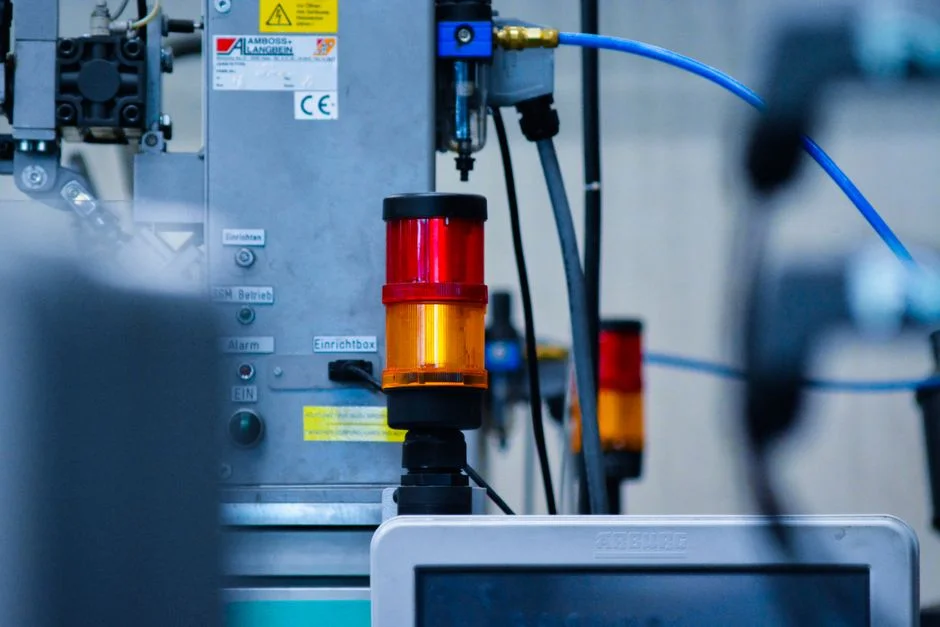
A defensible train for a small-footprint plant near Insull follows the order water sees it, with each step sized to remove a defined fraction of the load so the next step performs within its design envelope. The choice between active measures (RO, aeration, clarification) and passive measures (engineered wetlands, reactive barriers) typically favors active paths for sewer-discharge plants with a small footprint.
- Equalization and pH adjustment. Restore neutral pH with lime, caustic soda, or sulfuric acid. This step delivers the 6.0–9.0 range the typical POTW requires, and at elevated pH many dissolved metals precipitate as hydroxides, reducing the burden on downstream polishing. An automatic chemical dosing system with pH probe is the standard control loop.
- Coagulation and flocculation. Add coagulants (alum, ferric chloride, or polyaluminum chloride) and flocculants (anionic or cationic polyacrylamides) to agglomerate suspended solids and fine metal-hydroxide particles into settleable or floatable flocs. Dose is typically tuned in jar tests against the actual feed.
- Solid-liquid separation. A DAF system for mining wastewater clarification is preferred where the feed carries fine suspended solids, oil and grease, or colloidal metal hydroxides; a lamella clarifier for high-solids mining influent is preferred where sludge recirculation is a priority. Many Insull-area trains run DAF first to capture floatables, then a lamella for the settleable fraction.
- Filtration. A multi-media filter for TSS polishing before sewer discharge removes residual solids to typically 5–10 mg/L or lower, protecting downstream ion exchange or membrane stages. Pre-separation with a centrifugal separator up to 2,000 micron for grit is common upstream to extend media life.
- Heavy-metal polishing. Where dissolved metals remain above local limits after pH and clarification, sulfide precipitation (NaHS, Na2S, or FeS), selective ion exchange, or membrane concentration (RO / nanofiltration) brings residual metals below threshold. This is the step most likely to be sized by the strictest single local limit.
- Disinfection and discharge. Chlorine dioxide or UV are used if the POTW requires microbial control; otherwise flow goes to sewer under the local permit, with on-line TSS and pH monitoring per Part 403 requirements.
For plants weighing biological polishing, how MBBR works for mining-side biological treatment is a useful primer, and the headworks should be protected by a routine mechanical bar screen maintenance protocol before any of these stages sees the flow.
Pollutant-to-Process Decision Table
The matrix below maps each regulated parameter to its typical source, the required pretreatment step, and the equipment class that delivers it.
| Pollutant | Typical Cause | Required Pretreatment Step | Equipment Type |
|---|---|---|---|
| TSS | Haul roads, crushing, tailings contact water | Coagulation + clarification or DAF | DAF or lamella clarifier, followed by multimedia filter |
| Low pH (ARD) | Sulfide oxidation, pyrite/pyrrhotite exposure | Neutralization to 6.0–9.0 | Automatic chemical dosing with pH probe and feedback loop |
| Dissolved Fe, Mn, As | ARD, leaching, ore-body geochemistry | Oxidation (aeration / chlorine) + pH adjustment to metal-precipitation range | DAF + multimedia polishing; sulfide precipitation where tighter limits apply |
| Sulfate / TDS | Process water reuse cycles, brackish makeup, sulfide oxidation | Membrane concentration or selective ion exchange | Reverse osmosis or ion exchange, sized to recovery target |
| Residual metals below precipitation threshold | Soluble complexes, chelating agents, or low-level feed swings | Polishing | Ion exchange or membrane (NF/RO) polishing stage |
| Cyanide (legacy gold circuits) | Historic processing commingled with active streams | Alkaline chlorination or INCO SO2/air destruction | Chlorine dioxide generation with ORP control |
Site-Specific Considerations for Plants Near Insull
For a small-to-mid plant near Insull, the controlling number is almost always the local POTW limit under 40 CFR Part 403, not the federal Part 440 effluent guideline. Local limits can be stricter than federal ELGs because the POTW is protecting its own biomass and sludge quality, and a categorical industrial user has no automatic exemption. Confirm three things on the permit before any equipment is ordered: the local limits for each metal on the analytical panel, the maximum daily and instantaneous loading rates, and any slug-control or flow-equalization requirements the POTW has added to the discharge authorization.
Water reuse should be designed in from the start. SME's technical position supports maximizing water recycling during operations to minimize both consumption and discharge; on-site reuse reduces permit risk, freshwater demand, and haulage. For plants with limited footprint, the recycle fraction typically targets 60–80% of clarified effluent, with the balance sent to sewer under permit. Sludge from metal-hydroxide precipitation is dewatered with a plate and frame filter press for mining sludge dewatering before landfill disposal; filtration areas range from 5 m² for small packaged units to over 100 m² for full-scale presses. Flow-management controls — leachate collection, run-on/run-off diversions, grout curtains for underground workings — should be considered alongside the wastewater plant to reduce the hydraulic load on the treatment train.
Frequently Asked Questions
Which federal rule applies to a small gold or silver operation near Insull?
Metal-bearing ore operations are governed by 40 CFR Part 440 (Ore Mining and Dressing, NAICS 2122). Where the discharge goes to a municipal sewer rather than surface water, 40 CFR Part 403 local POTW limits layer on top and typically serve as the controlling numeric standard.
What is the standard treatment train for acidic mining wastewater with high TSS and dissolved metals?
The standard train is equalization with pH adjustment, coagulation and flocculation, DAF or lamella clarification, multimedia filtration, and heavy-metal polishing (sulfide precipitation, ion exchange, or membrane). A plate and frame filter press dewaters the metal-hydroxide sludge before disposal.
Do mines have to meet NPDES requirements if they only discharge to a POTW?
Yes. Any US mine generating wastewater must hold an NPDES permit, and discharges to a POTW are additionally subject to 40 CFR Part 403 categorical and local pretreatment limits, which the POTW enforces through its sewer-use ordinance.
Can mining wastewater be recycled instead of discharged to the sewer?
Yes, and SME's technical position supports maximizing water recycling to reduce both freshwater demand and discharge volume. On-site reuse lowers permit risk, but the residual blowdown must still meet local POTW limits under 40 CFR Part 403 before sewer discharge.