
Why cooling-tower blowdown is the central wastewater problem for a Puebla data center
Evaporative cooling consumes 80–90% of a data center's total water demand, and the discharge stream that scales with that demand is cooling-tower blowdown (CTBD). Genesis Water Tech (2026) reports that a facility operating at 4 cycles of concentration loses roughly 25–30% of its makeup water to blowdown, so a plant pulling 10 million gal/month from the municipal network will purge 2.5–3 million gal/month before any recovery system is added. In the Puebla industrial corridor, that stream lands in the Alto Atoyac sub-basin, which CONAGUA has repeatedly classified as water-stressed, so the cost of ignoring it shows up in three places at once: lost freshwater, a discharge stream the regulator will not let you send untreated, and a concentrate that has nowhere cheap to go.
The practical consequence is that blowdown, not sanitary wastewater, is the volume and quality problem the engineer has to solve first. CTBD typically runs TDS 1,200–6,000 mg/L with suspended solids 10–50 mg/L, plus treatment chemicals, biofilm fragments and corrosion products that downstream unit operations must tolerate (Genesis Water Tech, 2026). The three end-of-pipe strategies a Puebla developer must choose between are: reuse as cooling-tower makeup, sewer or industrial-park discharge under SEMARNAT NOM-001-SEMARNAT-2021, or zero liquid discharge. The decision is driven less by technology preference than by basin stress, discharge fees in comparable water-stressed regions ($5–15/kgal per Genesis Water Tech, 2026) and the TDS caps regulators are pushing below 1,500 mg/L.
Water-quality targets the treatment train must hit
Cooling-tower makeup reuse is the highest-value pathway when storage exists, and it has a tight target window. Genesis Water Tech (2026) lists the operating envelope as TDS 500–1,500 mg/L, hardness below 200–400 mg/L as CaCO₃, TSS below 10–25 mg/L, pH 6.5–8.5, alkalinity 50–200 mg/L as CaCO₃, and heterotrophic plate count below 10,000 CFU/mL. The blowdown feeding the train is consistently harder and dirtier than that: TDS 1,200–6,000 mg/L, TSS 10–50 mg/L, with biocides, scale and corrosion inhibitors, and biofilm fragments that the chemistry downstream must tolerate (Genesis Water Tech, 2026).
If the discharge pathway is the industrial-park sewer rather than reuse, the relevant limits are those in SEMARNAT NOM-001-SEMARNAT-2021, which the research confirms is the controlling standard for industrial discharges in Mexico. The article does not have Puebla-specific numerical limits in the public research, so the engineer must request them from the park operator before sizing any equipment. Side-stream filtration sized at 1–5% of circulation flow consistently drops blowdown TSS to membrane-friendly levels and is the lowest-cost way to protect every downstream unit operation (Genesis Water Tech, 2026).
| Parameter | Cooling-tower makeup target | Typical CTBD feed |
|---|---|---|
| TDS | 500–1,500 mg/L | 1,200–6,000 mg/L |
| Hardness (as CaCO₃) | 200–400 mg/L | Higher, scaling risk |
| TSS | 10–25 mg/L | 10–50 mg/L |
| pH | 6.5–8.5 | Site-specific |
| Alkalinity (as CaCO₃) | 50–200 mg/L | Site-specific |
| HPC | < 10,000 CFU/mL | Above target |
The pretreatment chain must therefore include a multi-media filter and a stocked spare-parts package for the consumables that wear fastest, sourced through the filter media and valves inventory.
Pretreatment: getting blowdown clean enough for membranes
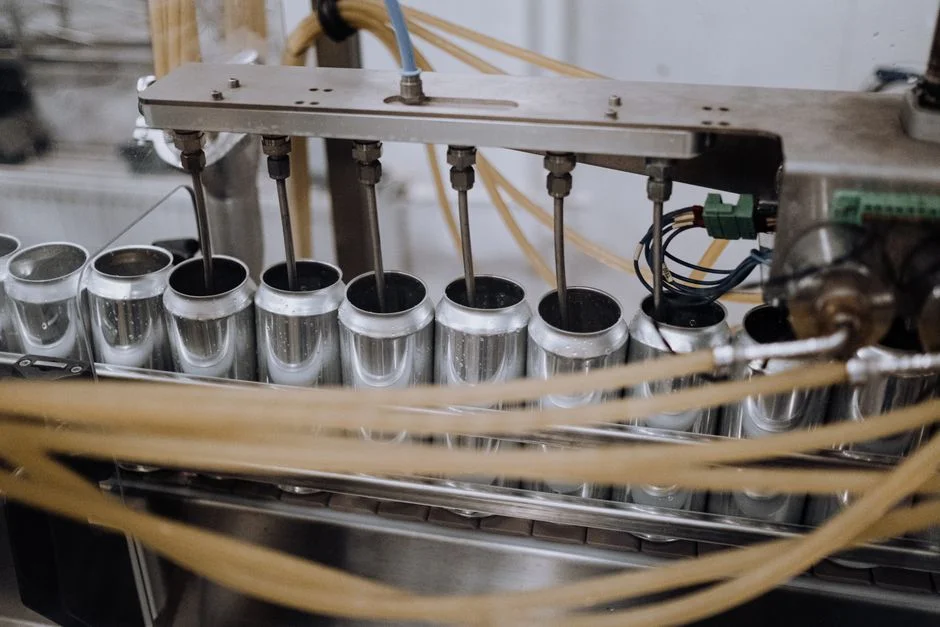
The most common Puebla-plant failure mode is not the RO skid itself but the pretreatment upstream of it. Self-cleaning spiral or screen filtration at 10–25 microns cuts TSS to the <10–15 micron level that RO feed requires, and Genesis Water Tech (2026) places the installed CAPEX for this step at roughly $50,000–$200,000 for typical data-center flow rates. Coagulation and flocculation paired with a lamella clarifier handle colloidal and organic load that depth filtration misses; surface loading rates of 20–40 m/h on inclined-plate settlers let the pretreatment fit a small Puebla footprint without giving up solids capture.
For sites where conductivity is consistently above 1,000 ppm, electrocoagulation becomes attractive because it removes suspended solids, colloids, oils and metals with minimal downstream sludge; below that threshold, bio-organic flocculants paired with spiral filtration are the more economical choice (Genesis Water Tech, 2026). One non-negotiable step is screening for fibrous debris from cooling-tower fill before finer filtration — rags and plastic will blind the next stage and the RO feed will pay for it within days. A complete pretreatment train typically pairs a rotary bar screen with a lamella clarifier and a polishing multi-media filter ahead of the membranes, with a high-efficiency sedimentation tank handling the bulk solids and a rotary mechanical bar screen protecting the downstream stages from gross debris.
Membrane selection: UF, NF, or RO — and when each one wins
Membrane choice is the single biggest cost and reliability lever in the whole plant, and the right answer depends on whether the bottleneck is biology, hardness, or total TDS. Ultrafiltration at 0.01–0.1 micron removes suspended solids, bacteria, viruses and high-MW organics at 10–30 psi with 90–95% recovery, making it the right barrier when biological and particulate control is the goal (Genesis Water Tech, 2026). Nanofiltration at 75–150 psi selectively removes hardness, sulfate and multivalent ions at 70–85% recovery with permeate TDS at 30–50% of feed; NF wins when blowdown hardness is the discharge or reuse bottleneck rather than total TDS. Reverse osmosis at 150–400 psi removes 95–99% of TDS, hardness, silica and most treatment chemicals, with permeate at 10–50 mg/L TDS and 50–85% recovery, and is the right choice when permeate is going back to the cooling tower as high-quality makeup (Genesis Water Tech, 2026).
For a 50,000 GPD RO treating blowdown, Genesis Water Tech (2026) places installed CAPEX at $250,000–$500,000 and OPEX at $1.50–$3.00 per thousand gallons, including energy, antiscalant, membrane replacement and maintenance. In a Puebla plant that translates to the RO skid, CIP skids, and a PLC-controlled antiscalant dosing skid. Always pair the RO with an antiscalant program matched to the Alto Atoyac-style water profile, and design CIP to use existing permeate so the cleaning loop does not waste treated water. The base train combines an industrial hollow-fiber UF skid with an industrial RO system, and the operator should standardize on replacement RO/UF membrane elements stocked locally.
| Technology | Operating pressure | Recovery | Permeate / role |
|---|---|---|---|
| UF | 10–30 psi | 90–95% | RO/NF pretreatment; standalone for biology and TSS |
| NF | 75–150 psi | 70–85% | Permeate TDS 30–50% of feed; hardness-limited streams |
| RO | 150–400 psi | 50–85% | Permeate 10–50 mg/L TDS; high-purity makeup |
When the answer is reuse, discharge, or ZLD
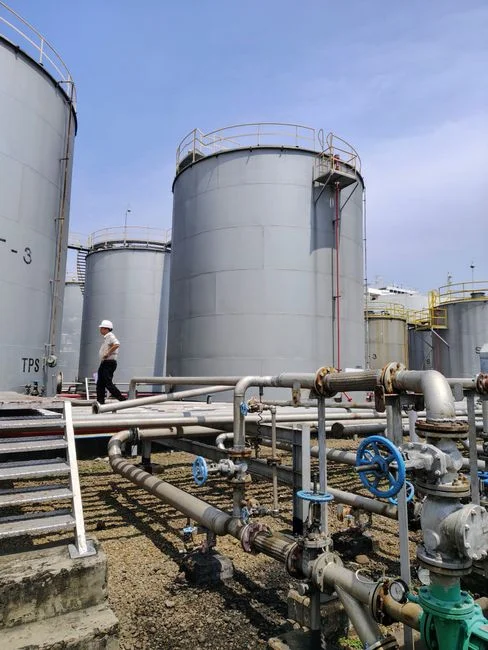
Equipment selection has to start with the end-use strategy, not the membrane catalog. Cooling-tower makeup reuse typically achieves 60–85% recovery and is the highest-value option when on-site storage exists; the cited Texas hyperscale site recovers 2.5 million gal/month and cut municipal demand by roughly 35% (Genesis Water Tech, 2026). Sewer or industrial-park discharge is viable only when the receiving system has capacity and the SEMARNAT NOM-001-SEMARNAT-2021 limits can actually be met — the research does not give Puebla-specific numerical limits, so the engineer must obtain them from the park operator before sizing.
Partial ZLD with RO followed by MVC on the concentrate reaches 85–95% overall recovery and is the right answer when hauling is constrained but full crystallization is not yet justified. Full ZLD with a crystallizer hits 95–99% recovery but at $3–8 million CAPEX and $5–$15/kgal OPEX (Genesis Water Tech, 2026), which is rarely the right call for a Puebla data center unless every other pathway is closed. For the MVC step itself, the numbers to put in the CAPEX sheet are 95–98% recovery on the concentrate, distillate below 10 mg/L TDS, CAPEX $1–3 million for 10,000–30,000 GPD of distillate, and energy 15–25 kWh per 1,000 gallons (Genesis Water Tech, 2026).
Puebla-specific compliance, water-stress, and cost framework
The compliance picture for a Puebla data center runs on two parallel tracks. SEMARNAT NOM-001-SEMARNAT-2021 governs industrial discharges, and CONAGUA titles and concessions govern extraction; a project will normally need both, and because the public research does not include exact local fees or limit values, those need to be requested as a permit-engineering deliverable rather than estimated. The water-stress benchmark the engineer can defend to a regulator or lender is the trend cited for water-stressed regions: discharge fees exceeding $5–15 per thousand gallons and TDS caps below 1,500 mg/L, both of which match the planning case for the Alto Atoyac basin (Genesis Water Tech, 2026).
The cost bands that can be quoted to a client, drawn directly from the research, are: side-stream filtration $50,000–$200,000; a 50,000 GPD RO $250,000–$500,000; MVC $1–3 million; and full ZLD $3–8 million (Genesis Water Tech, 2026). OPEX for the same scope: RO $1.50–$3.00/kgal; ZLD $5–$15/kgal; MVC energy 15–25 kWh/kgal. Where the discharge pathway requires pathogen control, plan a ClO₂ disinfection system and a UV sterilizer before the final outfall, sized to the recovered-stream flow and the SEMARNAT compliance targets.
| Item | CAPEX | OPEX |
|---|---|---|
| Side-stream filtration | $50,000–$200,000 | Minimal (solids disposal, maintenance) |
| 50,000 GPD RO | $250,000–$500,000 | $1.50–$3.00/kgal |
| MVC (10,000–30,000 GPD) | $1–3 million | 15–25 kWh/kgal distillate |
| Full ZLD | $3–8 million | $5–$15/kgal |
Building the right HydropureWater train for a Puebla data center
The baseline blowdown-recovery train translates the process narrative into a bill of materials the engineer can request a quotation against. It starts with a rotary bar screen and a lamella clarifier for gross solids, runs through a multi-media filter and a hollow-fiber UF skid, and finishes on an industrial RO system with a PLC-controlled antiscalant dosing skid and CIP loop. If the discharge pathway is sewer under SEMARNAT NOM-001-SEMARNAT-2021 and BOD is non-trivial, add an MBR system ahead of RO, or a polishing ClO₂ disinfection system and UV sterilizer before discharge.
For hyperscale Puebla sites where hauling brine is constrained, append an MVC unit on the RO concentrate to push overall recovery above 90% without committing to a full ZLD crystallizer, and add a plate-frame filter press for the sludge dewatering step that any pretreatment train will eventually produce. Plan the spare-membrane and consumables stock around replacement RO/UF membrane elements so the first three years of operation do not depend on a single OEM supply chain. To calibrate the cost side against a real Mexico benchmark, the Puebla wastewater treatment plant cost breakdown provides a useful cross-check, and the Estado de México industrial wastewater compliance guide covers the SEMARNAT pathway in more detail. For a parallel international reference point, the Vadodara data center blowdown treatment guide walks through a comparable train under Indian discharge rules, and the polymer dosing cost optimization guide helps trim pretreatment OPEX on the flocculation step.
Frequently Asked Questions
What blowdown volume and TDS should a Puebla data center plan for at 4 cycles of concentration?
At 4 cycles of concentration, a facility loses roughly 25–30% of its makeup water as blowdown, so 10 million gal/month of makeup translates to 2.5–3 million gal/month of blowdown (Genesis Water Tech, 2026). That blowdown typically runs TDS 1,200–6,000 mg/L and TSS 10–50 mg/L depending on source water and chemistry, and the engineer should plan the train against the upper end of that band because the Alto Atoyac basin trends toward harder, more mineralized makeup than US benchmark sites.
What does a turnkey 50,000 GPD RO blowdown treatment train cost in Mexico?
Genesis Water Tech (2026) places installed CAPEX for a 50,000 GPD RO treating blowdown at $250,000–$500,000 with OPEX of $1.50–$3.00 per thousand gallons including energy, antiscalant, membrane replacement and maintenance. For a Puebla bid, the engineer should request a separate line item for the antiscalant dosing skid, CIP loop, and a stocked first-year membrane kit, because those are the items most often left out of headline pricing.
What supplier-selection criteria matter most for a Puebla data center blowdown project?
Shortlist suppliers on three things the research and the SEMARNAT pathway make non-negotiable: documented experience on a comparable m³/h-sized blowdown train (not just GPM-rated US references), local service and spare-membrane inventory in Mexico, and the ability to provide the pilot data and compliance documentation the SEMARNAT NOM-001-SEMARNAT-2021 and CONAGUA permit processes require. Ask each bidder to identify the consumables stocked within Mexico and the lead time on a replacement RO element, because that is what determines whether a membrane failure becomes a 48-hour swap or a multi-week outage.
What is the compliance risk of discharging blowdown to a Puebla industrial-park sewer without ZLD?
Discharge is permitted under SEMARNAT NOM-001-SEMARNAT-2021 only if the effluent meets the park operator's stated limits, and the public research does not include the exact numerical values for the receiving sewer, so the engineer must request them before sizing. Water-stressed regions are pushing TDS caps below 1,500 mg/L and discharge fees above $5–15/kgal (Genesis Water Tech, 2026), and the Alto Atoyac basin trends in that direction. If the limits cannot be met with RO permeate alone, the realistic alternatives are partial ZLD with MVC on the RO concentrate at 85–95% overall recovery, or full ZLD with a crystallizer at 95–99% recovery and $5–$15/kgal OPEX (Genesis Water Tech, 2026).