Why Mining Plants Near Hermann Face Two Pretreatment Layers at Once
Mining and metals plants near Hermann, Missouri that discharge to a POTW have to satisfy two stacked authority layers: the federal floor under 40 CFR Part 436 (Mineral Mining and Processing Effluent Guidelines and Standards, promulgated 1975 and amended 1976–1979, NPDES-incorporated), plus the local sewer authority's metal, pH, and TSS limits. A defensible 2026 treatment train starts with influent characterization by stream — acid mine drainage, process water, tailings pond effluent, dewatering discharge — because each carries a different load. The unit-operation sequence the literature supports is pH correction, coagulation, solids separation (DAF or lamella), multimedia filtration, and a membrane polish (RO) where dissolved salts and trace metals persist, with PLC monitoring and POTW self-monitoring on the back end. The sizing decision is "reuse as much as economics allow, then polish the rest to sewer quality."
The federal floor is 40 CFR Part 436 — Mineral Mining and Processing Effluent Guidelines and Standards — promulgated 1975 and amended 1976, 1977, 1978, and 1979, covering mine drainage, mineral processing, and stormwater runoff; the requirements are incorporated into NPDES permits (EPA, 2026-02). Several subparts in 40 CFR Part 436 are reserved with no current numeric effluent limits, including Dimension Stone (Subpart A), Lightweight Aggregates (Subpart H), Lithium (Subpart U), Ball Clay (Subpart AH), Feldspar (Subpart AI), Talc/Steatite/Soapstone/Pyrophyllite (Subpart AJ), and Garnet (Subpart AK). A Hermann-area operator working in dimension stone, lightweight aggregate, or lithium exploration must first confirm whether the mineral falls under an active subpart with numeric effluent limits or a reserved subpart with no current numeric effluent limits, because the answer drives whether federal limits exist at all before the local layer applies (EPA, 2026-02).
On top of the federal layer, every POTW that accepts industrial discharge runs a pretreatment program, so the local sewer authority reconciles EPA categorical standards with locally established limits for heavy metals, pH, and TSS. For a Hermann-area operation discharging to the local sewer authority's service area, the operator needs both sets of numbers in front of them at sizing time — not one or the other. A copper mine, a coal operation, and a dimension-stone quarry produce fundamentally different wastewaters and cannot share a single default treatment train, which is why the Genesis Water Technologies page makes the point at the chemical-properties level: wastewater is "incredibly acidic" and carries iron, arsenic, manganese, and "heavy metals, organic compounds, and metalloids" that conventional approaches handle poorly.
Characterize the Influent Stream by Stream Before You Talk to a Supplier
Acid mine drainage (AMD) is the most prevalent mining water quality problem and shows up wherever sulfide minerals in waste rock and tailings are exposed to oxygen and water; the resulting sulfuric acid leaches iron, manganese, copper, zinc, arsenic, and cadmium at concentrations far exceeding regulatory limits (AMPAC USA, 2025-09). Process water from ore processing — flotation, heap leaching, cyanide gold extraction, chlorination — typically carries high TDS, with cyanide, ammonia, or chloramines depending on the circuit. Tailings pond effluent is the liquid fraction of tailings impoundments and contains fine solids, processing chemicals, and leached metals. Dewatering discharge is water pumped from underground or open-pit mines to maintain access, and its composition varies by geology — sometimes relatively clean, sometimes carrying significant metal loading (AMPAC USA, 2025-09).
The practical consequence is that AMD and process streams together drive the need for pH correction, metals precipitation, and — when dissolved salts persist — a membrane polish step. A review of mining wastewater treatment technologies reinforces that mining wastewater "is generally highly acidic and has a high quantity of suspended solids," and that "the acidity increases as a result of the high concentration of sulfates and metals in the water" — so pH correction and metals precipitation are non-negotiable first moves before any membrane, clarifier, or filter is specified (PMC, 2024).
For a Hermann-area operator, the trap is the "one stream fits all" assumption. The site has to sample each stream separately during a representative operating window — not average a single composite across AMD, process water, and dewatering flow — because composite data hides the peak loads that drive equalization basin volume and pump selection. The mining operations review in the DOE/ACS literature confirms that "geographic distribution and target resource diversity" result in "highly localized considerations for mine water reuse, including variation in effluent water quality and regulations" — the same logic applies to pretreatment sizing (DOE/ACS, 2021). A small dimension-stone or sand-and-gravel site with no sulfide mineralogy may see relatively clean dewatering discharge, but an aggregate washing circuit or a metal-bearing seam can flip that profile overnight.
The Six-Step Unit-Operation Train That Gets a Hermann Mine to Sewer Quality
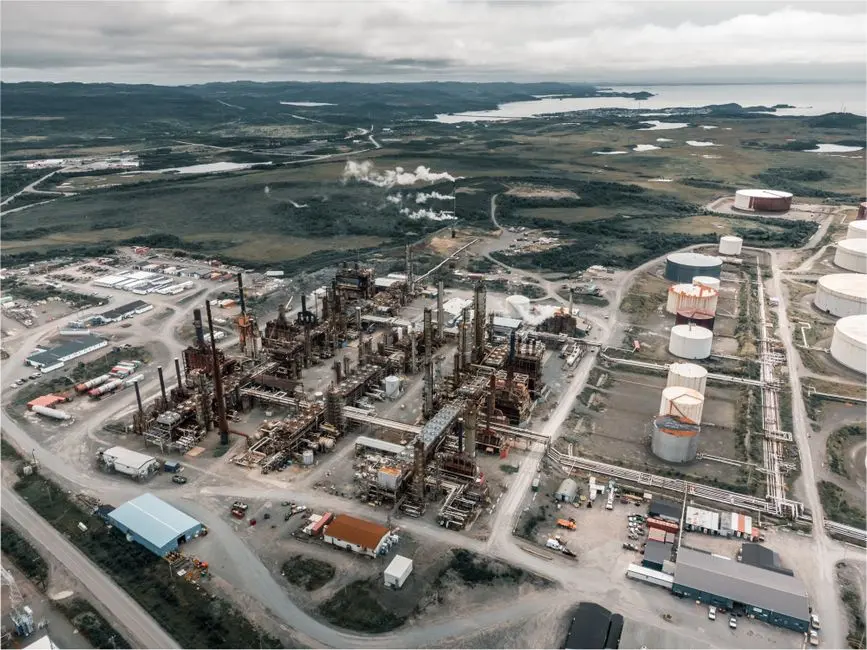
The defensible 2026 sequence for a Hermann-area mineral mining or aggregate operation has six steps, and each maps to a specific unit operation (Genesis Water Technologies; PMC review, 2024-02). First, pH correction: raise pH so dissolved metals precipitate as hydroxides and gypsum drops out — lime raise to pH >10 before thickening is the literature baseline. Second, coagulation and flocculation: aggregate suspended solids and fine metal particles into settleable or floatable flocs, matched to the floc density that drives the next step. Third, solids separation — a DAF system for mining wastewater solids separation for buoyant floc or oil/fines, or a lamella clarifier for metal hydroxide sludge for sludge volume and footprint. Fourth, multimedia filtration: drop turbidity and colloids to protect downstream membranes, specifying target SDI after the filter, not inlet turbidity. Fifth, a membrane polish — an ultrafiltration system for RO pretreatment for fine colloids, then an industrial RO system for mining wastewater for dissolved salts and metals, rated at >99% rejection of dissolved metals and salts, at 50–70% recovery on AMD feed and 70–85% on a ZLD RO stage (AMPAC USA, 2025-09). Sixth, monitoring and reporting: PLC/HMI with continuous pH, flow, and conductivity, plus POTW self-monitoring records (LiqTech, 2025-08).
The proposal should tie chemistry dosing, PLC/HMI controls, and the membrane skid into a single integrated control system, and the supplier should have installed the same unit operations at flows in the same order of magnitude. An automatic chemical dosing system for lime and flocculant is the standard for lime, coagulant, flocculant, and pH-adjuster injection, with PLC control and pre-wiring so commissioning is fast and dosing ties into the same HMI the rest of the train reports through.
| Step | Unit Operation | Function | Basis-of-Design Question to Specify |
|---|---|---|---|
| 1 | pH correction | Precipitate dissolved metals as hydroxides; drop gypsum | Target pH setpoint (typically >10 with lime); hydraulic residence time |
| 2 | Coagulation / flocculation | Aggregate suspended solids and fine metals into flocs | Floc density, polymer type, dose-to-flow ratio |
| 3 | Solids separation (DAF or lamella) | Remove bulk precipitated solids | Air-to-solids ratio and polymer compatibility (DAF); plate spacing and underflow solids (lamella) |
| 4 | Multimedia filtration | Protect downstream membranes from turbidity and colloids | Target SDI after the filter, not inlet turbidity |
| 5 | Membrane polish (UF + RO) | Reject dissolved salts and trace metals | >99% rejection; 50–70% recovery on AMD feed, 70–85% on a ZLD RO stage (AMPAC USA, 2025-09) |
| 6 | Monitoring and reporting | Maintain setpoints; meet POTW self-monitoring | PLC/HMI continuous pH, flow, conductivity; data retention for POTW records |
Choosing Between DAF and a Lamella Clarifier at the Solids-Separation Step
The clarifier decision turns on floc density and sludge footprint, not on what a single supplier happens to stock. DAF is the right call when the floc is buoyant or the influent carries oils or fines that float; lamella is the right call when sludge volume and footprint are the binding constraint and there is no oil loading. For a Hermann-area aggregate washing circuit that carries clay fines and precipitated metal hydroxides, DAF typically wins on floc capture rate; for a high-flow, low-oil lime precipitation train, the lamella clarifier's plate-pack footprint often beats DAF on hydraulic capacity per square meter (Genesis Water Technologies, 2025-11). A side-by-side comparison of the two is covered in the DAF vs clarifier for mining wastewater factory guide and the DAF or clarifier for mining/metals wastewater in Mount Vernon reference, and a broader mechanism-level breakdown is in the DAF vs sedimentation industrial wastewater comparison.
The basis-of-design questions to put to each supplier are different. For DAF, specify the air-to-solids ratio and polymer compatibility against the floc the train is actually generating. For lamella, specify plate spacing and underflow solids, and confirm the underflow rate matches the downstream dewatering cycle. Chemical precipitation produces metal hydroxide sludge that has to be dewatered downstream, so the choice of clarifier ties to the cake-volume target on the filter press for mining sludge dewatering — a clarifier that overflows fine floc forces a longer filter press cycle and a wetter cake, which is why the two pieces of equipment have to be sized together.
Reuse Economics: Where the Compliance Investment Starts to Pay Back
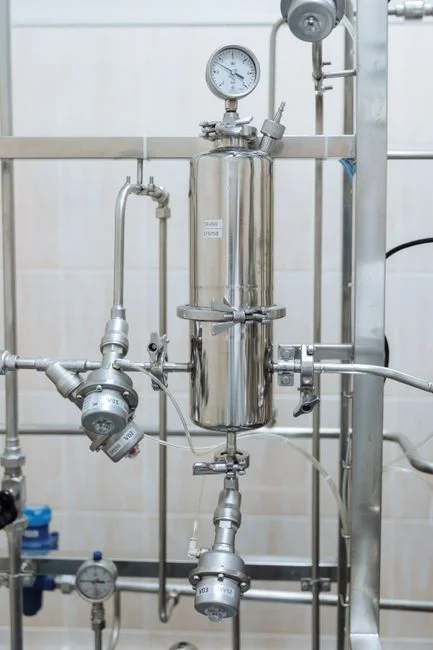
For mines near sensitive ecosystems or in water-stressed catchments, internal water reuse enabled by RO can reduce freshwater consumption by 40–60% compared to once-through operations (AMPAC USA, 2025-09). That is the lever to monetize compliance investment: every cubic meter the plant reuses is a cubic meter it does not pay to discharge or to draw from a freshwater source. Where zero-liquid discharge is required, RO handles the bulk water recovery — typically 70–85% — before the more energy-intensive thermal stages handle the remaining concentrate, and the operator should request a recovery curve, not just a nameplate figure (AMPAC USA, 2025-09).
The wider context is that mining water usage accounts for less than one percent of 2015 total U.S. water demand, but is locally significant — so reuse economics are sharper near the Gasconade than in a water-rich basin (DOE/ACS, 2021). For a small Hermann-area operator that wants reuse and pretreatment in one footprint, a compact integrated water purification skid tied to the industrial RO system for mining wastewater and an automatic chemical dosing system for lime and flocculant is the package typically asked of a supplier. The sizing logic is "reuse as much as economics allow, then polish the rest to sewer quality" — not "discharge as much as the permit allows."
Basis of Design: What to Hand the Supplier Before You Ask for a Quote
The supplied research does not publish price points for a complete pretreatment train, so a buyer has to request a quotation against their own basis of design rather than rely on a published range. The information to put in the request: peak and average flow in m³/h, influent pH and metal profile from a representative sampling round, the local sewer authority discharge limits for metals, pH, and TSS, and the desired recovery percentage if reuse is in scope. With that basis of design in hand, suppliers can quote a six-step train — equalization, pH correction, coagulation, DAF or lamella, multimedia filtration, and RO — at the >99% rejection of dissolved metals and salts the literature reports (AMPAC USA, 2025-09).
On supplier selection, the literature points to end-to-end service and a clear plan for how to operate and maintain the system (LiqTech, 2025-08). The operator should confirm the proposed scope ties the chemistry dosing, the PLC/HMI controls, and the membrane skid into a single integrated control system, and that the supplier has installed the same unit operations — DAF or lamella, multi-media filter for RO pretreatment, ultrafiltration system for RO pretreatment, RO, and sludge dewatering — at flows in the same order of magnitude as the Hermann site. Mining water treatment processes vary significantly between operations, both in required capacity and in wastewater content, which is why suppliers develop customized systems matched to specific needs (LiqTech, 2025-08).
| Basis-of-Design Input | What to Provide | Why It Matters |
|---|---|---|
| Flow profile | Peak and average flow in m³/h | Drives equalization basin volume and pump selection |
| Influent characterization | pH and metal profile from a representative sampling round, by stream | Determines lime dose, coagulant selection, and whether RO is required |
| Discharge limits | Local sewer authority limits for metals, pH, and TSS | Sets the polishing target the train has to hit |
| Recovery target | Desired reuse percentage if reuse is in scope | Drives RO sizing and reuse vs. discharge economics |
| Supplier track record | Installed base at flows in the same order of magnitude | Reduces commissioning risk on a non-standard influent |
Frequently Asked Questions
What does a six-step pretreatment train for a Hermann mining or metals site cost in 2026?
The supplied research does not publish price points for a complete pretreatment train, so a buyer has to request a quotation against their own basis of design — peak and average flow in m³/h, influent pH and metal profile, local sewer authority discharge limits, and desired recovery percentage — rather than rely on a published range. Suppliers can only return comparable numbers when those inputs are pinned down first.
How does a small operator pick the right supplier for a 2026 mining pretreatment train?
Look for end-to-end service and a clear plan for operation and maintenance, and confirm the supplier has installed the same unit operations — DAF or lamella, multimedia filter, UF, RO, and sludge dewatering — at flows in the same order of magnitude as the Hermann site (LiqTech, 2025-08). The proposed scope should tie chemistry dosing, PLC/HMI controls, and the membrane skid into a single integrated control system so commissioning is not held up by interface gaps between vendors.
When does a mining site near Hermann actually need RO, and when does multimedia filtration plus precipitation get it to sewer quality?
RO is required when dissolved salts or trace metals survive pH correction, metals precipitation, and multimedia filtration at concentrations above the local sewer authority's discharge limits — the literature reports >99% rejection of dissolved metals and salts by RO, at 50–70% recovery on AMD feed and 70–85% on a ZLD RO stage (AMPAC USA, 2025-09). If the discharge limit is on total suspended solids and bulk metals only, and the influent TDS is moderate, multimedia filtration and a well-run precipitation step can sometimes get to sewer quality without the membrane polish.
What is the biggest compliance risk a small Hermann-area aggregate or metals plant misses when sizing a pretreatment train?
The most common miss is treating the site as one stream — averaging AMD, process water, tailings pond effluent, and dewatering discharge into a single composite and sizing against the average instead of the peak. A copper mine, a coal operation, and a dimension-stone quarry produce fundamentally different wastewaters and cannot share a single default treatment train, which is why the basis-of-design request has to include a per-stream characterization from a representative sampling round before the supplier sizes anything (AMPAC USA, 2025-09).