Why the DAF-vs-Clarifier Question Is Different for Mount Vernon Mining and Metals Plants
Mining and metals wastewater in the Mount Vernon area is a mix of heavy mineral slurries, acid mine drainage (AMD), metal-finishing rinse water, and oily wash streams from vehicle and equipment washing arriving at the same outfall. Treating the DAF-vs-clarifier choice as a brand-versus-brand decision is exactly how Mount Vernon plants end up with a clarifier-default that oversizes the basin, under-removes fines, and misses categorical pretreatment limits.
The historic engineering baseline for U.S. mining and metals separation is the EPA Process Design Manual for Suspended Solids Removal (EPA 625/1-75-003a, January 1975), which covers sedimentation, tube settlers, wedge-wire clarifiers, and flotation. Microbubble DAF has been documented in the mining literature for over fifteen years as a tool for mining-vehicle wash water treatment, AMD neutralization, and high-rate solids/water separation (Rodrigues & Rubio, International Journal of Mineral Processing, Vol. 82, Issue 1, February 2007). A 2026 buyer who treats the question as a feed-characterization problem gets a defensible specification they can carry into both a vendor meeting and a 40 CFR 435 control-authority review. For the microbubble flotation unit itself, a packaged DAF system sized to a Mount Vernon mining flow is the most common 2026 reference design.
The Two Technologies, in One Paragraph Each
A dissolved air flotation (DAF) unit saturates a pressurized recycle side-stream with air and then releases the pressure through nozzles, generating 30–100 μm microbubbles that attach to oil droplets, fine suspended solids, ultrafine mineral particles (down to <13 μm, and even <5 μm in flotation-assisted recovery), and precipitates, floating them as a surface layer for skimming (Rodrigues & Rubio, February 2007). DAF treats effluent volumes in the 100–20,000 m³/h envelope, with a smaller footprint, thicker sludge, rapid start-up, and high operational reliability compared to settling, filtration, precipitation, or adsorption (Rodrigues & Rubio, February 2007). A lamella clarifier stacks inclined plates at 55–60° to shorten the effective settling distance a particle must travel, delivering a 20–40 m/h surface loading rate and up to 30% lower flocculant consumption than a conventional settling basin (per the HydropureWater high-efficiency sedimentation tank product specification). The clarifier relies on Stokes' law and has no mechanism for floating neutrally buoyant emulsified oil, which is why it consistently underperforms on oil-bearing feeds. Both units are real engineering options, but they separate different populations of particles, and that asymmetry is the entire reason the comparison exists.
The Four Mining/Metals Feed Types You Will Actually See in Mount Vernon
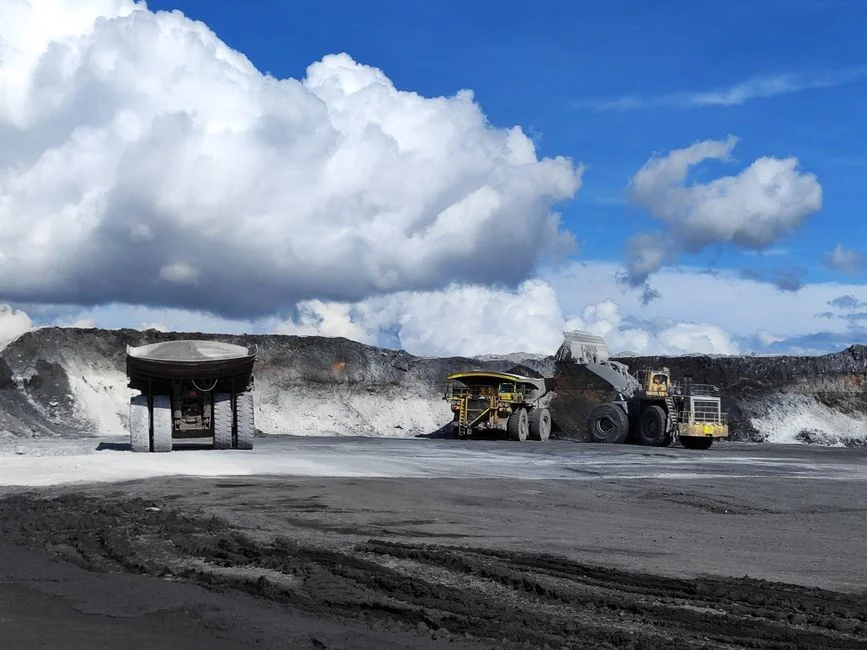
Heavy mineral slurry and tailings thickener overflow is the first feed profile: dense, inert, low-oil, with a particle-size distribution dominated by rapidly settling coarse solids. Gravity or lamella separation is the natural fit here, and a DAF would be over-specified on the oil dimension, though it remains defensible if recycle-water clarity is the priority and the plant wants to recover fines into a closed loop. AMD and metal-rich rinse water is the second profile: target pollutants are dissolved heavy metals and colloidal precipitates that need pH adjustment plus a high-rate solids/liquid separation; Rodrigues & Rubio (February 2007) document microbubble flotation for AMD neutralization and for removal of iron-hydroxide colloidal precipitates via modified column flotation in mining wastewaters. Oily wash and metalworking fluids are the third profile: free and emulsified tramp oil, cutting fluids, and drawing compounds, where oil droplet diameters sit in a near-neutral-buoyancy band that a lamella pack cannot capture. Mining-vehicle and heavy-equipment wash water is the fourth profile: oil emulsions and entrained grit arriving in the same stream, a documented DAF use case with operating references in Brazilian mining vehicle wash water recovery (Rodrigues & Rubio, February 2007, citing CVRD 2003). A clarifier on this fourth feed will sheet oil over the weir with no recovery path and no compliance credit. The combined case—the 2026 default for most new Mount Vernon builds—is all four feeds blended into one treatment train, where a DAF primary followed by a lamella polishing step is the only configuration that addresses every stream.
DAF vs Clarifier: The 2026 Parameter Table for a Mount Vernon Mining/Metals Plant
The asymmetry between the two technologies necessitates a head-to-head table in a 2026 procurement document. The table below condenses the parameters a Mount Vernon engineer will need in a single vendor-meeting view.
| Parameter | DAF (Microbubble Flotation) | Lamella / Conventional Clarifier |
|---|---|---|
| Removal mechanism | Microbubble flotation, 30–100 μm bubble size; targets fine particles <13 μm and ultrafines <5 μm (Rodrigues & Rubio, February 2007) | Gravity sedimentation per Stokes' law; inclined plates shorten settling distance |
| Flow envelope (single unit) | 100–20,000 m³/h with smaller footprint (Rodrigues & Rubio, February 2007) | 20–40 m/h surface loading rate (lamella product spec) |
| Oil and FOG removal | ~95% on a high-oil industrial stream (Ecologix, 2026) | ~70% on the same stream, with visible sheen and FOG slip on stabilized emulsions (Ecologix, 2026) |
| Heavy inert solids removal | Strong on fines; weaker on coarse dense particles without a floc stage | ~90% solids reduction on a heavy-sediment mining stream at lower cost (Ecologix, 2026) |
| Chemical intensity | Coagulant + flocculant program, jar-test selected | Flocculant only; up to 30% lower consumption on a lamella vs a conventional basin (lamella spec) |
| Sludge consistency | Thicker floated sludge; downstream dewatering typically required | Thinner settled sludge; larger volumes to handle |
| CapEx sensitivity | Higher in packaged form (saturation vessel, recycle pump, skimmer drive, PLC) | Lower for a conventional basin; lamella sits between the two |
| OpEx driver | Polymer dose and compressed-air cost dominate | Polymer dose; no compressed-air load |
| Documented mining use cases | AMD neutralization, mining-vehicle wash water, high-rate solids/water separation (Rodrigues & Rubio, February 2007) | Thickener overflow and tailings-side streams; limited recovery of fines and oil |
The single most actionable item in this table is the oil-removal row. A lamella clarifier on a Mount Vernon feed that contains even 10% emulsified oil will fail FOG and TSS discharge monitoring, and no amount of downstream polishing recovers what the inclined plates never captured. The chemistry program on the DAF side is best delivered by a packaged automatic chemical dosing skid so jar-test-validated dose rates are reproduced consistently in production.
The 2026 Decision Rule for Mount Vernon Mining/Metals Procurement
If the feed contains emulsified oil, FOG, sub-50-μm metal fines, AMD precipitates, or any requirement for recycle-water polishing, specify DAF as the primary separator—a clarifier on this stream is a compliance risk. If the feed is dominated by heavy, inert, oil-free grit, a lamella clarifier is sufficient, cheaper to operate, and chemically simpler. The 2026 default for new Mount Vernon builds is a combined case: DAF primary for oil, fines, and AMD, followed by a lamella clarifier downstream as a polishing step to catch residual floc before discharge to the local POTW. Every technology selection in 2026 must be preceded by a jar-test-validated chemical program; skipping jar testing is the most common cause of DAF underperformance and the failure mode a control authority will look for first in a 40 CFR 435 review. Engineers building the underlying compliance narrative can review the Skippack chemicals 40 CFR pretreatment guide for a parallel jar-test-to-discharge sequencing pattern, and cross-check the parallel Prattville mining/metals selection guide to confirm the same decision rule holds outside the Mount Vernon locale.
Sizing the Unit: Flow, Recycle, and Sludge Handling for a Mount Vernon Site
Size to a 24-hour averaged flow profile using the actual discharge duration of batch sources, not the nameplate of the largest intermittent pump—this typically trims 30–50% off an oversized spec and is the single largest CapEx lever a Mount Vernon engineer controls in 2026. DAF sludge typically comes off at 3–6% dry solids—too thin to landfill directly, too thick to haul as liquid—so a downstream plate and frame filter press is the standard dewatering step in a 2026 flowsheet for any mining/metals plant that needs to land a stackable cake. AMD streams require a pH-adjustment stage ahead of the DAF or clarifier so the target metals are precipitated into a separable solid phase rather than staying in solution; the dosing rate on that stage should be governed by the same automatic chemical dosing skid that feeds the DAF coagulant, with each reagent on a calibrated, PLC-trimmed setpoint. A packaged DAF that ships with chemical dosing, PLC, and saturation vessel pre-tested on the shop floor typically cuts weeks off a 2026 install versus a bare-tank field integration.
Frequently Asked Questions
What is the defensible 2026 cost band a Mount Vernon mining/metals buyer should expect for a primary DAF unit?
Buyers should request a line-item quote from at least two vendors covering the saturated vessel, recycle pump, skimmer drive, PLC, and integrated chemical dosing skid in 304SS, plus an alternate quote for 316SS if chloride-bearing wash or bright-dip rinse water is in the feed. OpEx should be quoted at the buyer's actual polymer dose from the jar test, not a generic chart dose, since polymer is the largest variable operating cost on a DAF.
What supplier-selection criteria matter most for a Mount Vernon 40 CFR 435 categorical pretreatment project in 2026?
Insist on documented mining-industry DAF installations with AMD or vehicle-wash references similar to those reviewed in Rodrigues & Rubio (February 2007), and require the vendor to provide a chemical-program scope tied to a jar-test protocol run on the buyer's actual stream. The vendor should also pre-wire the chemical dosing skid, PLC, and saturation vessel at the shop so field integration is minimized.
Can a DAF and a lamella clarifier be run together on a Mount Vernon mining/metals feed?
Yes, and that combination is the 2026 default for plants running mixed feeds. DAF handles emulsified oil, sub-50-μm fines, and AMD precipitates; the lamella clarifier downstream polishes residual floc before discharge. The two units are complementary because they separate different particle populations—the DAF floats what the lamella cannot settle, and the lamella captures the heavier floc that escapes the float layer.
Why does a lamella clarifier consistently fail on emulsified oil from a Mount Vernon feed?
Emulsified oil droplets in a stabilized metalworking or vehicle-wash stream have specific gravity within a few percent of water and droplet diameters that Stokes' law-driven settling cannot remove at any reasonable residence time. The inclined plates in a lamella pack shorten the settling distance but do not change the buoyancy; the oil passes through to the discharge. DAF microbubbles in the 30–100 μm range attach to those droplets and lift them, which is why the same stream that defeats a clarifier is the one a D