The Regulatory Stack That Controls Every Sewer Discharge
Chemical plants near Skippack, PA meet pretreatment limits before sewer discharge by satisfying a three-layer regulatory stack. Layer 1 is the general and specific prohibitions at 40 CFR 403.5(a) and (b), which ban any discharge that causes pass-through or interference as defined at 40 CFR 403.3(p) and 40 CFR 403.3(k). Layer 2 is the federal categorical standard for the plant's specific industry subpart — most often 40 CFR Part 414 for organic chemicals, plastics, and synthetic fibers, or Part 415 for inorganic chemicals. Layer 3 is the site-specific local limit set by the receiving POTW's Control Authority under 40 CFR 403.5(c). The most stringent applicable limit controls, and chemical plants usually meet the Significant Industrial User definition at 40 CFR 403.3(v), which triggers a baseline monitoring report, 90-day compliance reports, and a slug load control plan under 40 CFR 403.8(f).
Layer 1 is qualitative but enforceable. Under 40 CFR 403.5(a), a discharge that causes pass-through or interference is prohibited regardless of whether any numeric limit is exceeded, and 40 CFR 403.5(b) lists specific prohibited pollutants (ignitable, corrosive, and toxic-gas categories) that are banned at any concentration (per EPA, 2026). Pass-through is defined at 40 CFR 403.3(p) as a discharge that exits the POTW into waters of the United States in quantities or concentrations that is a cause of a violation of any requirement of the POTW's NPDES permit, including an increase in the magnitude or duration of an existing violation; interference at 40 CFR 403.3(k) is a discharge that, alone or in conjunction with other sources, both (1) inhibits or disrupts the POTW, its treatment processes or operations, or its sludge processes, use, or disposal, and (2) therefore is a cause of an NPDES permit violation or a violation of sewage sludge use or disposal requirements under CWA §405 or RCRA (per EPA, 2026).
Layer 2 is the federal categorical pretreatment standards at 40 CFR Parts 405–471. For chemical plants, the relevant subparts are 40 CFR Part 414 (organic chemicals, plastics, and synthetic fibers), Part 415 (inorganic chemicals), Part 417 (soap and detergent manufacturing), Part 419 (petroleum refining), and Part 433 (metal finishing) when alloy or metal processes are present (per EPA, 2026). These are numeric effluent limits set industry-by-industry, and EPA revises them on a multi-year cycle — confirm current values directly in 40 CFR rather than relying on cached numbers.
Layer 3 is the site-specific local limit set by the receiving POTW's Control Authority under 40 CFR 403.5(c) and published in the POTW's approved pretreatment program. Local limits can be more stringent than the federal categorical number when the receiving plant's hydraulic or biological capacity is constrained, and they are intended to protect the POTW from pass-through, interference, and sludge management issues (per EPA, 2026). EPA's NPDES pretreatment guidance requires periodic reevaluation of local limits. The Cranberry Township pretreatment program shows how a real POTW operationalizes this: Chapter 19 of the municipal code requires wastewater surveys, local limits are derived from the plant's specific wastewater makeup and treatment removal rate, and discharge permits are issued to significant industrial users and FOG-program users (Cranberry Township, 2026).
Statutory basis runs through the Clean Water Act: §307(b) authorizes EPA to set pretreatment standards for pollutants that pass through or interfere with POTW operations, §402(n) authorizes POTW pretreatment programs as part of the NPDES framework, and §405 and RCRA govern sludge-related interference (per EPA, 2026). EPA can enforce locally developed limits as pretreatment standards when they are developed and approved in accordance with 40 CFR Part 403.5(c).
| Layer | Citation | What it sets | Why it binds |
|---|---|---|---|
| 1 — General and specific prohibitions | 40 CFR 403.5(a) and (b) | Bans any discharge causing pass-through (403.3(p)) or interference (403.3(k)); lists specific prohibited pollutants | Applies to every industrial user; qualitative but enforceable (per EPA, 2026) |
| 2 — Categorical pretreatment standard | 40 CFR Parts 405–471 (e.g., 414, 415, 417, 419, 433) | Numeric effluent limits for specific industry subcategories | Triggers SIU status at 40 CFR 403.3(v)(1); floor for the discharge envelope (per EPA, 2026) |
| 3 — Local limit | 40 CFR 403.5(c) and approved POTW program | Site-specific numeric or narrative limits, including BMPs | Often more stringent than the federal categorical when hydraulic or biological capacity is constrained (per EPA, 2026) |
For a Skippack-area plant, the practical move is to read all three layers in order before sizing any equipment. The receiving POTW in the Perkiomen watershed is the Control Authority that publishes the binding local limit letter, and that letter is what the rest of the design has to hit. EPA's overview of pretreatment standards and local limits is the right starting reference.
Why Skippack-Area Plants Almost Always Hit SIU Status
An Industrial User is any nondomestic discharger to a POTW; a Significant Industrial User (SIU) is the subset held to a heavier monitoring and reporting bar at 40 CFR 403.3(v) (per EPA, 2026). Three independent triggers qualify a discharger as an SIU: (1) the IU is subject to categorical pretreatment standards; (2) the IU discharges an average of 25,000 gpd or more of process wastewater; or (3) the IU's process waste stream makes up 5% or more of the POTW's average dry-weather hydraulic or organic capacity. A facility meeting any one of those three triggers is an SIU and inherits the full compliance program on top of the limits themselves (per EPA, 2026).
Chemical plants in the Skippack/Upper Gwynedd/Perkiomen watershed almost always meet trigger (1) because they fall under 40 CFR Part 414 (organic chemicals, plastics, and synthetic fibers), Part 415 (inorganic chemicals), Part 419 (petroleum refining), or an adjacent subpart (per EPA, 2026). That single classification drives the bulk of the paperwork: a baseline monitoring report (BMR) at the point of categorical standard promulgation or at new-discharge startup, 90-day compliance reports on a defined schedule, a written control mechanism from the POTW, and routine POTW inspections and sampling under 40 CFR 403.12 (per EPA, 2026). The BMR establishes the baseline pollutant envelope that the rest of the compliance program measures against; it has to be reissued when the categorical subpart changes or when a new pollutant envelope is detected. The same pattern shows up in adjacent chemical-industry compliance work, including organic chemicals pretreatment near Greenwich Twp, where trigger (1) is the entry point to the entire reporting chain.
Batch operators carry one extra obligation. Under 40 CFR 403.8(f), a Significant Industrial User is typically required to develop and implement a slug load control plan — a written set of procedures that combines equalization capacity, flow and pH monitoring, and batch-release protocols to prevent a non-routine pollutant release or hydraulic surge from causing pass-through or interference at the receiving POTW (per EPA, 2026). The slug load control plan is the document a regulator will ask for first if a chemical plant near Skippack ever has an excursion, and it is also the document that ties the equalization basin and PLC-controlled dosing into the compliance file.
Confirm current categorical values in 40 CFR directly because EPA revises subparts on a multi-year cycle. The SIU determination, by contrast, is stable until the process changes — flow, product mix, or the applicable subpart. The Cranberry Township pretreatment program follows the same structure: educational outreach, wastewater surveys under municipal code, discharge permits for SIUs and FOG-program users, and proactive inspections, all of which mirror the EPA framework at the local level (Cranberry Township, 2026).
The Unit-Operation Train That Actually Hits the Limits
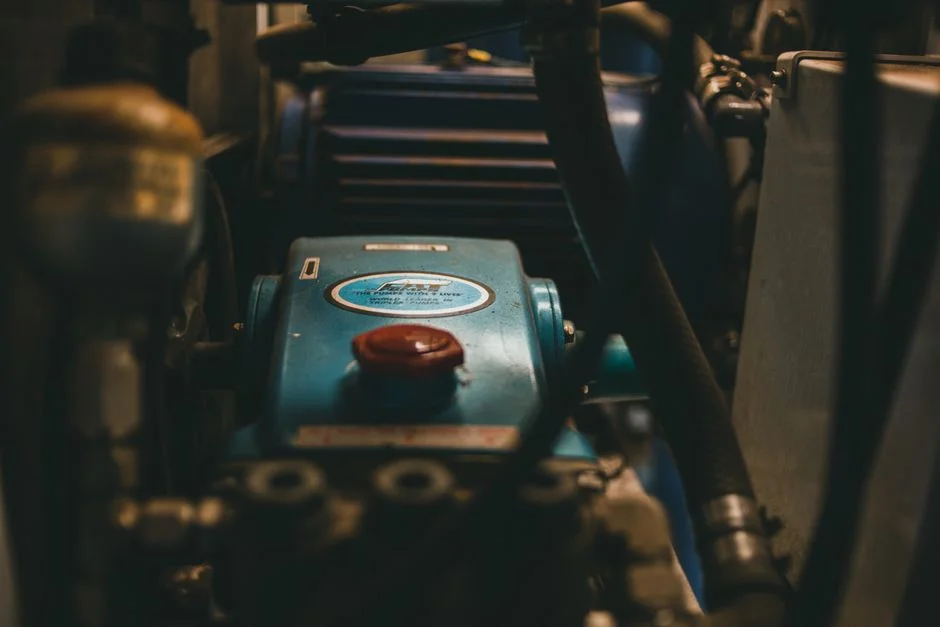
Six unit operations, in roughly this order, handle the vast majority of chemical plant wastewater streams that go to a POTW. Not every plant needs all six — the right subset is a function of the controlling pollutant, which is the decision logic laid out below. The table below links each unit operation to the influent problem it solves, the parameter it typically controls, and the regulatory driver behind that parameter (per EPA, 2026). Specific numeric limits are set by the applicable 40 CFR categorical subpart and by the local POTW's pretreatment program, both of which must be consulted for the values that govern a given plant.
Equalization comes first because it dampens batch pH, flow, temperature, and concentration swings before downstream unit operations see them. Sizing for hours to days of retention is the lowest-cost insurance against pass-through excursions, and under-sizing the equalization basin is the most common root cause of failed compliance events at chemical plants (per EPA, 2026). PLC-controlled pH adjustment is the most common first chemical step; the binding number is typically the local pH limit of 6–9, driven by 40 CFR 403.5(b) specific prohibitions and the receiving POTW's local limit (per EPA, 2026). A PLC-controlled chemical dosing system with redundant pH probes is the standard hardware for this step.
For oils, FOG, and suspended solids, a dissolved air flotation system handles free and emulsified oils and FOG in a single step, and is the standard first physical separation on chemical-plant streams. Total metals control typically routes through chemical precipitation followed by a clarifier such as a lamella clarifier (high-efficiency sedimentation tank), which delivers the surface loading rate needed to hit metal limits under 40 CFR Part 433 or the local limit, whichever is more stringent. Biological polishing — conventional activated sludge or an MBR membrane bioreactor — addresses soluble COD/BOD before discharge, and the binding BOD/COD number is usually the POTW's local limit rather than the federal categorical. Multimedia and/or carbon filtration is a polishing step that protects the discharge sampling point and supports reuse-quality targets where applicable.
| Unit operation | Influent problem | Parameter controlled | Regulatory driver |
|---|---|---|---|
| Equalization basin | Batch swings in pH, flow, temperature, concentration | Hydraulic and concentration variability | 40 CFR 403.5(a) pass-through/interference; 40 CFR 403.8(f) slug load control (per EPA, 2026) |
| PLC-controlled pH adjustment | Strong acid or caustic batches | pH (typically 6–9 local limit) | 40 CFR 403.5(b) specific prohibitions; local limit (per EPA, 2026) |
| DAF / coagulation | Free and emulsified oils, FOG, suspended solids | Oils & grease, TSS | 40 CFR 403.5(a) pass-through; categorical standard; local limit (per EPA, 2026) |
| Chemical precipitation + clarifier | Dissolved metals | Total metals (Cd, Cr, Cu, Ni, Pb, Zn, etc.) | Categorical standard (e.g., 40 CFR Part 433 for metal finishing); local limit (per EPA, 2026) |
| Biological polishing (activated sludge / MBR) | Soluble organics | COD, BOD | Categorical standard; local limit on BOD/COD to POTW (per EPA, 2026) |
| Multimedia / carbon filtration | Residual organics, color, trace contaminants | Final polish parameters | Local limit; reuse-quality targets if applicable (per EPA, 2026) |
Four decision axes determine which combination of unit operations to build. Axis 1 is the controlling pollutant: identify the parameter most likely to exceed the most stringent applicable limit. Oils and TSS point to DAF; dissolved metals point to precipitation plus a clarifier; high COD/BOD points to biological polishing; pH swings point to equalization plus PLC-controlled dosing (per EPA, 2026). Axis 2 is SIU status and applicable standard: if the plant is an SIU under a categorical standard, the federal number is the floor and the local limit is often the binding constraint; if the plant is non-categorical, the design still has to prevent pass-through and interference under 40 CFR 403.5(a), which is qualitative but no less enforceable (per EPA, 2026). Axis 3 is flow pattern: batch operations with long cycle times need equalization sized for hours to days, while continuous operations can usually get away with shorter retention. Axis 4 is reuse ambition: plants moving toward reuse should evaluate the MBR-plus-RO path against discharge-only activated sludge. Adjacent pretreatment work, including the chemicals plants near Galva pretreatment guide and the chemical plants near Picayune pretreatment guide, walks the same six-op train against different receiving POTWs.
Building the Skippack-Specific Compliance File
The framework above turns into a concrete compliance file once it is tied to a specific address. Skippack sits in the Perkiomen watershed in Montgomery County, PA, and chemical-plant discharges in that area are typically routed to neighboring POTWs whose service areas cross municipal boundaries; the receiving POTW — not the county or the watershed — is the Control Authority that sets the binding local limits (per EPA, 2026). The first action for any Skippack-area plant is to confirm which POTW's collection system the site actually discharges into, and then to request the current local limits letter and the most recent annual local limits evaluation from that Control Authority. EPA's NPDES guidance requires periodic reevaluation of local limits, so the letter a plant receives today may differ from the one it received five years ago.
With the local limits letter in hand, the next step is to compile the Baseline Monitoring Report using the 40 CFR 403.12 sampling and analysis requirements. The BMR establishes the pollutant envelope that subsequent 90-day compliance reports will be measured against, and it has to be reissued when the applicable categorical subpart changes or when a new pollutant envelope is detected (per EPA, 2026). Equalization sizing rationale, slug load control plan elements (flow and pH monitoring, written batch release procedures), and inspection-readiness files all belong in the same package. The slug load control plan under 40 CFR 403.8(f) is the document a regulator will request first if an excursion occurs, and it is also the document that ties the equalization basin and PLC-controlled dosing into the compliance file.
The Cranberry Township pretreatment program is a useful template for the workflow: pretreatment program with educational outreach, wastewater survey under municipal code, discharge permit with monitoring frequency, and proactive inspections (Cranberry Township, 2026). A similar end-to-end file structure shows up in adjacent industries, including fabricated metals pretreatment near Portland and the petroleum plants near Kalispell pretreatment guide, where the same Control Authority / BMR / slug load control plan structure applies. What changes for each site is the specific local limit values and the applicable 40 CFR subpart — not the file structure itself.
Cost of the Train vs Cost of a Failed Excursion
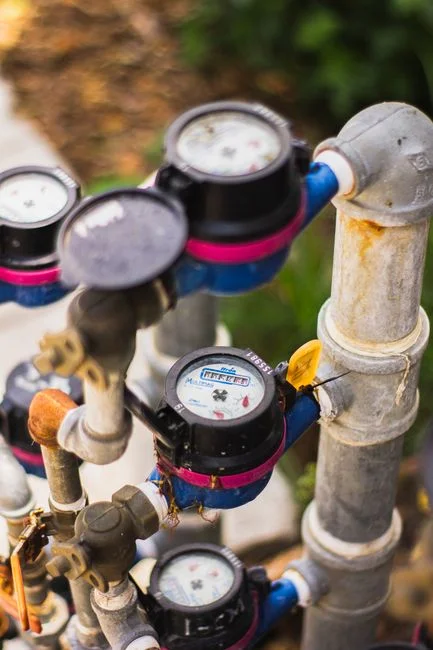
Under-sized equalization and PLC-controlled dosing are the most common root cause of failed compliance events at chemical plants, so the lowest-cost line items in the train carry the highest risk reduction (per EPA, 2026). The cost of the equipment itself is straightforward to scope; the cost of a failed excursion is harder to quantify but no less real. Pass-through and interference are defined as causes of NPDES permit violations, including increases in the magnitude or duration of an existing violation, so a single upset at a chemical plant can pull a downstream POTW into non-compliance and trigger enforcement at both ends of the pipe (per EPA, 2026).
The defensible move is to compare bids on a controlling-pollutant basis rather than flow-only sizing. CAPEX drivers to compare across bids include equalization basin retention hours, DAF air-to-solid ratio and surface loading, clarifier surface loading rate, MBR membrane material and aeration design, and PLC/SCADA monitoring scope (per EPA, 2026). OPEX drivers to compare include chemical consumption (coagulant, flocculant, pH adjuster), membrane replacement interval, sludge dewatering cost, and energy per m³ treated. For sludge dewatering, a plate and frame filter press is the standard downstream step, and the cake-solids target should be set against the receiving POTW's sludge acceptance criteria rather than a generic number.
For a defensible CAPEX case, request a side-by-side bid comparison keyed to the categorical subpart and the local limit — not generic flow-only sizing — and ask each bidder to identify the equalization retention hours, the DAF air-to-solid ratio, and the clarifier surface loading rate that their proposal assumes. The qualitative cost of a pass-through excursion under 40 CFR 403.3(p) and 40 CFR 403.3(k) is that a single upset can trigger enforcement against both the industrial user and the receiving POTW, which is the risk an adequately sized train is designed to retire (per EPA, 2026). The same risk framing shows up in adjacent compliance work, including the mining pretreatment near Travellers Rest guide, where under-sized equalization is repeatedly identified as the root cause of compliance events.
Frequently Asked Questions
What budget should a Skippack-area chemical plant plan for a 2026 pretreatment train?
There is no single published price for a 40 CFR Part 414 or 415 pretreatment train because the cost is driven by the controlling pollutant, the applicable categorical subpart, the local limit set by the receiving POTW, and the equalization retention hours the design assumes (per EPA, 2026). The right input to request from each bidder is a side-by-side scope keyed to the categorical subpart and the local limit — equalization retention hours, DAF air-to-solid ratio, clarifier surface loading rate, MBR membrane spec, and PLC/SCADA monitoring scope — rather than a flow-only price.
How do we choose a pretreatment equipment supplier for a chemical plant in the Perkiomen watershed?
Evaluate each supplier on documented experience with the applicable 40 CFR subpart (414, 415, 417, 419, or 433) and on whether they will size the train to the receiving POTW's local limit rather than to a generic flow number (per EPA, 2026). Ask for a written basis of design that names the categorical subpart, the local limit letter it is engineered to, and the equalization retention hours assumed — the same file structure the Cranberry Township pretreatment program requires of its industrial users (Cranberry Township, 2026).
Which 40 CFR subpart actually controls a given chemical plant near Skippack?
The binding subpart is set by the plant's primary product, not by its location. Organic chemicals, plastics, and synthetic fibers fall under 40 CFR Part 414; inorganic chemicals under Part 415; soap and detergent manufacturing under Part 417; petroleum refining under Part 419; and metal finishing under Part 433 when alloy or metal processes are present (per EPA, 2026). Confirm current categorical values in 40 CFR directly because EPA revises subparts on a multi-year cycle, and the receiving POTW's local limit may be more stringent than any federal categorical number.
What is the slug load control plan requirement under 40 CFR 403.8(f)?
Under 40 CFR 403.8(f), a Significant Industrial User is typically required to develop and implement a slug load control plan — a written set of procedures that combines equalization capacity, flow and pH monitoring, and batch-release protocols to prevent a non-routine pollutant release or hydraulic surge from causing pass-through or interference at the receiving POTW (per EPA, 2026). The plan is the document a regulator will request first after an excursion, and it is also the document that ties the equalization basin and PLC-controlled dosing into the compliance file.
Related equipment and engineering reading
- How Industrial Organic Chemicals Plants Near Lake Providence Meet Pretreatment Limits (2026 Guide)
- How Industrial Organic Chemicals Plants Near Greenwich Twp Meet Pretreatment Limits (2026 Guide)
- How Agricultural Chemical Plants Near Vacaville Meet 2026 Pretreatment Limits
- How Baytown Industrial Organic Chemicals Plants Meet Pretreatment Limits (2026 Guide)