Why Vacaville Ag-Chemicals Dischargers Face a Layered Compliance Stack
Agricultural chemicals plants near Vacaville, California meet pretreatment limits by treating wastewater on-site before it reaches the City of Vacaville Easterly Wastewater Treatment Plant, which discharges under NPDES Order R5-2025-0028 (adopted 20 June 2025, effective 1 August 2025, expiring 31 July 2030; NPDES No. CA0077691) (source: Central Valley RWQCB Order R5-2025-0028, 2025-06-20). The order's effluent framework — including the seasonal summer filtration requirements supported by a quantitative microbial risk assessment (QMRA) of Old Alamo Creek — raises the upstream bar for any industrial user feeding the collection system (source: IWA Publishing, *Water Supply*, 2017).
Three layers stack on top of that permit. Layer one is the federal general pretreatment regulation at 40 CFR Part 403, which defines Industrial User (IU) at 40 CFR 403.3(j), pass-through at 40 CFR 403.3(p), and interference at 40 CFR 403.3(k) (source: EPA, "Pretreatment Standards and Requirements — Local Limits"). Layer two is the categorical standard, most commonly 40 CFR Part 414 for inorganic chemicals and 40 CFR Part 455 for pesticide chemicals. Layer three is the site-specific local limit developed by the Control Authority — in Solano County, the California Regional Water Quality Control Board, Central Valley Region (Region 5S) — per 40 CFR 403.5(c) (source: EPA, "Pretreatment Standards and Requirements — Local Limits"). The Easterly WWTP is a major-discharge POTW with design flow above 5 mgd, which is the federal trigger for a mandatory pretreatment program (source: California State Water Resources Control Board, NPDES Pretreatment Program).
Are You an SIU? Classification Triggers for Ag-Chemicals Plants
An industrial user crosses into Significant Industrial User (SIU) status through any one of four pathways defined at 40 CFR 403.3(v): (1) process wastewater flow of 25,000 gpd or more; (2) discharge equal to or greater than 5% of the POTW's dry-weather flow; (3) designation as a Categorical Industrial User (CIU) under 40 CFR Parts 405–471; or (4) a Control Authority determination that pass-through, interference, or sludge impact is plausible (source: California State Water Resources Control Board, NPDES Pretreatment Program). Most ag-chemicals formulators in the Vacaville Industrial Area trip the categorical pathway under 40 CFR Part 414 (inorganic chemicals) or 40 CFR Part 455 (pesticide chemicals); the controlling subpart depends on the facility's SIC/NAICS code, which the operator must verify against the EPA category tables before the baseline monitoring report is filed.
Classification drives the monitoring load. A CIU files the 90-day baseline monitoring report within 180 days of the categorical standard's applicability date, then submits self-monitoring reports on a semi-annual cycle (source: 40 CFR 403.12). Non-SIUs are still bound by the local limits, but typically report less often and are not subject to the full baseline report requirement. Enforcement against both classes runs through the Central Valley RWQCB's compliance-audit cycle, which the State Water Board runs every 5 years, paired with annual compliance inspections (source: California State Water Resources Control Board, NPDES Pretreatment Program).
| Pathway | Threshold | Resulting Class | Reporting Frequency |
|---|---|---|---|
| Process flow | ≥ 25,000 gpd | SIU | Semi-annual SMR minimum |
| POTW fraction | ≥ 5% of POTW dry-weather flow | SIU | Semi-annual SMR minimum |
| Categorical standard (40 CFR Part 414 or 455) | Any applicable subpart | CIU / SIU | 90-day baseline + semi-annual SMR |
| Control Authority determination | Pass-through or interference risk | SIU | Per Control Authority schedule |
| Below all of the above | — | Non-SIU | Per Control Authority schedule; local limits still apply |
What Comes Out of an Ag-Chemicals Line — and What the Manhole Will Reject
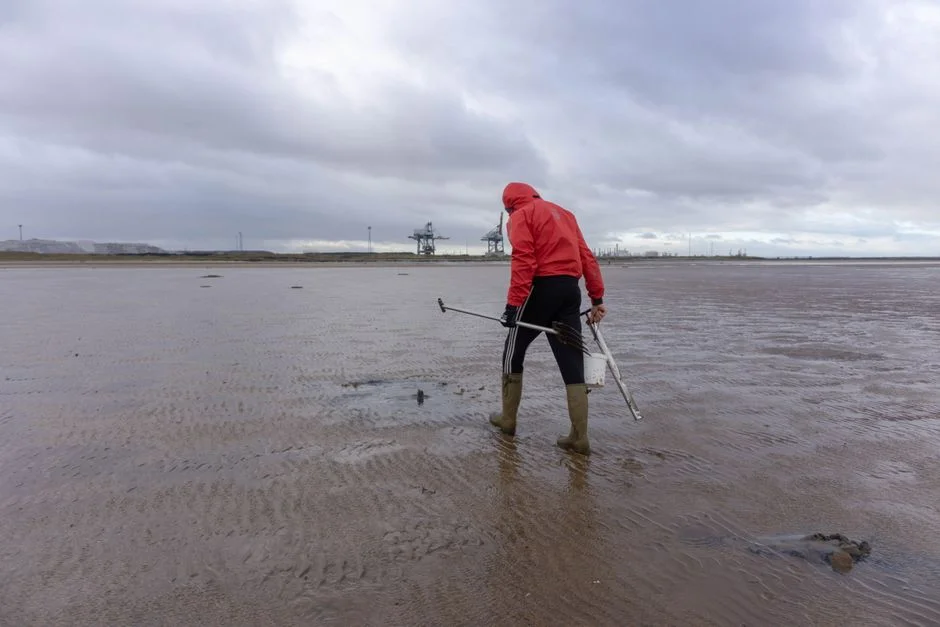
Typical ag-chemicals wastewater streams pull from equipment washdown, product-dust cleanup, batch reactor rinses, and packaging-line drip. The contaminant classes that show up in a Control Authority inspection are predictable: high-COD/BOD washwater; suspended solids from formulated product dust; oil and grease from equipment cleaning; solvents; ammonia; sulfates; chlorides; pH excursions from acid or alkaline batch neutralization; and trace active-ingredient residuals. Each class maps to a local-limit trigger — oil & grease, TSS, BOD/COD, ammonia, pH, sulfates — with exact numeric limits developed by the POTW per 40 CFR 403.5(c) and enforced at end-of-pipe (source: EPA, "Pretreatment Standards and Requirements — Local Limits").
Pesticide active ingredients are the pass-through concern that drives everything else. The POTW's biological process is not designed to mineralize modern pesticide actives, so the Vacaville POTW will layer narrative best-management-practice limits and often numeric limits on top of the categorical standard, especially because the host NPDES permit already includes the stringent summer filtration requirements supported by the QMRA on Old Alamo Creek (source: IWA Publishing, 2017; Central Valley RWQCB Order R5-2025-0028, 2025-06-20). Solvents, ammonia, and high-COD loads can also knock the POTW's nitrification and aeration basins off setpoint, which the Control Authority treats as interference under 40 CFR 403.3(k).
| Contaminant Class | Typical Source on an Ag-Chemicals Line | Local-Limit Trigger | Risk Pathway at the POTW |
|---|---|---|---|
| COD / BOD | Reactor washwater, surfactant cleaners | BOD, COD limits | Interference with biological treatment |
| Total suspended solids | Product dust, formulation residues | TSS limit | Sludge build-up, pass-through |
| Oil & grease | Equipment cleaning, floor wash | O&G limit (typically ~100 mg/L range) | Foaming, aeration basin upset |
| pH excursions | Acid/alkaline batch neutralization | 6–9 standard range | Microbial inhibition, corrosion |
| Ammonia | Fertilizer co-products, cleaning chemistries | Ammonia limit | Nitrification upset, toxicity |
| Sulfates / chlorides | Salt-based actives, neutralization acids | Sulfate, TDS limits | Sludge disposal, concrete corrosion |
| Trace pesticide actives | Formulating line drips, changeover rinses | Narrative BMPs, possibly numeric | Pass-through to Old Alamo Creek |
Building a 2026 Pretreatment Train for Vacaville Dischargers
Five unit operations cover roughly 90% of the ag-chemicals pretreatment trains we see on Solano County sites. The order is not optional — each step protects the one downstream.
Step 1 — Flow equalization and pH adjustment. Batch chemical operations produce slug loads; a 24-hour equalization basin smooths hydraulic and concentration swings to the unit processes downstream. A PLC-controlled chemical dosing skid tied to a pH probe holds the stream inside the typical 6–9 local-limit band and lets the operator trim coagulant dose in real time.
Step 2 — Primary solids and oil & grease removal. A rotary mechanical bar screen removes fibrous debris and rags before they foul downstream pumps. From there, a DAF unit is the workhorse for FOG and colloidal TSS, while a high-efficiency sedimentation tank is the right call when footprint is tight and FOG is moderate. Both are commonly installed — DAF upstream of the sedimentation tank — when the stream carries both free oil and dense inorganic solids.
Step 3 — Biological treatment. An MBR system or conventional activated sludge takes out dissolved COD/BOD and ammonia. MBRs produce a tighter effluent, tolerate batch-load swings, and are the right call when the plant is even considering water reuse.
Step 4 — Polishing. Multimedia filtration, activated carbon, or advanced oxidation (ozone/UV/H2O2) handles residual color, refractory COD, and the trace pesticide actives that the bio step will not fully mineralize. The polishing chain is also where the plant decides whether the effluent heads to the manhole or to a reuse loop.
Step 5 — Sludge handling. A plate-and-frame filter press dewaters the DAF float and biological waste sludge to a cake suitable for disposal; in many cases the dewatered cake is treated under 40 CFR Part 503 domestic-sludge analogue rules, but operators should confirm vector-attraction reduction and pollutant ceilings against their specific sludge classification.
DAF vs Lamella vs MBR — Which Tech Fits an Ag-Chemicals Plant Near Vacaville?
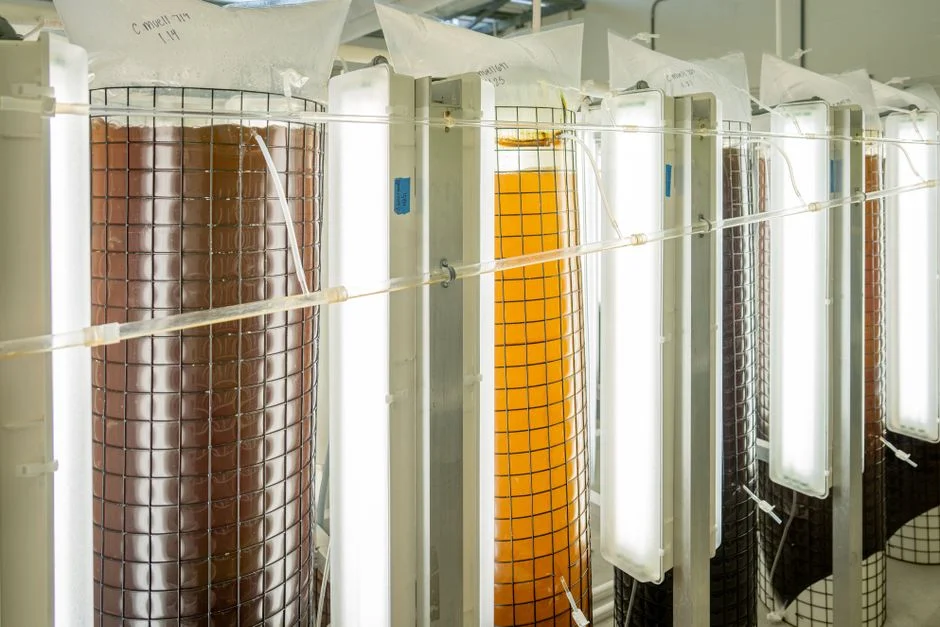
Selection is a flow-versus-contaminant question. DAF is the default for ag-chemicals formulating lines with high FOG and colloidal TSS; a typical DAF system covers 4–300 m³/h. MBR is the right call when COD load is variable, batch swings are large, or the plant is moving toward water reuse; MBR packages typically run 10–2,000 m³/day. Lamella — the high-efficiency sedimentation tank geometry — wins when footprint is the binding constraint and pollutant load is moderate, with surface loading rates on the order of 20–40 m/h (HydropureWater engineering reference, 2026).
The most common 2026 reference design for chemical formulators in this flow range is a DAF + MBR combination: the DAF system strips FOG and colloidal TSS upstream so the MBR membranes do not foul, and the MBR delivers the tight effluent that downstream carbon polishing or a reuse loop can rely on. For a deeper maintenance reference on the flotation side, see the pressure flotation maintenance protocol. For a parallel look at how chemical formulators in other regions are sizing the same train, the Houston chemical-plant pretreatment playbook and the Logan chemical-plant pretreatment guide are useful points of comparison.
| Criterion | DAF | Lamella Clarifier | MBR |
|---|---|---|---|
| Typical flow range | 4–300 m³/h | 5–200 m³/h (per skid) | 10–2,000 m³/day per module |
| Footprint | Moderate | Smallest of the three | Largest; tankage dominates |
| Primary target | FOG, colloidal TSS, emulsified oils | Settleable TSS, moderate FOG | Dissolved COD/BOD, ammonia |
| Energy intensity | Low–moderate (saturated recycle pump, 2–6 kWh/m³ typical) | Low (no aeration) | High (membrane aeration, 4–10 kWh/m³ typical) |
| Sludge yield | Thick float (2–5% DS typical) | Settled sludge (1–3% DS) | Waste-activated sludge (0.5–1% DS) |
| Best-fit Vacaville ag-chemicals scenario | Default for high-FOG formulating lines | Footprint-constrained sites, moderate load | Variable load, reuse goals, tight effluent targets |
A 90-Day Roadmap to Compliance with the Central Valley RWQCB
Days 0–30 — Baseline. Characterize every wastewater stream, pull a copy of the POTW's local limits and the host NPDES permit (Order R5-2025-0028, NPDES No. CA0077691), and decide SIU/CIU status against the four pathways at 40 CFR 403.3(v). This is the month to confirm whether 40 CFR Part 414 (inorganic chemicals) or 40 CFR Part 455 (pesticide chemicals) applies to the specific SIC/NAICS codes on site.
Days 31–60 — Engineering. Finalize the unit-process train, size equalization basins for 24-hour hydraulic buffering typical of batch chemical operations, and lock equipment selection (DAF, lamella, MBR, polishing, sludge dewatering). Solicit bids and freeze the P&ID.
Days 61–90 — Permitting and install. Submit the 90-day baseline monitoring report if categorical, install pilot or full-scale equipment, and train operators on sampling, pH probes, and DAF chemistry. Build the self-monitoring report template that 40 CFR 403.12 requires, and schedule the first semi-annual SMR.
Plan forward: the order expires 31 July 2030 and the Report of Waste Discharge is due 31 July 2029, so 2028 monitoring should be designed to support the renewal submittal as well as the Central Valley RWQCB's 5-year compliance audit cycle (source: Central Valley RWQCB Order R5-2025-0028, 2025-06-20; California State Water Resources Control Board, NPDES Pretreatment Program).
Frequently Asked Questions
Which NPDES order governs the Vacaville Easterly WWTP in 2026?
Order R5-2025-0028, NPDES No. CA0077691, adopted 20 June 2025, effective 1 August 2025, expiring 31 July 2030 (source: Central Valley RWQCB, 2025-06-20).
What makes an industrial user "significant" under federal pretreatment rules?
Any of the four pathways at 40 CFR 403.3(v): ≥ 25,000 gpd process flow, ≥ 5% of POTW dry-weather flow, subject to a categorical standard, or designated by the Control Authority for pass-through or interference risk (source: 40 CFR 403.3(v)).
How often does the Central Valley RWQCB audit industrial users in Solano County?
Compliance audits run on a 5-year cycle, with inspections typically annual except when an audit is scheduled in the same year (source: California State Water Resources Control Board, NPDES Pretreatment Program).
Do local limits apply to a non-SIU?
Yes. Local limits are enforced at end-of-pipe for every industrial user per 40 CFR 403.5(c); SIU status adds baseline and semi-annual reporting but does not gate the limits themselves (source: EPA, "Pretreatment Standards and Requirements — Local Limits").