Why Fabricated Metals Wastewater Is Different from Food or Refinery Streams
Mount Vernon fabricated metals factories in 2026 should choose a dissolved air flotation system — not a conventional clarifier — whenever the feedwater contains free or emulsified tramp oils, synthetic cutting fluids, stamping lubricants, or low-density metal fines. DAF's 30–50 micron microbubbles float material that a gravity clarifier cannot settle. A lamella clarifier remains the better choice only as a secondary polishing step downstream of a DAF, or for heavy particulate-only streams with no oil load.
The fabricated metals wastewater envelope does not behave like the food, dairy, or refinery FOG streams that dominate generic DAF marketing. A stamping cell discharges drawing compounds and stamping lubricants that ride on a water film. A machining center generates water-soluble and straight-oil cutting fluids dosed with surfactants to keep the oil emulsified and the tool cool. A parts washer contributes alkaline or solvent-bearing washwater carrying tramp oil that has leaked past machine guards. Grinding and lapting operations add sub-50-micron metal fines and swarf into the same floor drain.
These streams defeat a conventional clarifier for a specific chemical reason: synthetic and semi-synthetic cutting fluids are stabilized by surfactants, which keep oil droplet diameters in the 5–20 micron range with specific gravity within 2–5% of water. Those droplets will not settle under gravity, and they will not coalesce without chemical or mechanical intervention. DAF microbubbles in the 30–50 micron band are sized precisely to attach to these droplets (per SigmaDAF / Clearwater Industries, 2026-04) — "exactly the material a clarifier struggles with" (Spectrum Water, 2026).
Mount Vernon's small-to-mid fabricated metals plants typically run between 25 and 300 gpm on a single shift, which puts them squarely in the single-skid or modular DAF envelope where plug-and-play units ship with chemical feed already integrated.
How a Dissolved Air Flotation System Actually Works on Metalworking Fluids
A DAF unit is not a magic box. It is a three-stage process: chemical conditioning, bubble attachment, and surface removal. Skipping any of the three collapses performance, and on metalworking fluids the chemistry stage is where most projects go wrong.
- Saturation of the recycle stream. Clarified effluent from the DAF outlet is pressurized to roughly 60–80 psig in an air saturation vessel, where compressed air dissolves into the recycle water. When this saturated recycle is released through a pressure-relief valve at the inlet of the flotation cell, the dissolved air comes out of solution as a cloud of 30–50 micron microbubbles (SigmaDAF USA, 2026-04; ClearStream Environmental).
- Chemical conditioning upstream of the cell. Coagulant (typically a cationic polymer or ferric-based coagulant for oil emulsions) destabilizes the emulsified oil droplets, and a flocculant agglomerates them with the fine metal particles into a pin-floc that the bubbles can lift. Spectrum Water (2026) puts it directly: "a DAF with the wrong coagulant is an expensive tank." Jar testing on the actual stream — not a generic dose chart — is non-negotiable on metalworking feeds.
- Separation inside the cell. The bubble-attached floc floats to the surface in 3–5 minutes of residence time, where a paddle or belt skimmer scrapes it off into a sludge trough. Heavier settleable solids — coarse swarf, shot-blast dust — drop to a collection zone and are augered out the bottom. Clarified underflow exits the cell for downstream polishing or discharge.
For metals plants, material of construction matters more than it does in food or pulp & paper. 304 stainless steel is the standard build. 316SS is the upgrade for chloride-bearing washwaters and bright-dip rinses. Polypropylene wetted parts are available for acid pickling rinse streams where halides attack even 316SS. A properly specified compact DAF system arrives with the saturation vessel, recycle pump, pressure relief valve, skimmer drive, and PLC controls factory-wired and tested.
How a Conventional or Lamella Clarifier Performs on the Same Stream
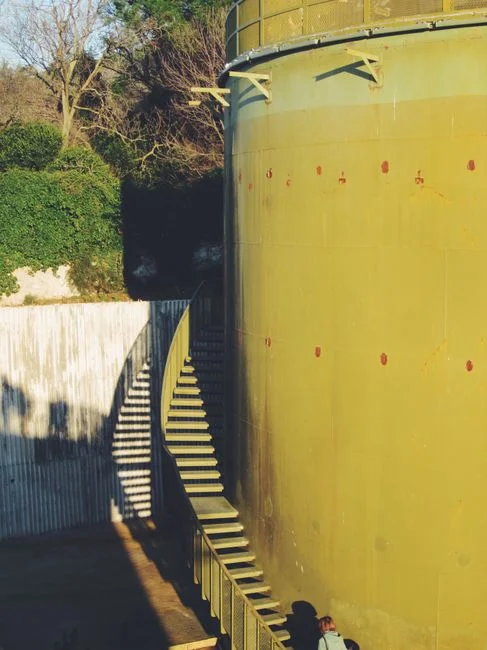
A conventional gravity clarifier relies on Stokes' law: particles with specific gravity appreciably greater than water settle out given enough residence time. A lamella clarifier accelerates this by stacking inclined plates at 55–60°, which shortens the effective settling distance a particle must travel. The result is a much smaller footprint for the same throughput.
HydropureWater's lamella clarifier spec is 20–40 m/h surface loading rate with up to 30% reduction in chemical consumption versus a conventional settling basin. For heavy, inert, oil-free solids — grinding swarf, shot-blast dust, scale from rinse tanks — that performance is genuinely competitive with a DAF, and the operating cost is lower because no recycle pump runs continuously and no saturation vessel consumes compressed air.
The failure mode on fabricated metals is specific and predictable: emulsified oils, synthetic cutting fluids, and sub-50-micron metal fines have near-neutral buoyancy, and the inclined plates of a lamella pack do nothing to capture them. The clarifier passes them straight through to the discharge. Where they appear as visible oil sheen or as FOG/TSS excursions on a discharge monitoring report, the operator is then dosing polymer into the clarifier trying to force a separation the geometry was never designed to deliver.
The honest position is that a lamella clarifier is the right primary unit only when the stream is essentially oil-free. As a polishing step downstream of a DAF — capturing any fine floc that escapes the float layer — it performs well, and that is where it earns a place in a fabricated metals treatment train.
DAF vs Clarifier: Side-by-Side Performance on Fabricated Metals Streams
Procurement needs a single table they can hand to a vendor and a plant manager in the same meeting. The asymmetry between the two technologies on oil-bearing streams is the entire reason this comparison exists, and the table below makes it explicit.
| Parameter | Dissolved Air Flotation (DAF) | Lamella / Conventional Clarifier |
|---|---|---|
| Free & emulsified oil removal | 85–99% (typical industrial range) | <30% on emulsified streams; near zero on stabilized synthetics |
| FOG removal | 80–95% | 10–40%, often fails discharge limits |
| TSS removal | 70–95% | 50–80% on inert, non-buoyant solids only |
| Footprint (per 100 gpm) | ~25–40 ft² (compact skid envelope) | ~50–80 ft² for lamella; much more for conventional basin |
| Hydraulic residence time | 3–5 minutes | 20–60 minutes (lamella); 2–4 hours (conventional) |
| Chemical demand | Coagulant + flocculant, jar-test selected (Spectrum Water, 2026) | Flocculant only; up to 30% lower consumption (lamella spec) |
| CapEx band (2026, packaged unit, 50–200 gpm, 304SS) | $80K–$250K | $40K–$120K |
| OpEx band (2026, $/1,000 gal treated) | $0.40–$1.10 (compressed air + polymer) | $0.10–$0.35 (polymer only) |
| Maintenance burden | Recycle pump, saturation vessel, skimmer drive, PRV | Plate inspection, sludge auger, simple basin |
| Sensitivity to feed swings (oil surges) | Tolerates 2–3× design oil load with proper chemistry headroom | Sheets oil over the weir; no recovery path |
| Flowrate envelope (single unit) | 50–1,000 gpm compact DAF; 66 GPM single-skid threshold (SigmaDAF / Spectrum, 2026) | Wide; limited by available footprint |
The asymmetry is the decision. On oil, FOG, and sub-50-micron metal fines, a DAF is 10–20× more effective than a clarifier per unit volume treated. On heavy inert grit with no oil load, the clarifier holds its own and runs cheaper. The DAF's operational Achilles heel is consistent coagulant/flocculant dosing — if jar testing is skipped and the operator is dosing polymer by eye, performance drifts within hours and the plant will see FOG excursions on its DMR.
The 2026 Selection Rule for Mount Vernon Fabricated Metals Plants
The decision rule for any 2026 procurement in the Mount Vernon area should be stated plainly, because the alternative — letting a vendor steer the spec — is how plants end up with clarifiers that cannot pass their 40 CFR 433 self-monitoring reports.
Primary rule: If the stream contains free oil, emulsified tramp oil, synthetic or semi-synthetic cutting fluid, stamping lubricant, or drawing compound, specify a DAF as the primary separator. A clarifier on this stream is a compliance risk, not a cost saving.
Secondary rule: If the stream is dominated by heavy metal fines, swarf, or shot-blast dust with negligible oil load (a separate grinding bay effluent, for example), a lamella clarifier is sufficient, cheaper to operate, and chemically simpler.
Combined case (the 2026 default for new builds): For mid-size Mount Vernon plants with mixed flows — DAF primary for oil and fine TSS, lamella clarifier as a polishing step to catch residual floc before discharge. This train typically hits EPA 40 CFR 413 (Metal Finishing) and 40 CFR 433 (Metal Products & Machinery) pretreatment expectations without over-specifying either unit.
The compliance driver is non-negotiable. 40 CFR 433 sets categorical pretreatment standards for metal products & machinery operations, with daily maximum limits on cadmium, chromium, copper, lead, nickel, silver, zinc, cyanide, and total metals — alongside FOG and TSS limits enforced by the local POTW. A DAF's 85–99% oil removal and 70–95% TSS removal is what gets a metalworking plant inside those limits on the first round of sampling, not the third. A clarifier alone rarely does. Operators evaluating procurement should also reference the parallel fabricated metals wastewater selection guide for Geneva plants for a corroborating Midwest benchmark.
Sizing, Footprint, and Integration Considerations for 2026 Installs
Sizing starts with the actual flow data, not the nameplate on the wash pump. Plants consistently oversize by 30–50% because they use the nameplate of the largest intermittent source instead of a 24-hour averaged profile. A single 100 gpm stamping press does not justify a 100 gpm DAF if it discharges for 8 minutes per shift.
The compact DAF envelope runs 50–1,000 gpm per unit, with the 66 GPM single-skid threshold (SigmaDAF, 2026-04) being the practical break point below which a single pre-assembled skid with integrated chemical feed ships in one piece. Above 66 GPM, the same vendor typically supplies a two-skid modular system. Parallel units cover higher flows. Most Mount Vernon fabricated metals plants sit between 25 and 250 gpm and fit the single-skid or small two-skid form factor cleanly.
Integration risks are the hidden cost driver. A DAF that arrives with the chemical feed already wired, the PLC programmed, and the saturation vessel pre-tested on a shop floor cuts weeks off a 2026 install. A DAF that ships as a bare tank with field integration required typically adds 3–6 weeks of plumbing, electrical, and process commissioning — which is the window where a parallel DAF-then-lamella train can fail. Bundling the DAF with an automatic chemical dosing skid ensures that coagulant and flocculant hydration is consistent and that the chemistry performance demonstrated in jar testing is the chemistry performance the operator gets in production.
Sludge handling is the last step most spec sheets under-design. A DAF generates floated sludge at 3–6% dry solids — too thin to landfill directly, too thick to haul as liquid. The downstream answer is a plate-and-frame filter press that dewaters the floated sludge to a 25–35% cake for disposal. Wire-drawing and stamping operations generating higher sludge volumes should review the dedicated wire drawing wastewater filter press sizing guide alongside this article. Plants running electronics assembly or printed-circuit processes as a secondary line can also reference the electronics assembly wastewater treatment guide for copper- and lead-specific pretreatment considerations.
Frequently Asked Questions
Can a lamella clarifier replace a DAF for fabricated metals wastewater?
Generally no. A lamella clarifier is the right primary unit only when the stream is essentially oil-free — heavy swarf, shot-blast dust, or scale from a rinse tank with no tramp oil contamination. Once the stream contains free oil, emulsified tramp oil, or synthetic cutting fluid, a lamella clarifier will pass the oil through to discharge and the plant will fail its FOG limits. A DAF is the required primary separator in that case, and the lamella can be added downstream as a polishing step.
What flowrate range suits a compact DAF?
Compact DAF units run 50–1,000 gpm per unit, with 66 GPM being the practical single-skid threshold (SigmaDAF USA, 2026-04; Spectrum Water, 2026). Flows above 1,000 gpm are handled by paralleling units. Most Mount Vernon fabricated metals plants sit comfortably inside a single compact skid.
Do DAF systems need chemicals?
Yes. A DAF is only as good as its coagulant and flocflocculant program, which must be selected by jar testing on the actual plant stream — not by a generic dose chart. Common choices on metalworking feeds are cationic coagulants (or ferric-based coagulants for tight oil emulsions) paired with an anionic or nonionic flocculant. Skipping the jar test and dosing polymer by sight is the most common cause of DAF underperformance on fabricated metals feeds.
What materials of construction hold up to metalworking washwater?
304 stainless steel is the standard for DAF and lamella wetted parts. 316SS is the correct upgrade for chloride-bearing washwaters and bright-dip rinses where halide stress-cracking is a concern. Polypropylene wetted parts are available for acid pickling rinse streams where even 316SS would be attacked.
What is the typical 2026 CapEx range for a packaged DAF unit?
For a packaged compact DAF in the 50–200 gpm range with 304SS construction and integrated chemical feed, 2026 CapEx typically falls in the $80K–$250K band. 316SS upgrades, larger flowrates, dual-skid modular configurations, and integrated sludge-handling packages push that band upward. OpEx runs $0.40–$1.10 per 1,000 gallons treated at 2026 polymer and compressed-air pricing, dominated by chemical cost.