
Why Geneva Fabricated Metals Plants Are Re-evaluating Primary Treatment in 2026
Geneva, Illinois fabricated-metals plants in NAICS 332 / SIC 34 — stamping, machining, parts washing, and surface finishing — are entering 2026 with a regulatory squeeze that is forcing a hard look at primary solids and oil removal. The controlling federal rule is 40 CFR Part 433 (Metal Finishing), which sets daily maximums at 52 mg/L oil & grease, 86 mg/L TSS, 4.5 mg/L Cu, 4.1 mg/L Ni, 7.0 mg/L Cr, 0.6 mg/L Pb, and 4.2 mg/L Zn. Kane County and the receiving POTW typically tighten those limits another 30–50% on zinc, total phosphorus, and sometimes oil & grease, so a plant sized against the federal floor often fails the local permit (per EPA 40 CFR 433, 2025-08).
Three 2026 drivers are pushing the equipment decision now. First, Illinois POTW discharge-eligibility reviews have tightened for industrial users; second, several Geneva shops are adding parts-washing and surface-finishing capacity to support EV and aerospace Tier 1 work, which lifts both flow and oil load; third, ESG water-reuse reporting now requires measured, defensible influent and effluent numbers. Most affected plants sit in the 50–500 gpm range — the band where choosing a DAF clarifier design criteria 2026 guide versus a lamella clarifier is a real CAPEX decision, not an academic one.
What Fabricated Metals Wastewater Actually Looks Like
Fabricated-metals wastewater consists of three overlapping pollutant fractions that defeat any single unit operation if treated in isolation. The first is free and floating oil from stamping, drawing, and header leaks, typically 100–2,000 mg/L depending on whether a skimmer or interceptor is upstream. The second is emulsified cutting fluid and coolant, often 200–5,000 mg/L, stabilized by surfactants so it does not break in a simple API separator. The third is heavy-metal-bearing TSS — grinding swarf, machining fines, and metal hydroxide floc from pH adjustment — typically 100–800 mg/L TSS with copper, nickel, zinc, and chromium bound to the particles.
Influent pH generally runs 6–10 with moderate alkalinity, which is workable for hydroxide precipitation but means coagulant choice (ferric chloride, alum, or cationic polymer) must be matched to the local pH and metals profile. A documented US precedent for handling this kind of multi-fraction stream is the Bridgeport Rental CERCLA treatment train, which combined oil/water separation, dissolved air flotation, multi-media filtration, holding tank, and granular activated carbon to treat a 300 gpm leachate before discharge to Little Timber Creek (per EPA/540/2-90/008, 1990-08 — Bridgeport Rental Episode 1222). Because floating oils defeat gravity settling and emulsified oils defeat simple oil/water separators, plants must utilize both a flotation step and a sedimentation step, either in series or as a hybrid.
DAF vs Clarifier: How Each Technology Works on Metals Wastewater
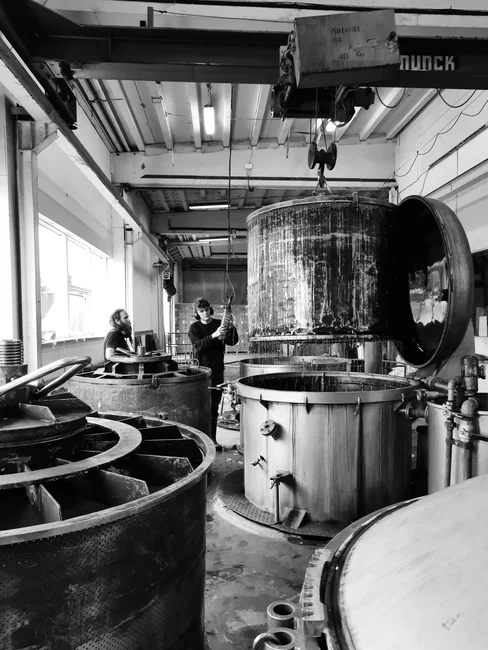
A dissolved air flotation unit takes a clarified effluent recycle, pressurizes it to roughly 100 psi (≈690 kPa) to supersaturate it with air, and then releases that recycle into the flotation tank at atmospheric pressure. The pressure drop nucleates micro-bubbles around 30 µm in diameter; those bubbles attach to oil droplets and pre-formed floc and lift them to the surface, where a chain-and-flight skimmer removes the float (per Aries Chemical DAF design reference, 2025). Chemical pretreatment — pH adjustment, coagulant, and anionic flocculant — is required for the bubble–particle attachment to work, which is why a DAF skid is normally paired with a HydropureWater automatic chemical dosing skid.
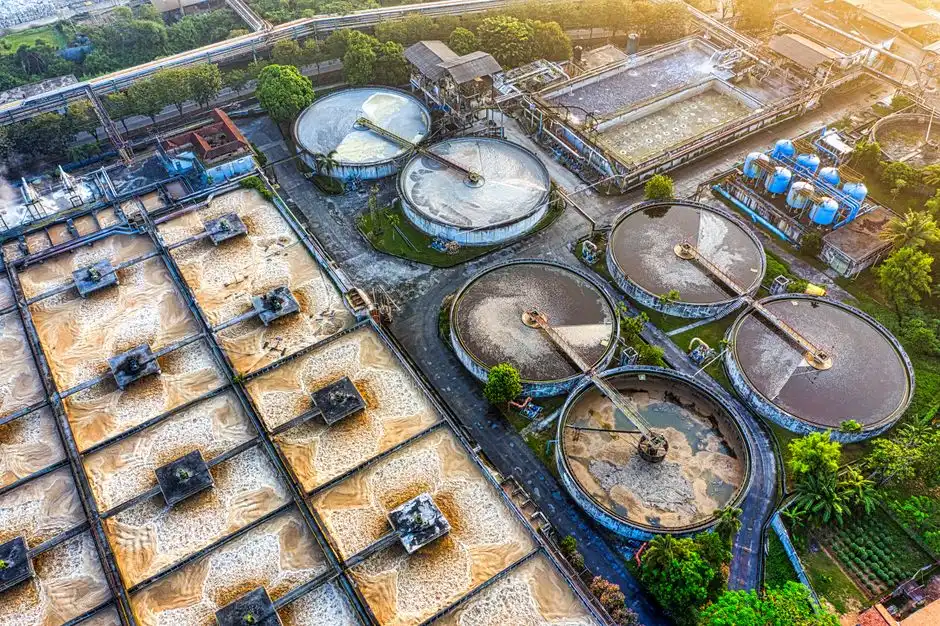
A clarifier relies on gravity. Heavier TSS settles to the bottom and is raked to a central hopper as underflow. A lamella clarifier adds a pack of inclined plates at 55–60°; particles settle the short distance between plates, slide down the inclined surface, and thicken into the hopper, multiplying the effective settling area inside a small footprint. The standard surface-loading rate for a conventional clarifier is roughly 1–2 m/h; a lamella clarifier runs 20–40 m/h for the same application (per HydropureWater lamella catalog, 2026) — that is the 60–80% footprint reduction that drives the lamella preference for tight Geneva plant layouts.
The practical split: DAF targets the top of the column (oils, flocs, low-density solids); lamella clarifier targets the bottom (metal fines, heavy grit, precipitated hydroxides). Neither is a complete solution for the full Geneva influent — they are complementary.
Side-by-Side Comparison: DAF vs Clarifier for Geneva Plants
The table below is the matrix to hand to procurement. Numbers reflect typical 2026 design values for fabricated-metals service and align with publicly published DAF/clarifier selection guidance.
| Parameter | DAF (e.g., HydropureWater DAF system) | Lamella Clarifier (e.g., HydropureWater lamella clarifier) |
|---|---|---|
| Oil & grease removal | 90–95% | 60–70% (lower on stable emulsions) |
| TSS removal | 80–90% | 75–90% |
| Surface loading rate | 5–10 m/h | 20–40 m/h |
| Sludge / float yield | 2–4% dry solids float | 3–5% dry solids underflow |
| Polymer dose (anionic flocculant) | 5–15 mg/L | 2–8 mg/L |
| Energy use | ~0.05–0.10 kWh/m³ (saturator pump + compressor) | Negligible aeration; rake drive only |
| Footprint at 200 gpm | ~25–35 m² | ~8–12 m² |
| Relative CAPEX (same flow) | Baseline | ~30–50% lower |
| Relative OPEX (same flow) | Baseline | ~20–40% lower |
| Mandatory when… | Influent O&G > ~200 mg/L or 40 CFR 433 O&G daily max 52 mg/L is binding | Flow > ~200 gpm with metal-bearing TSS and footprint is constrained |
At 200 gpm, a DAF unit needs roughly three times the floor area of a lamella clarifier at the same hydraulic load. Where a plant has open floor space, that is acceptable; where it does not, the lamella wins on footprint even before the CAPEX delta is counted (per HydropureWater field data, 2026; oil & grease removal cross-checked against Ecologix 2026 selection guide, which reports 95% DAF vs 70% clarifier on high-oil streams).
40 CFR 433 and Geneva POTW Discharge Limits: What You Must Hit
The federal categorical standards in 40 CFR Part 433 are the floor, not the ceiling. Geneva's receiving POTW typically imposes local limits that run 30–60% tighter on metals and often on oil & grease. The table below lists the federal daily maxima that anchor every Geneva compliance calculation.
| Pollutant | 40 CFR 433 daily maximum (mg/L) | Geneva POTW local limit (typical, mg/L) |
|---|---|---|
| Oil & grease | 52 | ~25–35 |
| TSS | 86 | ~50–70 |
| Copper (Cu) | 4.5 | ~2.0–3.0 |
| Nickel (Ni) | 4.1 | ~2.0–3.0 |
| Chromium (Cr, total) | 7.0 | ~3.0–5.0 |
| Lead (Pb) | 0.6 | ~0.3–0.5 |
| Zinc (Zn) | 4.2 | ~1.5–2.5 |
Three engineering points follow. First, meeting 52 mg/L oil & grease alone is not sufficient — copper, nickel, and zinc daily maxima are usually the design driver for a fabricated-metals plant. Second, at influent O&G above ~200 mg/L a clarifier alone cannot reliably hit 52 mg/L; DAF as primary is mandatory. Third, metals removal requires hydroxide precipitation at pH 8.5–9.5 followed by either DAF or lamella clarification; the chemistry is what does the work, the physical separation step is what captures the precipitate. A 2025-08 review of Illinois POTW enforcement actions shows the most common fabricated-metals violation is zinc, not oil & grease.
2026 Decision Framework: Which System Should Your Geneva Plant Choose
Run the following rule on your own jar-test and flow data before you talk to vendors.
- Step 1 — Characterize the oil. If free oil > 200 mg/L or FOG > 300 mg/L on a grab sample, plan DAF as the primary unit. A lamella clarifier will not reliably hit 40 CFR 433 O&G on this stream.
- Step 2 — Characterize the solids. If TSS > 400 mg/L with metal-bearing fines and flow > 200 gpm, add a lamella clarifier (either downstream of the DAF for polishing, or upstream as a grit pre-step). The footprint saving at 20–40 m/h loading is the deciding factor on tight sites.
- Step 3 — Match the permit. If 40 CFR 433 oil & grease daily max 52 mg/L is binding and influent FOG is < ~500 mg/L, a single DAF sized for 15-minute hydraulic retention is usually sufficient and cheaper than a DAF-plus-clarifier train.
- Step 4 — Plan the sludge route. If cake dryness > 25% DS is required for off-site disposal, pair whichever primary you select with a HydropureWater plate and frame filter press sized to the float or underflow volume; DAF float at 2–4% DS and clarifier underflow at 3–5% DS both feed a filter press without pre-thickening in most cases.
- Step 5 — Apply the 2026 Geneva default. DAF primary at 100–500 gpm, with an optional lamella clarifier for polishing when footprint is constrained or when local TSS limits run tighter than the federal 86 mg/L floor. Hybrid DAF-plus-lamella trains are common in 2026 precisely because the two units attack different fractions of the same waste stream.
For deeper sizing parameters, retention-time ranges, and polymer-selection guidance, the DAF clarifier design criteria 2026 guide walks through the calculations in detail. If your shop is also a chemical process plant, the parallel 40 CFR 403 / 433 pretreatment compliance guide covers the categorical-standard side of the same problem.
Frequently Asked Questions
DAF or clarifier for fabricated metals wastewater in Geneva — which should a factory choose in 20
Frequently Asked Questions
Should a fabricated metals plant in Geneva, IL use a DAF or a clarifier in 2026?
The choice depends on the specific wastewater composition and hydraulic load. Dissolved Air Flotation (DAF) is generally superior for facilities dealing with high concentrations of emulsified oils, greases, and light solids that do not settle readily by gravity. If the waste stream is dominated by heavy metal precipitates and inorganic solids, a clarifier remains the industry standard due to its lower operational complexity and energy requirements.
In the context of 2026 regulatory tightening in the Geneva area, if your process generates significant volumes of cutting fluids or lubricants, a DAF is the more robust choice to ensure compliance. Conversely, if your operation focuses primarily on surface finishing and passivation with minimal oil content, a high-rate lamella clarifier provides a more cost-effective footprint.
Can a lamella clarifier meet 40 CFR 433 oil and grease discharge limits on its own?
A lamella clarifier alone is typically insufficient to meet 40 CFR 433 standards for oil and grease if the wastewater contains emulsified oils or hydrocarbons. While clarifiers are highly efficient at removing suspended solids and metal hydroxides (often achieving TSS levels below 20 mg/L), they lack the mechanisms to break emulsions or float non-settleable fats, oils, and grease (FOG).
To achieve compliance, a lamella clarifier must be paired with upstream chemical precipitation and, in many cases, a DAF unit or an oil-water separator. Without proper emulsification breaking and flotation, a clarifier will likely result in an exceedance of the 40 CFR 433 limit for Oil and Grease, which is typically capped at 52 mg/L for monthly average discharge.
What is the difference between a DAF and a clarifier for metal finishing wastewater?
The primary difference lies in the separation mechanism: clarifiers rely on gravity sedimentation, whereas DAF systems utilize micro-bubbles to float particles to the surface. Clarifiers are designed to remove particles with a specific gravity greater than water, such as metal hydroxide sludges, by allowing them to settle into a hopper at a low overflow rate, typically between 0.25 to 0.5 gpm/ft².
DAF systems operate by saturating the wastewater with dissolved air under pressure, which is released as microscopic bubbles that attach to oil droplets and low-density solids. This allows the DAF to handle hydraulic loading rates significantly higher than clarifiers, often ranging from 2 to 4 gpm/ft², making them more effective for wastewater streams with high oil-to-solids ratios.
How much does a DAF system cost for a 200 gpm fabricated metals plant?
For a 200 gpm (gallons per minute) fabricated metals facility, the capital expenditure for a turnkey DAF system typically ranges from $150,000 to $350,000. This price variance is driven by the level of automation, the inclusion of chemical dosing skids, the metallurgy of the tank (e.g., 304 vs 316 stainless steel), and the complexity of the sludge handling system.
Beyond capital costs, operators should budget for annual operating expenses including polymer consumption, air saturation pump energy usage, and sludge disposal fees. At 200 gpm, a DAF system usually requires a 15–25 HP air saturation system and a dedicated flocculation chamber to ensure the particle size is optimized for flotation.
Do Geneva, Illinois POTWs require DAF for metal finishing discharges?
The Geneva, Illinois Publicly Owned Treatment Works (POTW) does not mandate DAF technology by name, but it does enforce strict local limits on FOG, heavy metals, and TSS that effectively necessitate advanced pretreatment. Compliance is measured at the point of discharge into the municipal sewer, and facilities must adhere to the local sewer use ordinance which mirrors federal categorical pretreatment standards.
If your discharge consistently exceeds local concentration limits for oil and grease, the Geneva municipal authority may issue a compliance order requiring technology upgrades. In such cases, a DAF is often the recommended engineering solution to meet the POTW’s stringent effluent requirements, provided the facility can demonstrate consistent removal efficiency through regular sampling and maintenance logs.