The Three-Layer Rule Stack Every Trenton Chemical Plant Must Hit
Chemical plants discharging to the Trenton Sewer Utility (TSU) must satisfy three rule sets in parallel, and the most stringent applicable number controls the equipment design. Layer 1 is the federal floor: 40 CFR 403.5(a) bans any discharge that causes pass-through or interference at the receiving POTW, and 40 CFR 403.5(b) lists specific prohibited pollutants including ignitable, corrosive, and certain toxic-gas releases regardless of numeric concentration (per 40 CFR 403.5). Layer 2 is the federal categorical standard under 40 CFR Parts 405–471, with chemical-sector plants typically falling under Part 414 (organic chemicals, plastics, synthetic fibers), Part 415 (inorganic chemicals), Part 417 (soap and detergent), Part 419 (petroleum refining), or Part 433 (metal finishing). Layer 3 is the Trenton Sewer Utility's published local limits, which are site-specific and routinely tighter than the federal categorical numbers when receiving-plant hydraulic or biological capacity is constrained. Statutory authority for the federal layers sits in Clean Water Act §307(b) (EPA pretreatment standards) and §402(n) (POTW pretreatment programs under NPDES).
Two definitions drive enforcement at all three layers, and both are independently enforceable even without a numeric exceedance. Pass-through under 40 CFR 403.3(p) is "a discharge that exits the POTW into waters of the United States in quantities or concentrations that, alone or in conjunction with a discharge or discharges from other sources, is a cause of a violation of any requirement of the POTW's NPDES permit (including an increase in the magnitude or duration of a violation)" (per 40 CFR 403.3(p)). Interference under 40 CFR 403.3(k) is a discharge that, alone or with other sources, both inhibits or disrupts the POTW, its treatment processes, or its sludge processes, use, or disposal, and therefore is a cause of an NPDES permit violation or a violation of sewage sludge use or disposal requirements under CWA §405 or RCRA. If either trigger fires, the industrial user is in violation regardless of whether a numeric limit was exceeded — which is why an equipment train engineered only against a flow-and-concentration table will still fail the inspection.
| Layer | Authority | What it controls | Typical binding parameter for a Trenton chemical plant |
|---|---|---|---|
| 1 — General prohibitions | 40 CFR 403.5(a) and (b) | Bans pass-through, interference, and specific prohibited pollutants | Slug-load pH excursions, ignitable solvents |
| 2 — Categorical standards | 40 CFR Parts 414 / 415 / 417 / 419 / 433 | Industry-specific numeric effluent limits | Metals (Cd, Cr, Cu, Ni, Pb, Zn); BOD/COD; oil & grease |
| 3 — TSU local limits | Approved POTW pretreatment program, Mercer County | Site-specific limits, surcharge thresholds, notification clocks | pH 6–9 band; TSS cap; local metals floor tighter than federal |
The compliance posture for any new line at a Trenton facility is to engineer against the lowest of the three numbers for each parameter, then defensible document the selection in the Baseline Monitoring Report. Engineers preparing parallel permits at other facilities can compare against the Cincinnati chemical-plant pretreatment guide, which walks through the same three-layer logic in a different control-authority context.
When a Trenton Chemical Plant Becomes a Significant Industrial User (SIU)
The Significant Industrial User (SIU) definition at 40 CFR 403.3(v) carries three independent triggers, and any one of them pulls a Trenton chemical plant into the federal pretreatment permit system. Trigger 1 is being subject to categorical pretreatment standards — chemical-sector SIC codes (2869, 2821, 2833, 2899 and adjacent) land under 40 CFR Part 414, 415, 417, 419, or 433 by default, so this trigger fires automatically regardless of flow. Trigger 2 is discharging an average of 25,000 gpd or more of process wastewater; sanitary, non-contact cooling, and boiler blowdown are typically excluded from the calculation (per EPA, 2026). Trigger 3 is contributing a process wastestream that makes up 5% or more of the POTW's average dry-weather hydraulic or organic capacity. Because Trigger 1 is essentially automatic for chemical manufacturers, the practical question for a Trenton plant is not whether it is an SIU, but which compliance obligations attach the moment the threshold is crossed.
SIU status brings four concurrent obligations. First, a Baseline Monitoring Report (BMR) at the point of categorical standard promulgation or new-discharge startup establishes the pollutant envelope every later compliance measurement is compared against. Second, 90-day compliance reports on a defined schedule track each regulated parameter against its limit. Third, the plant must operate under a written control mechanism — the TSU-issued discharge permit or equivalent control document — that formalizes limits, monitoring points, and reporting. Fourth, routine POTW inspections and sampling under 40 CFR 403.12 are authorized, and TSU's Pretreatment Coordinator can pull operating records and split samples without notice. Batch operators also need a slug load control plan under 40 CFR 403.8(f) covering equalization capacity, flow and pH monitoring, and written operating procedures for batch releases — a slug event is the single fastest path to a pass-through enforcement action.
Application lead time matters. Industrial users generally must file the permit application well before discharge begins, and the typical control-authority window cited across EPA-region programs is 180 days (per EPA Industrial Pretreatment Program guidance, 2025). Trenton-area engineers should confirm the current TSU requirement with the Pretreatment Coordinator before locking a new-line startup date — the application window is the critical-path engineering item, not a courtesy timeline, and a plant that begins discharge before the permit is issued is operating without authorization from day one.
The Six Unit Operations That Hold a Trenton Chemical Plant Under All Three Limits
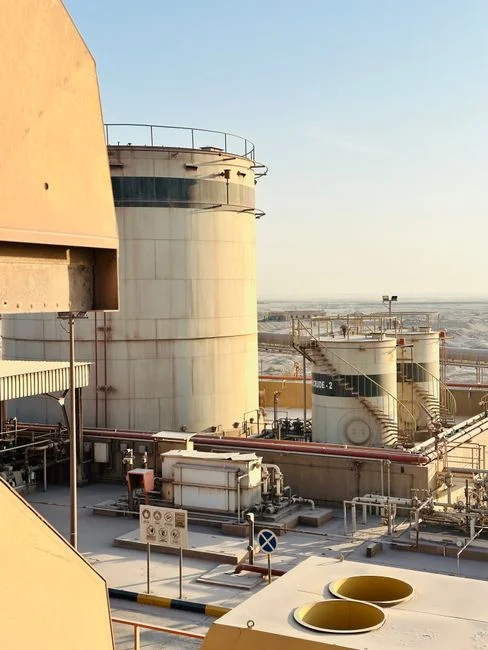
Six unit operations, in this order, handle the vast majority of chemical-plant wastewater streams that go to a Trenton-area POTW. Not every plant needs all six — the right subset is a function of the controlling pollutant — but the full train is the common case because most facilities hit two or three of these problems simultaneously. The decision logic walks in order: equalization and dosing first to dampen swings, pH trim second, physical separation third, metals precipitation fourth, biological polishing fifth, and sludge dewatering last to close the loop on the receiving POTW's sludge-contamination concerns.
Step 1 — Equalization with PLC-controlled dosing. Equalization dampens batch swings in pH, flow, temperature, and concentration before downstream unit operations see them, which prevents pass-through events and reduces wear on pumps, membranes, and instrumentation. For batch operations with long cycle times, equalization is typically sized for hours to days of retention; for continuous operations, 4–8 hours is the standard envelope (HydropureWater field data, 2026). Pairing the basin with a PLC-controlled chemical dosing skid that holds reagent stoichiometry inside the band the BMR assumes is the lowest-cost insurance against compliance excursions — under-sizing either piece is the most common root cause of failed events at chemical plants.
Step 2 — pH adjustment with redundant acid/caustic dosing. The typical TSU local pH band is 6–9, and a pH excursion is the single most common cause of failed categorical compliance sampling. Redundancy matters because every downstream chemistry step requires a stable operating window, and a single failed dose pump on a Sunday-night batch is enough to trigger a slug-load violation. Step 3 — Dissolved air flotation (DAF) for oils, FOG, TSS, and colloids. Standard DAF packages handle 4–300 m³/h and are proven in petrochemical and chemical-plant service, sized by hydraulic loading and air-to-solids ratio. For influent streams dominated by free oil and TSS, a dissolved air flotation system is the right call; sizing details are in the DAF clarifier design criteria guide.
Step 4 — Chemical precipitation for metals (Cd, Cr, Cu, Ni, Pb, Zn). pH-controlled hydroxide or sulfide dosing followed by a polishing clarifier removes dissolved metals to categorical-standard levels. The typical polishing step is a high-efficiency sedimentation tank operating at a surface loading of 20–40 m/h (HydropureWater field data, 2026), which drops the clarified-metal concentration to the band the categorical subpart assumes. Step 5 — Biological polishing with an integrated MBR membrane bioreactor system. MBR delivers sub-micron (<1 μm) filtration in roughly 60% of the footprint of a conventional activated-sludge system, which is the right call when the categorical standard includes organic loading and the site is footprint-constrained. Step 6 — Sludge dewatering on a plate-and-frame filter press. Polymer-conditioned dewatering brings residuals to a handleable cake and reduces sludge volume 70–90%, which closes the loop on the POTW's sludge-contamination concerns and cuts off-site disposal tonnage.
| Step | Unit operation | Influent problem solved | Typical sizing envelope | Regulatory driver |
|---|---|---|---|---|
| 1 | Equalization basin + PLC dosing | Batch swings in pH, flow, temperature, concentration | 4–8 h continuous; hours–days batch | 40 CFR 403.5(a) pass-through; 403.8(f) slug control |
| 2 | pH adjustment (redundant acid/caustic) | Strong acid or caustic batches | pH 6–9 band | 40 CFR 403.5(b) specific prohibitions; local limit |
| 3 | DAF | Oils, FOG, TSS, colloids | 4–300 m³/h hydraulic; A/S ratio per design | 40 CFR 403.5(a); categorical standard; local limit |
| 4 | Chemical precipitation + lamella clarifier | Dissolved metals (Cd, Cr, Cu, Ni, Pb, Zn) | Surface loading 20–40 m/h | 40 CFR Part 414/415/433 categorical; local limit |
| 5 | MBR biological polishing | COD/BOD residual; colloidal BOD | ~60% of conventional AS footprint | Categorical organic loading; local BOD cap |
| 6 | Plate-and-frame filter press | Sludge volume, sludge contamination | 70–90% volume reduction | Local sludge contamination / pass-through rule |
Polymer conditioning for the press is covered in the filter press sizing and polymer conditioning guide, which walks through feed-SS optimization for chemical-plant residuals.
Notification Clocks: The 2-Hour / 24-Hour / 30-Day Sequence
Three parallel notification clocks start the moment a Trenton chemical plant becomes aware of any unexpected, unintended, abnormal, or unapproved discharge, including a slug release of pH, COD, solvents, or metals. Missing any one clock is independently enforceable, so a plant that handles one correctly but skips another still carries an open enforcement file. The clocks run as follows.
| Clock | Action | Deadline | Triggering event | Consequence if missed |
|---|---|---|---|---|
| 1 | Verbal notification to TSU Pretreatment Coordinator | 2 hours from discovery | Any slug release, overflow, or abnormal discharge | Independent violation; starts enforcement file |
| 2 | Written Noncompliance Notification | 24 hours from awareness of missed limit | Knowledge that a permit limit will not or cannot be met | Activates the 30-day repeat-sample obligation |
| 3 | Repeat sampling and analysis submission | 30 days after the violation becomes known | Any reported exceedance or noncompliance | Open file rolls into the next 6-month chronic-violation window |
The 2-hour verbal clock is the one that gets missed on nights and weekends. The defensible posture is to post the Pretreatment Coordinator's contact — with after-hours number — at every operator station, route it through the plant's emergency-call list, and rehearse the verbal-notification script during routine HAZOP refreshers. The 24-hour written clock is the one that triggers the repeat-sample obligation; the 30-day clock then requires a resampling event with results reported on the standard SMR cadence. NJDEP runs a parallel enforcement track under the NJPDES framework, so an event handled correctly with TSU can still surface in the state inspection file. Engineers building the same compliance posture at a different control authority can compare the clock mechanics in the Clearwater pretreatment guide.
CapEx vs Fines: The Trenton-Area Cost Math
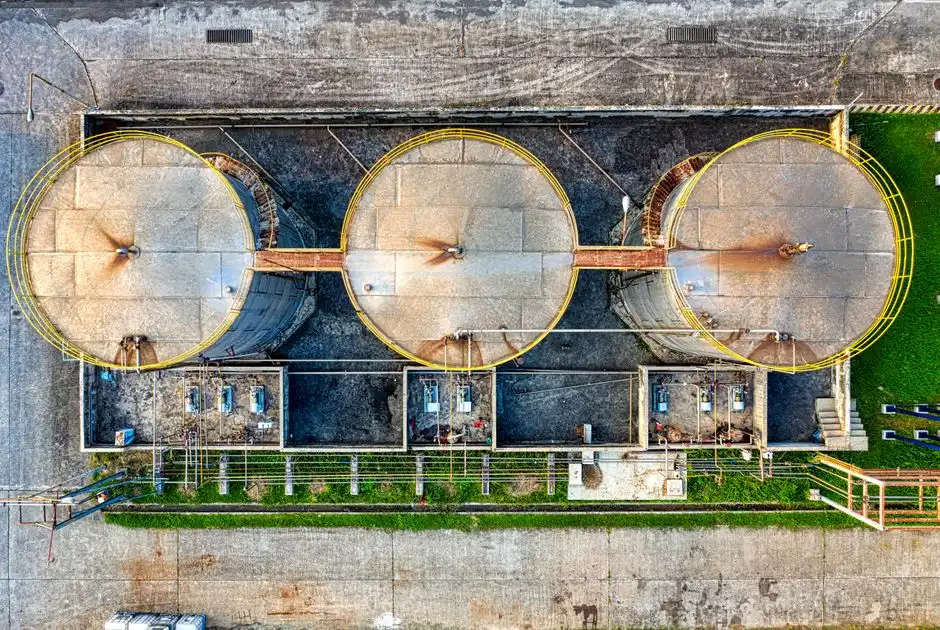
Regulatory exposure at a Trenton-area chemical plant stacks in three independent tracks, and the annualized operating cost of a properly sized DAF, chemical dosing skid, or filter press is reached by the fine stack in well under a quarter — before any third-party cleanup from a slug event is added. A single missed pH excursion can trigger three enforcement tracks at once: pass-through under 40 CFR 403.5(a), interference under 40 CFR 403.5(a), and the slug-discharge prohibition under 40 CFR 403.5. Administrative fines stack per day per violation during the period of violation, and monthly or long-term-average limit breaches accrue daily. While the TSU schedule is site-specific, control-authority programs across EPA Region 2 cite administrative fines up to $1,000/day as a typical cap (per EPA Industrial Pretreatment Program guidance, 2025), and surcharge fees for excess metered discharge compound the exposure.
| Line item | Typical magnitude | Source / driver | Annualized exposure |
|---|---|---|---|
| Administrative fine, single pH excursion | Up to $1,000/day per violation | TSU Enforcement Response Plan; federal guidance (per EPA, 2025) | $30,000–$365,000/year if uncorrected |
| Surcharge on excess metered discharge | $/1,000 gal above cap | TSU rate schedule | Compounds with flow excursions |
| Slug-event third-party cleanup | Site-specific, often six figures | Pass-through / interference enforcement | One-time, not annualized |
| Properly sized DAF, dosing skid, or filter press | $150,000–$300,000 CapEx | Engineered equipment train | Recovers in <90 days of fine avoidance |
A $250,000 dissolved air flotation system package is roughly 250 days of maximum daily fines — and fines are per violation, per day, so a chronic-violation count of multiple parameters multiplies the exposure fast. Pretreatment CapEx is the cheaper insurance, and the BMR is the audit-defense file that ties the equipment sizing to each numeric limit on the permit.
Pre-Inspection Readiness Checklist for the Next Trenton Sewer Utility Visit
Run this list internally before the TSU Pretreatment Coordinator's next site visit so the inspection confirms compliance rather than initiates enforcement.
- Pull the last six months of self-monitoring data and confirm fewer than 66% of measurements exceed any numeric limit — the federal chronic-violation threshold defined at 40 CFR 403.3(l).
- Confirm the slug-control plan is current and that 2-hour verbal-notification contacts (with after-hours number) are posted at every operator station.
- Reconcile process-water metering with the public water supply feed to validate the 25,000 gpd SIU trigger calculation; document any non-contact cooling or boiler blowdown exclusions with flow data.
- Stage the 30-day repeat-sample report, the most recent BMR, the active compliance-schedule update, and the contract lab's QA/QC certification for one-pass review.
Frequently Asked Questions
What SIU trigger pulls a Trenton chemical plant into the federal pretreatment permit system?
Any one of three triggers under 40 CFR 403.3(v): (1) being subject to categorical pretreatment standards — which fires automatically for chemical-sector SIC codes under 40 CFR Part 414, 415, 417, 419, or 433; (2) discharging an average of 25,000 gpd or more of process wastewater; or (3) contributing a process wastestream that makes up 5% or more of the POTW's average dry-weather hydraulic or organic capacity (per EPA, 2026).
Which 40 CFR subpart applies to organic chemical manufacturers discharging to the Trenton Sewer Utility?
Organic chemicals, plastics, and synthetic fibers fall under 40 CFR Part 414. Inorganic chemicals are covered by 40 CFR Part 415, soap and detergent manufacturing by Part 417, petroleum refining by Part 419, and metal finishing by Part 433. Confirm current subpart values in 40 CFR rather than relying on memory, because EPA revises categorical subparts on a multi-year cycle (per EPA, 2026). Plant-level applicability is detailed in the Cincinnati chemical-plant pretreatment guide.
How long does a chemical plant have to verbally report a slug release to the local POTW?
Two hours from discovery. The Trenton Sewer Utility's notification clock — like other EPA Region 2 POTW pretreatment programs — requires verbal notification to the Pretreatment Coordinator within 2 hours of any unexpected, unintended, abnormal, or unapproved discharge, followed by a written Noncompliance Notification within 24 hours and a repeat-sample submission within 30 days. Each clock is independently enforceable, so a plant that handles one correctly but misses another still carries an open enforcement file.
What defines a chronic pretreatment violation under federal rules?
A chronic violation is defined as 66% or more of measurements exceeding any numeric limit during any six-month period (per 40 CFR 403.3(l)). It is the primary escalation trigger in a Control Authority's Enforcement Response Plan and the metric that converts a string of individual exceedances into a permit-revision action.
When should a Trenton-area chemical plant choose MBR over conventional activated sludge for the biological polishing step?
MBR is the right call when the categorical standard includes organic loading and the site is footprint-constrained, because MBR delivers sub-micron (<1 μm) filtration in roughly 60% of the footprint of a conventional activated-sludge system. It is also the stronger candidate when the plant is moving toward water reuse, since MBR effluent is a better feed for downstream RO. Pure discharge-to-sewer operations with adequate footprint can stay on conventional activated sludge or a simpler aerobic basin (HydropureWater field data, 2026).