The Three Rule Sets a Terre Haute Chemical Plant Must Satisfy
Chemical plants discharging to the Terre Haute Wastewater Utility (THWU) must meet three layered rule sets before sewer discharge: federal Categorical Pretreatment Standards under 40 CFR 403.6 Subchapter N, the National Prohibited Discharge Standards in 40 CFR 403, and THWU's local limits under the Sewer Use Ordinance (adopted September 14, 2012 as Ordinance Number 8, 2012). Most plants hit a permit trigger at 25,000 gallons per day of process wastewater, must apply at least 180 days before discharge, and face up to $1,000 per day in administrative fines plus chronic-violation action when 66% or more of measurements exceed a numeric limit in any six-month period.
At the federal layer, the National Prohibited Discharge Standards in 40 CFR 403 apply to every commercial and industrial user regardless of SIC code, while Categorical Pretreatment Standards in 40 CFR Chapter I Subchapter N set industry-specific numeric limits — chemical manufacturers typically fall under the organic chemicals, plastics, or pharmaceutical categories depending on product mix. At the state layer, IDEM receives at least quarterly noncompliance reports from THWU and enforces parallel Indiana water-quality standards. At the local layer, the THWU Sewer Use Ordinance (incorporating EPA Streamlining Rules) can be stricter than the federal floor but is never more permissive; the ordinance explicitly forbids discharges that would "interfere" with plant operations or "pass through" untreated into the receiving stream, and THWU evaluates both failure modes when scoring a violation (per THWU Enforcement Response Plan, 2025-09).
The two failure modes THWU is explicitly trying to prevent are interference and pass-through. Interference means a discharge that disrupts plant operations, harms collection infrastructure, damages sludge quality, or endangers worker safety; pass-through means pollutants that slip through the WWTP and cause THWU to violate its own NPDES permit. Both definitions are quoted directly in the Sewer Use Ordinance and are the standards the Pretreatment Coordinator applies during the six-month chronic-violation calculation.
| Rule Layer | Authority | Key Citation | What It Controls |
|---|---|---|---|
| Federal — National Prohibited Discharge | U.S. EPA | 40 CFR 403.5 | Discharges that cause interference or pass-through at any POTW |
| Federal — Categorical Standards | U.S. EPA | 40 CFR Chapter I Subchapter N | Industry-specific numeric limits (e.g., 40 CFR 414 for organic chemicals) |
| State | IDEM | 327 IAC 5; quarterly noncompliance reports | Indiana water-quality standards and parallel enforcement |
| Local | THWU | Ordinance Number 8, 2012 (Sept. 14, 2012) | Local limits, slug control, notification clocks, enforcement |
When a Chemical Plant Needs a THWU Discharge Permit
A chemical plant needs a THWU wastewater discharge permit when any one of four conditions is met. The first trigger is being subject to federal Categorical Pretreatment Standards under 40 CFR 403.6 Subchapter N — most chemical SIC codes (e.g., 2869, 2821, 2833, 2899) land here by default, and a facility does not need to be at full production to be in scope. The second trigger is discharging 25,000 gallons or more of process wastewater per day; sanitary wastewater, non-contact cooling water, and boiler blowdown are explicitly excluded from this calculation. The third trigger is contributing a process wastestream that equals 5% or more of the treatment plant's average dry-weather hydraulic or organic loading. The fourth is a discretionary trigger: any discharge that THWU judges could impact the treatment system or violate pretreatment regulations (per THWU Industrial Pretreatment Program page, 2025-09).
The application path is a 180-day lead item. Permit applications must be submitted to the Wastewater Utility Director at least 180 days before the date any discharge begins or recommences, and the process begins with the Industrial User Survey that THWU uses to triage which users need a formal permit versus simple best-management-practice controls. For a new production line or an acquired asset, that 180-day window is the critical path that drives equipment selection, not a courtesy timeline — there is no fast-track bypass. Plants that start discharge before the permit is issued are operating without authorization and exposing themselves to the full enforcement ladder from day one.
Self-classification pays off here. A plant that determines it does not hit any of the four triggers still files the Industrial User Survey and gets a written determination; that document becomes the audit-defense file when the Pretreatment Coordinator runs the next annual review.
The Notification Clock: 2 Hours, 24 Hours, 30 Days, Quarterly

THWU's Sewer Use Ordinance runs four parallel clocks once a permit limit is missed or a slug release occurs, and a chemical plant that manages each clock on schedule turns a single over-limit sample into a self-contained event rather than a chronic violation. The first clock is verbal: an Industrial User must verbally report any unexpected, unintended, abnormal, or unapproved discharge to the THWU Pretreatment Department within two hours of discovery. The second clock is the written Noncompliance Notification, which must be delivered within 24 hours of becoming aware that a permit limit will not or cannot be met. The third clock is the repeat sampling and analysis, which must be completed and submitted within 30 days after the violation becomes known. The fourth clock is upstream reporting: THWU's Pretreatment Coordinator must notify IDEM of all industrial noncompliance at least quarterly and US EPA annually, so the enforcement record is shared across agencies and a "local fix" does not stay local (per THWU Industrial Pretreatment Program page, 2025-09).
Operationally, the 2-hour verbal clock is the one that gets missed on nights and weekends. The defensible posture is to post the Pretreatment Coordinator's contact (with after-hours number) at every operator station, route it through the plant's emergency-call list, and rehearse the verbal-notification script during routine HAZOP refreshers. The 24-hour written clock is the one that triggers the repeat-sample obligation; the 30-day clock then requires a resampling event with results reported on the standard SMR cadence. Each missed clock is independently enforceable, so a plant that handles 2-hour verbal notification correctly but skips the 30-day repeat sample still has an open enforcement file.
Building a Treatment Train That Holds the Limits
The unit operations that reliably hold a chemical plant under both Categorical Pretreatment Standards and the local limits layered on top are well-understood and vendor-standard, which is exactly why a defensible Baseline Monitoring Report can cite them. The train starts with equalization and flow buffering to dampen slug loads of pH, COD, and toxics — required for any facility that can produce slug releases, and the first place THWU looks when a slug event shows up in self-monitoring data. The second step is pH adjustment with redundant acid and caustic dosing; a pH excursion is the single most common cause of failed categorical compliance sampling, and redundancy matters because the downstream chemistry steps all require a stable operating window. The third step is a DAF system for chemical-plant pretreatment or lamella clarifier for oil/grease, TSS, and colloids — standard DAF packages handle 4–300 m³/h and are proven in petrochemical and chemical-plant service, with comparison guidance in the DAF vs clarifier for chemical wastewater selection guide.
The fourth step is chemical precipitation for metals — iron, chromium, nickel, and zinc are the routine ones in chemical plants — using pH-controlled hydroxide or sulfide dosing followed by a polishing clarifier, paired with a PLC-controlled chemical dosing skid that holds reagent stoichiometry inside the band the BMR assumes. The fifth step is biological polishing with an MBR for COD/BOD polishing where the categorical standard includes organic loading; MBR delivers sub-micron filtration in roughly 60% of the footprint of a conventional activated-sludge system, which is the right call when the site is constrained. The train closes with sludge dewatering on a filter press for pretreatment sludge to bring residuals to a handleable cake for off-site disposal — the same pass-through logic that drives THWU's influent limits also drives its sludge-contamination concerns. For facilities where metals precipitation dominates, a lamella clarifier for metals precipitation can replace or supplement the DAF step.
| Unit Operation | Target Pollutant Class | Rule It Satisfies |
|---|---|---|
| Equalization / flow buffering | Slug pH, COD, toxics | Slug-discharge prohibition (40 CFR 403.5) |
| pH adjustment (redundant) | pH excursions | Categorical Standard pH window (per SIC) |
| DAF or lamella clarifier | Oil/grease, TSS, colloids | Local oil/grease and TSS limits; pass-through prevention |
| Chemical precipitation + clarifier | Metals (Fe, Cr, Ni, Zn) | Categorical metals limits in 40 CFR Subchapter N |
| MBR biological polishing | COD, BOD, residual organics | Categorical organic loading limits |
| Plate-and-frame filter press | Sludge volume, sludge contamination | Local sludge contamination / pass-through rule |
Monitoring, Self-Reporting, and What THWU Actually Verifies

Self-monitoring reports are not paperwork — they are THWU's primary evidence stream and the direct input to the chronic-violation calculation. The Pretreatment Coordinator tracks self-monitoring reports (SMRs), Baseline Monitoring Reports, compliance-schedule progress reports, and monthly reports against required due dates, and each missed submission is independently enforceable. Analyses are run in the THWU WWTP laboratory or by a contract laboratory with documented SOPs and a THWU-approved QA/QC program; plants that switch contract labs mid-permit must confirm the new lab is on THWU's approved list before submitting data, or every sample becomes a paperwork defect (per THWU Industrial Pretreatment Program page, 2025-09).
THWU's evidence base goes well past the SMR. Site visits, slug-discharge reports, employee tips, public information, and IDEM/EPA referrals all feed the compliance picture, and each becomes a possible entry point into the Enforcement Response Plan. The only safe posture is continuous compliance with the actual discharge, not just on paper — a plant whose SMR is timely and complete but whose grab samples show recurring exceedances is still accumulating the 66% chronic-violation count. For facilities running similar chemistry, the LASA chemical-plant pretreatment guide walks through comparable SMR and BMR mechanics, and a worked example of organic-acid stream chemistry is in the citric acid wastewater treatment process reference.
Enforcement Exposure: From Notice of Violation to Permit Revocation
The enforcement ladder is documented in the THWU Enforcement Response Plan and the costs escalate predictably. Administrative fines cap at $1,000.00 per day per violation, assessed for each day during the period of violation in the case of monthly or other long-term average discharge limits (per THWU Enforcement Response Plan, 2025-09). Compliance schedules with milestone dates — engineer hired, preliminary plans, final plans, construction start, construction complete — are a formal enforcement tool, not a courtesy, and missing a milestone date is a fresh violation that restarts the fine clock. Cease-and-desist orders, court injunctions, and ultimately permit revocation and sewer-service suspension sit above the administrative-fine layer; the explicit trigger for escalation is repeated minor exceedances, which the ERP describes as suggesting "operating practices are inadequate to meet the limits and further pretreatment measures are needed."
The cost-stacking case for pretreatment CapEx is straightforward. The $1,000/day administrative fine plus THWU's base rate of $28.21 per 2,244 gallons plus roughly $0.012 per gallon of additional metered discharge (per THWU rate schedule, 2025-09) reaches the annualized operating cost of a properly sized DAF, chemical dosing skid, or filter press in well under a quarter, before the surcharge fees and any third-party cleanup costs from a slug event are added in. A $250,000 DAF package, for example, is roughly 250 days of maximum daily fines — and fines are per violation, per day, so a chronic-violation count of multiple parameters multiplies the exposure fast.
Pre-Audit Checklist Before THWU's Pretreatment Coordinator Arrives
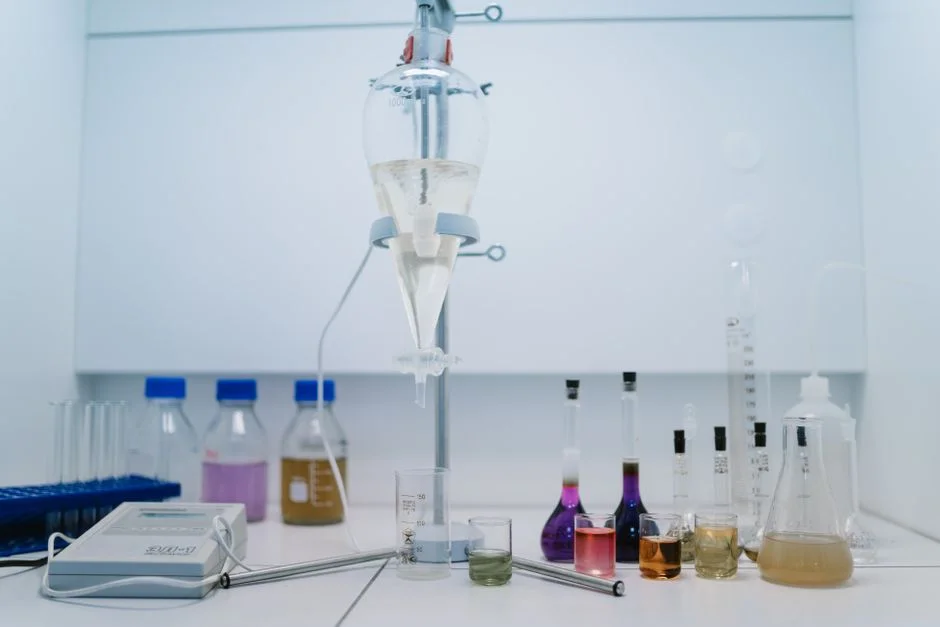
Run this readiness list internally before the Pretreatment Coordinator's next site visit so the inspection confirms compliance rather than initiates enforcement. First, pull the last six months of self-monitoring data and confirm fewer than 66% of measurements exceed any numeric limit, the federal chronic-violation threshold defined in 40 CFR 403.3(l) and applied in the THWU ERP. Second, confirm the slug-control plan is current and that 2-hour verbal-notification contacts (with after-hours number) are posted at every operator station; tape the contact card to the inside of the control-room door, not in a binder on a shelf. Third, reconcile process-water metering with the Indiana American Water Company feed to validate the 25,000 gpd trigger calculation, and document any non-contact cooling or boiler blowdown exclusions with flow data. Fourth, stage the last 30-day repeat-sample report, the most recent Baseline Monitoring Report, the active compliance-schedule update, and the contract lab's QA/QC certification so the Coordinator can review the file in one pass (per THWU Enforcement Response Plan, 2025-09).
Frequently Asked Questions
How long does the THWU discharge permit process take from application to first discharge?
THWU requires a permit application to be submitted to the Wastewater Utility Director at least 180 days before the date any discharge begins or recommences, and the process starts with the Industrial User Survey used to triage whether a full permit is required (per THWU Industrial Pretreatment Program page, 2025-09). Plants planning a new production line should treat the 180-day clock as a critical-path engineering item, not a paperwork lead time.
What counts as a slug discharge that triggers the 2-hour verbal notification?
Any unexpected, unintended, abnormal, or unapproved discharge — including slug releases of pH, COD, solvents, or metals — must be reported verbally to THWU's Pretreatment Department within two hours of discovery (per THWU Sewer Use Ordinance, 2025-09). The 24-hour written Noncompliance Notification and 30-day repeat-sample obligations are triggered automatically once the verbal report is made.
When does THWU escalate from an NOV to permit revocation?
Escalation follows the documented ladder: Notice of Violation, administrative fine up to $1,000/day, compliance schedule with milestone dates, cease-and-desist order, court injunction, and finally permit revocation and sewer-service suspension. The chronic-violation trigger is 66% or more of measurements exceeding any numeric limit during a six-month period, which the ERP treats as evidence that operating practices are inadequate and that further pretreatment measures are required (per THWU Enforcement Response Plan, 2025-09).
Can a chemical plant use a contract laboratory for self-monitoring?
Yes, but the contract lab must have documented SOPs and a THWU-approved QA/QC program; analyses are otherwise required to be run in the THWU WWTP laboratory. Switching contract labs mid-permit requires confirming the new lab is on THWU's approved list before any SMR data is submitted (per THWU Industrial Pretreatment Program page, 2025-09).
Related Equipment
- MBR for COD/BOD polishing — specifications, capacity range, and technical data