LASA Pretreatment Authority & What It Means for Leola Chemical Plants
The Lancaster Area Sewer Authority (LASA) maintains a federally mandated pretreatment program under the authority of EPA 40 CFR 403 and the Clean Water Act, governing all industrial discharges through its Chapter 60 Rules and Regulations. For chemical manufacturing facilities in Leola, PA, compliance is a prerequisite for continued operation. LASA designates facilities as Significant Industrial Users (SIUs) if they discharge more than 25,000 gallons per day (gpd) of process wastewater, contribute 5% or more of the treatment plant's capacity, or are subject to federal categorical pretreatment standards.
The enforcement ladder at LASA protects the municipal treatment facility from pass-through contamination and interference with biological processes. Failure to meet numeric local limits or reporting requirements triggers an escalating response: initial Notices of Violation (NOV) are followed by formal Administrative Orders carrying daily fines ranging from $1,000 to $10,000. Under CWA §309, civil penalties can reach $56,460 per day per violation. Because local limits are reevaluated annually to account for changing influent characteristics and NPDES permit requirements, facilities must maintain a design basis that accounts for potential tightening of discharge thresholds.
5-Step Permit-to-Discharge Workflow for New Chemical Facilities
A disciplined 90-day timeline ensures that pretreatment infrastructure is commissioned and verified before the first gallon of process water reaches the sewer. Managing this schedule prevents the risk of unauthorized discharge penalties.
- Days 1-14: Nondomestic Waste Survey. Submit the survey to LASA to determine if an Industrial User Permit is required. Include a comprehensive process flow diagram and a characterization of all anticipated pollutants.
- Days 15-45: Technical Review and Sampling. LASA may mandate additional sampling. Engage a certified contract lab to perform analysis under EPA 624/625 methods, testing for volatile organics, metals, cyanide, phenol, and FOG.
- Days 46-60: Formal Application. Complete the Nondomestic Waste Discharge Application. This must include the design basis for your pretreatment train, equipment specifications, and a contingency plan for accidental slug loads.
- Days 61-80: Permit Drafting. LASA will draft the permit, establishing site-specific local limits and defining monitoring frequencies—typically involving monthly self-monitoring and quarterly unannounced sampling by the Authority.
- Days 81-90: Commissioning. Upon permit issuance, finalize the installation of pretreatment equipment. Conduct baseline sampling and prepare to submit the first compliance report within 30 days of the authorized discharge start date.
Contaminant-by-Contaminant Technology Selection for Chemical Wastewater
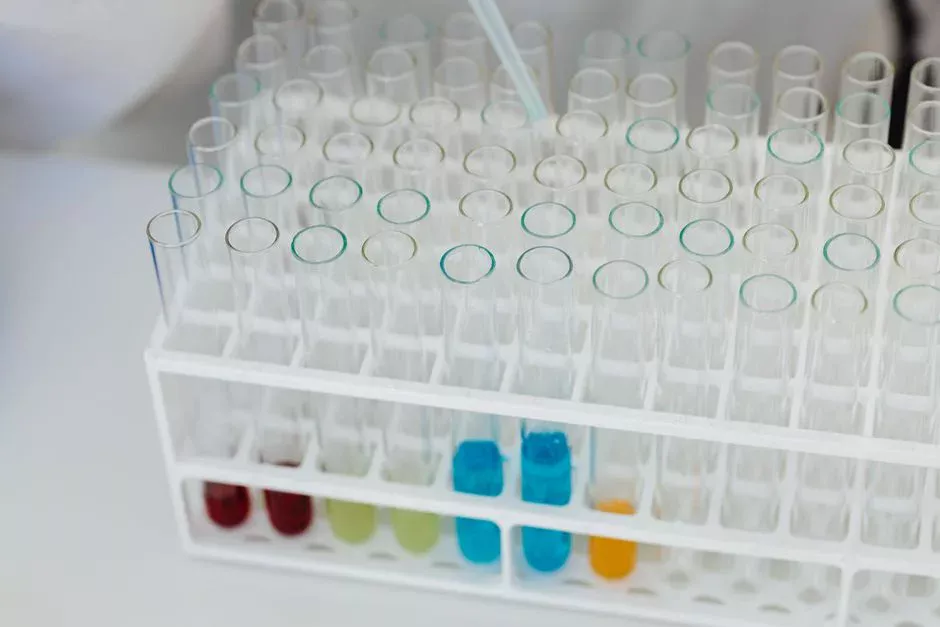
Selecting the correct technology aligns removal mechanisms with the specific contaminant profiles common in chemical manufacturing, such as high-strength organics, emulsified fats, and dissolved heavy metals. The following table summarizes the performance benchmarks for standard pretreatment technologies.
| Contaminant Class | Target Parameter | Recommended Technology | Removal Efficiency |
|---|---|---|---|
| FOG & TSS | >250 mg/L | DAF | 95-99% FOG; 90-97% TSS |
| Dissolved Metals | 0.5-2.0 mg/L | Chemical Precipitation + DAF | 90-99% Removal |
| High COD/BOD | >500 mg/L | Integrated MBR system | <30 mg/L BOD; <50 mg/L COD |
| pH Swings | 6.5-8.5 range | PLC-controlled chemical dosing skid | ±0.2 pH accuracy |
For FOG and TSS management, a DAF for FOG and metals removal is effective due to its micro-bubble generation (40-60 micron range), which ensures separation for petrochemical and surfactant-heavy streams. When dissolved metals (Cu, Zn, Cr) exceed 1.5 mg/L, chemical precipitation using a PLC-controlled chemical dosing skid is necessary to adjust pH to the 8.5–11.0 range, facilitating metal hydroxide formation before DAF polishing. For high-strength organics, an Integrated MBR system for high-strength organics provides a compact footprint compared to conventional activated sludge, utilizing 0.1 μm PVDF membranes to ensure complete solids retention.
Equipment Comparison: Footprint, CAPEX & OPEX for 50,000 gpd Chemical Plant
Capital and operational expenditures vary based on the treatment train required to meet LASA’s strict local limits. For a 50,000 gpd facility, the investment in pretreatment is often offset by the avoidance of high-strength surcharges, which are calculated based on excess BOD and TSS levels above 250 mg/L.
| Technology Train | Est. CAPEX | Est. OPEX ($/1000 gal) | Footprint |
|---|---|---|---|
| DAF System (DAF-50) | $180K - $250K | $0.08 - $0.12 | 12 ft x 6 ft |
| Chemical Precip + DAF | $240K - $340K | $0.11 - $0.15 | 20 ft x 10 ft |
| MBR System (DF-150) | $450K - $650K | $0.15 - $0.22 | 20 ft x 40 ft |
| GAC Polishing | $80K - $120K | $0.05 - $0.08 | 10 ft x 10 ft |
The total installed cost for a comprehensive pretreatment train typically ranges from $770,000 to $1.1 million. While the initial CAPEX is substantial, the OPEX remains manageable, often resulting in a return on investment within 18 to 30 months when compared against the cumulative costs of LASA surcharge penalties and off-site hazardous waste disposal fees.
Ongoing Compliance: Monitoring, Reporting & Avoiding Common Violations
Maintaining compliance after the initial permit issuance requires rigorous monitoring of both influent variability and equipment performance. LASA assesses surcharges using the formula: Monthly Flow × (Sample BOD - 250) × $0.42/lb + (Sample TSS - 250) × $0.38/lb. Efficient MBR operation, which consistently produces permeate with <30 mg/L BOD, effectively eliminates these surcharges.
The three most frequent causes of enforcement actions in chemical plants are:
- pH Excursions: Caused by batch dumps of cleaning chemicals. This is mitigated by installing a 2,000–10,000 gallon equalization tank paired with an automatic chemical dosing system for precise neutralization.
- FOG Breakthrough: Often the result of misconfigured skimmer timers on DAF units. Ensure the skimmer cycle is calibrated to the actual FOG loading rate rather than a default factory setting.
- Metal Spikes: Typically occur due to coagulant pump failure. Install low-flow alarms and redundant pump skids to ensure continuous stoichiometric dosing of precipitation chemicals.
Frequently Asked Questions
What are LASA's exact numeric local limits for copper, zinc, and cyanide?
LASA’s local limits are defined in the Chapter 60 Rules and Regulations. As of 2026, typical industrial limits are Copper at 1.5 mg/L, Zinc at 2.0 mg/L, and Cyanide at 0.65 mg/L. Always verify current limits with the LASA pretreatment coordinator during the application phase, as these may change based on the POTW's annual NPDES permit review.
Can we discharge batch reactor cleaning waste without equalization?
LASA requires flow and pH equalization for any batch discharge exceeding 10% of your total daily flow. A minimum of 4 hours of hydraulic retention time is recommended to buffer pH spikes and chemical concentrations before they enter the municipal sewer.
What pretreatment does a specialty chemical plant with <10,000 gpd need?
The permit process remains the same regardless of flow rate. A compact, pre-wired package including a GX series rotary bar screen for headworks followed by a small-scale DAF and dosing skid is often sufficient to meet discharge requirements without the footprint of a full biological system.