
Edison, NJ Chemical Wastewater Context: 2026 Regulatory Baseline
For chemical manufacturing facilities in Edison, NJ, compliance with NJDEP DSW permits typically mandates stringent effluent quality, with common local limits for Middlesex County Utilities Authority requiring total suspended solids (TSS) ≤200 mg/L and fats, oils, and grease (FOG) ≤100 mg/L, alongside a pH range of 6–9 and specific limits for heavy metals like chromium, copper, nickel, zinc, and lead (per Middlesex County Utilities Authority 2026 pretreatment ordinance). Edison's chemical sector, encompassing specialty chemicals, pharmaceuticals, and adhesives, frequently generates wastewater with highly variable FOG loads (ranging from 50–500 mg/L), colloidal metals, solvent emulsions, and pH swings due to batch processes. The Sayreville Water Treatment Plant, located approximately 5 miles from Edison, successfully selected Krofta DAF technology for treating raw water with iron concentrations exceeding 20 ppm at a flow rate of 7 MGD, demonstrating the viability of DAF for high-metal industrial streams within this regional aquifer (source: CME Associates, S1). ChemREADY, operating from Saddle Brook (12 miles north), provides on-site jar testing, polymer optimization, and comprehensive DAF chemical programs, actively supporting Edison-area facilities in achieving and maintaining compliance (source: ChemREADY, S4).
Particle Physics: Why Chemical Wastewater Defies Generic Design
Chemical wastewater typically exhibits a higher proportion of colloidal (0.001–1 μm) and supracolloidal (1–100 μm) particles compared to municipal streams, primarily due to emulsified oils, polymer colloids, and metal hydroxides, which significantly shifts the particle size distribution from the typical settleable fractions found in raw domestic wastewater (source: EPA S3 Table 1-1, 1975). This altered distribution means that traditional gravity settling mechanisms, which are highly effective for particles >100 μm, often struggle with the finer, non-settleable components prevalent in industrial discharges. The specific gravity of chemical sludge also plays a critical role, frequently ranging from 1.05–1.15, which is notably lower than municipal sludge (typically 1.2–1.3), making DAF a more effective separation method for these lighter solids (source: HydropureWater field data, 2026). Emulsified oils and grease, often present as particles smaller than 10 μm, necessitate chemical destabilization followed by microbubble attachment in a DAF system for efficient removal, as conventional clarifiers cannot capture these fine emulsions without an impractically large footprint. For industrial applications, DAF systems are designed with specific parameters, including an air-to-solids ratio of 0.01–0.06, a recycle ratio ranging from 10–100%, and hydraulic loading rates between 20–40 m/h (source: EPA S3 Chapter 7.8, Table 7-4, 1975).
Head-to-Head Parameter Comparison: DAF vs Lamella Clarifier
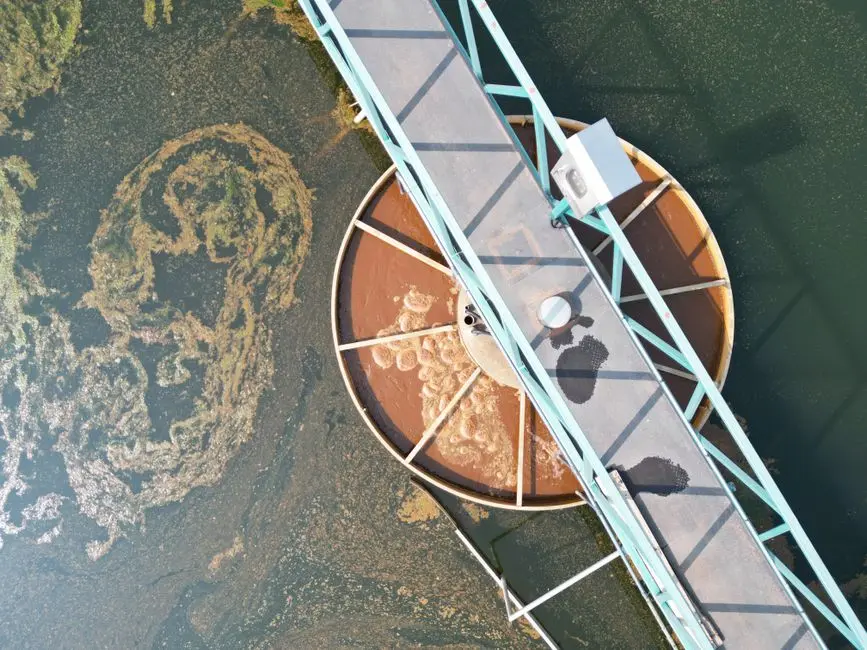
Dissolved Air Flotation (DAF) systems achieve 90–97% TSS removal for industrial applications, outperforming lamella clarifiers which typically achieve 85–92% TSS removal (source: EPA S3 Table 7-4 vs. Tables 7-2/7-3, 1975). While both technologies can operate at similar hydraulic surface loading rates of 20–40 m/h (based on DAF systems (4–300 m³/h) and lamella clarifier with sludge recirculation specifications), DAF systems effectively handle 2–3 times higher solids loading rates (kg/m²·h) due to their floatation mechanism versus gravity settling. DAF demonstrates superior FOG removal efficiency, achieving 85–95% with proper coagulation, whereas a standalone clarifier typically removes less than 30% of FOG without upstream DAF or an API separator. DAF units often require a 30–50% smaller footprint for an equivalent flow capacity compared to clarifiers, a critical advantage in space-constrained industrial facilities like the Sayreville Water Treatment Plant (source: CME Associates, S1). Although lamella clarifiers may require 30% less coagulant for dense, settleable solids (source: HydropureWater lamella clarifier product claim, 2026), DAF can reduce overall polymer dose for high-FOG or metal-laden streams by facilitating more efficient float separation. DAF produces a concentrated float sludge with 2–5% solids content, which is generally easier to dewater, while clarifier underflow typically contains 1–3% solids, often necessitating further thickening. For a 50 m³/h system installed in NJ in 2026, typical CAPEX for a DAF system ranges from $180–220k, compared to $140–170k for a lamella clarifier, with both figures including chemical dosing, controls, and platform.
| Parameter | DAF | Lamella Clarifier |
|---|---|---|
| Hydraulic Loading Rate | 20–40 m/h | 20–40 m/h |
| Solids Loading Rate | 2–3× higher than clarifier | Lower, gravity dependent |
| TSS Removal Efficiency | 90–97% (EPA S3, industrial) | 85–92% (EPA S3) |
| FOG Removal Efficiency | 85–95% (with coagulation) | <30% (without upstream DAF) |
| Footprint (for equivalent flow) | 30–50% smaller | Larger |
| Chemical Consumption | Optimized for FOG/colloidal metals | 30% less coagulant for dense solids |
| Sludge Solids Content | 2–5% (float) | 1–3% (underflow) |
| CAPEX (50 m³/h, 2026 NJ) | $180–220k | $140–170k |
Decision Matrix: Match Your Wastewater Profile to Technology
For chemical wastewater in Edison, United States, if influent FOG concentrations consistently exceed 100 mg/L, or colloidal metals are above 50 mg/L, or the specific gravity of the suspended solids is less than 1.15, a DAF system is the decisively superior choice for factories in 2026. This decision rule is supported by the DAF's inherent ability to handle lower-density particles and emulsified compounds, which conventional gravity settling cannot effectively manage. Consider the following common chemical wastewater profiles in the Edison area:
| Wastewater Profile | Characteristics | DAF Score (1-10) | Clarifier Score (1-10) | Rationale |
|---|---|---|---|---|
| A | High FOG + emulsified solvents (adhesives, coatings) | 9/10 | 3/10 | DAF mandatory for efficient FOG/emulsion removal. |
| B | Metal hydroxide sludge (pickling, plating, catalysts) | 8/10 | 5/10 | DAF preferred for colloidal metals (Sayreville precedent, S1). |
| C | Dense inorganic settleable solids (silica, catalyst fines) | 6/10 | 7/10 | Clarifier wins on OPEX for high-density, easily settleable solids. |
| D | Variable batch pH + polymer colloids (specialty resins) | 8/10 | 4/10 | DAF handles slug loads and difficult-to-settle polymer colloids better. |
| E | Low FOG, high TSS biological effluent (on-site bio-treatment) | 6/10 | 7/10 | Clarifier sufficient and more cost-effective for well-flocculated biological solids. |
| F | Combined sewer with sanitary + process | 9/10 | 5/10 | DAF provides a crucial FOG buffer for municipal compliance and handles mixed streams effectively. |
This framework highlights that while clarifiers offer a lower initial CAPEX, the operational challenges and compliance risks associated with high FOG, colloidal metals, or low specific gravity particles in chemical wastewater make DAF a more reliable and often more cost-effective long-term solution.
10-Year TCO for 50 m³/h System in Edison, NJ (2026 Dollars)
The 10-year Net Present Value (NPV) for a 50 m³/h DAF system in Edison, NJ, is approximately $410k, while a lamella clarifier system has an NPV of about $340k, demonstrating a significant initial capital cost advantage for clarifiers, but this can shift rapidly based on wastewater characteristics and operational expenses. For a DAF system, the mid-range CAPEX is estimated at $200k. Annual operating costs include approximately $18k for power (based on 15 kW consumption at an average NJ industrial rate of $0.12/kWh), $22k for chemicals (coagulant and polymer, often managed by PLC-controlled coagulant and polymer dosing), $15k for sludge haul (assuming 2.5% solids content and a $120/ton disposal rate for dewatered float via a sludge dewatering filter press (1–500 m²)), and $8k for maintenance, leading to a Year 1 total of $263k. Conversely, a lamella clarifier system has a lower CAPEX of $155k. Its annual power cost is about $12k (8 kW), chemicals are $15k (benefiting from 30% less coagulant for dense solids), but sludge haul increases to $22k due to higher volume and lower solids content (1.5% solids), with maintenance at $6k, resulting in a Year 1 total of $210k. A critical crossover point exists: if annual chemical dosing costs exceed $30k/yr, typically for high FOG or metal streams, the DAF's 10-year TCO becomes more favorable than the clarifier's, despite the higher initial CAPEX. Additionally, NJCEP (New Jersey's Clean Energy Program) incentives may offset 10–15% of the CAPEX for energy-efficient DAF recycle pumps, improving the overall ROI.
| Cost Category | DAF System (50 m³/h) | Lamella Clarifier (50 m³/h) |
|---|---|---|
| CAPEX (2026 NJ Installed) | $200,000 | $155,000 |
| Annual Power (NJ Industrial $0.12/kWh) | $18,000 (15 kW) | $12,000 (8 kW) |
| Annual Chemicals (Coagulant + Polymer) | $22,000 | $15,000 |
| Annual Sludge Haul ($120/ton) | $15,000 (2.5% solids) | $22,000 (1.5% solids) |
| Annual Maintenance | $8,000 | $6,000 |
| Year 1 Total Cost | $263,000 | $210,000 |
| 10-Year NPV (Approx.) | ~$410,000 | ~$340,000 |
Implementation Roadmap: From Jar Test to Permit Submission
A typical industrial wastewater pretreatment project in Edison, NJ, requires a minimum of 30 days of operational data for final NJDEP permit approval, necessitating a structured implementation roadmap. The initial phase (Weeks 1–2) involves collecting comprehensive 7-day composite samples, analyzing for TSS, FOG, metals, and particle size distribution, followed by a series of jar tests to determine optimal chemical dosages; local support from ChemREADY or HydropureWater can streamline this crucial step (source: ChemREADY, S4). By Week 3, a pilot decision is made, often deploying a DAF pilot skid (such as a DAF-10, 10 m³/h unit) or conducting extensive clarifier jar tests, aiming for a consistent 90% TSS removal at the projected design loading. Weeks 4–6 are dedicated to developing a robust Basis of Design package for NJDEP Treatment Works Approval (TWA), which must include process flow diagrams, a hydraulic profile, and a detailed sludge management plan. Procurement, covering the acquisition of a DAF system or lamella clarifier, a PLC-controlled coagulant and polymer dosing system, and a sludge dewatering filter press (1–500 m²), typically spans Weeks 7–10. Installation, commissioning, and performance testing occur during Weeks 11–16, culminating in the critical 30-day operational data collection period required by NJDEP. Leveraging HydropureWater's US partners and ChemREADY's chemical program provides single-source accountability for both equipment and chemistry, a significant local advantage for chemical plant pretreatment compliance case studies.
Frequently Asked Questions
Can a clarifier handle FOG if I add a DAF upstream?
Yes, a hybrid DAF/clarifier system is highly effective for high-FOG and high-TSS streams. The DAF unit efficiently removes the FOG and a significant portion of the colloidal solids, while the downstream clarifier polishes the effluent by settling any remaining dense suspended solids, often leading to superior overall TSS removal and compliance.
What NJDEP forms apply for pretreatment equipment installation?
For pretreatment equipment installation in New Jersey, you will typically need to submit a Treatment Works Approval (TWA) application to the NJDEP, along with a modification request for your existing Discharge to Sewerage Works (DSW) permit. The Middlesex County Utilities Authority generally requires a 60-day review period for these applications.
Does HydropureWater provide NSF/ANSI 61 certified DAF for chemical wastewater?
HydropureWater's DAF systems are constructed with 304 or 316L stainless steel wetted parts, which are compatible with a wide range of chemical services. While not all industrial DAF units require NSF/ANSI 61 certification (which primarily applies to potable water components), third-party certification can be pursued and provided based on specific project requirements and chemical compatibility needs.
How does winter temperature (Edison Jan avg 0°C) affect DAF performance?
Lower water temperatures, such as Edison's January average of 0°C, can reduce the efficiency of microbubble generation and flocculation kinetics in DAF systems. To mitigate this, it is recommended to increase the recycle ratio by 15–20% and, if economically feasible, heat the recycle water to 10–15°C. Designing for at least a 40% recycle margin accounts for these seasonal variations in microbubble generation efficiency, which drops significantly below 5°C.
What's the typical lead time for a 100 m³/h DAF system to NJ?
For a 100 m³/h DAF system, the typical lead time is 10–12 weeks ex-works from our manufacturing facility, followed by approximately 2 weeks for shipping to New Jersey, and an additional 3 weeks for on-site installation and commissioning. To ensure a Q4 2026 startup, ordering by Q2 2026 is advisable.