Why Chemical Plants Near Goldsmith Face a Two-Layer Compliance Problem
Any chemical plant discharging process wastewater to a sanitary sewer is an Industrial User (IU) under 40 CFR 403.3(j) and must comply with the general pretreatment rules in 40 CFR Part 403. Chemical manufacturers fall under category-specific effluent limits in 40 CFR Part 414 for inorganic chemicals and 40 CFR Part 415 for organic chemicals—both housed inside the broader 40 CFR Subchapter N framework covering Parts 405 through 471. On top of the federal layer, the receiving publicly owned treatment works (POTW) applies site-specific local limits developed under 40 CFR 403.5(c) to protect the plant from pass-through as defined in 40 CFR 403.3(p) and interference as defined in 40 CFR 403.3(k).
The practical rule is the "more stringent wins" principle under 40 CFR 403.5(a): federal categorical standards apply where they are stricter than local limits, and local limits apply where they are stricter than federal. A chemical plant near Goldsmith designing a new pretreatment system must therefore size the unit against the more restrictive of the two values for every regulated parameter. Clean Water Services' published 90-day pre-discharge application window is a representative POTW timeline to plan against (per Clean Water Services, cleanwaterservices.org/industry/pretreatment). Engineers should confirm the exact lead time with their own receiving POTW before locking in a construction schedule.
The Numeric Limits Your Pretreatment System Must Hit
The table below compiles maximum daily metal concentrations and surcharge thresholds drawn from a representative local limits ordinance (Middlesboro, KY § 51.062). Engineers should verify the exact numbers against the ordinance governing the receiving POTW, but the parameter set is typical of what chemical plants face across the U.S. The values are enforced on 24-hour composite samples, or representative grab samples where compositing is impractical (per § 51.062(M)(1)).
| Parameter | Maximum Daily Concentration (mg/L) |
|---|---|
| Arsenic | 0.75 |
| Cadmium | 0.07 |
| Chromium, total | 1.71 |
| Chromium, hexavalent | 0.41 |
| Copper | 1.2 |
| Cyanide, amenable | 0.13 |
| Lead | 0.18 |
| Mercury | 0.001 |
| Nickel | 0.69 |
| Selenium | 0.13 |
| Silver | 0.24 |
| Zinc | 1.48 |
Surcharge thresholds are triggered when BOD exceeds 350 mg/L, COD exceeds 1,000 mg/L, TSS exceeds 350 mg/L, NH3-N exceeds 30 mg/L, or total phosphorus exceeds 14 mg/L — each pound of loading above the limit is billed as a surcharge (per § 51.062(M)(2)). 40 CFR Part 414 also caps Total Toxic Organics (TTO) and individual organics such as benzene, toluene, and chloroform at sub-mg/L levels depending on the chemical subcategory. The POTW retains authority under § 51.062(P) to set limits more stringent than state or federal regulations when needed to protect the receiving water or biosolids program.
The Standard Pretreatment Process Train for Chemical Plants
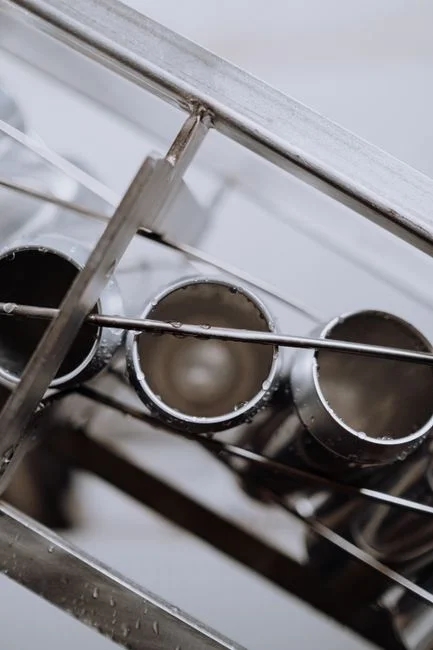
A pretreatment train that consistently delivers the limits in the table above follows a fixed sequence: equalize, neutralize, precipitate, separate, polish biologically, and polish physically. Engineers can map each step directly to a unit on a P&ID.
- Equalization. A mechanically mixed EQ basin sized for 8–24 hours of hydraulic retention dampens flow and load swings. A floating cover is standard for VOC control and odor suppression.
- pH adjustment. A PLC-controlled chemical dosing system with two-stage acid/alkaline dosing holds pH within ±0.3 of the precipitation target, typically pH 8.5–9.5 for heavy metals hydroxide precipitation.
- Coagulation and flocculation. Ferric chloride or alum coagulant plus anionic polyacrylamide flocculant destabilizes colloids, oils, and precipitated metal hydroxides.
- Solids–liquid separation. A DAF system or a lamella clarifier removes the floe. DAF is preferred when FOG or oil sheen is present; lamella is preferred for high-flow inorganic streams without oil.
- Biological polishing. Activated sludge or an MBR reduces COD/BOD to below the 350/1,000 mg/L surcharge thresholds and ammonia to below 30 mg/L.
- Multimedia filtration and optional carbon. Sand/anthracite/GAC polishing removes residual TSS, color, and trace organics.
- Online monitoring and flow-proportional composite sampling. pH, flow, and conductivity are logged continuously; a 24-hour flow-proportional composite sampler feeds metals and organics analyses per the standard sampling protocol.
Engineers must integrate these stages to ensure consistent effluent quality. An automatic chemical dosing system tied to the upstream pH and ORP signals serves as the control backbone for Steps 2 and 3 — without it, hydroxide precipitation drifts and metals breakthrough downstream. For a worked example of how each unit interlocks, the DAF process flow diagram guide provides a step-by-step walkthrough of the separation stage.
Primary Treatment Selection: DAF vs Lamella Clarifier vs MBR
The choice of primary separation unit is the single biggest CAPEX and footprint decision in the train. Use the table below to match influent character to equipment.
| Criterion | DAF | Lamella Clarifier | MBR (Membrane Bioreactor) |
|---|---|---|---|
| Best influent | Emulsified oil, FOG, floatable colloids | High-flow inorganic chemical streams, low oil | High COD/BOD with ammonia constraint or reuse target |
| Surface loading | 5–25 m/h | 20–40 m/h (plate area basis) | N/A — membrane flux 15–25 LMH |
| Membrane / bubble pore size | Micro-bubbles 10–100 μm | N/A | PVDF ultrafiltration 0.1–1 μm |
| Standard capacity | 4–300 m³/h | 5–500 m³/h | 10–1,000 m³/d per skid |
| Chemical demand | Moderate (coag + floc + polymer) | Low to moderate | Low (biological + minor coag for membrane fouling control) |
| Typical effluent TSS | 10–30 mg/L | 20–50 mg/L | < 5 mg/L |
| Footprint | Medium | Small | Large (membrane tanks + bioreactor) |
Selection follows a clear logic: oil or FOG present necessitates DAF; high flow with low oil favors lamella; ammonia or reuse-quality effluent requires MBR. A membrane bioreactor integrated skid collapses Steps 5 and 6 into one unit and is the most compact option when the receiving POTW applies a tight ammonia limit. Where polishing for trace metals is needed beyond the precipitation stage, an ion exchange polishing step can be added downstream of filtration to bring metals to ppb levels (HydropureWater field data, 2026). For a peer reference on the full regulatory envelope, the inorganic chemicals pretreatment compliance guide lays out a comparable equipment train for inorganic chemical plants.
What Pretreatment Coordinators Will Ask You For
A complete submission package is the difference between a 90-day review and a six-month back-and-forth. The pretreatment coordinator will require the nondomestic waste survey and discharge permit application submitted at least 90 days before first discharge (per Clean Water Services precedent). Required attachments include a process description, raw material list, wastewater characterization, a P&ID of the proposed treatment system, and a slug control plan written to satisfy 40 CFR 403.8(b).
Significant Industrial Users (SIUs) must also file Baseline Monitoring Reports (BMRs) within 180 days of first discharge and submit annual self-monitoring reports thereafter. POTW inspectors retain 24/7 access authority to the IU's monitoring points. Best Management Practices (BMPs) may be required by the pretreatment coordinator under § 51.062(R), and once written into a permit they are treated as enforceable local limits.
Common Compliance Failures and How to Avoid Them
Five failure modes account for the majority of chemical-plant pretreatment violations. Each one is a design constraint, not an operational footnote.
- Slug discharge. An accidental release of concentrated process water can blow through pH and metals limits in minutes. Specify EQ basin capacity for at least one full batch volume plus a high-level interlock tied to the upstream diversion valve.
- Dilution as a compliance strategy. Increasing clean water flow to lower concentrations is prohibited under 40 CFR 403.5(d) and § 51.063. The compliance lever is treatment, not water.
- Foaming and color complaints. Surfactant and dye streams should be pretreated at source — diverted to a dedicated break tank — before they reach the main equalization basin, where they can disrupt biological polishing.
- Hazardous waste streams. Any stream classified as hazardous under RCRA (42 USC §§ 6901 et seq.) requires 60-day prior notification to the pretreatment coordinator before discharge, per § 51.062(L).
- Whole Effluent Toxicity (WET) failure. A WET test failure on the POTW's NPDES permit is a shared liability under § 51.062(O). Chronic toxicity must be tracked at the connection point, not only at the IU's own outfall.
Frequently Asked Questions
What are the typical maximum daily metal limits a chemical plant must meet before sewer discharge?
Under a representative local limits ordinance, the maximum daily concentrations are As 0.75 mg/L, Cd 0.07 mg/L, total Cr 1.71 mg/L, hexavalent Cr 0.41 mg/L, Cu 1.2 mg/L, Pb 0.18 mg/L, Hg 0.001 mg/L, Ni 0.69 mg/L, and Zn 1.48 mg/L (per § 51.062(N)). The receiving POTW's ordinance controls in every case.
How long does the industrial user permit process take?
Clean Water Services requires a completed nondomestic waste discharge application at least 90 days before first discharge (per cleanwaterservices.org). Significant Industrial Users must also file Baseline Monitoring Reports within 180 days of discharge under 40 CFR 403.8(b).
Is dilution an acceptable way to meet categorical pretreatment standards?
No. Both 40 CFR 403.5(d) and the local ordinance at § 51.063 prohibit using clean water — process water, noncontact cooling water, or stormwater — to dilute a discharge as a substitute for treatment.
What is the standard process train for chemical plant pretreatment?
Equalization, pH adjustment, chemical precipitation for metals, dissolved air flotation or lamella clarification, biological polishing (activated sludge or MBR), and multimedia filtration, with online pH/flow/conductivity monitoring and flow-proportional composite sampling at end-of-pipe.