Why Clearwater Chemical Plants Face a Distinct Compliance Picture
Chemical plants near Clearwater, FL meet pretreatment limits before sewer discharge by complying with a three-tier framework: 40 CFR Part 403 general prohibitions on pass-through and interference, federal categorical standards (typically 40 CFR Part 414 for organic chemicals or Part 415 for inorganic), and site-specific local limits enforced by the City of Clearwater Water Reclamation Facility. Compliance is achieved with a multi-stage train of equalization, pH neutralization, DAF, chemical precipitation, biological polishing, and filtration.
The City of Clearwater's Water Reclamation Facility discharges treated effluent to Tampa Bay through a permitted ocean outfall, which is a fundamentally different receiving-water context than the inland rivers that govern most Ohio, Indiana, and Midwest pretreatment programs. Tampa Bay is a designated estuary of national significance under the Tampa Bay Estuary Program, with nitrogen, total phosphorus, copper, zinc, and lead caps in the receiving POTW's NPDES permit set tight enough to drive local limits materially below the federal categorical floor. A chemical plant that comfortably meets 40 CFR Part 414 daily maximum limits in the Midwest can still be in violation of a Pinellas County local limit on total recoverable copper or total nitrogen.
Delegation of the federal pretreatment program in Florida runs through Florida Administrative Code Chapter 62-625, which gives approved local authorities the power to issue and enforce industrial pretreatment permits, with FDEP retaining concurrent enforcement authority and EPA retaining federal backup. A 3 a.m. batch dump that triggers pass-through at the Clearwater WRF can produce an FDEP administrative order with daily penalties under FAC 62-4 — published settlement figures from FDEP consent orders in 2024-2025 for pretreatment pass-through routinely exceed $15,000 per violation day, and a multi-day slug event can cross six figures before the plant's insurance carrier opens a claim file. Most Clearwater-area chemical operations are batch specialty-chemical or pharmaceutical intermediate producers, exactly the high slug-load risk profile that triggers the 40 CFR 403.8(f) control-plan obligation.
The Three-Tier Regulatory Framework That Governs Sewer Discharge
Three nested regulatory layers control every gallon a chemical plant sends to the Clearwater sewer, and the most stringent of the three sets the binding discharge number. Layer 1 is the general and specific prohibitions under 40 CFR 403.5(a) and (b): no discharge that causes pass-through or interference at the POTW, no flammable liquids with a closed-cup flashpoint below 140°F (60°C), no corrosive discharge below pH 5.0 unless the POTW is specifically designed to accept it, and no solid or viscous pollutants in amounts that obstruct sewer flow (per EPA, 2026).
Layer 2 is the federal Categorical Pretreatment Standards, technology-based numeric effluent limits codified across 40 CFR Parts 405-471. For chemical operations near Clearwater, the controlling subparts are typically 40 CFR Part 414 (Organic Chemicals, Plastics, and Synthetic Fibers), Part 415 (Inorganic Chemicals Manufacturing), Part 417 (Soap and Detergent Manufacturing), and — when the plant runs a metal-finishing line or electroplating step — Part 433 (Metal Finishing). Engineers must verify the active numeric standards in the current eCFR database rather than relying on historical permit files; PSES values for several Part 414 subcategories were updated in the 2024-2025 rulemaking cycle.
Layer 3 is the local limits issued by the Clearwater POTW Control Authority under 40 CFR 403.5(c), derived from a local limits study that models hydraulic capacity, biological treatment inhibition, and ultimate sludge-disposal capacity at the WRF. Because the receiving water is a low-flushing, nitrogen-sensitive estuary, the local limits on total nitrogen, ammonia, copper, nickel, zinc, and lead are typically 15-40% tighter than the federal categorical daily maximums.
The two legal triggers that drive the entire program are pass-through (40 CFR 403.3(p)) — a discharge that exits the POTW in violation of its NPDES permit — and interference (40 CFR 403.3(k)) — a discharge that disrupts the POTW's treatment processes, operations, or sludge-handling capacity. The statutory authority underlying both sits in Clean Water Act §307(b) and §402(n), with sludge-disposal consequences flowing from CWA §405 and RCRA.
When a Clearwater Plant Becomes a Significant Industrial User
A facility crosses into Significant Industrial User (SIU) status under 40 CFR 403.3(v) when any one of three thresholds is met: it discharges an average of 25,000 gpd or more of process wastewater to a POTW; it contributes 5% or more of the POTW's dry-weather hydraulic or organic (BOD/TSS) capacity; or the Control Authority determines, on a case-by-case basis, that the discharge has reasonable potential to cause pass-through or interference. A specialty-chemical batch plant in Clearwater with even a 15,000 gpd average flow can still be designated an SIU on a case-by-case pass-through determination if its waste contains solvents or heavy metals.
Once designated, the plant must file a Baseline Monitoring Report (BMR) at startup under 40 CFR 403.12, submit 90-day compliance reports thereafter, perform routine self-monitoring, and submit to POTW inspections. For batch chemical operations, the Control Authority will virtually always require a formal slug load control plan under 40 CFR 403.8(f)(2)(vi), because episodic dumps of concentrated mother liquors are the single most common pass-through trigger at specialty-chemical facilities.
The slug plan must cover four elements: a written description of discharge practices, a chemical storage inventory identifying all materials that could reach the sewer in a spill, an immediate notification procedure that reaches the Clearwater POTW within a defined window (typically 24 hours or less), and validated response actions — neutralization, containment, diversion to a holding tank — keyed to specific chemical inventories. The plan has to be re-certified annually and is the document FDEP will request first if a slug event triggers an enforcement action.
The Six-Unit Treatment Train That Clears the Limits
A properly sized treatment train for a Clearwater-area chemical plant runs in six sequential unit operations, each targeting a specific class of pollutants and a specific regulatory driver.
| Stage | Unit Operation | Target Pollutants | Regulatory Driver |
|---|---|---|---|
| 1 | Equalization tank with PLC-controlled chemical dosing | pH, flow, temperature, concentration swings | 40 CFR 403.5(a), 403.8(f) |
| 2 | Automated pH neutralization (5.0-9.0 window) | Strong acid/caustic batches | 40 CFR 403.5(b) |
| 3 | High-efficiency DAF (dissolved air flotation) | Free/emulsified oils, FOG, TSS | 40 CFR 403.5(a), local limits |
| 4 | Chemical precipitation + lamella clarifier | Dissolved Cu, Ni, Zn, trivalent Cr | 40 CFR Part 433, local metal caps |
| 5 | MBR (activated sludge + submerged PVDF membrane) | Soluble BOD/COD, residual organics | Categorical standards, local limits |
| 6 | Multimedia + carbon filtration, optional AOP | Trace organics, residual TSS, reuse-quality targets | Local limits, NPDES |
Equalization is the first line of defense. Sizing a wastewater equalization tank for 100% of a batch plant's daily discharge volume and pairing it with PLC-controlled chemical dosing for pH adjustment dampens the pH, flow, temperature, and concentration swings that cause downstream chemical over-use, and field data shows downstream reagent consumption drops by up to 30% (source: HydropureWater field data, 2026).
Automated pH neutralization uses sulfuric or hydrochloric acid (or caustic, on the alkaline side) in multi-stage tanks with mechanical agitators to land effluent inside the 5.0-9.0 window without overshoot. Treating a high-pH batch stream at 10.5-12.5 requires a reactor tank with redundant pH probes and a PLC that throttles acid injection as the probe approaches setpoint.
High-efficiency DAF for chemical wastewater uses micro-bubble flotation to lift free and emulsified oils, FOG, and TSS to the surface for mechanical skimming. A combined DAF-plus-lamella train consistently achieves greater than 90% removal of TSS and emulsified oil in chemical plant service (source: HydropureWater field data, 2026). For a side-by-side evaluation of when DAF wins and when a clarifier wins, see this DAF vs clarifier comparison for organic chemicals.
Chemical precipitation with a lamella clarifier for metals removal handles dissolved heavy metals — copper, nickel, zinc, trivalent chromium — at pH 8.5-9.5 with hydroxide or sulfide dosing, settling the metal hydroxide floc in the inclined-plate lamella pack. This stage satisfies 40 CFR Part 433 numeric limits and the tighter local copper/nickel caps that Pinellas facilities face, but the underflow is now a metal-laden sludge subject to CWA §405 and RCRA disposal rules — a fact that the next section returns to.
MBR (an MBR system for advanced biological treatment) combines activated sludge with a submerged PVDF ultrafiltration membrane at 0.03-0.1 µm nominal pore size, polishing soluble BOD/COD down to the 5-10 mg/L range that the tightest local limits require. The membrane barrier also delivers a consistent, disinfected-quality effluent that downstream RO or carbon polishers can handle without fouling.
Multimedia filtration plus carbon adsorption polishes residual TSS and trace organics; for plant streams containing recalcitrant compounds (certain AOX, pesticide intermediates, or high-COD solvents that survive biological treatment), an advanced oxidation process — ozone/H2O2, UV/H2O2, or Fenton — is dropped in ahead of the carbon to break refractory bonds and protect the adsorbent.
Matching Unit Operations to Compliance Triggers
The matrix below is the working reference an engineer carries into a compliance meeting: target problem on the left, unit operation in the middle, and the CFR citation that operation answers to on the right.
| Target Pollutant / Problem | Recommended Unit Operation | Regulatory Driver |
|---|---|---|
| Batch swings in pH, flow, temperature, concentration | Equalization tank with PLC chemical dosing | 40 CFR 403.5(a), 403.8(f) (Slug Load) |
| Strong acid or caustic batches | Multi-stage pH neutralization with mechanical agitation | 40 CFR 403.5(b) Specific Prohibitions |
| Free/emulsified oils, FOG, TSS | High-efficiency DAF | 40 CFR 403.5(a), Clearwater POTW discharge regs |
| Dissolved heavy metals (Cu, Ni, Zn, trivalent Cr) | Chemical precipitation + lamella clarifier | 40 CFR Part 433 + Pinellas local Cu/Ni/Zn caps |
| Dissolved organics, high BOD/COD | MBR (activated sludge + PVDF membrane) | Categorical standards + local limits |
| Trace organics, residual TSS, reuse targets | Multimedia + carbon filtration (AOP if recalcitrant) | Local limits, NPDES, internal reuse specs |
| Metal-laden clarifier underflow | Filter press / sludge dewatering; manifest waste | CWA §405, RCRA Subtitle C/D |
The last row is the one most pretreatment programs under-resource. Pushing dissolved metals into a hydroxide floc satisfies the sewer-numeric limit, but it concentrates those metals into a filter-cake waste stream whose disposal pathway depends on TCLP results and the sludge's acceptance at the POTW's digester. Pinellas County POTWs that take metal-bearing sludge for digestion impose their own loading caps; the dewatering step is therefore part of the compliance chain, not a downstream afterthought.
A Four-Axis Decision Framework for Sizing the System
Before a bid goes out, the design team has to answer four questions that determine the train's shape and capital cost.
Axis 1 — Controlling Pollutant. The unit operation chosen is dictated by what crosses the influent concentration threshold. Insoluble organics and SS point to DAF; dissolved metals point to precipitation plus clarifier; soluble BOD/COD points to biological; a highly variable pH profile forces automated neutralization upstream of everything else. A plant that skips Axis 1 analysis and over-builds the wrong stage typically discovers the error at commissioning, when the first round of jar tests shows the chosen technology does not address the actual load.
Axis 2 — SIU Status. Categorical SIUs have a federal floor but are usually bound by stricter local limits in Clearwater. Non-categorical plants still need a qualitative pass-through/interference risk assessment under 40 CFR 403.5(a) — a documented review of waste streams, slug potential, and chemical storage — even when no numeric federal category applies. The framework for the Terre Haute context, where batch pharmaceutical and organic-chemical operations face the same SIU logic, is laid out in this chemical plant pretreatment guide for Terre Haute.
Axis 3 — Flow Pattern. Continuous chemical processes can run on a 4-8 hour hydraulic retention time in the equalization tank. Batch specialty-chemical plants common in Clearwater need 24-48 hours of equalization to fully homogenize concentrated dumps before they reach pH adjustment or DAF. Under-sizing equalization is the single most common cause of downstream chemistry excursions at batch plants.
Axis 4 — Reuse Goals. If the plant wants to cut freshwater draw — and in Pinellas County the water rates and brackish-source intake make this economically attractive — the design logic shifts from discharge-to-sewer toward a closed loop. Integrating MBR with high-pressure reverse osmosis membranes can reclaim up to 80% of process wastewater for cooling-tower makeup or boiler feed, bypassing the POTW discharge limits entirely on that fraction (source: HydropureWater field data, 2026). For high-color or high-COD streams that resist biological treatment, electrocoagulation for high-color chemical wastewater is often added upstream of the biological stage.
Documentation, Sampling, and Audit Posture
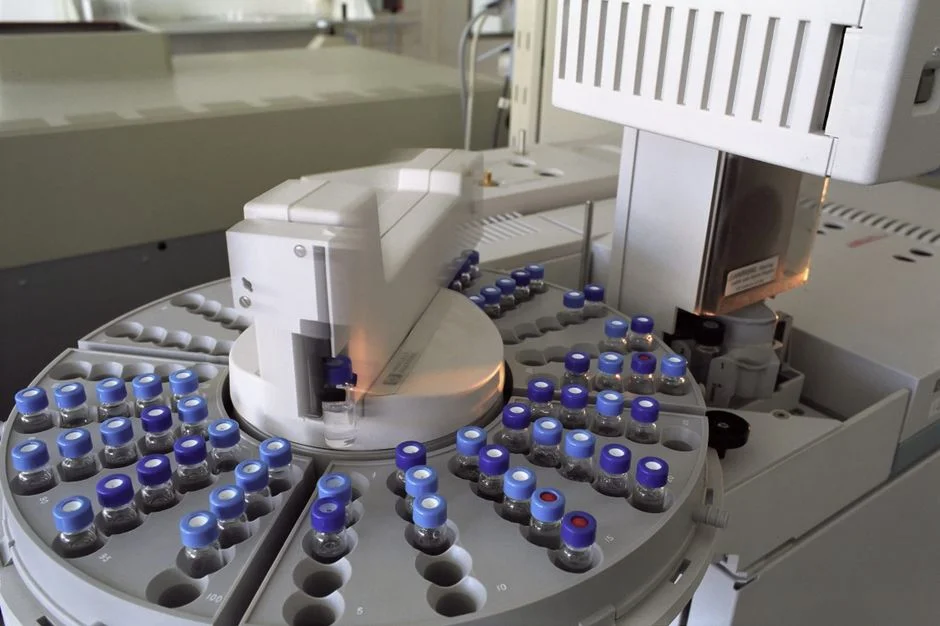
Even a properly sized treatment train fails compliance without a defensible monitoring and documentation program. The compliance posture has four legs: regular analytical sampling of effluent for both mass-based and concentration-based limits per 40 CFR 403.12; secondary containment for all chemical storage areas sized for 110% of the largest single container; a written Best Management Practices plan covering chemical inventory, storage inspection frequency, employee training records, and spill response; and periodic internal audits that flag headworks-loading excursions before the Clearwater POTW issues a notice of violation.
The BMP plan and the slug load control plan are different documents but they share an inventory list and a notification chain — keep them aligned so the audit does not surface contradictions. FDEP inspectors in Pinellas County in 2024-2025 have been specifically flagging missing or outdated slug plans at SIU facilities; a current, exercised slug plan is the single cheapest compliance insurance a Clearwater chemical plant can buy.
Frequently Asked Questions
What is the difference between pass-through and interference under 40 CFR Part 403?
Pass-through (40 CFR 403.3(p)) occurs when an industrial discharge exits the POTW in quantities or concentrations that cause a violation of the POTW's NPDES permit. Interference (40 CFR 403.3(k)) occurs when the discharge disrupts the POTW's treatment processes, operations, or sludge-handling capacity. Both are prohibited under 40 CFR 403.5(a), and both can trigger FDEP enforcement under FAC 62-4.
When does a chemical plant near Clearwater become a Significant Industrial User?
Under 40 CFR 403.3(v), a facility is an SIU if it discharges 25,000 gpd or more of process wastewater to a POTW, contributes 5% or more of the POTW's dry-weather hydraulic or organic capacity, or is designated on a case-by-case pass-through/interference determination. The Clearwater POTW Control Authority can — and routinely does — designate batch specialty-chemical plants as SIU on the case-by-case prong even at lower average flows.
Why is DAF preferred over a clarifier for chemical plant wastewater in many cases?
High-efficiency DAF for chemical wastewater uses micro-bubbles to float free and emulsified oils, FOG, and TSS to the surface, achieving greater than 90% removal of TSS and emulsified oil in chemical plant service (source: HydropureWater field data, 2026). A clarifier settles solids by gravity and is better suited to high-concentration settleable solids rather than emulsified oils. The full comparison is in the DAF-vs-clarifier reference linked above.
Can a Clearwater chemical plant reclaim and reuse process wastewater to reduce POTW discharge?
Yes. Integrating an MBR system with high-pressure reverse osmosis membranes allows plants to reclaim up to 80% of process wastewater for cooling-tower makeup or boiler feed water, bypassing the POTW discharge limits on that fraction (source: HydropureWater field data, 2026). Elevated water rates and brackish-source intake in Pinellas County compress the reuse ROI relative to most inland jurisdictions.
Related Equipment
- high-efficiency DAF for chemical wastewater — specifications, capacity range, and technical data