
Filter Press for Animal Feed Wastewater: Why the Sludge Is Different
A filter press for animal feed wastewater dewaters protein-and-fat biosludge to 25–40% dry cake solids at 100 psi. Feed-mill sludge resists municipal settings, so polymer conditioning at 3–8 kg PAM per dry ton comes before plate selection on any feed mill dewatering project.
Feed-mill biosludge is fundamentally different from municipal activated sludge, and specifying a dewatering unit based on municipal settings is the single most common cause of underperforming filter press installations at grain, soy, and rendering plants. A typical feed-mill wastewater train blends three streams: grain and soy washwater carrying 2,000–8,000 mg/L COD from solubilized starches and proteins, rendering condensate with emulsified fats at 200–1,500 mg/L oil and grease, and CIP effluent from pellet cooler and mixer sanitation. After anaerobic or aerobic biological treatment, the waste activated sludge carries the byproducts of all three: slowly biodegradable protein (often 25–40% of total suspended solids as TKN-derived biomass), emulsified residual fat that coats flocs, and fine grain fragments that resist flocculation. Cake dryness targets of 18–22% dry solids — workable for municipal WAS — are rarely achieved on this feed without aggressive polymer conditioning and a press rated for the full 100 psi operating envelope.
The BRIN plate-frame study (2024) on simulated activated sludge illustrates the equipment-class performance curve: at 1–4% w/w feed solids, filter performance changes significantly with both concentration and cloth type, with cotton cloth achieving 56.00% solute removal at 4% w/w — the upper benchmark for the plate-frame class on a controlled surrogate. That study used CaCO3 as a surrogate, and inorganic CaCO3 flocs dewater more readily than organic protein-and-fat biosludge from a feed mill because the latter has higher bound water, higher compressibility, and a cationic demand that an inorganic surrogate does not exhibit. Engineers should frame a feed-mill filter press selection as a polymer-conditioning problem first and a hardware problem second. An automatic polymer dosing system sized to the biosludge stream unlocks the 25–40% cake dryness that the equipment class can deliver when properly conditioned.
How a Filter Press Works in a Feed Mill Wastewater Train
Wikipedia defines the industrial filter press as a tool used in separation processes, specifically to separate solids and liquids: slurry is injected into the centre of the press, each chamber fills, and liquid strains through the filter cloths. In a feed-mill train, that unit dewaters biosludge from biological treatment of grain, soy, and rendering effluent. A 100 psi recessed plate press with polypropylene plates typically achieves 25–40% dry cake solids, and a membrane plate press delivers 5–15% higher cake dryness than conventional designs (Yuwei Filtration, 2025). The cycle is fixed and predictable, making it a standard choice for feed-mill duty.
During the fill cycle, a feed pump — typically a progressing cavity or air-operated diaphragm pump rated for 100 psi — transfers conditioned biosludge into the closed press. Solids distribute across the recessed chamber cavities, and filtrate passes through the filter cloth into the central manifold. As the cycle progresses, fine particles blind the cloth surface; this initial blinding improves solids capture from that point forward (M.W. Watermark, 2025). Cloth selection — cotton, polypropylene, or drill — governs how quickly that protective layer forms and how much protein-rich fine floc passes through to the filtrate during the first minutes of the cycle.
On a recessed chamber press, the cycle ends when the follower reaches end-of-stroke and chambers are full. On a membrane press, an elastic diaphragm applies secondary compression for 5–15% higher cake solids (Yuwei Filtration, 2025) before discharge. Cake discharge is the labor bottleneck: a manual press requires an operator to shift each plate; a semi-automatic press uses a plate shifter; a fully automatic PLC-controlled press runs unattended with cloth washing between cycles. The Plate and Frame Filter Press for Sludge Dewatering line covers the full 1–500 m² filtration area range, allowing a feed mill to match press size to daily wet-ton throughput.
For mechanics down to plate stress and cloth flow paths, the sibling How Does a Plate Frame Filter Press Work? Engineering Mechanics, Efficiency Data & Industrial Selection Guide walks the physics step by step, and the plate & frame filter press dewatering spec guide adds the selection-side numbers. Both are worth a read before an RFQ goes out.
Plate-and-Frame vs Recessed Chamber vs Membrane: Which Press Fits a Feed Mill
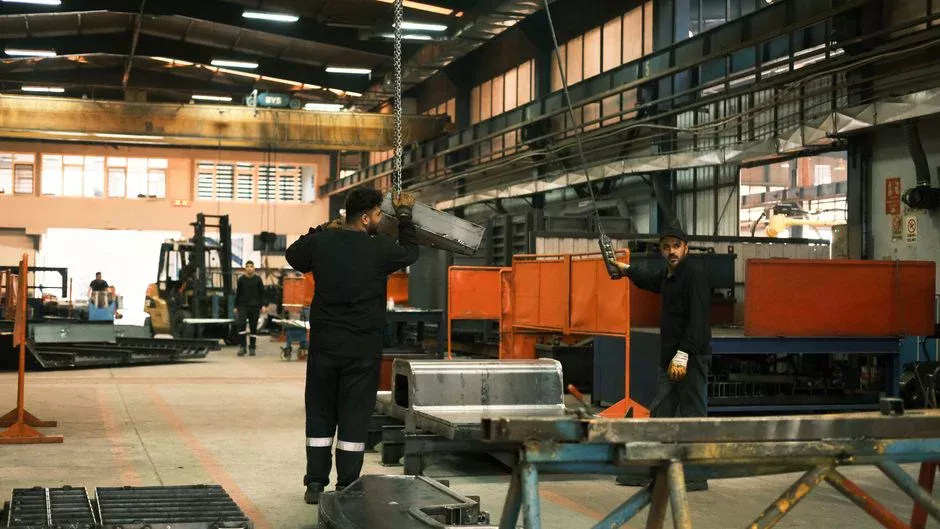
The choice between plate-and-frame, recessed chamber, and membrane presses involves a trade-off between capex, cake dryness, and automation. The table below captures the operating envelope each type delivers on a feed-mill biosludge, drawn from Beckart Hy-Pack specifications (2025) and Yuwei Filtration performance data (2025).
| Parameter | Plate-and-frame | Recessed chamber | Membrane (diaphragm) |
|---|---|---|---|
| Plate size (mm) | 630 / 800 | 800 / 1000 / 1200 | 1000 / 1200 / 1500 |
| Chamber volume | 2–15 ft³ | 15–60 ft³ | 30–200 ft³ |
| Operating pressure | 60–100 psi | 100 psi | 100 psi (filtration) + 250 psi (squeeze) |
| Cake dryness (% DS) | 22–30% | 25–35% | 30–40%+ |
| Typical cycle time | 60–120 min | 45–90 min | 30–60 min |
| Automation level | Manual / semi-auto | Semi-auto / fully auto | Fully auto PLC |
| Relative capex | Lowest | Mid | Highest (1.5–2× recessed) |
Specify plate-and-frame for small feed mills under 50 m³/d wastewater needing simple, low-cost batch operation. Recessed chamber is the default for mid-size feed plants in the 50–500 m³/d range, where the 100 psi polypropylene plate rating handles the protein-bound water. Membrane presses earn their premium where cake disposal costs dominate — typically where hauling exceeds $80 per wet ton — because the 5–15% additional cake solids directly reduces tonnage hauled. Wikipedia also attributes a cycle-time benefit to membrane designs, noting they reduce the filtration cycle time by more than 50 percent on average, which matches the shorter 30–60 min cycles in the table. Footprint favors the press class as a whole: a standard filter press offers a filter area of 216 m² where a standard belt filter offers approximately 15 m², per Wikipedia's comparison. The HydropureWater plate and frame filter press range is offered in manual, hydraulic, and fully automatic PLC-controlled configurations to match specific plant needs.
Polymer Conditioning and Operating Parameters for Feed Mill Biosludge
Polymer choice and dose drive final cake dryness more than any plate selection. For the protein-and-fat-rich biosludge typical of feed mills — characterized by cationic demand of 2–6 meq/g dry solids and bound-water content above 4 g water per g dry solids — cationic polyacrylamide (PAM) is the primary flocculant. A starting dose of 3–8 kg PAM per dry ton of sludge covers the operating band, with the upper end triggered by high-fat rendering streams or morning-shift CIP loads. Dose optimization should be run as a jar test (100–250 mL samples) before committing the full feed pump; underdosing leaves fines in the filtrate, while overdosing costs polymer and re-stabilizes the colloid. Feed concentration matters as much as dose: Wikipedia's sludge primer puts thickened primary sludge at about 8–10 percent solids and secondary sludge at about 4, while feed-mill WAS usually reaches the press at 1–4% w/w — gravity or drum thickening ahead of the press often pays for itself in cycle count.
pH conditioning is critical: a target range of 5.5–7.5 maximizes the cationic charge density of most commercial PAMs, and an automatic polymer dosing system with feedback from a streaming current detector or Zeta potential probe will stabilize dose against influent swings. Cloth selection is equally vital. Cotton cloth suits fine protein flocs in relatively clean service; polypropylene is the better choice where residual oil and grease are present, as natural fibers in cotton absorb oil and blind irreversibly. For plants with FOG above 500 mg/L entering the press feed, specify monofilament polypropylene at 80–120 cfm air permeability. The DAF pretreatment for organic-rich wastewater guide covers the oil-removal step that should sit ahead of the press. Wikipedia describes DAF as a water treatment process that clarifies wastewaters by removal of suspended matter such as oil or solids, and notes circular cells need just 3 minutes of rise time versus 20–30 minutes for rectangular units — a useful sizing contrast when the press feed keeps drifting oily.
Filter press cake dryness feed mill biosludge: realistic targets
Realistic cake dryness on feed-mill biosludge runs 25–35% dry solids on a 100 psi recessed chamber press and 30–40%+ on a membrane unit (Beckart Hy-Pack spec, 2025; Yuwei Filtration, 2025). Municipal-style targets of 18–22% are a floor, not a goal, on this sludge. Wikipedia puts the achievable dry-matter range for filter presses overall at 30 to over 80 percent, and its sludge primer notes that after dewatering, sludge may be handled as a solid containing 50 to 75 percent water. Feed-mill biosludge, with its bound water and emulsified fat, sits at the low end of both envelopes — plan polymer trials accordingly rather than quoting the class maximum.
Cost, ROI, and When a Filter Press Beats a Belt Press or Drying Bed
Filter presses offer superior performance regarding footprint, cake dryness, and labor per dry ton compared to alternatives. On a feed-mill biosludge with high bound water, a belt press typically delivers 18–22% dry solids, whereas a recessed chamber or membrane press pushes this to 30–40%. At $40–$80 per wet-ton hauling cost in most U.S. regions, the savings from reduced tonnage repay a 1–500 m² plate-and-frame press within 12–24 months at mid-size feed mills (HydropureWater field data, 2026). Filtrate returns to the head of the biological train — Wikipedia notes filtrate and centrate are typically returned to the sewage treatment process — so polymer overdose shows up there as COD load, not just as cost.
Use the following decision logic: if your hauling cost per wet ton exceeds the press's annualized polymer, power, and labor costs, the press is justified. If land for drying beds is unavailable, the press is justified. If your feed is below 30 m³/d, specify a small manual or semi-automatic recessed chamber press under 30 ft³ chamber volume; if above, scale to a 60–200 ft³ fully automatic PLC unit. The compact food processing wastewater treatment guide covers the upstream biological step and discharge-permit economics. The HydropureWater plate and frame filter press line scales from 1 m² to 500 m² of filtration area, ensuring capex aligns with actual throughput.
Who This Is For / Next Step
Once commissioned, uptime rides on a written filter press maintenance routine — cloth condition, hydraulic seals, plate alignment — and a filter press maintenance manual the night shift can actually follow. A filter press is a batch unit, so a missed cloth wash shows up as a wetter cake within two cycles.
This filter press for animal feed wastewater guide targets plant engineers and EPC buyers sizing sludge dewatering at grain, soy, and rendering plants between roughly 30 and 500 m³/d of wastewater. Send sludge volume, feed solids, and hauling cost through the request a filter press quote form, and we will map press size, polymer dose, and cake dryness target to your numbers before anything is ordered.
Frequently Asked Questions
What cake dryness can a filter press realistically achieve on feed-mill biosludge?
A 100 psi recessed chamber press with polypropylene plates typically achieves 25–35% dry cake solids on properly conditioned feed-mill biosludge, and a membrane press adds 5–15 percentage points to reach 30–40%+ dry solids (Yuwei Filtration, 2025; Beckart Hy-Pack spec, 2025). Polymer conditioning sets where inside that band you land.
Which polymer and dose should I start with for protein-rich feed-mill WAS?
Start with cationic polyacrylamide (PAM) at 3–8 kg per dry ton of sludge, with the upper end of the range for high-fat rendering streams; hold pH at 5.5–7.5 and dose through an automatic polymer dosing system for stability against CIP swings (HydropureWater field data, 2026).
How does the BRIN plate-frame study apply to organic feed-mill biosludge?
The BRIN study (2024) used inorganic CaCO3 as a sludge surrogate and reported 56.00% solute removal at 4% w/w feed solids with cotton cloth. Real feed-mill biosludge dewaters more slowly and demands polymer conditioning to approach comparable capture rates on the organic fraction (BRIN, 2024).
Belt press or filter press for feed-mill sludge?
A belt press delivers 18–22% dry solids on this biosludge; a recessed chamber or membrane press reaches 30–40%. That gap decides hauling cost: at $40–$80 per wet ton, the drier cake repays the press within 12–24 months at mid-size mills. Wikipedia's footprint comparison — 216 m² of filter area for a standard press versus approximately 15 m² for a standard belt filter — matters on cramped sites. Choose the belt only where continuous operation outweighs cake dryness.
What feed solids should the press receive from a feed-mill train?
Feed-mill WAS usually reaches the press at 1–4% w/w solids, the band the BRIN study tested. Wikipedia's sludge primer puts thickened primary sludge at about 8–10 percent solids and secondary at about 4, so gravity or drum thickening ahead of the press cuts cycle count. Run a jar test at 100–250 mL to fix polymer dose before the first full cycle.