Why an Amman Data Center Cannot Afford to Discharge Blowdown Anymore
A 100 MW data center can withdraw up to ~2 million liters of water per day, and 70–80% of that evaporates through cooling towers while 20–30% exits as liquid cooling-tower blowdown (CTBD) (source: ide-tech.com, 2026). At 4 cycles of concentration, blowdown already represents 25–30% of makeup water, with TDS in the 1,200–6,000 mg/L band — well above the <1,500 mg/L discharge ceilings that water-stressed jurisdictions are now enforcing (source: genesiswatertech.com, 2026). The same chronic-renewable-water-stress drivers that place the Middle East on every "high-stress data center" shortlist apply directly to Amman: hyperscaler interest in the Levant is rising, while municipal supply, groundwater recharge, and downstream wastewater capacity are all under pressure. With discharge fees in stressed regions already running $5–15 per thousand gallons, dumping blowdown is no longer a cheap default — it is a line item that grows every year the permit tightens (source: genesiswatertech.com, 2026). In 2026, the design driver for any Amman site is not "can we discharge?" but "how much can we recover before we ever have to ask permission to discharge?"
Air-cooling is rarely a viable substitute in Amman's summer regime, where high dry-bulb and narrow wet-bulb depression push any adiabatic or trim coil toward the same evaporative loss problem. That makes the blowdown stream the single most addressable piece of the water balance, and the cheapest place to find 60–95% recovery on a 10–50 MW campus.
Amman Blowdown Profile: What the Water Looks Like Before Treatment
Cooling-tower makeup in Amman is typically drawn from municipal potable sources that already carry elevated mineral content; that baseline mineral load is then multiplied by the cycles of concentration the operator runs. A tower at 4 cycles pushes blowdown into the 1,200–6,000 mg/L TDS range, and at 6 cycles the upper end climbs toward the silica and calcium-sulfate scaling thresholds that determine the whole treatment envelope (source: genesiswatertech.com, 2026). Higher cycles cut blowdown volume — improving the raw water-usage effectiveness (WUE) of the facility — but they simultaneously raise TDS, scaling risk, and the recovery ceiling of any downstream membrane system. That trade-off is the central design choice for an Amman plant.
The table below summarizes a typical pre-treatment design basis. Specific Amman tap values will vary by season and source well; the ranges below are what the blowdown stream will look like once cycles and chemistry are applied.
| Parameter | Typical Amman CTBD Range | Design Implication |
|---|---|---|
| TDS | 1,200–6,000 mg/L | Drives RO recovery ceiling and MVC sizing |
| Total suspended solids | 10–50 mg/L | Sets side-stream filter rating and UF backwash frequency |
| Calcium + magnesium hardness | 400–1,800 mg/L as CaCO₃ | Limits cycles; controls antiscalant dose |
| Silica (SiO₂) | 40–180 mg/L | Often the binding constraint on RO recovery |
| Alkalinity (M-alkalinity) | 150–600 mg/L as CaCO₃ | Acid or pH trim may be needed to protect membranes |
| Free / total chlorine residual | 0.1–1.0 mg/L | Must be quenched before UF/RO |
| Biocides, corrosion inhibitors, dispersants | Variable, program-dependent | Non-phosphate, low-foaming chemistry required for reuse |
| Temperature (blowdown) | 25–38 °C (summer peak) | Reduces RO net driving pressure; pre-cooling may be needed |
| Planktonic bacteria / biofilm fragments | 10³–10⁵ CFU/mL | UV or chlorine-dioxide polish on the reuse loop |
Summer ambient conditions in Amman — high dry-bulb, low wet-bulb depression, and frequent dust events — push operators toward higher cycles to reduce makeup, but each step up the cycles ladder multiplies scaling risk in the blowdown. Anything above ~5 cycles typically requires both RO and a thermal or controlled-precipitation step to stay within silica and CaSO₄ limits (source: genesiswatertech.com, 2026).
The Core Treatment Train: Side-Stream Filtration → UF → Reverse Osmosis
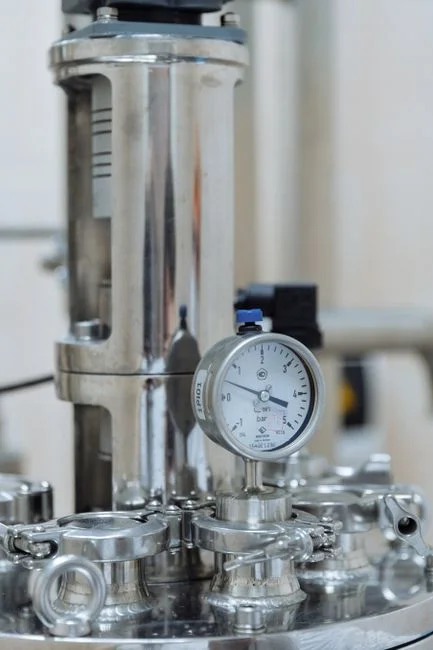
About 80% of data-center blowdown-reuse systems built today converge on the same three-stage sequence: side-stream filtration, ultrafiltration, and reverse osmosis. The exact sizing depends on the blowdown profile in the table above, but the parameter ranges are stable across vendors.
Side-stream filtration. A self-cleaning spiral or multi-media multi-media side-stream filter treats 1–5% of circulation flow continuously, rated at 10–25 µm, and pulls suspended solids, corrosion products, and biofilm fragments out of the loop before they reach the basin. Capex typically lands between $50,000 and $200,000 for a data-center installation, with operating cost limited to solids disposal and routine maintenance (source: genesiswatertech.com, 2026). The real value of this stage is downstream: it lets the cooling system run higher cycles without exporting suspended solids into the membrane skid.
Ultrafiltration. The UF stage protects the RO membranes. PVDF hollow-fiber modules at 0.01–0.1 µm pore size, operating at 10–30 psi with automatic backwash, handle up to ~300 NTU feed turbidity without coagulant chemicals and reach 90–95% recovery (source: genesiswatertech.com, 2026). A packaged ultrafiltration pretreatment system sized for 50,000 GPD blowdown typically delivers permeate turbidity below 0.5 NTU and SDI₁₅ below 3, which is what an RO train needs to stay clean. Chemical cleaning is normally on a 1–3 month interval depending on feed quality.
Reverse osmosis — the workhorse. An industrial reverse osmosis system removes 95–99% of TDS, with permeate at 10–50 mg/L TDS — clean enough to send straight back to the cooling tower as supplemental makeup, or to blend with standard makeup and push the whole tower to higher cycles. Operating pressure sits in the 150–400 psi band depending on concentrate TDS, and a PLC-controlled antiscalant dosing skid is mandatory to hold scaling ions in solution. Recovery is bounded at 50–85% by CaCO₃, CaSO₄ and silica scaling thresholds (source: genesiswatertech.com, 2026). A 50,000 GPD RO skid treating blowdown lands in the $250,000–$500,000 installed range with opex of $1.50–$3.00 per thousand gallons treated (source: genesiswatertech.com, 2026). For sites planning future capacity, sizing the RO frame for the ultimate flow and staging the membranes later is cheaper than a second full skid.
Nanofiltration as an alternative. When the binding constraint is hardness rather than full TDS, NF runs at 75–150 psi, achieves 70–85% recovery, and produces permeate at 30–50% of feed TDS — enough to enable higher cycles of concentration without the energy bill of a full RO pass (source: genesiswatertech.com, 2026). A useful cross-reference is our nanofiltration process flow guide, which walks through the engineering trade-offs in more detail.
Blended train. The standard 2026 configuration is side-stream → UF → RO, with RO permeate routed to the cooling-tower makeup line and RO concentrate routed to a controlled discharge point, a partial ZLD stage, or — in arid sites with land — a lined evaporation pond. RO and UF membrane replacements should be budgeted as a recurring opex line from day one, not treated as a contingency.
| Stage | Function | Key Parameters | Typical Capex (50,000 GPD skid) |
|---|---|---|---|
| Side-stream filter | Bulk SS + biofilm removal from cooling loop | 10–25 µm, 1–5% of circ flow | $50,000–$200,000 |
| UF | RO pretreatment, turbidity & SDI control | 0.01–0.1 µm, 10–30 psi, 90–95% recovery | Included in packaged skid |
| RO (BWRO) | TDS, hardness, silica removal | 150–400 psi, 50–85% recovery, 95–99% rejection | $250,000–$500,000 |
| NF (optional) | Partial softening for hardness-limited reuse | 75–150 psi, 70–85% recovery, 30–50% feed TDS permeate | Lower than RO at same flow |
Beyond RO: When an Amman Site Needs Partial or Full Zero Liquid Discharge
Conventional brackish-water RO plateaus at 75–80% recovery for scale-prone CTBD, limited by CaSO₄, CaCO₃ and silica on the concentrate side (source: ide-tech.com, 2026). For an Amman site, that ceiling translates into a meaningful fraction of the original blowdown stream still leaving the site as concentrate — concentrate that the permit may not accept if it breaches the local TDS or total-phosphorus envelope. That gap is what pushes a project toward zero liquid discharge (ZLD) or partial ZLD.
Mechanical Vapor Compression (MVC). MVC is the workhorse stage between RO and full ZLD. It recovers 95–98% of the RO concentrate as distillate at <10 mg/L TDS, while concentrating the brine to 20–30% dissolved solids. Energy sits in the 15–25 kWh per 1,000 US gallons band, and capex for a 10,000–30,000 GPD unit lands at $1–3 million (source: genesiswatertech.com, 2026). For an Amman site without cheap waste heat, MVC is normally the only thermal stage that pencils out.
Full ZLD staging. The standard ZLD train is RO (70–80% recovery) → MVC (95% of concentrate) → crystallizer, with the crystallizer converting the remaining brine to a solid salt cake for disposal. Overall system recovery hits 95–99%, but capex rises to $3–8 million for a data-center-class system and opex runs $5–15 per thousand gallons treated (source: genesiswatertech.com, 2026). For most 10–50 MW campuses, full ZLD is a 2030+ decision, not a 2026 one, unless discharge is categorically prohibited at the site.
Partial ZLD as the 2026 sweet spot. Partial ZLD — RO followed by MVC with no crystallizer — reduces liquid waste by 80–90%, pushes overall recovery into the 85–95% band, and avoids the crystallizer capex (source: genesiswatertech.com, 2026). The remaining 10–20% of concentrate is typically sent to a lined evaporation pond (viable in Amman's arid climate and low rainfall regime) or hauled off-site under a special permit. For most Amman builds in 2026, this is the configuration that hits the permit envelope without breaking the capital plan.
Biological control on the reuse loop. Any time the blowdown loop is recycled back to the cooling tower, the design needs a non-foaming, membrane-compatible biocide program. UV sterilization and chlorine-dioxide generation are the two workhorse options; both avoid the trihalomethane formation and biocide-residual issues that complicate discharge compliance downstream. An automatic chemical dosing system ties the biocide and antiscalant pumps into a single PLC, which is what auditors expect to see on a 2026 site.
Reuse vs. Partial ZLD vs. Full ZLD: 2026 Decision Matrix for Amman
The table below puts the three options side by side at the order-of-magnitude level a 10–50 MW Amman campus is actually scoped at. All capex figures are USD; convert to JOD at ~0.71 USD/JOD for local budgeting. Cost ranges are anchored to the 50,000 GPD class system from the prior sections (source: genesiswatertech.com, 2026).
| Parameter | Reuse (UF + RO only) | Partial ZLD (UF + RO + MVC) | Full ZLD (UF + RO + MVC + Crystallizer) |
|---|---|---|---|
| Overall water recovery | 60–85% | 85–95% | 95–99% |
| Liquid discharge volume | 15–40% of original blowdown | 5–15% of original blowdown | <1% (solid salt cake only) |
| Permeate / distillate quality | 10–50 mg/L TDS | Distillate <10 mg/L TDS | Distillate <10 mg/L TDS |
| Capex (10–50 MW class) | $300k–$700k | $1.5M–$3.5M | $3M–$8M |
| Opex per kgal treated | $1.50–$3.00 | $4–$8 | $5–$15 |
| Energy intensity | Low (membrane only) | Moderate (adds MVC) | High (MVC + crystallizer) |
| Footprint | Compact | Moderate; needs MVC skid | Large; crystallizer + cake handling |
| Permit complexity in Amman | Lowest; conventional sewer discharge after RO blend if TDS <1,500 mg/L | Moderate; small brine stream needs disposal route | Highest; solid waste handling approval |
| Fit for Amman 2026 | Viable only if sewer permit is obtainable and blended TDS <1,500 mg/L | Best 2026 NPV when discharge fees > ~$8/kgal and freshwater cost is high | Justified only where liquid discharge is prohibited or freshwater is unavailable |
The decision rule for 2026: if discharge fees in your Amman sewer agreement are below ~$8/kgal and a sewer permit is achievable, Reuse-only is defensible. Above that threshold, or whenever the permit team signals TDS or total-phosphorus risk, Partial ZLD is the right default. Full ZLD remains a hedge against the next permit revision rather than a 2026 baseline. The concentrate side of the Reuse train still needs a downstream plan — a plate-frame filter press is the standard answer for dewatering any sludge generated in the side-stream or clarifier stages.
Compliance and Operating Checklist for Jordan in 2026
Jordan's regulatory framework for industrial and commercial discharge is administered through the Ministry of Water and Irrigation (MWI) and aligned with Jordanian Standards and Metrology Organization (JSMO) limits, with site-specific discharge permits layered on top. The 2026 trend in water-stressed governorates including Amman is toward tighter TDS caps (with <1,500 mg/L already becoming a de facto ceiling), explicit limits on total phosphorus from legacy phosphate-based cooling programs, and biocide-residual tracking at the discharge point (source: genesiswatertech.com, 2026). A design that hits the checklist below will pass both the technical review and the operating-permit renewal conversation.
- Discharge TDS: blended effluent to sewer <1,500 mg/L; if blending is used, mass-balance the streams and meter both.
- Total phosphorus: switch the cooling program to a non-phosphate, low-toxicity chemistry so concentrate does not poison downstream treatment or breach the permit.
- Biocide residual: specify non-foaming, membrane-compatible biocides and verify residual at the discharge point; UV sterilization or ozone-based disinfection are the two options that minimize residual at outfall.
- pH and temperature: meet the 6.5–9.0 pH window and the typical 35–40 °C discharge temperature limit; pre-cool the blowdown stream if the tower runs hot in summer.
- Online monitoring: conductivity on RO permeate (reuse-quality check), turbidity on UF feed (membrane protection check), and flow totalization on the blowdown line (reuse accounting and mass balance).
- Mass-balance accounting: log makeup, evaporation, blowdown, and reuse volumes monthly to support the WUE reporting the MWI will increasingly expect.
- Spent membrane and cartridge disposal: document the disposal route for RO and UF consumables; this is a permit-renewal item, not a one-time submittal.
Frequently Asked Questions
What TDS range should an Amman data center design its blowdown treatment for?
Design for 1,200–6,000 mg/L TDS in the blowdown stream, depending on cycles of concentration. At 4 cycles, expect the lower-to-mid range; at 6 cycles and above, expect the upper end and add a thermal or controlled-precipitation step (source: genesiswatertech.com, 2026).
What overall water recovery is realistic for an Amman facility in 2026?
A UF + RO reuse train typically recovers 60–85% of blowdown. Adding MVC for partial ZLD pushes overall recovery to 85–95% while keeping concentrate manageable, which is the configuration most 10–50 MW Amman campuses will converge on (source: genesiswatertech.com, 2026).
How much of a 100 MW data center's water actually leaves as blowdown?
For evaporatively cooled facilities, 70–80% of makeup is lost to evaporation and 20–30% exits as blowdown. On a ~2 million liter/day site, that is roughly 400,000–600,000 liters of blowdown per day — the target stream for any reuse system (source: ide-tech.com, 2026; ketos.co, 2026).
Is full ZLD required for an Amman data center in 2026?
No. Full ZLD is technically achievable at 95–99% recovery but costs $3–8 million in capex and $5–15 per thousand gallons in opex. Most 2026 Amman builds will specify partial ZLD (UF + RO + MVC) and dispose of the remaining small brine stream via evaporation pond or permitted off-site handling (source: genesiswatertech.com, 2026).
Why not just air-cool an Amman data center and avoid blowdown entirely?
Amman's summer wet-bulb regime makes all-air cooling inefficient at the densities hyperscalers are deploying, and trim coils still produce blowdown. The blowdown stream is the most addressable piece of the water balance, which is why it is where the engineering focus sits (source: ide-tech.com, 2026).