Why Bandung data centers cannot keep treating blowdown as waste
A 100 MW hyperscale campus burns through roughly 2 million liters of water per day, the daily equivalent of thousands of households (IDE Tech, 2026). For a Bandung hyperscale or colocation site scaled to 5-20 MW, that benchmark still translates to 100,000-400,000 L/day of cooling-tower makeup, of which 25-30% is typically bled off as blowdown at four cycles of concentration (Genesis Water Tech). Bandung receives 1,500-2,000 mm of annual rainfall, which sounds comfortable, but PDAM Tirtawening supply is seasonally stressed in the Gedebage, Cimahi and Pasteur corridor where most colocation build-outs cluster. Treating blowdown as a disposal stream in 2026 is therefore a permit liability, not a sustainability choice.
Cooling towers in Bandung's 27-32 °C ambient and 75-85% relative humidity band run hotter and wetter than the temperate-country reference designs that dominate the global SERP results. Operators push cycles of concentration higher to control freshwater draw, which makes blowdown more concentrated and harder to discharge, not easier. Indonesia's PP No. 22/2021 on domestic wastewater management and Pergub Jawa Barat's effluent quality standards frame the legal ceiling for any concentrate or reject stream, and some jurisdictions already enforce TDS discharge limits below 1,500 mg/L (Genesis Water Tech). Bandung should be designed for 1,000-1,500 mg/L concentrate so future tightening of Pergub enforcement does not invalidate the plant.
What actually flows out of a Bandung cooling tower
Cooling-tower blowdown (CTBD) is a brackish stream that runs 4-8× higher in TDS than the PDAM makeup that fed the loop. The working envelope for design is 1,200-6,000 mg/L TDS, 10-50 mg/L suspended solids, plus accumulated treatment chemistry and biological content (Genesis Water Tech). Bandung PDAM feed typically falls in the 80-250 mg/L total hardness range with moderate silica, so the blowdown derived from it sits toward the lower end of that TDS band at 4 cycles, but climbs quickly as cycles rise above 5. Tropical softening chemistry behaves differently from temperate baselines: warmer water accelerates silica polymerization and biocide demand, so any hardness budget that worked in a Singapore or Hong Kong reference must be re-derived for Bandung's specific wet-bulb profile.
Four contaminant families must be addressed by the train: scaling minerals (Ca, Mg, silica, alkalinity), treatment chemicals (oxidizing biocides, phosphate inhibitors, dispersants), suspended solids (corrosion products, biofilm fragments, airborne particulates), and biological content (planktonic bacteria, algae, biofilm). Oxidizing biocides such as chlorine and bromine, plus legacy phosphate inhibitors, will damage polyamide RO membranes and must be neutralized upstream with sulfite dosing or activated carbon. Bandung's open cooling basins also run higher planktonic bacteria and algae counts than the temperate baseline the global commercial pages assume, which shifts the biological load the downstream UF and RO must handle.
| Parameter | PDAM makeup (typical Bandung range) | CTBD at 4 cycles | CTBD at 6 cycles |
|---|---|---|---|
| Total dissolved solids (mg/L) | 150-450 | 600-1,800 | 900-2,700 |
| Total hardness as CaCO3 (mg/L) | 80-250 | 320-1,000 | 480-1,500 |
| Silica as SiO2 (mg/L) | 10-40 | 40-160 | 60-240 |
| Suspended solids (mg/L) | <5 | 10-50 | 15-60 |
| Free chlorine residual (mg/L) | 0.2-0.5 (PDAM) | 0.1-0.3 | 0.1-0.3 |
Side-stream filtration: the first lever Bandung operators usually miss
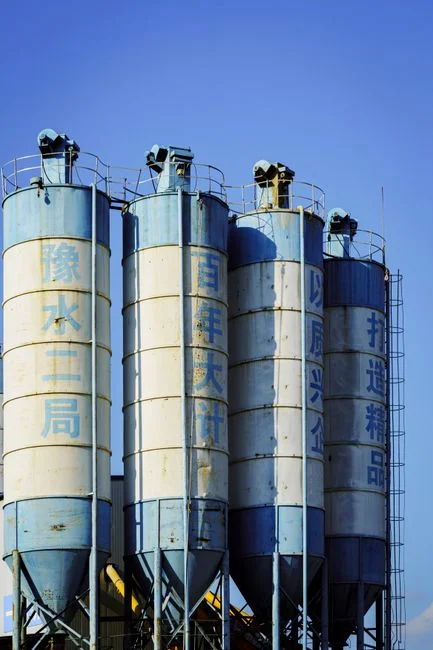
Most Bandung blowdown problems are created inside the cooling loop, not at the RO skid. Side-stream filtration is the cheapest intervention in the train because it improves blowdown quality before any membrane sees it. Definition: a continuous slip-stream of 1-5% of total circulation flow, pulled from the basin or return line, passed through self-cleaning filters at 10-25 micron, and returned to the loop (Genesis Water Tech).
For a typical 2-5 MW Bandung cooling loop with 4-8 m3/hr circulation, a self-cleaning spiral or disc filter rated at 10-25 micron is the right tool. These units scrape accumulated solids automatically and avoid the backwash downtime of multimedia beds. The published CAPEX band for data center side-stream filtration sits at $50,000-200,000 depending on flow rate (Genesis Water Tech), which for a Bandung mid-range installation maps to the lower half of that range once flow is normalized. The payback is not at the RO: it shows up in cleaner heat exchangers, lower biocide spend, and a blowdown stream that finally meets the <10-15 micron and SDI <5 targets that protect downstream membranes. A multi-media side-stream filter sized for 1-3% of circulation is the practical entry point for a Bandung retrofit.
Ultrafiltration pretreatment before the RO membranes
UF is the buffer between the messy cooling-tower world and the RO membrane. Pore size sits at 0.01-0.1 micron, operating pressure 10-30 psi, recovery 90-95% (Genesis Water Tech). At those ratings UF removes essentially all suspended solids, bacteria, viruses and high-molecular-weight organics while passing dissolved salts through to the RO, which is exactly what the downstream membrane wants to see.
Bandung's humid basin plus any open cooling-tower sump introduces more biological loading than temperate reference designs assume. UF handles that load without extensive pretreatment and tolerates feed variability that would foul an NF or RO directly. Backwash with permeate or treated water, plus a CIP cadence of every 1-3 months, is the standard maintenance envelope. The non-negotiable design target is feed at <10-15 micron and SDI <5 entering the RO; if the side-stream filter and UF together do not deliver that, the RO will pay for it in cleaning frequency. A packaged ultrafiltration pretreatment skid with dead-end or outside-in hollow-fiber modules is the practical building block for the Bandung train.
RO versus NF for Bandung blowdown: a real choice, not a default
RO and NF are not interchangeable on CTBD. The decision rule is driven by what limits the feed: silica and biocide residuals point to RO; calcium and magnesium hardness with low silica points to NF.
RO removes 95-99% of dissolved solids, produces permeate at 10-50 mg/L TDS, operates at 150-400 psi, and recovers 50-85% of CTBD feed (Genesis Water Tech). It is the only membrane that fully strips silica and most treatment chemicals, which matters when the loop runs on phosphonate or high-cycle chemistry. The ceiling for a conventional BWRO on CTBD is 75-80% recovery before silica, calcium carbonate and calcium sulfate cross scaling thresholds (IDE Tech, 2026). Pushing past that ceiling requires either advanced antiscalant programs, dynamic RO operation, or a salt-precipitation step in a fluidized bed reactor.
NF removes hardness and sulfate selectively, holds permeate at 30-50% of feed TDS, runs at 75-150 psi, and recovers 70-85% of feed (Genesis Water Tech). If Bandung PDAM feed is soft to moderately hard with low silica, NF delivers most of the cycle-of-concentration benefit at substantially lower energy and capital. Antiscalant selection matters in either case: non-phosphate, membrane-compatible formulations, with sulfite dosing upstream to neutralize residual chlorine or bromine, are the chemistry combination that protects the membrane and the discharge permit. The published 2026 budget anchors are $250,000-500,000 CAPEX for a 50,000 GPD RO system and $1.50-3.00 per 1,000 gallons OPEX (Genesis Water Tech). An industrial reverse osmosis system paired with the right RO/UF membrane elements for high-TDS, scale-prone feed is the Bandung default unless hardness-only limits apply.
| Parameter | Reverse osmosis (RO) | Nanofiltration (NF) |
|---|---|---|
| Rejection of dissolved solids | 95-99% | 50-70% |
| Permeate TDS | 10-50 mg/L | 30-50% of feed |
| Operating pressure | 150-400 psi | 75-150 psi |
| Recovery on CTBD | 50-85% | 70-85% |
| Silica removal | >95% | Partial |
| Best-fit Bandung case | Silica- or biocide-limited feed | Hardness-limited feed, low silica |
Discharge, reuse or zero liquid discharge: the Bandung decision
There are three end-of-train strategies, and they sit at very different points on the cost curve. Reuse as cooling-tower makeup typically achieves 60-85% recovery and is the highest-value use of permeate because it directly displaces PDAM freshwater (Genesis Water Tech). Discharge to sewer under PP No. 22/2021 and Pergub Jawa Barat is the cheapest path but exposes the operator to permit risk if concentrate TDS exceeds 1,500 mg/L or if local enforcement tightens.
Mechanical vapor compression (MVC) is the relevant step when there is no sewer or discharge option. MVC runs at 95-98% recovery, produces distillate below 10 mg/L TDS, consumes 15-25 kWh per 1,000 gallons, and carries a CAPEX band of $1-3 million for 10,000-30,000 GPD (Genesis Water Tech). Full zero liquid discharge (ZLD) at 95-99% recovery adds a crystallizer to convert the MVC brine to a solid cake; ZLD CAPEX is $3-8 million and OPEX runs $5-15 per 1,000 gallons, which is only justified where Bandung municipal discharge is refused entirely or where hyperscale tenant ESG mandates a closed loop. Bandung site selection should weigh sewer availability, plot space for brine handling and solids storage, and the tenant's published water-reuse targets before picking the end-of-train strategy.
| Strategy | Recovery | Typical CAPEX (2026) | OPEX ($/1,000 gal) | Bandung fit |
|---|---|---|---|---|
| Cooling-tower makeup reuse | 60-85% | Folded into RO/MVC CAPEX | RO $1.50-3.00 | Default for sewer-served sites |
| Sewer discharge (PP 22/2021, Pergub) | n/a | Concentrate handling only | Discharge fees $5-15 | Only if TDS <1,500 mg/L |
| MVC concentration | 95-98% | $1-3 million (10-30k GPD) | Energy-driven | No-sewer sites, hyperscale ESG |
| Full ZLD | 95-99% | $3-8 million | $5-15 | Only where discharge is refused |
Putting the Bandung train together: indicative cost and footprint
The published 2026 CAPEX bands stack into a tiered Bandung view: side-stream filtration $50,000-200,000, RO $250,000-500,000 at 50,000 GPD, MVC $1-3 million, full ZLD $3-8 million (Genesis Water Tech). These are typical-range inputs for a 2026 budget conversation, not binding quotes; a Bandung 5 MW campus with a 100,000 GPD CTBD stream will sit in the lower-middle of each band once flow is normalized. The OPEX gradient runs from RO at $1.50-3.00 per 1,000 gallons, through MVC at higher energy-driven cost, up to ZLD at $5-15 per 1,000 gallons plus consumables and crystallization solids handling.
Moving from straight discharge to 85% permeate reuse typically reduces freshwater draw by 60-85% (Genesis Water Tech), which is the headline metric for any Bandung ESG submission or green-building submission. A phased build is the right Bandung default: side-stream filtration plus UF first, RO second, MVC or ZLD only when discharge capacity is constrained or when tenant ESG targets demand it. Tying the train together with a PLC-controlled antiscalant and biocide-neutralization dosing system is the cheapest insurance against membrane fouling and permit excursions, because the skid handles antiscalant, sulfite for chlorine/bromine neutralization, and pH adjustment in one package.
| Build phase | Unit operations | Indicative 2026 CAPEX (USD) | OPEX ($/1,000 gal) |
|---|---|---|---|
| Phase 1 | Side-stream filter + UF | $80,000-250,000 | <$0.50 (solids disposal) |
| Phase 2 | Add RO (50,000 GPD class) | $250,000-500,000 | $1.50-3.00 |
| Phase 3 | Add MVC (10-30k GPD) | $1,000,000-3,000,000 | Energy-driven |
| Phase 4 (only if required) | Full ZLD with crystallizer | $3,000,000-8,000,000 | $5.00-15.00 |
Frequently Asked Questions
What TDS band should a Bandung cooling-tower blowdown treatment train be designed for?
Design for 1,200-6,000 mg/L TDS at the blowdown outlet, with the concentrate side of the RO held at 1,000-1,500 mg/L TDS to stay ahead of Pergub Jawa Barat enforcement and jurisdictions that already cap discharge below 1,500 mg/L (Genesis Water Tech).
How much freshwater can a Bandung data center realistically save by treating cooling-tower blowdown?
Moving from straight discharge to permeate reuse at 60-85% recovery typically cuts freshwater draw by 60-85% (Genesis Water Tech). On a 100,000-400,000 L/day Bandung 5-20 MW cooling loop, that is on the order of 60,000-340,000 L/day of PDAM offset.
When is mechanical vapor compression or full ZLD justified in Bandung instead of RO plus sewer discharge?
MVC at $1-3 million CAPEX (10-30k GPD) and 95-98% recovery is justified when no sewer is available or when hyperscale tenant ESG targets demand a near-closed loop. Full ZLD at $3-8 million CAPEX and $5-15 per 1,000 gallons OPEX is only economic where Bandung municipal discharge is refused entirely (Genesis Water Tech).
Does Bandung's tropical climate change the side-stream filtration sizing compared to a temperate reference?
Yes. The 1-5% of circulation flow range is the published envelope, but Bandung's 27-32 °C ambient and 75-85% relative humidity drive higher biological and particulate loading, so designers typically size toward the upper half of that 1-5% range and pair it with a downstream UF to protect the RO (Genesis Water Tech).