
What 'Packaged MBR STP' Actually Means for a Hamburg Hotel
A packaged MBR STP for a Hamburg hotel is a skid- or container-mounted membrane bioreactor that combines activated sludge with submerged PVDF membrane filtration (0.1–0.03 μm) to deliver near-reuse effluent suitable for discharge under Germany's Abwasserverordnung. For a 200-bed hotel, expect ~250 m³/d of design flow, BOD removal above 95%, and 60% smaller footprint than conventional activated sludge — confirmed by a 200-bed 5-star reference install treating 250 m³/d (Imemflo hotel reference, 2025). In plain engineering terms, a packaged MBR is a factory-built unit that ships complete: biological tankage, membrane cassettes, blowers, permeate pumps, and a control panel are pre-assembled, plumbed, and tested on a single skid or inside an ISO container before the unit is sealed for export.
The term "packaged" distinguishes this from civil-built STPs poured in concrete on site. A packaged unit is pre-engineered to a rated flow and a stated effluent quality; the site work reduces to a concrete plinth, an inlet pipe, an outlet, and a power connection. "Containerised" is a subset of packaged — the entire process chain fits inside a 20- or 40-foot ISO container that can be lifted off a truck and plugged in. For an inner-city Hamburg hotel basement or a service yard where civil work would take 8–12 weeks and disrupt guest operations, this is the decisive difference.
MBR is the technology of choice over SBR or MBBR for hotel duty when discharge limits are tight and space is at a premium: the submerged membrane step replaces the secondary clarifier, producing TSS near zero and effluent that meets stringent AbwV indirect-discharge thresholds (Imemflo technology description, 2025). For a Hamburg hotel that must hand a defensible spec to procurement, the packaged MBR wastewater treatment system is the default. Sizing it correctly is the next step.
Sizing the Plant: Litres per Guest, Peaks and FOG
A defensible design flow for a Hamburg hotel starts at roughly 200–250 L per guest-night, with food-and-beverage load adding another 20–30 L per cover and on-site laundry adding 40–60 L per occupied room. The Imemflo 200-bed 5-star reference runs 250 m³/d at typical 60–70% occupancy (Imemflo hotel reference, 2025), which works back to ~1,250 L per bed-day at the design occupancy — the right order of magnitude for a full-service 4- or 5-star property. Budget and limited-service hotels sit at the lower end of that range; conference hotels with banqueting can sit above it.
The sizing formula an engineer can put on a datasheet: Design flow (m³/d) = rooms × occupancy factor × L per guest-night + F&B load + laundry load, then apply a 1.2–1.5× peak factor for morning (07:00–10:00) and evening (18:00–22:00) demand swings when the biological stage and the membrane tank see simultaneous loading. Hamburg-specific seasonality matters: Elbe cruise passengers, HafenCity events, and trade-fair weeks (Hamburg Messe + Congress calendar) can push occupancy above 90% for sustained periods, so the design should be sized for peak, not for the annual mean. Under-sizing on the basis of average occupancy is the most common root cause of membrane fouling and BOD slip in retrofits.
FOG from hotel kitchens is the second sizing input that is often missed. A packaged MBR still needs upstream grease management — typically a grease trap sized at 40 L per meal cover per day or a small DAF unit — because free oil coats the membrane surface and accelerates irreversible fouling. Plan the upstream underground package sewage treatment plant for pre-screening, grit removal, and FOG separation before the MBR skid, even if the MBR vendor offers an "all-in-one" claim.
| Hotel category | L per guest-night | Peak factor | Example: 200 rooms at 70% occupancy |
|---|---|---|---|
| Limited-service / 3-star | 180–220 | 1.2× | ~31–37 m³/d average, ~45 m³/d peak |
| Full-service 4-star | 220–260 | 1.3× | ~36–43 m³/d average, ~56 m³/d peak |
| Luxury 5-star / conference | 250–320 | 1.4–1.5× | ~45–58 m³/d average, ~75 m³/d peak |
The 200-bed 5-star Imemflo reference (250 m³/d) sits at the upper end of the full-service band — appropriate when banqueting, spa, and laundry are in scope.
Process Chain Inside a Packaged MBR: From Inlet to Disinfected Effluent
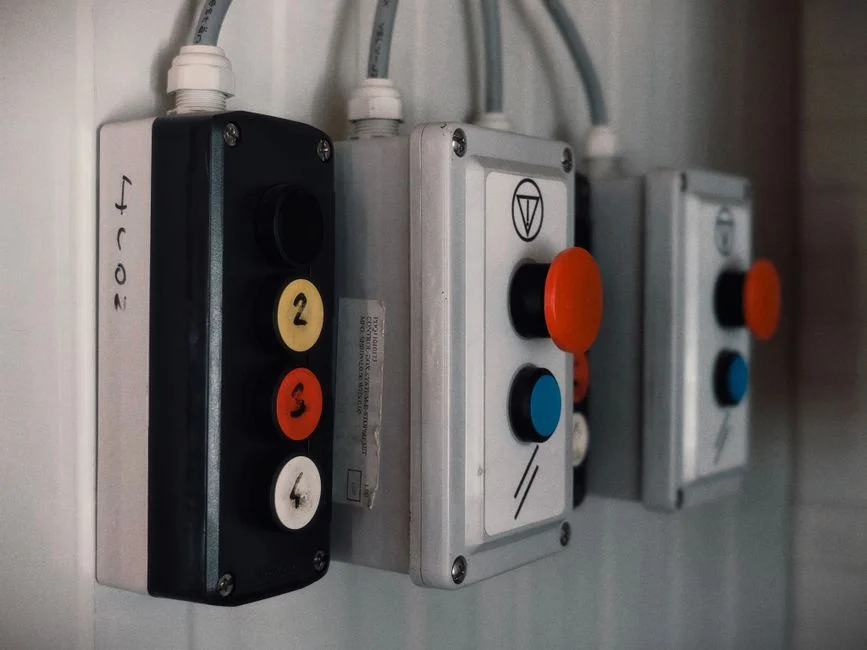
Reading a vendor P&ID is easier when you know the four stages every packaged MBR has, in order. A typical Hamburg hotel skid runs: coarse screening → biological treatment → submerged membrane filtration → disinfection, with a sludge side-stream to a filter press or bagging station.
Stage 1 — coarse screening. A rotary mechanical bar screen for pre-treatment with 3–6 mm openings protects downstream pumps and membranes from rags, plastics, and fibrous debris. Without it, hair and lint from on-site laundry will accumulate on the membrane surface and accelerate fouling.
Stage 2 — biological treatment. An anoxic zone (denitrification) followed by an aerobic zone (BOD/COD oxidation through the activated-sludge microorganisms) reduces the organic load. MBR systems typically run at mixed liquor suspended solids (MLSS) of 8,000–12,000 mg/L, roughly double a conventional activated-sludge plant, which intensifies biological treatment in a smaller tank (Imemflo technology description, 2025).
Stage 3 — submerged membrane filtration. A DF series flat-sheet PVDF MBR module with 0.1 μm nominal pore provides the solid–liquid separation. Continuous coarse-bubble aeration scours the membrane surface to control fouling — 10–20× lower energy than pumped cross-flow systems because there is no recirculation loop. Permeate is drawn through the membrane under slight vacuum by a permeate pump operating in intermittent cycles (8–10 minutes on, 1–2 minutes off).
Stage 4 — disinfection. A UV steriliser for effluent disinfection is the common German choice because it adds no chemicals and is effective against chlorine-resistant Cryptosporidium and Giardia. Where a residual is required in the reuse loop (e.g. toilet-flushing lines), chlorine dioxide is the alternative.
Waste activated sludge (WAS) is wasted from the aerobic tank to a plate-and-frame filter press for dewatering to ~20–25% dry solids, then bagged for off-site disposal by a licensed Hamburg hauler.
Meeting German Discharge Limits: What the Effluent Must Show
The compliance framework for a Hamburg hotel is the Bundes-Immissionsschutzgesetz-adjacent Abwasserverordnung (AbwV) for indirect discharge to the municipal sewer, with Hamburger Stadtentwässerung (HSE) enforcing local thresholds. For hotel effluent, the parameters a permitting authority will look at are BSB5 (BOD₅), CSB (COD), TSS, NH4-N, and — if the effluent is reused on site — E. coli and total coliforms.
A well-designed packaged MBR with 0.1 μm membranes routinely delivers BSB5 <25 mg/L, CSB <100 mg/L, TSS <1 mg/L, and NH4-N <10 mg/L — the practical target band that has been demonstrated on comparable hotel installs (sister Berlin packaged-MBR guide, 2026; Imemflo reference data, 2025). The 0.1 μm membrane provides a near-absolute barrier to bacteria and most viruses, which is what gets a packaged MBR past pathogen limits that conventional ASP cannot meet without tertiary treatment.
For deeper process detail, the MBR vs conventional activated sludge comparison is the engineering reference. The short version for a Hamburg spec: MBR outperforms conventional ASP on TSS by an order of magnitude, is comparable on BOD, and removes the clarifier from the footprint — which is why MBR is the default for inner-city hotel sites.
| Parameter | Typical indirect-discharge target (AbwV, hotel duty) | Packaged MBR effluent (0.1 μm PVDF) | Conventional ASP effluent |
|---|---|---|---|
| BSB5 (mg/L) | ≤ 25 | < 5–10 | 15–25 |
| CSB (mg/L) | ≤ 100–150 | < 50–75 | 80–120 |
| TSS (mg/L) | ≤ 30 | < 1 | 20–40 |
| NH4-N (mg/L) | ≤ 10 | < 5 | 10–20 |
Hollow-Fibre vs Flat-Sheet MBR Modules: Which Suits a Hotel
The single biggest technical decision inside a packaged MBR is the membrane format. Hollow-fibre (HF) and flat-sheet (FS) modules both deliver 0.1 μm nominal pore, but they behave very differently in hotel duty where the flow is variable, the FOG traces are unpredictable, and on-site laundry contributes lint and microfibres.
Hollow-fibre (HF). Higher packing density (m² of membrane per m³ of tank), lower capex per m², and the format of choice for large municipal MBRs. Suppliers named in published hotel MBR references include Suez, Dow, DuPont, and Mitsubishi (Imemflo supplier list, 2025). The downside in hotel duty: HF is more sensitive to fouling by hair, lint, and grease — a single fouled fibre bundle can depress the whole module's performance, and cleaning in place is harder because the fibres are potted in the manifold.
Flat-sheet (FS). Mechanically tougher, easier to clean in place, and individually replaceable elements — if one panel fouls, it can be pulled and swapped without taking the cassette out of service. The DF series flat-sheet PVDF module offered for hotel duty delivers 80–225 m² per stack and 32–135 m³/d per stack with 10–20× lower energy than external cross-flow systems (HydropureWater DF series datasheet, 2026). The trade-off is a slightly larger membrane tank footprint and marginally higher capex per m².
| Criterion | Hollow-fibre (HF) | Flat-sheet (FS) |
|---|---|---|
| Footprint (packing density) | Higher (more m² per m³ tank) | Moderate |
| Capex per m² membrane | Lower | Moderate |
| Fouling tolerance (FOG, lint, hair) | Lower | Higher |
| Clean-in-place difficulty | Harder (potted fibre bundles) | Easier (individual panels) |
| Element-level replacement | Module-level only | Yes — individual panels |
| Energy demand | Low (submerged aeration scour) | Low (10–20× lower than cross-flow) |
| Best fit for hotel duty | Only if footprint is binding constraint and pre-screen is robust | Default for variable hotel flows |
Decision rule for a Hamburg hotel: default to flat-sheet PVDF unless the plant room is so tight that only HF packing density will fit, in which case fit a 2 mm rotary pre-screen and accept tighter operator oversight.
Procurement and Logistics: Container to Hamburg Port
Sea transit from an Asian manufacturer to Hamburg Port typically runs several weeks depending on the route and customs clearance, with 2–4 additional weeks for Hamburg port handling, customs release, and inland road transport to the hotel site (Optima Water Solutions export note, 2025). For a Hamburg hotel on a tight pre-opening schedule, that timeline is a hard constraint — order the MBR at the same time the building permit is filed, not after.
Two contractual points that protect the project schedule. First, require a Factory Acceptance Test (FAT) before the container is sealed: the vendor runs the MBR on clean water, confirms membrane integrity with a bubble-point or pressure-hold test, and provides a signed FAT report. Second, ship a 1–2 year consumables kit with the unit — membrane cleaning chemicals (typically sodium hypochlorite and citric acid), UV lamps, seal kits, and one set of spare membrane elements plus valves and fittings — to avoid the 6–8 week air-freight wait when the first cleaning cycle is due.
Commissioning for a containerised packaged MBR is normally supported remotely with detailed guidance from the vendor's engineering team; on-site engineer visits are arranged for larger modular systems or where the client lacks in-house wastewater operators (Optima Water Solutions export note, 2025). For a Hamburg hotel, plan a 3–5 day on-site commissioning window after the container is placed, with the vendor's commissioning engineer present for at least the first 48 hours.
Vendor Selection Checklist for a Hamburg Hotel Project
A short, defensible checklist for the procurement meeting:
- Compliance evidence. ISO 9001:2015 certification, documented effluent test data against AbwV parameters (BSB5, CSB, TSS, NH4-N) from a comparable hotel install, and CE marking for the skid as a whole, not just individual components.
- Process guarantee. Stated effluent quality with margin, membrane replacement interval (typically 5–8 years for PVDF flat-sheet in hotel duty), and a written hydraulic capacity guarantee at the design peak factor.
- Footprint and noise. Confirm the packaged MBR fits the plant room or basement on the architect's plan, including access for membrane extraction. Check blower noise (typically 75–82 dB(A) at 1 m) for any above-grade install within 15 m of guest rooms.
- Service network. Confirm a commissioning engineer for Germany and a European spares route — an 8-week air-freight wait on a membrane replacement is not acceptable.
- Total lifecycle cost. Include membrane replacement, energy (blowers + permeate pumps, typically 0.4–0.8 kWh/m³ for hotel duty), cleaning chemicals, and sludge disposal — not just the purchase price of the packaged MBR wastewater treatment system.
Frequently Asked Questions
What is the typical design flow for a packaged MBR STP in a 200-room Hamburg hotel?
Approximately 200–250 m³/d at 70% occupancy, with a 1.3× peak factor applied for morning and evening demand swings. Full-service 4- and 5-star hotels sit at the upper end of that range; limited-service 3-star hotels sit at the lower end. A 200-bed 5-star reference install runs 250 m³/d (Imemflo hotel reference, 2025).
Does a packaged MBR meet German BSB5 limits for indirect discharge?
Yes. A properly designed packaged MBR with 0.1 μm PVDF membranes routinely achieves BSB5 <25 mg/L, comfortably under typical AbwV indirect-discharge thresholds, alongside CSB <100 mg/L and TSS near zero (sister Berlin packaged-MBR guide, 2026).
How long does it take to ship a containerised MBR STP from Asia to Hamburg?
Several weeks of sea transit plus customs clearance at Hamburg Port, then typically 3–5 days to commission on site after the container is placed. Plan the order at the same time the building permit is filed, not after, to protect the pre-opening schedule (Optima Water Solutions export note, 2025).
Hollow-fibre or flat-sheet MBR for a hotel?
Flat-sheet PVDF is the lower-fouling and easier-to-maintain choice for variable hotel flows with FOG and laundry lint; hollow-fibre is the choice only if footprint is the binding constraint and a robust 2 mm pre-screen is fitted upstream.
Can packaged MBR effluent be reused for toilet flushing or landscape irrigation?
Yes. With UV or chlorine dioxide disinfection, the effluent meets typical non-potable reuse criteria for toilet flushing and landscape irrigation. Confirm the specific reuse scope with Hamburger Stadtentwässerung before designing the reuse distribution loop, as local requirements apply.