Why a Frankfurt Hotel Needs a Packaged MBR, Not a Conventional STP
A packaged MBR STP for a Frankfurt hotel should be sized to a peak flow of roughly 0.6–0.8 m³ per occupied room per day, use a submerged PVDF membrane (0.1–0.4 μm) for an effluent below 30 mg/L COD, and meet the German Abwasserverordnung (AbwV) and EU Directive 91/271/EEC discharge limits. The reason it has to be a membrane bioreactor rather than a conventional activated-sludge plant (ASP) with a secondary clarifier is site pressure: most inner-Frankfurt hotel plots sit within a few hundred metres of the Main, with footprints already absorbed by the building envelope, basement plantrooms and a narrow yard for deliveries. A conventional ASP plus settling tank plus tertiary filter typically needs 0.4–0.5 m² of plant footprint per m³/day of design flow; a packaged MBR with a submerged membrane cassette replacing the clarifier and most of the tertiary stage runs at roughly 0.15–0.2 m² per m³/day — about 60% smaller (S2).
The MBR also clears the discharge envelope that a Frankfurt Genehmigungsbehörde will impose under the AbwV and the indirect-discharge clause of the Wasserhaushaltsgesetz (WHG). MBR permeate typically shows 90–95% removal of harmful substances, with COD reliably below 30 mg/L and TSS below 5 mg/L on a 24-h composite (S1, S2). That envelope is what allows a hotel operator to reuse treated water for toilet flushing, landscape irrigation, and in some cases laundry, without a separate polishing stage. A sequencing batch reactor (SBR) can technically meet similar effluent numbers, but only with longer hydraulic residence time and a larger equalisation volume — which is exactly the footprint a dense Frankfurt site does not have. MBBR sits between the two but cannot reliably hit the <30 mg/L COD band required for non-potable reuse without downstream UF, which puts the MBR one skid ahead on both area and effluent quality.
German and EU Compliance Targets a Hotel STP Must Hit
EU Directive 91/271/EEC sets the baseline for urban wastewater treatment at BOD ≤25 mg/L, COD ≤125 mg/L and TSS ≤35 mg/L for discharges from agglomerations above 10,000 PE, and German Länder impose tighter local limits on top of that envelope. For an indirect-discharge permit in Frankfurt-am-Main, the working number most consultants see in Genehmigungsbehörde correspondence is COD 50–100 mg/L at the discharge manhole, with NH₄-N targets between 5 and 10 mg/L depending on the receiving combined-sewer status. A packaged MBR with a submerged PVDF membrane easily undercuts all of these: documented MBR effluent ranges from hotel and greywater pilots are COD 15–30 mg/L, BOD₅ <5 mg/L, TSS <5 mg/L, NH₄-N <1 mg/L, total nitrogen 5–15 mg/L, total phosphorus 0.5–2 mg/L and E. coli below 10 CFU/100 mL (S1, S2).
Two hotel-specific risks need to be managed upstream of the membrane rather than relying on the membrane to absorb them. The first is fats, oils and grease (FOG) and surfactant load from kitchen and laundry discharge — these will blind a 0.1–0.4 μm membrane within days if not removed, so a coarse screen and a grease trap are mandatory before the equalisation tank. The second is disinfectant and chlorine spike load from housekeeping wet-wipe and floor-cleaning routines, which collapses nitrification biology. Both call for a properly sized equalisation/anoxic tank with at least 8–12 hours of hydraulic retention at average flow; without it, the membrane operates on a feast-famine cycle and the operating transmembrane pressure (TMP) climbs prematurely. For reuse polishing where the receiving authority insists, a UV sterilizer for reuse polishing is the standard downstream add-on.
| Parameter | EU 91/271/EEC limit | Typical Frankfurt indirect-discharge limit | MBR effluent (24-h composite) |
|---|---|---|---|
| COD | ≤125 mg/L | 50–100 mg/L | 15–30 mg/L |
| BOD₅ | ≤25 mg/L | ≤20 mg/L | <5 mg/L |
| TSS | ≤35 mg/L | ≤30 mg/L | <5 mg/L |
| NH₄-N | — | 5–10 mg/L | <1 mg/L |
| Total N | — | 15–25 mg/L | 5–15 mg/L |
| Total P | — | 1–2 mg/L | 0.5–2 mg/L |
| E. coli | — | ≤200 CFU/100 mL (reuse) | <10 CFU/100 mL |
Sizing a Packaged MBR STP from Room Count and Occupancy
Start the sizing from a loading rule of 0.6–0.8 m³ per occupied room per day, which is the conventional hotel-engineering figure of 150–200 L per guest for bathroom use plus staff, kitchen, laundry and back-of-house contributions. For a 200-bed 5-star property the S2 reference case documents 250 m³/day of treated flow, which sits inside that envelope. Apply a peak factor of 1.5–2.0× on top of the average to capture the morning bathroom surge (07:00–09:00), the weekend checkout spike, and the trade-fair demand that pushes a Frankfurt congress hotel toward 95% occupancy in a single week. The packaged MBR trains should be selected from the standard capacity steps most manufacturers hold in stock — 25, 50, 100, 200, 300 m³/day — and once the design peak clears ~150 m³/day the spec should call for a two-train modular layout so one train can stay online during CIP, membrane replacement or a sudden FOG upset.
The flow equalisation tank upstream of the membrane should be sized to roughly 25–35% of the daily average flow; for a 100 m³/day average hotel that is 25–35 m³, which doubles as the anoxic zone for denitrification. MLSS in the aeration tank should target 8,000–12,000 mg/L for an MBR (versus 2,500–4,000 mg/L in a conventional ASP), which is what allows the membrane to operate at a sustainable flux of 15–25 L/m²·h without excessive fouling. For a deeper dive on the flux, TMP and aeration-intensity assumptions, the MBR specifications and performance benchmarks reference document lays out the engineering data behind these numbers. A reference for the packaged skid itself is the packaged MBR membrane bioreactor system that the rest of this article assumes.
| Rooms (assumed 70% annual occupancy) | Average flow (m³/day) | Peak flow at 1.75× factor (m³/day) | Recommended packaged MBR layout |
|---|---|---|---|
| 80 | 35–45 | 60–80 | 1 × 50 m³/day train + EQ tank |
| 150 | 65–85 | 115–150 | 1 × 100 m³/day train + EQ tank |
| 200 | 85–110 | 150–195 | 2 × 100 m³/day trains (modular) |
| 300 | 130–170 | 225–300 | 2 × 150–200 m³/day trains (modular) |
| 400 | 170–225 | 300–390 | 2 × 200 m³/day trains (modular) |
Hollow-Fiber vs. Flat-Sheet MBR Membrane: Matching Membrane to Hotel Duty
The single most expensive decision in a packaged MBR spec is the membrane format, because the cassette alone is typically 30–45% of skid CAPEX and it dictates the air-scour blower sizing for the next decade. For Frankfurt hotel duty under ~200 m³/day, the hollow-fiber PVDF format — SUEZ, DuPont or Mitsubishi type — is the default: packing density runs to roughly 800–1,200 m² of membrane area per cubic metre of cassette, it tolerates the variable loading of a hotel occupancy curve without a TMP spike, and its air-scour pattern is forgiving of irregular sludge morphology. The trade-off is energy: hollow-fiber modules draw 0.25–0.35 kWh per m³ of permeate for membrane aeration alone, and the scour air sits in the bottom of the tank as coarse bubbles that must contact every fibre to keep it clean.
Above ~200 m³/day — or on sites where the operator's facilities team can manage periodic chemical cleaning and the engineer wants 10–20× lower cross-flow energy — flat-sheet PVDF (DF-series geometry, 0.1 μm pore size, integrated aeration box) is the better match. Flat-sheet cassettes deliver 32–135 m³/day per cassette in 80–225 m² sizes, and because the elements are individually replaceable, a single damaged sheet does not force a full cassette change-out. For comparison, a hollow-fiber cassette of similar daily capacity takes roughly half the cassette footprint, but the air-scour blower must be sized 20–40% larger to keep fibres mobile. For a hotel with stable staffing and a maintenance contract in place, the flat-sheet economics are usually favourable; for a hotel with a thin facilities team and fluctuating loading, hollow-fiber is the lower-risk choice. A reference geometry is the DF-series flat-sheet PVDF MBR module. When the membrane under-performs, the MBR membrane module troubleshooting field guide covers the seven fixes that recover TMP without a full CIP.
| Parameter | Hollow-fiber PVDF | Flat-sheet PVDF (DF-series) |
|---|---|---|
| Typical sweet-spot flow | Up to ~200 m³/day | Above ~200 m³/day |
| Packing density (m²/m³ cassette) | 800–1,200 | 400–600 |
| Cassette area range | 20–40 m² per element, stacks of 50–100 | 80–225 m² per cassette |
| Per-cassette daily capacity | 15–30 m³/day | 32–135 m³/day |
| Membrane aeration energy | 0.25–0.35 kWh/m³ permeate | 0.10–0.20 kWh/m³ permeate |
| Air-scour pattern | Coarse bubble, full-tank contact | Integrated aeration box, directed flow |
| Element replacement | Whole cassette typically | Individual sheets replaceable |
| Operator skill required | Lower (forgiving on TMP swings) | Higher (chemical CIP scheduling) |
| Hotel duty fit | Variable loading, 80–200 rooms | Stable loading, 200+ rooms |
What the Packaged Skid Should Include Before It Leaves the Factory
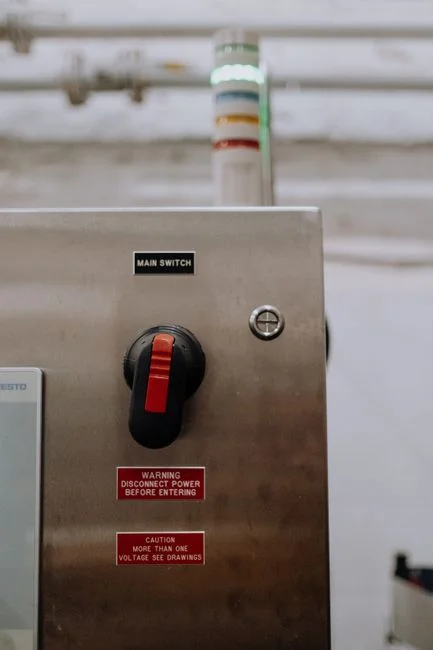
For a hotel duty cycle, the skid boundary must include the items that keep the membrane alive and the PLC simple enough for a facilities team to operate, not the items that belong in a municipal plant. Inside the factory-tested envelope the engineer should see: an inlet rotary mechanical bar screen at 3–5 mm aperture to protect the membrane from laundry fibre and kitchen solids; a flow-equalisation and anoxic tank sized to 25–35% of daily flow; the aerobic MBR tank with submerged PVDF membrane modules; a permeate pump with a VFD to hold flux constant as TMP rises; an air-scour blower with a smart air-scour controller that drops blower duty during low-flux overnight periods; a PLC panel with remote telemetry; and an automatic chemical dosing system for CIP (typically NaOCl for organic fouling and citric acid for inorganic scaling).
The smart air-scour control is the single most defensible energy-savings claim a supplier can put in front of a Frankfurt procurement team: a well-tuned controller delivers 35.2% average aeration energy savings against the manufacturer's default duty cycle (S1), and on a 30 m³/day reuse skid that pays back the controller cost inside three years. Below 30 m³/day the savings are smaller in absolute terms; above 200 m³/day the energy bill is large enough that the smart controller is essentially mandatory. Three items should explicitly remain outside the skid: sludge dewatering (a separate volute or screw press on a different footprint), UV or ClO₂ polishing for reuse (a downstream skid sized to reuse flow, not sewage flow), and any rainwater integration (separate tank and treatment train). Pulling these into the main skid inflates the cost and complicates the factory acceptance test.
CAPEX and OPEX: A Worked Example for a 150-Room Frankfurt Hotel
Worked example: 150 rooms at 70% long-stay occupancy ≈ 105 occupied rooms, which on the 0.6–0.8 m³/room/day rule gives an average flow of 65–85 m³/day, rounded to 100 m³/day for standard skid sizing. Apply the 1.75× peak factor and the design peak lands at 175 m³/day, which is above the single-train 150 m³/day threshold, so the spec calls for two MBR trains of 100 m³/day each operating in parallel with one train able to carry the full average load during maintenance. For a packaged MBR in this size class, CAPEX lands in the mid-five-figure to low-six-figure EUR range per train, with civil works (EQ tank, interconnecting pipework, electrical supply, building ventilation) adding a comparable order of magnitude. The exact figure depends on the membrane format (flat-sheet carries a 10–20% premium over hollow-fiber in 2026), stainless-vs-mild steel frame, and whether the PLC panel is bare or SCADA-integrated — which is why this article gives an order-of-magnitude band rather than a single number.
OPEX for a packaged MBR with smart aeration lands at 0.35–0.55 EUR/m³ of treated flow, dominated by blower power and membrane replacement amortised over an 8–10 year membrane life. The energy component alone is typically 0.15–0.25 EUR/m³ at current German industrial electricity tariffs, and chemical CIP consumption (NaOCl and citric acid) adds 0.03–0.06 EUR/m³. At 100 m³/day and 330 operating days per year, that is ~11,000–19,000 EUR/year in operating cost. The reuse economics come from displacing fresh water at Frankfurt tariffs, which typically run 4–6 EUR/m³ for commercial hotel accounts: at 100 m³/day of reuse for toilet flushing and landscape irrigation, the avoided water cost is in the order of 130,000–200,000 EUR/year, which recovers the packaged MBR CAPEX in 4–6 years and is consistent with the 3-year payback documented for 30 m³/day greywater reuse in the S1 hotel pilot. A comparable benchmark for a tropical hotel duty is the Medellín hotel MBR buyer's guide, which applies the same sizing logic to a different climate envelope.
| Cost line | Band (EUR) | Basis / driver |
|---|---|---|
| Packaged MBR skid CAPEX, 2 × 100 m³/day trains | Low six-figure per train | Membrane format, frame material, PLC scope |
| Civil works (EQ tank, pipework, MCC) | Comparable order of magnitude | Site conditions, basement vs. yard |
| Annual energy (smart aeration) | 0.15–0.25 EUR/m³ | 2026 German industrial tariff, 35% smart-savings |
| Annual chemical CIP | 0.03–0.06 EUR/m³ | NaOCl + citric acid, 8–10 year membrane life |
| Annual membrane replacement (amortised) | 0.05–0.10 EUR/m³ | PVDF cassette, 8–10 year life |
| Total OPEX band | 0.35–0.55 EUR/m³ | Sum of above, plus labour and spares |
| Fresh-water cost avoided (reuse) | 4–6 EUR/m³ | Frankfurt commercial hotel tariff |
| CAPEX payback on reuse | 4–6 years | 100 m³/day reuse, toilet + irrigation |
Frequently Asked Questions
What is the typical effluent COD from a packaged hotel MBR?
Below 30 mg/L on a 24-h composite, well under the AbwV and EU 91/271/EEC envelope. MBR pilots on hotel greywater report COD 15–30 mg/L with BOD₅ below 5 mg/L and TSS below 5 mg/L, which is the band a Frankfurt Genehmigungsbehörde will accept for indirect discharge to the combined sewer.
How do I size a packaged MBR for a 200-room Frankfurt hotel?
Plan 0.6–0.8 m³ per occupied room per day at average loading and apply a 1.5–2.0× peak factor. For 200 rooms at 70% occupancy that gives an average of 85–110 m³/day and a peak of 150–195 m³/day, which points to a two-train modular layout with each train sized at 100 m³/day so one can carry the average load during maintenance.
Hollow-fiber or flat-sheet membrane for a hotel MBR?
Hollow-fiber for variable hotel duty up to ~200 m³/day, where its tolerance for loading swings and simpler air-scour pattern outweigh the higher aeration energy. Flat-sheet for larger plants above ~200 m³/day or where the operator can manage periodic chemical cleaning and the engineer wants lower cross-flow energy and individually replaceable elements.
Can the treated water be reused for laundry or toilet flushing?
Yes — at <30 mg/L COD and 90–95% pathogen reduction, MBR permeate meets typical non-potable reuse targets. Add UV or ClO₂ polishing where the local authority or hotel operator requires an extra barrier, particularly for guest-facing reuse applications such as laundry rinse water.
How long does a packaged MBR take to install in a hotel basement?
Typically 2–4 weeks for the skid and pipework once civil works (EQ tank, MCC, floor penetrations) are complete, because the unit is factory-tested for hydraulics and PLC logic before delivery. Commissioning and biological seeding add another 2–4 weeks before the system meets discharge parameters on a 24-h composite basis.