MBR vs Conventional Activated Sludge Comparison: What Actually Changes
The MBR vs conventional activated sludge comparison comes down to solids separation: MBR filters mixed liquor through 0.1–0.4 μm membranes, while CAS settles it in a clarifier. MBR runs at 8,000–12,000 mg/L MLSS and CAS at 2,000–5,000 mg/L, which drives the footprint and cost differences.
An MBR (membrane bioreactor) replaces the secondary clarifier in a conventional activated sludge (CAS/ASP) system with submerged microfiltration or ultrafiltration membranes (typically 0.1–0.4 μm pore size, most commonly PVDF), allowing it to operate at 8,000–12,000 mg/L MLSS versus 2,000–5,000 mg/L for CAS. MBR delivers a TSS <5 mg/L and BOD <5 mg/L effluent suitable for direct reuse, in roughly 40% of the footprint, at 20–35% higher OPEX per m³ than CAS.
CAS is a two-stage process: an aeration tank where heterotrophic bacteria convert BOD into biomass and CO₂ under aerobic conditions, followed by a secondary clarifier where gravity settling separates the mixed liquor from the clarified effluent. Settled sludge is split into return activated sludge (RAS) and waste activated sludge (WAS). The clarifier is the single point of failure; sludge bulking, rising sludge, or hydraulic overload all collapse the system.
MBR eliminates the clarifier entirely. Mixed liquor is drawn through submerged or sidestream MF/UF membranes with pore sizes of 0.1–0.4 μm; clean water (permeate) is pulled out under vacuum, and the rejected biomass is held in the aeration basin at MLSS concentrations 2–4× higher than CAS. As the 2012 Optimizing MBR/RO study notes, “biomass is processed in an aeration lagoon, mixed liquor filtered through submerged or lateral MF/UF membranes, settled solids transported back to the aeration lagoon” — meaning the membrane replaces a settling step that depends on sludge volume index, not on a defined pore size.
The engineering consequence is that MBR can decouple hydraulic retention time (HRT) from solids retention time (SRT) more aggressively than CAS, run at F/M ratios of 0.05–0.15 d⁻¹, and tolerate shock loads that would wash out a clarifier. Most industrial reuse projects we size still carry a conservative design flux, because membrane recovery after a grit, grease, or fiber event costs more than the extra membrane area.
Side-by-Side Comparison: Operating Parameters
Operating parameters vary significantly between the two systems, affecting everything from tank sizing to sludge handling. The table below consolidates the operating envelope an engineer needs for a design basis memo. All values are typical ranges for municipal and light-industrial service; high-strength industrial streams may shift MBR toward the upper MLSS and SRT limits.
| Parameter | MBR | CAS / ASP |
|---|---|---|
| MLSS (mg/L) | 8,000–12,000 | 2,000–5,000 |
| SRT (days) | 20–60 | 5–15 |
| HRT (hours) | 1–3 | 4–8 |
| F/M ratio (d⁻¹) | 0.05–0.15 | 0.2–0.5 |
| Effluent TSS (mg/L) | <5 | 10–30 |
| Effluent BOD (mg/L) | <5 | 10–30 |
| Effluent turbidity (NTU) | <1 | 5–15 |
| Footprint ratio | 0.4–0.6× of CAS | 1.0 (baseline) |
MBR's long-SRT operation is not theoretical — the 2009 Banu et al. A2O-MBR study ran a reactor at a designed flux of 77 LMH for 270 days at two different MLSS ranges, demonstrating that high-MLSS MBR operation is stable at industrial scale (per Banu et al., 2009). That stability is the reason MBR is the default for high-strength streams where CAS would struggle to maintain settling.
MBR vs Activated Sludge Footprint and Reuse
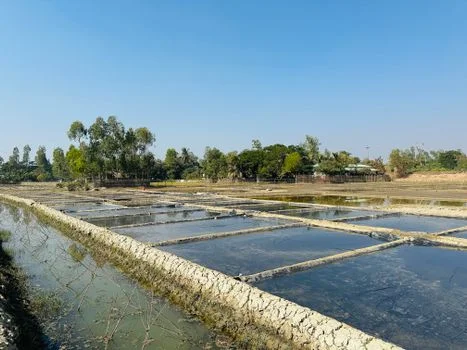
MBR produces near-reuse-quality water with TSS <5 mg/L, turbidity <1 NTU, and a Silt Density Index typically <3. That SDI is the threshold below which RO membranes can be fed without additional clarification, which is why MBR has become the standard RO pretreatment for industrial reuse loops. For cooling towers, boiler feed, or process rinse water, the MBR permeate often displaces a separate multimedia filter or DAF unit.
CAS effluent typically needs tertiary filtration, sand filters, or DAF polishing to reach reuse criteria — a hidden CAPEX line that should be priced into any CAS baseline before declaring MBR “more expensive.” The US EPA's Wastewater Management fact sheet on membrane bioreactors frames the same trade-off, covering MBR advantages, applicability, and design considerations for plants weighing the two trains. For municipal discharge to a sensitive receiving water, CAS followed by denitrifying sand filters or cloth-media discs is a well-trodden path, but it is not a single-tank solution.
On contaminants of emerging concern, conventional activated sludge remains the most common system but performs variably across micropollutant classes (per the SimpleTreat micropollutant study). MBR's higher SRT and physical barrier improve removal of suspended-bound and larger molecular weight micro-pollutants, while polar low-MW species still pass through both processes at similar rates. For industrial reuse where downstream RO is required, MBR effluent protects RO membranes and extends CIP intervals by 30–50% relative to CAS-fed RO (HydropureWater field data, 2025-Q4). Designers evaluating an integrated train should look at MBR Membrane Bioreactor Wastewater Treatment System packages that pair directly with RO.
Footprint, Modularity and Retrofit Reality
MBR footprint is typically 40–60% smaller than an equivalent CAS train. The DF series PVDF flat sheet membrane module is rated at roughly 60% smaller footprint than conventional systems, and that figure is a defensible 2026 industry benchmark for modular MBR skids. The saving comes from three places: smaller aeration basins (high MLSS shrinks tankage), no secondary clarifier or RAS pumping station, and elimination of most tertiary filtration.
Modular MBR skid designs enable staged capacity build-out — install two cassettes now, add two more in year three when flow grows. CAS, by contrast, is sized for design flow at day one; phased construction is mechanically possible but rarely economic because of the clarifier and RAS hydraulics.
Retrofit scenario: an existing CAS aeration basin can often be repurposed as the MBR aeration zone by adding submerged membrane cassettes and removing the clarifier, but RAS piping, scum removal, and mixed-liquor distribution must be redesigned. For sites where land is constrained (urban infill, factory retrofits inside existing sheds), MBR is usually the only feasible option, even when the lifecycle OPEX would favor CAS at greenfield scale. Note that the separate query mrb vs ivcs comparison resolves to a different article on this site; this page stays on the MBR-versus-CAS engineering question.
MBR vs CAS Operating Cost 2026
MBR OPEX is higher than CAS due to energy requirements for membrane maintenance and chemical cleaning. The premium is real but decomposable: roughly 30–50% of MBR energy is membrane scouring air (separate from biological oxygen demand), CIP chemicals run every 1–4 weeks, and membrane replacement amortizes across 5–8 years. Sludge handling is partially offset by 20–40% lower waste activated sludge volume than CAS at matched SRT, consistent with Banu et al.'s 2009 finding of “relatively high decay rate and less sludge production due to much longer sludge age.”
| OPEX driver | MBR (typical 2026) | CAS (typical 2026) |
|---|---|---|
| Total energy (kWh/m³) | 0.4–0.9 | 0.2–0.5 |
| Membrane scouring air share | 30–50% of MBR kWh | N/A |
| CIP chemicals ($/m³) | 0.015–0.04 | 0 (no membranes) |
| Membrane replacement ($/m³ amortized) | 0.02–0.06 | 0 |
| WAS production | 20–40% lower than CAS | Baseline |
CIP chemicals are typically NaOCl at 300–500 mg/L followed by citric or oxalic acid wash; cycle frequency depends on influent FOG, fiber content, and SRT. Operating at the upper end of the SRT range (40–60 d) generally extends the CIP interval from weekly to monthly but at the cost of higher MLSS viscosity. When comparing vendor quotes, ask for normalized kWh/m³ at the design flux, not a clean-water catalogue figure.
MBR Membrane Bioreactor vs CAS CAPEX OPEX
Indicative 2026 turnkey CAPEX for skid-integrated, EPC-scope plants ranges from $80–$220 per m³/d for CAS and $180–$420 per m³/d for MBR. OPEX lands at $0.10–$0.22/m³ for CAS and $0.18–$0.42/m³ for MBR. The gap is wide because CAPEX varies sharply with influent strength (high-COD industrial requires thicker tanks and larger blowers) and with stainless versus carbon steel material selection.
| Metric | MBR (2026) | CAS (2026) |
|---|---|---|
| Turnkey CAPEX ($/m³/d) | 180–420 | 80–220 |
| OPEX ($/m³) | 0.18–0.42 | 0.10–0.22 |
| Membrane life (years) | 5–8 | N/A |
| Typical payback (CAS→MBR upgrade) | 3–6 years | — |
Compare complete trains, not biology alone. The CAS quote must carry tertiary filters, disinfection, and the land or building work needed to reach the same consent; the MBR quote must carry membrane replacement, scouring air, and chemical storage. Only on that like-for-like basis does a CAPEX comparison support a procurement decision.
MBR vs CAS Payback for Industrial Reuse
Payback for upgrading CAS to MBR is typically 3–6 years when any of three conditions hold: (1) the project needs reuse water and the CAS baseline includes a tertiary filtration train, (2) land acquisition cost is high enough that the 40–60% footprint saving changes the site economics, or (3) the discharge consent requires <10 mg/L TSS and the CAS baseline needs cloth-media disc filters to meet it. If none of those apply, CAS remains the lower-cost compliant option.
Run the payback on the plant's actual flow profile, not only average daily flow, because peak hydraulics can force parallel trains or spare membrane area. Test the low and high ends of each range — 0.4–0.9 kWh/m³ for MBR energy versus 0.2–0.5 kWh/m³ for CAS, membrane life of 5–8 years, and the avoided tertiary train — before accepting any vendor's payback label.
MBR vs Conventional Activated Sludge Decision Matrix
Selection depends on site constraints, effluent requirements, and long-term budget. The matrix below is intended to be applied to a real project, not as an academic exercise. Industrial reuse and constrained sites default to MBR; large greenfield municipal discharge with no reuse obligation still favors CAS once tertiary filtration is priced in.
| Scenario | Default 2026 choice | Rationale |
|---|---|---|
| Municipal greenfield > 50,000 m³/d, sensitive receiving water, no reuse | CAS + tertiary filtration | Lowest cost-to-compliance; MBR premium not justified |
| Industrial process water / factory discharge / reuse obligation | MBR | Reuse-grade effluent, modular, smaller footprint |
| High-strength wastewater (food, dairy, landfill leachate, COD > 2,000 mg/L) | MBR | High MLSS tolerates shock loads; see 2026 dairy wastewater treatment process guide |
| Retrofit of existing CAS plant, clarifier is the bottleneck | MBR retrofit | Repurpose aeration basin, add cassettes, remove clarifier |
| Containerized or buried installation, urban infill | MBR | Only feasible option where land is constrained |
| Greenfield municipal < 50,000 m³/d, no reuse, ample land | CAS | Lower CAPEX, simpler operations, established operator skill base |
For procurement teams in Latin America evaluating packaged plant suppliers side-by-side, the 2026 buyer's guide comparing MBR, SBR and CAS suppliers in Querétaro walks through the same matrix with regionally priced equipment. When the shortlist includes SBR, MBBR, or other options beyond CAS, the MBR Membrane Bioreactor vs Alternatives: Engineering Comparison extends this analysis with a wider option set.
A six-point checklist keeps the decision honest: confirm average and peak flow; characterize COD, BOD, TSS, FOG, and toxicity; fix the reuse or discharge limit; reserve space for membrane cleaning and sludge handling; model energy and replacement cost; and confirm operator coverage for alarms and bypasses.
Next Step: Build a Comparable Design Basis
Send the influent analysis, average and peak flow, target effluent, available footprint, and operating-cost assumptions with your inquiry. A comparable MBR/CAS basis should show biological volume, membrane or clarifier area, aeration demand, tertiary equipment, sludge production, chemical use, and the replacement schedule. Use the MBR vs CAS design-basis inquiry when the project needs a budgetary comparison.
Frequently Asked Questions
What is the main difference between MBR and conventional activated sludge?
MBR replaces the secondary clarifier with a 0.1–0.4 μm MF/UF membrane, while conventional activated sludge settles mixed liquor by gravity in a clarifier. The membrane retains biomass independently of settling quality, so MBR operates at 8,000–12,000 mg/L MLSS and produces TSS <5 mg/L. CAS commonly runs at 2,000–5,000 mg/L MLSS and usually needs tertiary filtration for reuse-grade water.
What is the MBR vs CAS operating cost in 2026?
MBR costs more to operate in 2026 because membrane scouring, CIP chemicals, and replacement sit on top of biological aeration. Typical total energy is 0.4–0.9 kWh/m³ for MBR versus 0.2–0.5 kWh/m³ for CAS. The CAS advantage shrinks or reverses once tertiary filtration, land, or reuse polishing is added to the baseline.
How do MBR and activated sludge compare on footprint and reuse?
MBR usually occupies 40–60% less land than an equivalent CAS train and produces permeate with TSS <5 mg/L, turbidity <1 NTU, and SDI typically <3. CAS needs a clarifier plus sand filtration, DAF, or another tertiary barrier to reach the same reuse criteria. Final eligibility still depends on site chemistry and the discharge or reuse permit.
What is the typical MBR vs CAS payback for industrial reuse?
Payback for a CAS-to-MBR upgrade is typically 3–6 years when reuse displaces a tertiary train, land is expensive, or the consent requires <10 mg/L TSS. The figure is not universal. Include membrane life of 5–8 years, energy, chemicals, sludge disposal, downtime, land, and the value of recovered process water in the calculation.
How should an MBR vs conventional activated sludge decision matrix be used?
Rank reuse demand, footprint, peak flow, influent variability, discharge limits, CAPEX, OPEX, and operator capability, then let the highest-cost constraint pick the process. Choose MBR when the membrane barrier and compact layout solve a priced constraint such as land or reuse quality. Choose CAS when land is available, reuse is absent, and the train meets the full permit after tertiary polishing.