What 'Sewage Treatment Plant Supplier' Actually Means in Querétaro
A sewage treatment plant supplier in Querétaro, Mexico typically delivers containerized MBR, SBR, or A/O package systems sized 10–2,000 m³/day, factory-tested before shipment, and compliant with NOM-001-SEMARNAT-2021 (TSS <30 mg/L, BOD5 <30 mg/L). For 2026, expect landed CAPEX of MXN 2.5M–MXN 45M for industrial-scale units, with 8–14 week lead times from Asian and Mexican fab shops.
In Mexico, the word supplier covers three distinct entities, and confusing them is the single most common cause of warranty disputes and commissioning overruns. A local integrador is an engineering firm — usually 10–40 people based in Querétaro, Estado de México, or Monterrey — that imports skids from China or Korea, assembles them in a local workshop, and handles the civil and electrical scope. They carry the lowest equipment margin but the highest commissioning accountability, and roughly 80% of Mexican RFQs are fulfilled by this layer. A fabricante nacional builds tanks, blowers, and control panels domestically; their stainless and FRP fabrication quality is solid, but process design is often licensed from a foreign OEM. An exportador asiático (China, India, Korea) sells CIF or FOB directly and rarely commissions in Mexico unless they have a local rep — that is where the 14-week lead time and the 100% upfront payment terms come from.
Querétaro anchors the Bajío manufacturing corridor, with more than 300 tier-1 and tier-2 automotive and aerospace plants concentrated in El Marqués, San Juan del Río, and Apaseo el Alto, plus a heavy food and beverage cluster around Irapuato and Celaya. That industrial density is why the state commission CEA Querétaro, the local water utility, has tightened discharge inspections since 2023. The typical buyer in this market is a private industrial plant, a real-estate developer building a residential master plan, or a municipal operator working with CEA on a public-private concession — and each of those buyers needs to verify that the supplier on the other side of the table is actually the entity that will sign the performance bond.
NOM-001-SEMARNAT-2021 Discharge Limits You Must Hit
NOM-001-SEMARNAT-2021 sets monthly average TSS and BOD5 limits of 30 mg/L each for discharges to waterbodies and municipal sewers, with instantaneous maxima of 60 mg/L — thresholds that effectively eliminate conventional activated sludge without tertiary polishing as a 2026 compliance option for Bajío industrial flows.
The 2021 standard replaced NOM-001-1996 and tightened nearly every parameter that matters for an RFQ. For surface-water discharge (ríos, embalses), monthly average BOD5 and TSS are both 30 mg/L; instantaneous samples may not exceed 60 mg/L. For municipal sewer discharge, fats and oils are capped at 15 mg/L monthly average, and total nitrogen limits apply above 5,000 population-equivalents. For industrial discharges routed to a municipal collector, NOM-002-SEMARNAT-2021 imposes additional metal and COD ceilings negotiated with the receiving POTW. Since 2024, SEMARNAT also requires chronic toxicity testing using Vibrio fischeri (ISO 11348-3) for any discharge exceeding 5 L/s in Querétaro and Guanajuato — a step that adds 8–12 weeks of lab work to a CONAGUA permit and rules out suppliers who cannot produce ecotoxicology data.
Compliance is measured as a monthly composite versus instantaneous grab; a single excursion can trigger a sanción, so suppliers quoting older NOM-001-1996 numbers (TSS 40–60 mg/L, BOD5 50 mg/L) should be treated as non-conforming. In practice, only MBR, SBR followed by sand/UF polishing, or A/O with tertiary filtration can consistently meet these limits without chemical precipitation — which is why the technology selection in the next section is inseparable from the compliance question.
| Parameter | Monthly average (mg/L) | Instantaneous max (mg/L) | Applies to |
|---|---|---|---|
| TSS (Total Suspended Solids) | 30 | 60 | All discharges to waterbody or municipal sewer |
| BOD5 | 30 | 60 | All discharges |
| Fats & oils | 15 | 25 | Food, dairy, meat, and FOG-bearing waste |
| Total nitrogen | 25–40 | — | Plants >5,000 PE discharging to sensitive waterbodies |
| Total phosphorus | 5–20 | — | Plants >5,000 PE, eutrophication-prone basins |
| Chronic toxicity (Vibrio fischeri) | — | Pass (TU < 1.0) | Discharges >5 L/s in QRO and GTO (since 2024) |
Technology Options: MBR vs SBR vs A/O vs MBBR
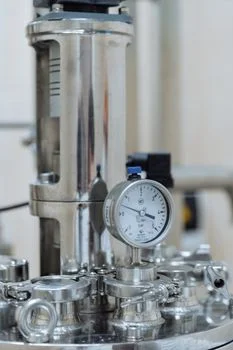
MBR is the 2026 default process train for 50–500 m³/day industrial flows in Querétaro because submerged PVDF membranes (<1 μm pore size) deliver a polished effluent in a single step and shrink the plant footprint by roughly 60% compared with conventional A/O — a critical advantage on the tight industrial sites that dominate the Bajío corridor.
For flows below 50 m³/day, the cheapest compliant option is typically a packaged SBR or a buried A/O unit like the WSZ A/O package plant, which can be delivered in a 20-ft or 40-ft container, buried flush with grade, and landscaped over. MBR is technically overkill at this scale unless the buyer needs reuse-quality water for cooling tower makeup or toilet flushing. For the 50–500 m³/day band — the workhorse of Querétaro's automotive and aerospace suppliers — an MBR membrane bioreactor system with hollow-fiber PVDF modules hits the NOM-001-2021 BOD/TSS numbers with comfortable margin and tolerates the hydraulic and organic shock loads common in tier-1 manufacturing. Reference module capacities in this range run 32–135 m³/day per skid, with WSZ A/O packages covering 1–80 m³/h for lower-strength streams. Above 500 m³/day, MBR remains the safest choice for high-FOG food and beverage loads, often paired with a dissolved-air flotation pre-stage; SBR alone starts to struggle when fats exceed 150 mg/L.
Influent tolerance is where suppliers cut corners. A properly designed MBR can absorb 200–8,000 mg/L COD and 50–2,000 mg/L FOG with the right pre-treatment; SBR and A/O packages have much narrower windows, and MBBR — moving-carrier media that retrofits into existing tanks — is the right answer when the buyer already owns an aeration basin and wants to upgrade capacity without civil work. The trade-off is always the same: tighter effluent and smaller footprint cost more in membranes, blowers, and controls.
| Process train | Flow sweet spot | Effluent BOD5/TSS | COD tolerance (mg/L) | Footprint vs. A/O | Best fit in Querétaro |
|---|---|---|---|---|---|
| SBR (batch fill/draw) | 10–500 m³/day | <20 / <20 mg/L with polishing | 200–4,000 | ~70% | Small commercial, low-FOG industrial |
| A/O (anoxic + aerobic) | 10–200 m³/day | <30 / <30 mg/L with clarifier | 150–1,200 | 100% (baseline) | Residential, light manufacturing |
| MBR (submerged PVDF) | 20–2,000 m³/day | <5 / <5 mg/L | 200–8,000 | ~40% | Industrial reuse, tight NOM-001 compliance, FOG-laden waste |
| MBBR (moving carriers) | 50–2,000 m³/day retrofit | <20 / <20 mg/L | 300–3,000 | ~60% | Upgrading existing activated sludge |
2026 CAPEX, OPEX, and Lead Time Ranges for Querétaro Buyers
For a fully installed, commissioned package STP in Querétaro in 2026, buyers should budget MXN 1.8M–3.5M for sub-50 m³/day flows, MXN 3.5M–12M for 50–200 m³/day, MXN 12M–28M for 200–500 m³/day, and MXN 28M–95M for 500–2,000 m³/day — a band that covers 90% of the industrial RFQs in the Bajío corridor.
OPEX lands at roughly 8–14% of CAPEX per year once you fold in energy (the blower and MBR permeate pump dominate), membrane replacement at the 5–7 year mark, chemicals for CIP and pH control, and a Mexican technician wage of about MXN 60–110/hr (US$3–6/hr). Civil works typically consume 35–50% of the total installed cost — tanks, pipe racks, MCC rooms, and the slab — and that line is where the integrator margin lives, not in the skids themselves. A 30-tonne crane in Querétaro rents for MXN 50,000–90,000/day (US$2,500–4,500), and a CONAGUA discharge permit still takes 60–90 calendar days even when the engineering file is clean.
Lead times depend entirely on whether the equipment is containerized in Asia or fabricated in Mexico. An Asian OEM quote runs 10–14 weeks ex-works plus 4–6 weeks sea freight to Manzanillo or Veracruz, 2–3 weeks inland to Querétaro, and 4–8 weeks for civil, installation, and commissioning — call it 22–30 weeks end-to-end. A Mexican fab on a WSZ or similar skid package runs 12–20 weeks end-to-end with shorter inland transit and faster warranty response. Cross-referencing the Illinois 2026 zero-risk CAPEX/OPEX breakdown and the Tampa 2026 industrial cost benchmark helps validate the upper and lower bounds, since logistics and steel pricing move together across North America.
| Flow range (m³/day) | CAPEX MXN (landed, 2026) | CAPEX USD equivalent | Typical OPEX (% CAPEX/yr) | Lead time (end-to-end) |
|---|---|---|---|---|
| <50 | 1.8M – 3.5M | US$100K – 180K | 10–14% | 14–20 weeks (MX fab) |
| 50–200 | 3.5M – 12M | US$180K – 600K | 9–13% | 18–24 weeks |
| 200–500 | 12M – 28M | US$600K – 1.4M | 8–12% | 22–28 weeks |
| 500–2,000 | 28M – 95M | US$1.4M – 5M | 8–11% | 24–34 weeks |
Supplier Shortlist: Who Actually Serves Querétaro in 2026
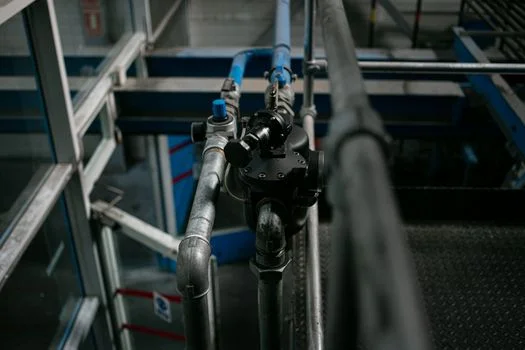
Three supplier categories compete for Querétaro STP work in 2026 — Chinese OEMs with a Mexican rep, national integrators headquartered in Estado de México or Monterrey, and EPC firms that sub-contract the equipment package — and the only reliable way to vet them is to demand NOM-001-2021 compliance documentation, three local references, and a written warranty package before pricing is discussed.
The Chinese OEM channel — represented by manufacturers with Mexican sales agents — offers the lowest equipment cost (typically 25–40% below Mexican fab on the skid itself) but pushes warranty risk and commissioning onto the local rep, who is often a two-to-five-person agency. The national integrator channel carries a higher equipment markup but provides single-point accountability for civil, electrical, and process performance; these are the firms most plant managers in El Marqués and San Juan del Río have on speed dial. The EPC channel (large constructors that sub-contract the STP) is the right answer for 1,000+ m³/day turnkey projects bundled with a building or production line, but the STP is rarely their core competency and warranty claims tend to drift.
Vetting logic is the same regardless of channel. Ask for a NOM-001-SEMARNAT-2021 compliance certificate from a SEMARNAT-accredited lab (not a self-declared letter), three commissioning references in Querétaro or Guanajuato within the last 24 months, a Spanish-language O&M manual, and an on-call response time stated in hours. Hard red flags include any quote that benchmarks against NOM-001-1996, no wastewater engineer on the supplier's staff, no factory acceptance test (FAT) video from a recent build, and payment terms that demand 100% upfront — a 30/40/30 split with retention against the performance bond is the 2026 Mexican norm. Always request in writing: a 12-month performance bond, a separately priced spare parts list, a 2-year membrane warranty, a 1-year labor warranty, and the three most recent Bajío installation contacts. For broader context on how Mexican industrial demand is shifting toward decentralized systems, the Decentralized Wastewater Treatment Forecast to 2030 and the Industrial Wastewater Treatment in Mexico City 2026 pieces lay out the adjacent market signals.
| Supplier channel | Strength | Weakness | Vet priority |
|---|---|---|---|
| Chinese OEM + Mexican rep | Lowest skid price (25–40% below MX fab) | Warranty and commissioning risk sit with a small local rep | FAT video, membrane warranty terms, Mexican bank guarantee |
| National integrator | Single-point accountability for civil + process | Higher equipment markup; smaller engineering bench | Three local references, in-house process engineer, SEMARNAT lab certificate |
| EPC sub-contractor | One contract for building + STP at >1,000 m³/day | STP is rarely their core competence | Sub-contracted OEM identity, direct OEM warranty pass-through |
What to Put in Your RFQ to a Querétaro STP Supplier
A defensible RFQ to a Querétaro STP supplier lists design flow with a peak hourly factor of 1.5–2.0, a full influent characterization (BOD, COD, TSS, FOG, pH, temperature, ammonia), the discharge point, an explicit NOM-001-SEMARNAT-2021 compliance target, site constraints in m² and dBA, and a commercial block that fixes the Incoterm to DDP Querétaro and the payment split to 30/40/30 with retention.
Specify the discharge point precisely — municipal sewer, surface water, or reuse — because that decision drives whether NOM-002 industrial limits or the full NOM-001 surface-water table applies, and it changes the process train selection. State the site footprint in m², the maximum structure height (3.5 m for buried or 6 m for above-grade containers), the preferred orientation, and the Querétaro municipal noise limit of 55 dBA at the property boundary. Close with the commercial asks: lead time in calendar weeks, FAT location and attendance rights, sea versus air freight, DDP Querétaro Incoterm, full commissioning scope with training days, and warranty terms aligned to the 2-year membrane / 1-year labor standard.
Frequently Asked Questions
What is a realistic 2026 CAPEX range for a 200 m³/day industrial STP in Querétaro?
A 200 m³/day MBR package plant, fully installed and commissioned, lands between MXN 8M and MXN 18M in 2026 (US$400K–900K), with OPEX at 9–13% of CAPEX per year including membrane replacement at year 5–7 (per current Bajío integrator quotes, 2026).
Which NOM-001-SEMARNAT-2021 limits are hardest to hit in Bajío food and beverage waste?
Fats and oils at 15 mg/L monthly average and BOD5 at 30 mg/L are the binding constraints, and they typically require MBR or SBR with dissolved-air flotation pre-treatment to meet without chemical polishing (NOM-001-SEMARNAT-2021, Diario Oficial).
Is MBR always the right technology choice for an industrial STP in Querétaro?
No. MBR is the 2026 default for 50–500 m³/day industrial reuse and tight NOM-001 compliance, but for sub-50 m³/day low-FOG flows a packaged A/O or SBR delivers the same compliance at 30–50% lower CAPEX (per WSZ A/O package plant spec sheets).
How long does it take to get a containerized STP from China delivered and commissioned in Querétaro?
Plan for 22–30 weeks end-to-end: 10–14 weeks ex-works, 4–6 weeks sea freight to Manzanillo or Veracruz, 2–3 weeks inland, and 4–8 weeks for civil, installation, and commissioning under a DDP Querétaro Incoterm (per current Asian OEM logistics data, 2026).
What warranty terms should a Querétaro STP buyer insist on in writing?
A 12-month performance bond, a 2-year membrane warranty, a 1-year labor warranty, a separately priced spare parts list, and a written on-call response time in hours — payment terms should be 30/40/30 with retention, never 100% upfront (per current Mexican EPC contracting practice, 2026).