Why Nairobi's 2026 Wastewater Treatment Market Is Different From the Rest of Africa
A wastewater treatment plant manufacturer in Nairobi in 2026 is typically either a Chinese EPC exporter (Shandong-based, US$4,000–$420,000 for containerized MBR and SBR units), an Indian OEM (Gujarat/Ahmedabad, ISO 9001:2008/2015 certified, packaged STP/ETP), or a local Kenyan system integrator that procures skid-mounted equipment and handles NEMA permitting. For a 200 m³/day industrial plant, buyers should expect CAPEX of US$180,000–$420,000 shipped CIF Mombasa, with NEMA Schedule III discharge limits (BOD ≤30 mg/L, COD ≤50 mg/L, TSS ≤30 mg/L) as the binding design target.
Nairobi is not Lagos, Accra, or Dar es Salaam — and the 2026 procurement environment reflects that. The 2025–2030 Nairobi City Water and Sanitation Master Plan identifies a multi-year capacity shortfall for industrial effluent treatment in the Athi River catchment, with the Athi River and Nairobi River basins already flagged for elevated BOD and fecal coliform loading from informal settlements and Industrial Area discharges. That gap is the single biggest reason NEMA tightened on-site enforcement in 2025–2026: random effluent sampling at discharge points, spot fines for non-compliant facilities, and a documented pattern of license renewal delays for plants that cannot produce a 12-month compliance record.
For a procurement engineer, this has a direct consequence. Buying on CIF price alone — the way many 2020–2023 Nairobi buyers did with low-cost Chinese containerized units — is now a liability. A material share of those early installations have required retrofit biological stages or tertiary filtration to meet NEMA's tightening 2026 sampling regime. The 2026 buyer therefore needs a manufacturer with a NEMA-documented Kenyan reference list dated within the last 24 months, not just a CE or ISO certificate from a Shandong factory floor.
NEMA Schedule III Discharge Limits and What They Mean for Equipment Selection
Schedule III of the NEMA Water Quality Regulations (Legal Notice No. 120 of 2006, as amended) sets the binding discharge envelope for industrial and municipal effluent released to inland waters in Kenya, and every credible Nairobi manufacturer proposal must be benchmarked against it before price is discussed.
The headline parameters for discharge to inland waters are: BOD ≤30 mg/L, COD ≤50 mg/L, TSS ≤30 mg/L, pH 6.5–8.5, and fecal coliforms ≤100 cfu/100 mL. Total nitrogen and total phosphorus are not yet capped at the Schedule III level for industrial discharge, but NEMA is signalling tighter nutrient limits in the 2026 review cycle, and several county regulators are already demanding ≤10 mg/L TN on new applications. The table below maps each parameter to the equipment stage that controls it — the same mapping a senior design engineer uses in a process P&ID review.
| Schedule III parameter | Limit (discharge to inland waters) | Equipment stage that controls it |
|---|---|---|
| BOD | ≤ 30 mg/L | Biological stage: MBR, SBR, or MBBR |
| COD | ≤ 50 mg/L | Biological stage + equalization basin |
| TSS | ≤ 30 mg/L | MBR membrane (<1 μm) or tertiary filtration |
| pH | 6.5 – 8.5 | Chemical dosing system (acid/alkali) |
| Fecal coliforms | ≤ 100 cfu/100 mL | UV disinfection > chlorination (residual-free) |
| Oil & grease | ≤ 10 mg/L (industrial) | API separator or dissolved air flotation (DAF) |
The 2026 NEMA review cycle is widely expected to tighten fecal coliforms and add trace-metal limits for industrial catchments. A manufacturer proposing DF-series PVDF flat sheet membrane modules paired with UV (rather than chlorination) scores measurably higher on future-proofing, because UV leaves no residual chlorine that itself triggers Schedule III excursions downstream of the discharge point.
Three Manufacturer Archetypes Serving Nairobi in 2026
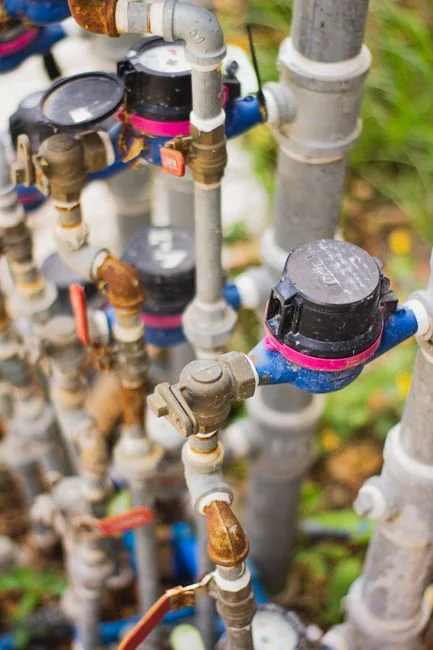
The 2026 Nairobi supplier landscape sorts cleanly into three archetypes, and the right one for a given project depends on flow rate, risk tolerance, and how much local accountability the buyer wants to retain. Staring at 50 Made-in-China listings without this framework is how procurement committees end up signing a 200 m³/day PO based on CIF price alone and inheriting a year of NEMA correspondence.
Archetype 1 — Chinese EPC exporters. Shandong-based packaged-plant specialists (Qingdao Yimei, Shandong Grenorth, and others) sell containerized MBR and SBR units in the US$4,000–$20,000 range for filter-press components and US$180,000–$420,000 for full packaged plants CIF Mombasa. Strength: lowest CAPEX, fastest ex-works delivery at 6–10 weeks. Weakness: limited on-the-ground service in Nairobi, commissioning often conducted remotely over WeChat or translated video calls, and sparse Kenyan reference documentation older than 24 months.
Archetype 2 — Indian OEMs. Gujarat- and Ahmedabad-based manufacturers (Freeion Engineering, InterGlobe Engineering, ERA Hydro-Biotech) typically hold ISO 9001:2008/2015 certification, report 250–650+ installations, and offer packaged STP/ETP from 50–2,000 m³/day. Strength: stronger documentation packages, English-speaking engineering teams, and established Nairobi agent networks that can mobilize a commissioning engineer inside 7–10 days. Weakness: 10–14 week shipping via Mumbai and a 10–20% price premium over equivalent Chinese supply.
Archetype 3 — Local Kenyan system integrators. Nairobi-based firms procure skid-mounted MBR or MBBR from China or India, integrate in a local workshop, and take full NEMA permitting and commissioning responsibility. Strength: single point of accountability in Nairobi, NEMA documentation prepared in the format county inspectors expect, and service response measured in hours not weeks. Weakness: limited engineering depth above 1,000 m³/day and variable quality of in-house fabrication.
| Archetype | Typical 200 m³/day CAPEX (CIF Mombasa) | Lead time | Local service | Best fit |
|---|---|---|---|---|
| Chinese EPC exporter | US$180,000 – $280,000 | 6 – 10 weeks | Remote / agent | Price-sensitive, <500 m³/day |
| Indian OEM | US$250,000 – $420,000 | 10 – 14 weeks | Nairobi agent | Documentation-heavy, hospital/pharma |
| Local Kenyan integrator | US$220,000 – $380,000 | 8 – 12 weeks | On-site, hours | NEMA-sensitive, mixed industrial |
For most Nairobi food-processing, textile, and hospital buyers, the third archetype combined with imported core components — for example a containerized MBR system as the biological backbone — is the lowest-risk 2026 configuration.
How to Choose the Right Treatment Process for Nairobi Conditions
Process selection in Nairobi is constrained by three site-specific realities that the top global manufacturer pages never address: chronic Kenya Power load-shedding, ambient temperatures that hold biological activity at 22–28 °C year-round, and a chronic land scarcity in the Industrial Area and Athi River EPZ. These three factors — not technology fashion — should drive the MBR-vs-SBR-vs-MBBR decision.
MBR (membrane bioreactor). Flow range 10–2,000 m³/day, <1 μm PVDF membrane filtration, footprint roughly 60% smaller than conventional activated sludge, and consistent effluent of BOD <5 mg/L and TSS <1 mg/L. MBR is the default choice for space-constrained Nairobi industrial parks because it comfortably under-shoots NEMA Schedule III even when the upstream load swings. Energy demand runs 0.6–1.2 kWh/m³ — manageable on a grid with 20–30% generator backup.
SBR (sequencing batch reactor). Good fit at 50–500 m³/day with lower CAPEX, but the larger footprint and dependence on a continuous aeration cycle make it vulnerable to load-shedding: a 4-hour grid outage without a backup generator can crash a sequencing cycle. Specify a 20–30% capacity diesel backup and a PLC auto-resume, or pick MBR instead.
MBBR (moving bed biofilm reactor). The right answer for variable-strength industrial loads (food processing with seasonal campaigns, textile dye batches). MBBR tolerates load shocks that would upset a CAS plant, but effluent TSS typically lands at 20–30 mg/L — right on NEMA's limit. Add a polishing stage (cloth-media filter or plate and frame filter press on the sludge side) to keep the compliance margin comfortable.
Containerized MBR. For construction sites, mining camps, and temporary hospital facilities, a skid-mounted containerized MBR compresses the deployment timeline to 6–8 weeks from PO to commissioning. For permanent installations under 80 m³/day, the WSZ underground package STP is the equivalent buried-footprint option favoured by real-estate developers who want zero above-grade visual impact.
| Process | Flow range (m³/day) | Footprint | Effluent BOD | Effluent TSS | Grid-outage tolerance |
|---|---|---|---|---|---|
| MBR | 10 – 2,000 | Compact | < 5 mg/L | < 1 mg/L | Good with backup |
| SBR | 50 – 500 | Large | < 20 mg/L | < 30 mg/L | Poor without backup |
| MBBR | 20 – 5,000 | Medium | < 20 mg/L | 20 – 30 mg/L | Good |
| Containerized MBR | 1 – 500 | Minimal | < 5 mg/L | < 1 mg/L | Good with PLC auto-shutdown |
2026 Cost and Logistics: What a Nairobi Buyer Should Realistically Budget
Pricing data from 2026 supplier quotes (HydropureWater field data, 2026) anchors the following CAPEX benchmarks for equipment only, CIF Mombasa, before installation: a 50 m³/day containerized MBR lands at US$45,000–$95,000; a 200 m³/day packaged MBR or MBBR at US$180,000–$420,000; and a 1,000 m³/day municipal SBR with tertiary filtration at US$900,000–$2.1M. These ranges assume a standard BOD/COD load; high-strength industrial effluent (tanneries, slaughterhouses) sits at the upper end.
The line item that derails most Nairobi WWTP budgets in 2026 is inland logistics. Add 12–18% to the CIF Mombasa price for container transport on the Mombasa–Nairobi corridor, customs clearance, KRA VAT at 16% on imported equipment, and NEMA inspection fees. For a 200 m³/day plant, expect KSh 8–15M in civil works for foundations, interconnecting pipework, and the equalization basin. OPEX benchmarks for 2026 Nairobi industrial plants run KSh 45–110 per m³ treated, with power at 60–70% of the total and chemical dosing at 15–20% — which is why low-energy MBR designs and a PLC-controlled chemical dosing system pay back faster in Kenya than in markets with stable grid power. Always spec PLC auto-shutdown aligned to Kenya Power's load-shedding schedule; manual restart after a 4-hour outage is the most common cause of biological-stage upsets in the first year of operation.
For a deeper look at the 2026 process-market context that drives these numbers, the MBR market growth 2026 analysis is worth reading alongside the prefabricated wastewater plant specifications guide. Plants with SCADA integration are the norm for any 2026 Nairobi installation above 500 m³/day, and the SCADA system for municipal wastewater plant guide covers the control architecture in detail.
Manufacturer Shortlist Checklist: 8 Questions to Ask Before You Sign a PO
Take this list into the next vendor meeting. A credible 2026 Nairobi manufacturer will answer all eight without hesitation; evasive answers are themselves the signal to drop the supplier from the shortlist.
- Can you provide a NEMA-accepted effluent test report from a comparable Kenya or East Africa installation dated within the last 24 months?
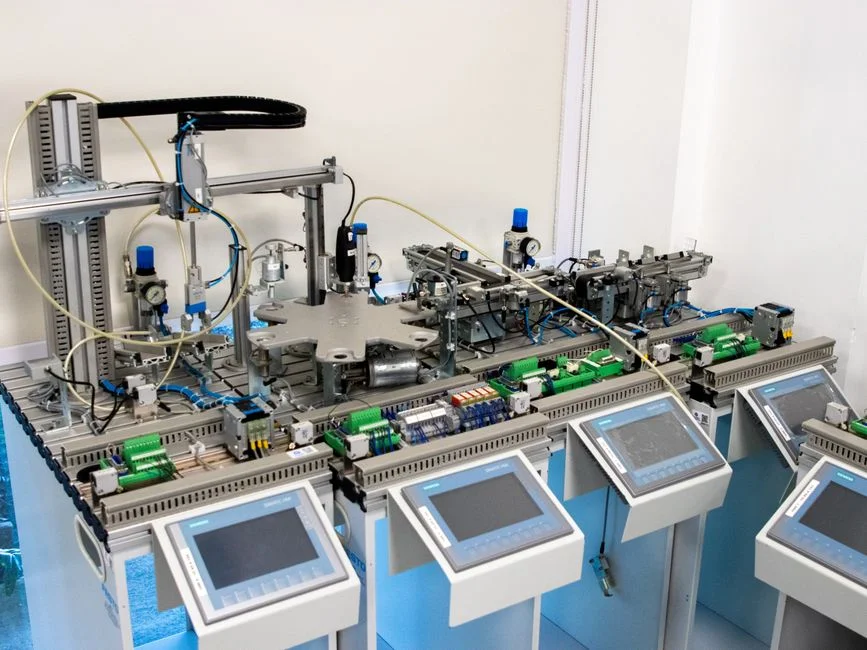
- Does the control system include PLC remote monitoring (4G/Sat) with auto-shutdown for grid outages — and is the HMI in English?
- What is the actual CIF Mombasa price, and who handles customs clearance and inland transport to the Nairobi site?
- What is the membrane or critical-component replacement interval, and what is the 2026 landed cost of spares in KES?
- Can a commissioning engineer be on-site in Nairobi within 7 days of the equipment arriving on site, and is that included in the PO price?
- What warranty terms apply to the membrane modules, the blowers, and the control panel — and what is the exclusions list?
- Do you provide a structured training program for local operators, with documentation in English and a competency assessment at the end?
- Can you supply a reference buyer in Kenya (name, plant, flow rate) that the procurement team can visit before issuing the PO?
Question 1 is the single most important. A 2026 NEMA-accepted test report from a comparable Kenyan or East African installation is the only documentary evidence that the unit as actually built — not as catalogued — will pass Schedule III. For plants with high solids loads, confirm the supplier has a working plate and frame filter press reference on the sludge side; a biological stage that meets BOD limits but pushes un-dewatered sludge to landfill is a NEMA liability of a different kind.
Frequently Asked Questions
What is the typical CAPEX for a 200 m³/day industrial wastewater treatment plant in Nairobi in 2026? Equipment-only CAPEX CIF Mombasa runs US$180,000–$420,000 for a packaged MBR or MBBR; add 12–18% for inland logistics and KRA VAT, and KSh 8–15M for civil works, for a typical total installed cost of US$240,000–$520,000 landed and commissioned in Nairobi.
Which NEMA effluent parameters drive equipment selection most heavily? BOD ≤30 mg/L and COD ≤50 mg/L drive biological-stage sizing (MBR/SBR/MBBR), TSS ≤30 mg/L drives the membrane or tertiary filtration choice, and fecal coliforms ≤100 cfu/100 mL drive the disinfection stage — UV scores higher than chlorination on future-proofing.
How long does it take to ship a containerized WWTP from China to a Nairobi site? Ex-works production is 4–6 weeks, Mombasa port transit and customs clearance add 3–5 weeks, and inland transport to Nairobi plus commissioning typically adds another 1–2 weeks, for a total of 8–13 weeks from PO to commissioned plant in 2026.
Should a Nairobi buyer choose a Chinese EPC exporter or a local Kenyan system integrator? For flow rates under 1,000 m³/day and NEMA-sensitive applications, a local Kenyan integrator that procures skid-mounted MBR cores from China typically offers the best balance of CAPEX, NEMA documentation quality, and on-site service response — at a small price premium over buying direct from a Chinese exporter.